LACMA

ShopMembershipMyLACMATickets
LACMA
Los Angeles County Museum of Art
5905 Wilshire Blvd.
Los Angeles, CA 90036
info@lacma.org
(323) 857-6000
Sign up to receive emails
Subscribe
© Museum Associates 2026
  • About LACMA
  • Jobs
  • Building LACMA
  • Host An Event
  • Unframed
  • Press
  • FAQs
  • Log in to MyLACMA
  • Privacy Policy
© Museum Associates 2026
Collections

Vienna Porcelain Manufactory
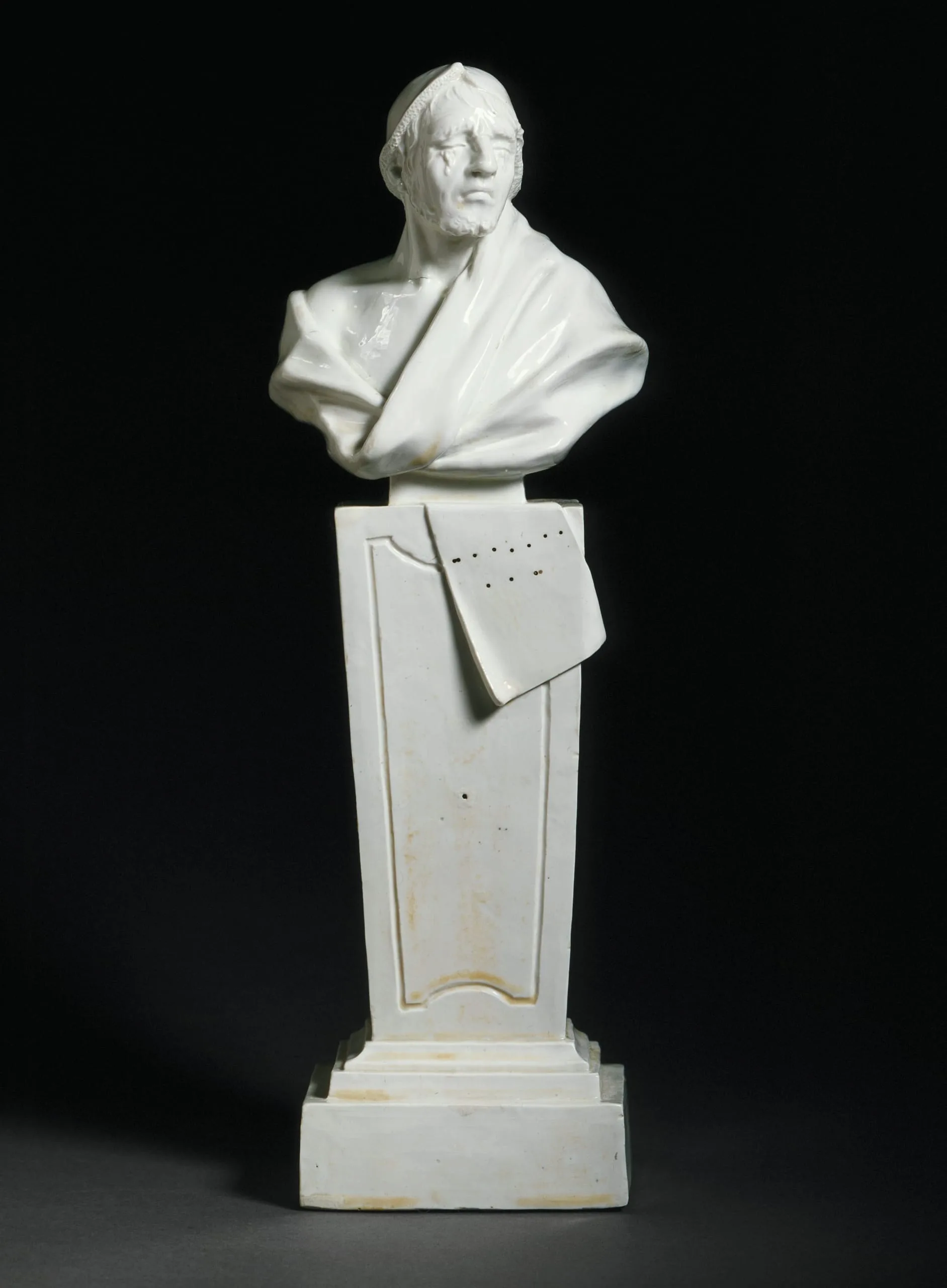
Bust of Heraclitus, 'The Weeping Philosopher'circa 1757

On view:
Geffen Galleries, floor 2
White-glazed ceramic bust of a bearded man with closed eyes and draped shoulders, mounted on a tall rectangular pedestal with a dotted plaque, stepped base

Vienna Porcelain Manufactory, Johann Christoph Ludwig Lücke, Bust of Heraclitus, 'The Weeping Philosopher', circa 1757, Los Angeles County Museum of Art, Decorative Arts Council Curatorial Acquisitions Discretionary Fund, photo © Museum Associates/LACMA

Artist or Maker
Vienna Porcelain Manufactory
Austria, Vienna, active 18th century
Artist or Maker
Johann Christoph Ludwig Lücke
Title
Bust of Heraclitus, 'The Weeping Philosopher'
Place Made
Austria
Date Made
circa 1757
Medium
Porcelain, white glaze
Dimensions
13 1/4 x 4 3/4 x 3 1/2 in. (33.66 x 12.07 x 8.89 cm)
Credit Line
Decorative Arts Council Curatorial Acquisitions Discretionary Fund
Accession Number
M.83.4
Classification
Sculpture
Collecting Area
Decorative Arts and Design
Curatorial Notes

Ivory carver Johann Christoph Ludwig von Lücke arrived in Austria in 1750 to work as a highly paid “master modeler” at the Vienna Porcelain Manufactory, an enterprise in direct competition with his former employer Meissen in Germany. This small porcelain sculpture after a model by Lücke depicts the ancient Greek philosopher Heraclitus, whose despairing view of human folly earned him the nickname, “the weeping philosopher.” The sculpture is conceived as a miniature version of a life-sized bust on a pedestal. It is often found paired with a bust of Democritus, another Greek who chose to be amused by human folly and thus was known as “the laughing philosopher.” The opposing views of humanity espoused by these two philosophers made for a popular pairing in painting as well as sculpture. The busts were also available without pedestals and with or without colored enamel decoration.