- Title
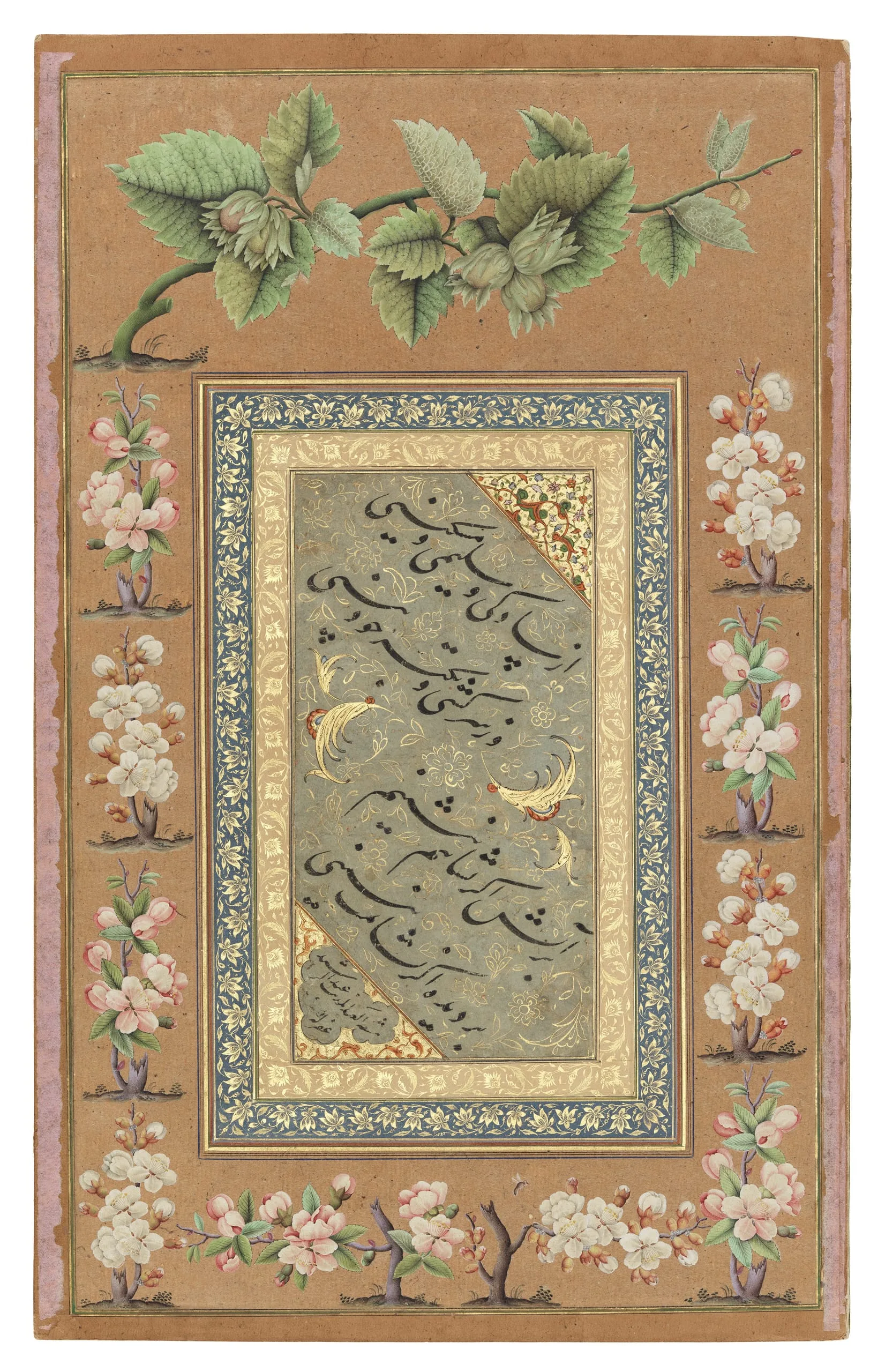
- Calligraphy from an Album with Eighteenth-Century Borders
- Date Made
- 17th century with 18th century borders
- Medium
- Opaque watercolor, ink and gold on paper
- Dimensions
- 13 3/16 x 8 1/4 in. (33.5 x 21.1 cm)
- Accession Number
- M.83.27.1
- Curatorial Notes
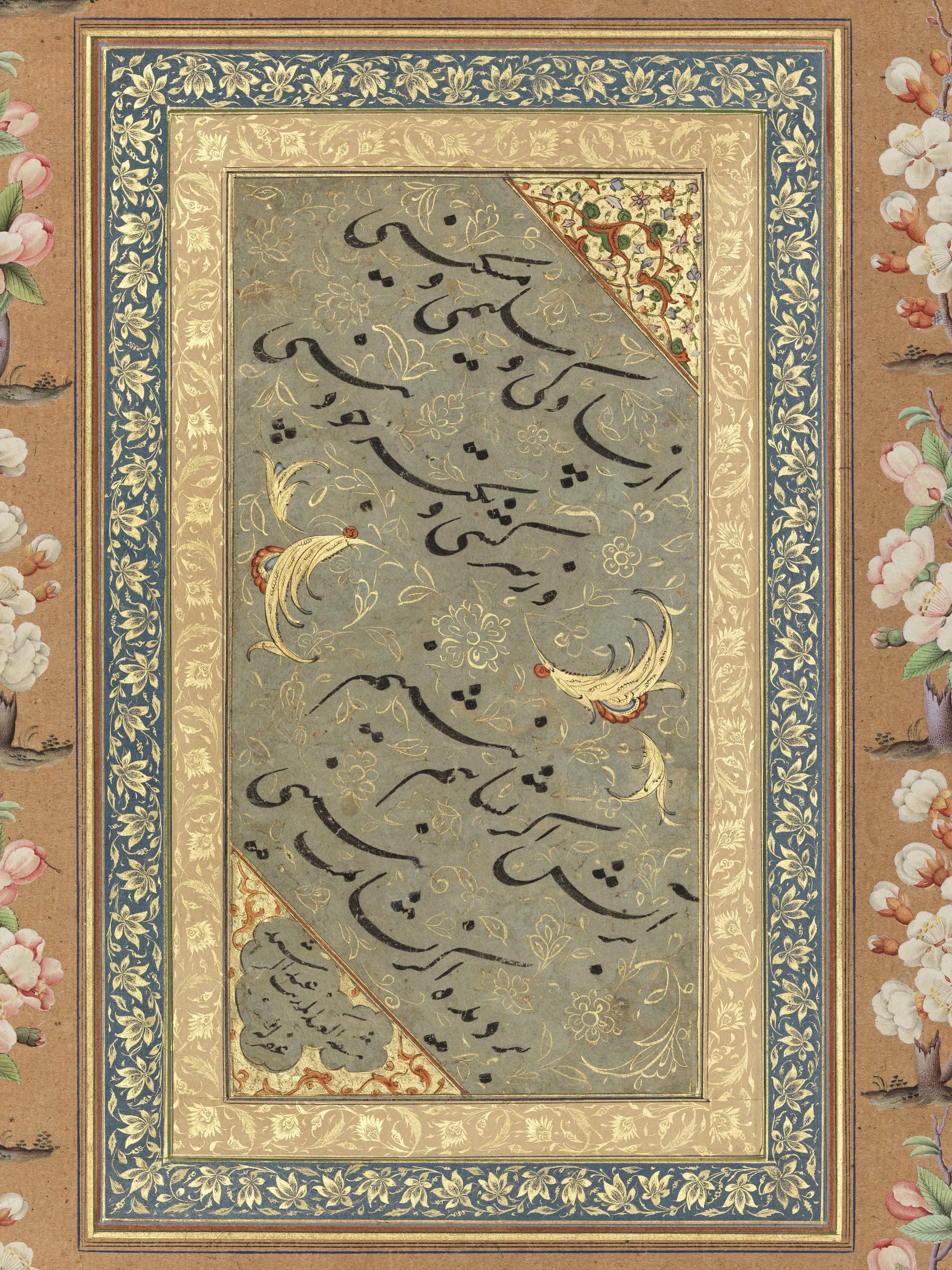
This folio showcases a Persian quatrain by the eleventh-century Iranian mystic Abu Sa‘id Abu’l Khayr, written on blue marbled paper in nasta‘liq, an elegant cursive script characterized by elongated curvaceous letterforms. It is signed by the renowned Iranian calligrapher ‘Abd al-Rashid Daylami, who immigrated to India and served Emperor Shah Jahan (r. 1628−58) as the Mughal library director and royal calligraphy tutor.
The diagonally written calligraphy is a hallmark of the chalipa format, in which text is arranged in a dynamic, four-line composition. The composition is particularly well suited for quatrains, a poetic form in which Abu Sa‘id excelled. The calligraphy is mounted on a page with eighteenth-century borders, likely painted by Muhammad Baqir, chief painter at the Afsharid court in Iran. This exemplifies the common practice of remounting calligraphy and painting in albums for aesthetic appreciation and preservation purposes. The album to which this page belonged was broken up in modern times. It once had a facing page with matching floral borders surrounding calligraphy by Mir ‘Imad Hasani, Daylami’s uncle and mentor, which would have had special meaning for the album’s intended audience.
2024
- Selected Bibliography
- Art Islamique, Nouveau Drouot, Paris. June 23, 1982.