Dating from circa 550 CE, the Devimahatmya (Glory of the Goddess) is a devotional text of 700 Sanskrit verses that extol the Goddess (Devi) as the supreme power and creator of the universe. The verses were interpolations to the earlier Markandeya Purana dating from circa 250 CE and then extracted as a stand-alone text. These folios may illustrate episodes of the Goddess triumphing over Madhu and Kaitabha (Chapter 1) and Mahishasura (Chapters 2-4).
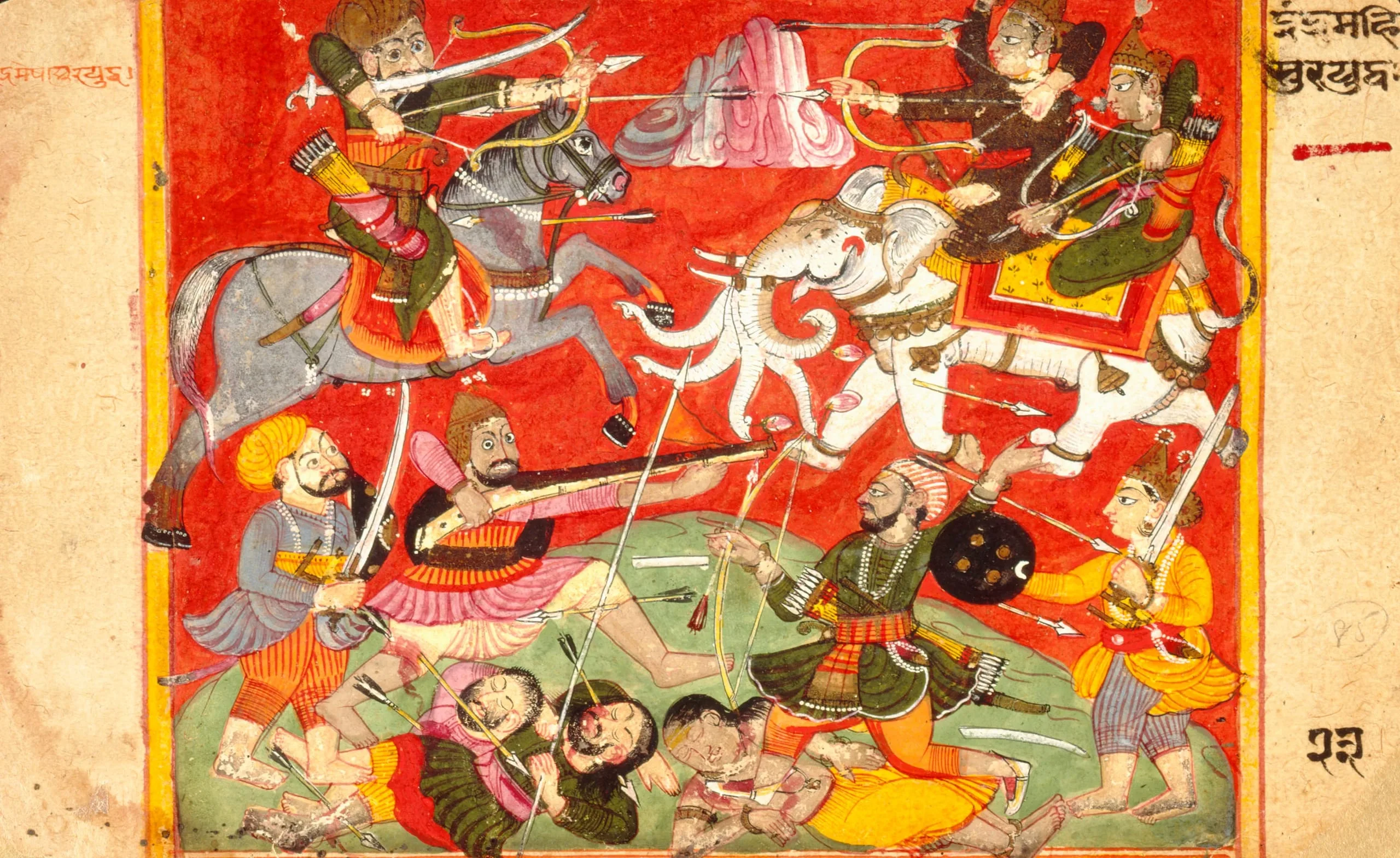
Recto: In this folio [#23], Indra, the King of the Gods, rides Airavata, his multi-trunked white elephant vehicle. He has four arms, with which he shoots an arrow and holds an elephant goad and unknown attribute (image cut off in painting). Seated behind him is a crowned archer, probably his son Jayanta. Beneath them are a princely man carrying a sword and a warrior. They are fighting the demon Mahishasura, who is portrayed in a human form on horseback, and two warriors beneath him, one of whom is aiming a musket. In the foreground are three fallen combatants.
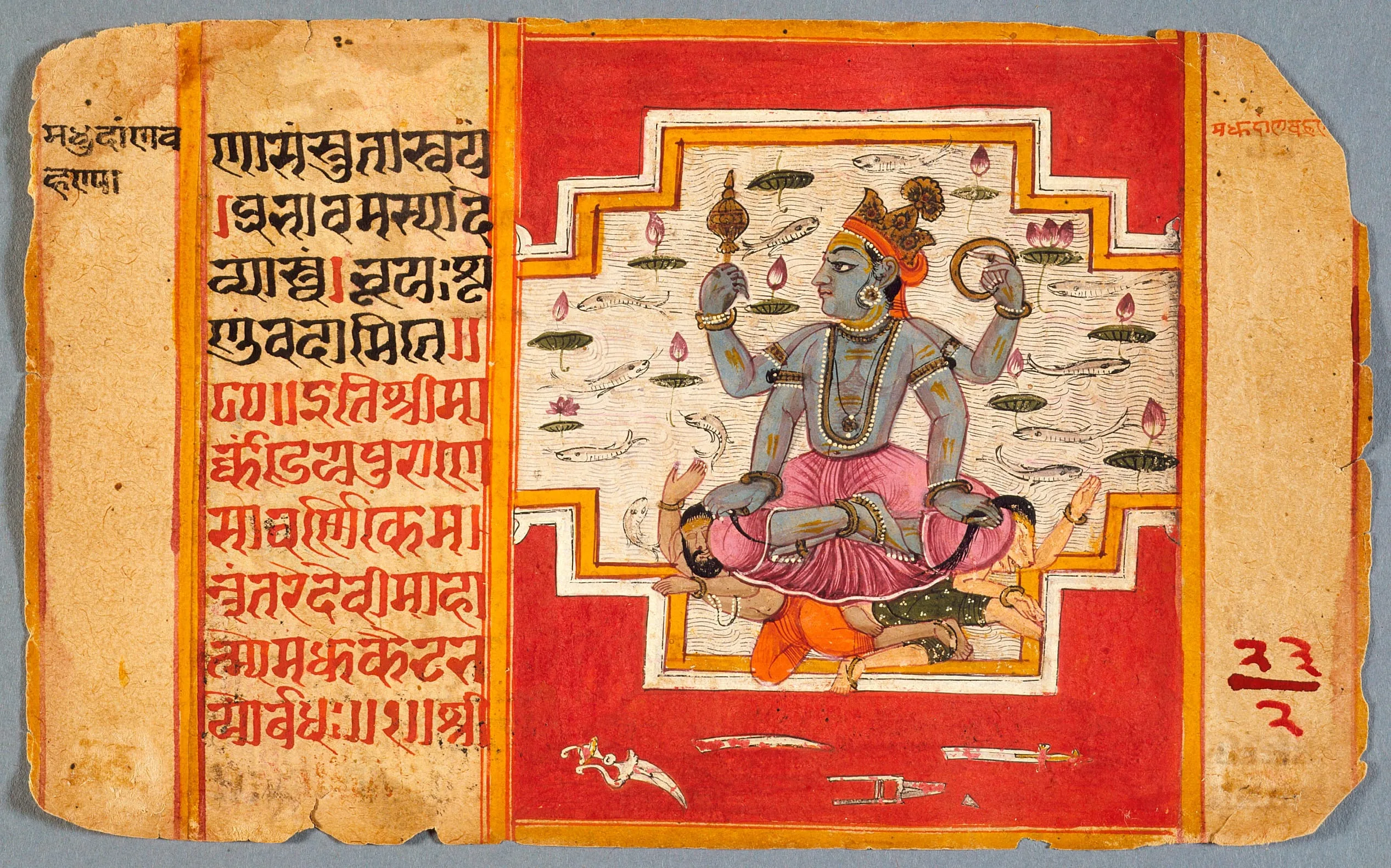
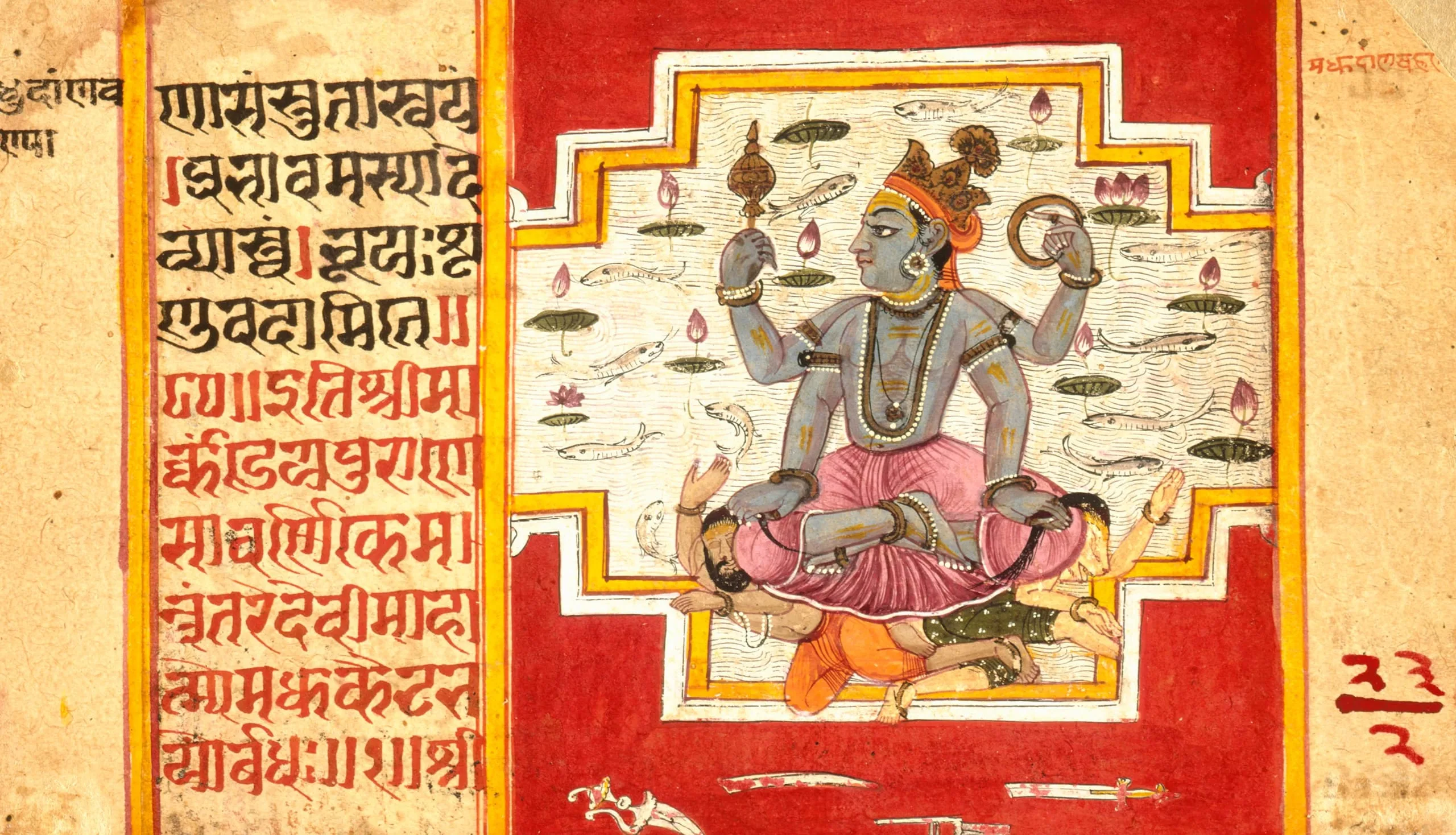
Verso: Vishnu, the God of Preservation, sits triumphantly on the slain bodies of the demons Madhu and Kaitabha while floating on the cosmic ocean. His upper two hands hold a mace and discus, while his lower two hands grasp the demons’ ponytails. The demons’ broken daggers and swords are strewn below.
See their series mates M.81.280.4a and M.2001.229.1a-b. Additional folios from this dispersed series are in the San Diego Museum of Art (1990.896-.897) and a private collection.