LACMA

ShopMembershipMyLACMATickets
LACMA
Los Angeles County Museum of Art
5905 Wilshire Blvd.
Los Angeles, CA 90036
info@lacma.org
(323) 857-6000
Sign up to receive emails
Subscribe
© Museum Associates 2025

Museum Hours

Monday

11 am–6 pm

Tuesday

11 am–6 pm

Wednesday

Closed

Thursday

11 am–6 pm

Friday

11 am–8 pm

Saturday

10 am–7 pm

Sunday

10 am–7 pm


  • About LACMA
  • Jobs
  • Building LACMA
  • Host An Event
  • Unframed
  • Press
  • FAQs
  • Log in to MyLACMA
  • Privacy Policy
© Museum Associates 2025
Collections

Unknown
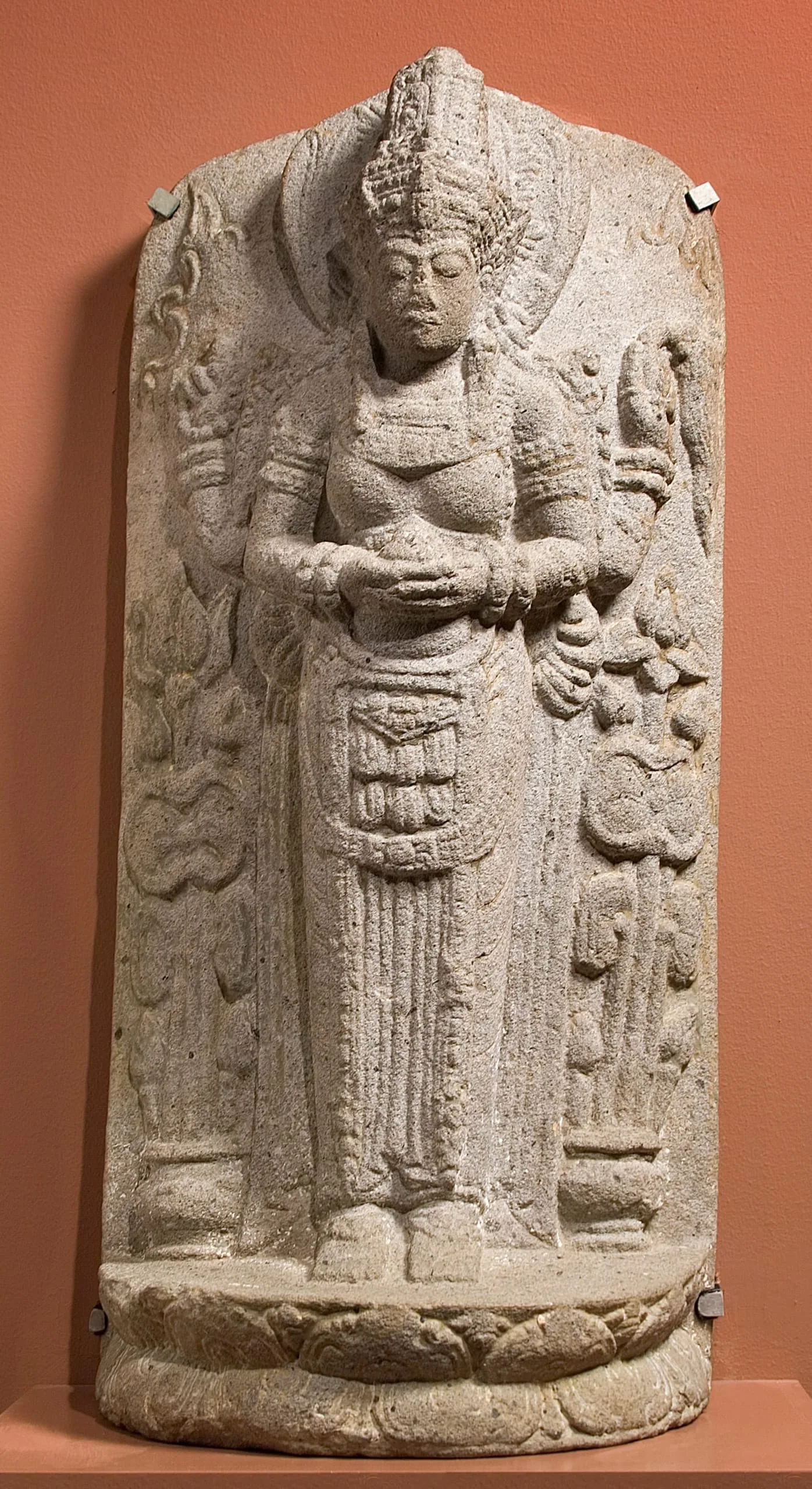
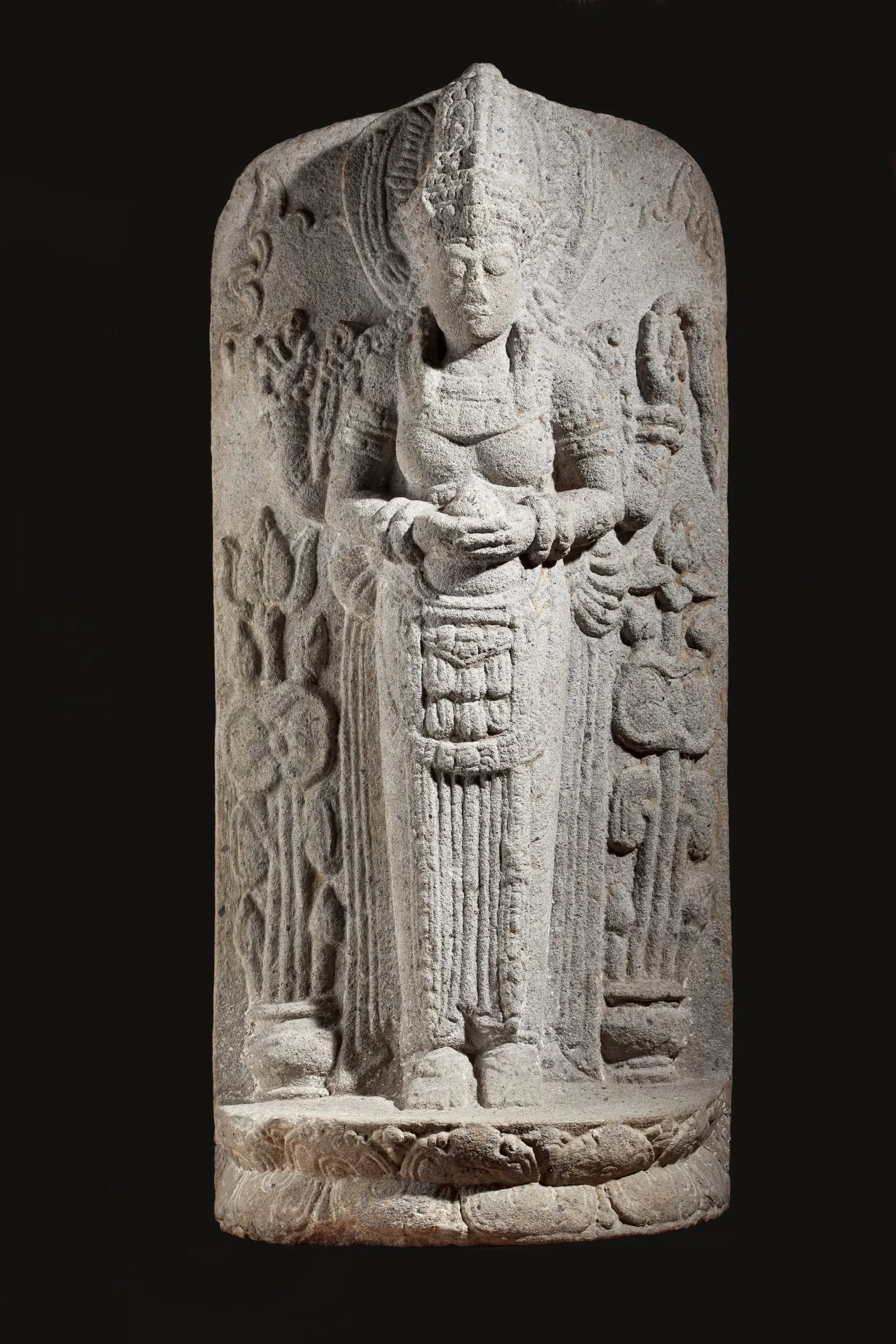
Memorial Statue of a Deified Queen14th-15th century

On view:
Geffen Galleries, Navigating Pacific Asia
Gray stone relief stele depicting a standing crowned figure with bare shoulders, decorative belt, and pleated lower garment, flanked by carved floral scrollwork
Stone stele with a standing figure in high relief, wearing an elaborate crown, jewelry, and a pleated lower garment, hands held before the chest; flanked by carved foliage on a lotus base, in the Central Javanese sculptural tradition.
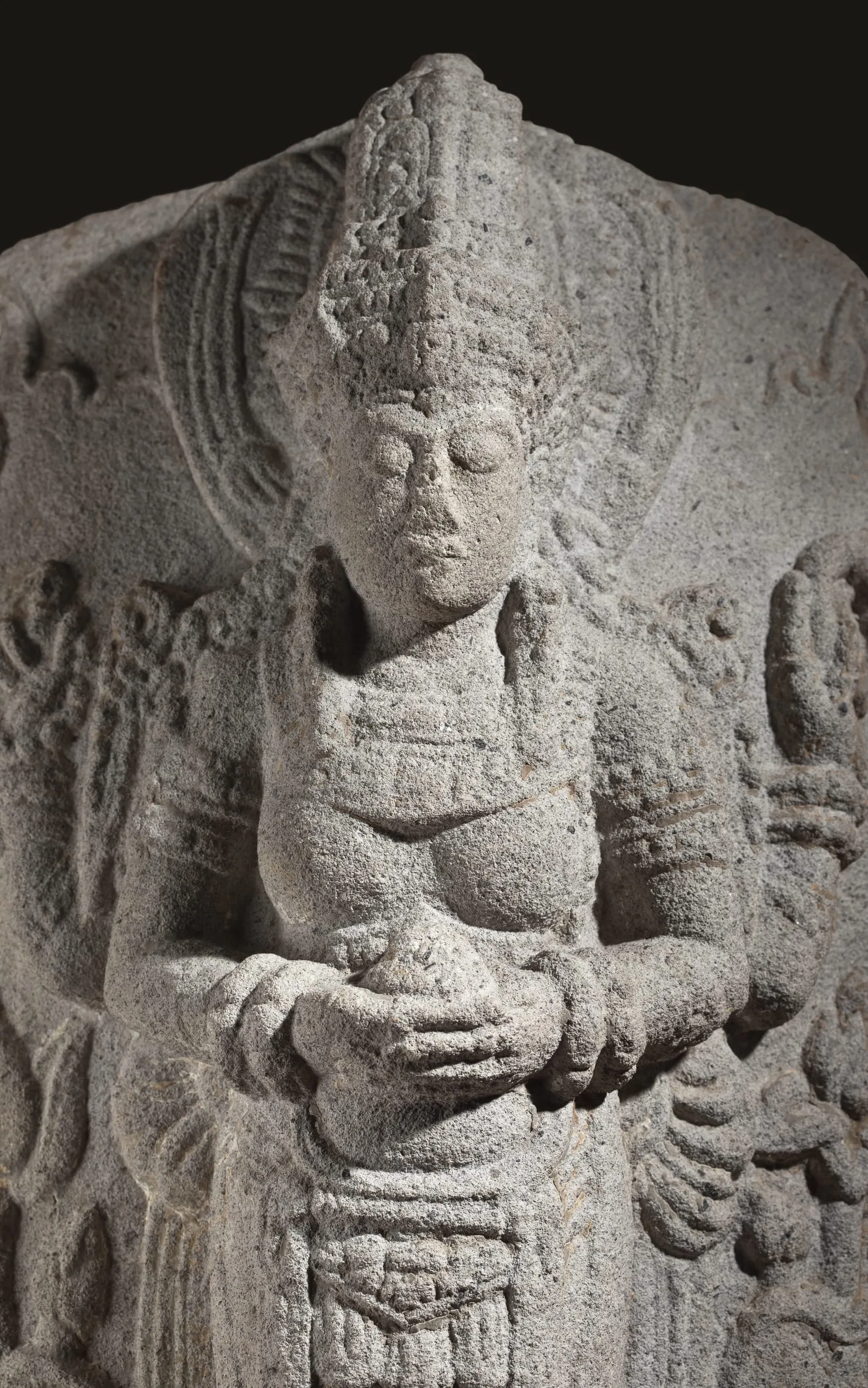
Stone relief sculpture of a standing deity figure wearing an elaborate crown and jewelry, hands held at the chest holding a round object, framed by an arched nimbus with foliate carvings, rough-textured gray stone surface.
Close-up of a stone relief carving showing a bird of prey with spread wings and taloned feet clutching an object, with textured feather details carved in low relief against a rough granite surface.
Close-up detail of a stone relief sculpture showing an upraised hand with elongated fingers in abhaya or vitarka mudra, set against a carved circular nimbus with scrolling foliate border, rough-textured gray stone surface.
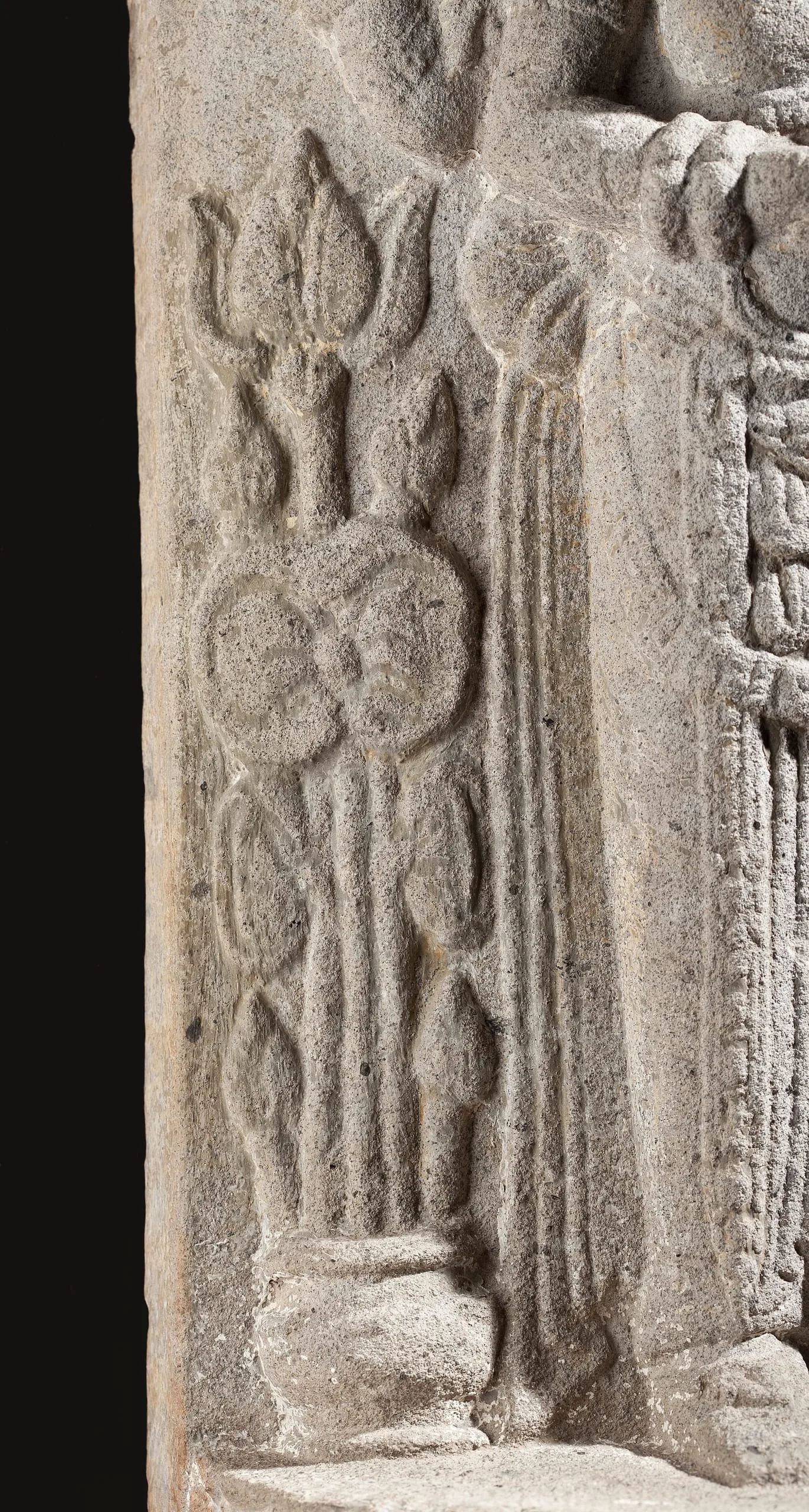
Stone relief fragment with carved floral and foliate motifs, including lotus buds, a central rosette, and layered leaf forms arranged in a vertical composition; weathered pale gray surface.
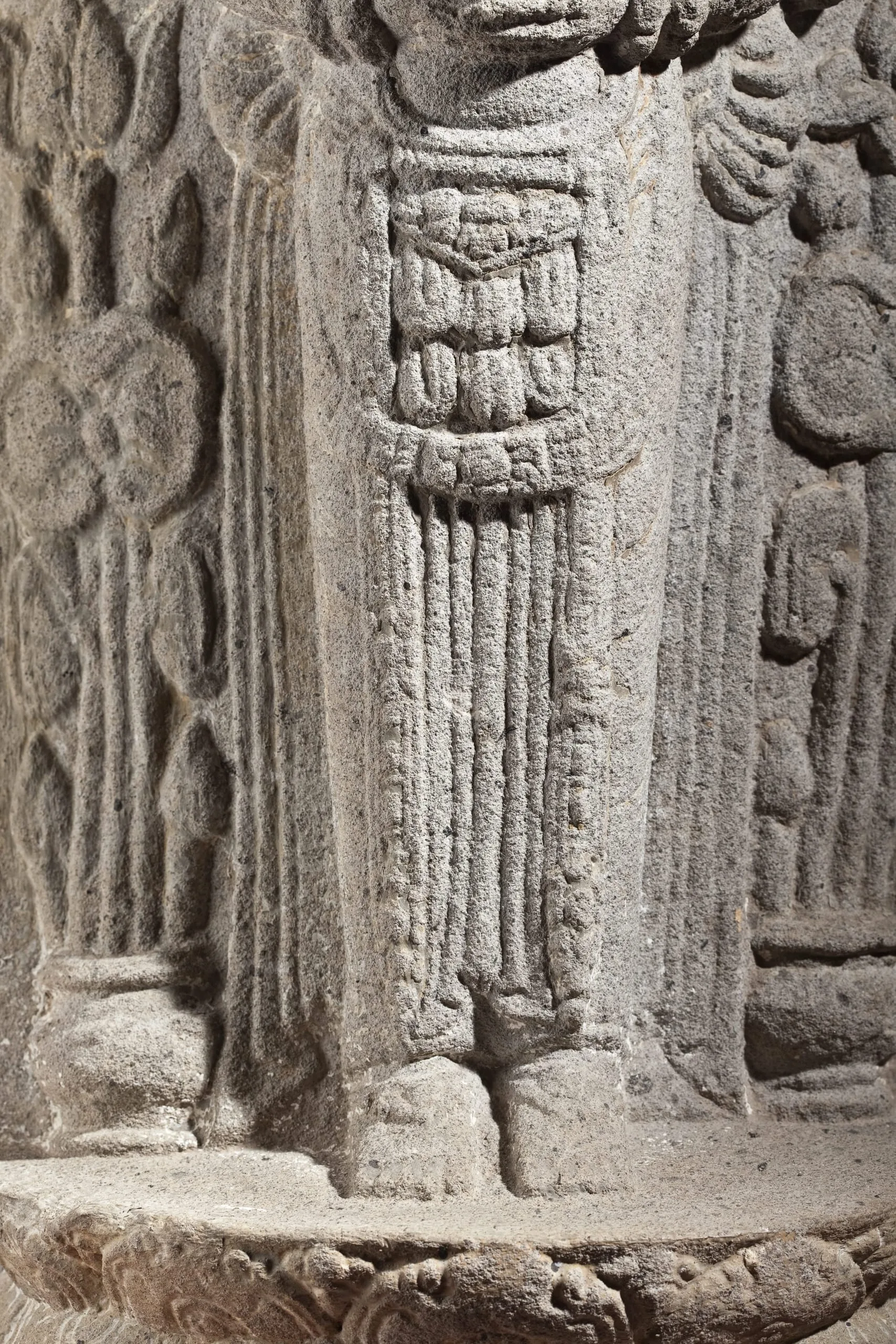
Stone relief sculpture, close-up of a standing figure in robes with vertically carved drapery folds, flanked by dense floral and scrolling vine relief patterns on weathered gray stone.
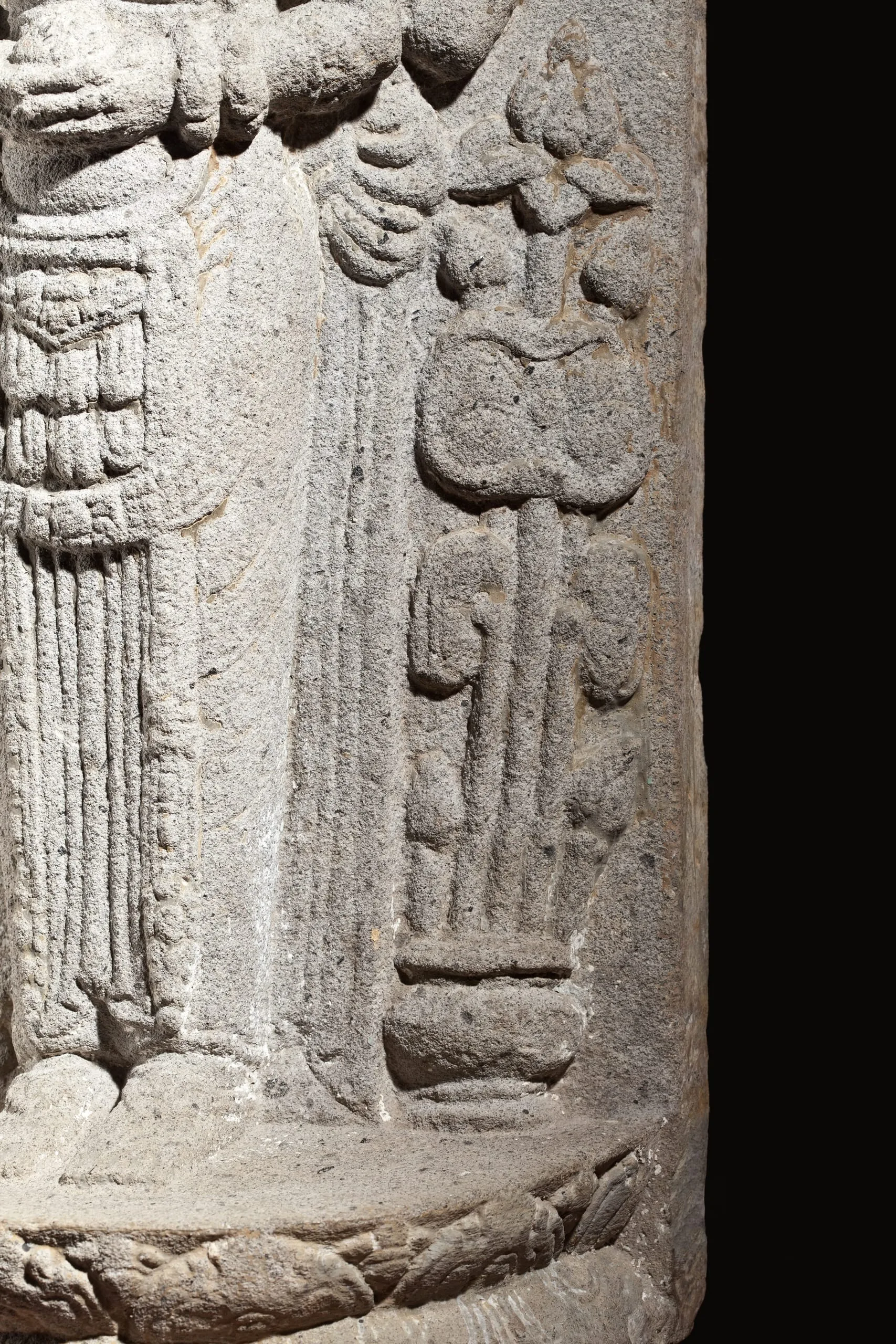
Stone relief carving on a cylindrical column, showing a standing figure in pleated robes at left beside a stylized flowering plant or tree on a tiered base, with rounded foliage forms in low relief against a black background.
Artist or Maker
Unknown
Title
Memorial Statue of a Deified Queen
Place Made
Indonesia, Eastern Java
Date Made
14th-15th century
Medium
Volcanic stone
Dimensions
30 1/4 x 13 3/8 x 9 1/4 in. (76.83 x 33.97 x 23.49 cm)
Credit Line
Gift of Mr. Jerry Heymann
Accession Number
M.81.273
Classification
Sculpture
Collecting Area
South and Southeast Asian Art
Curatorial Notes

Ancestor worship in eastern Java during the Majapahit empire (1293–1527) blended Hindu-Buddhist beliefs and connected the royal ancestral lineage to the veneration of the gods as a basis for the traditional authority of the monarchy. Memorial sculptures such as this indicate the subject’s ultimate oneness with a Supreme Divinity. Used for both male and female deceased sovereigns, they were intended to represent the attainment of an abstracted absolute knowledge and deification.

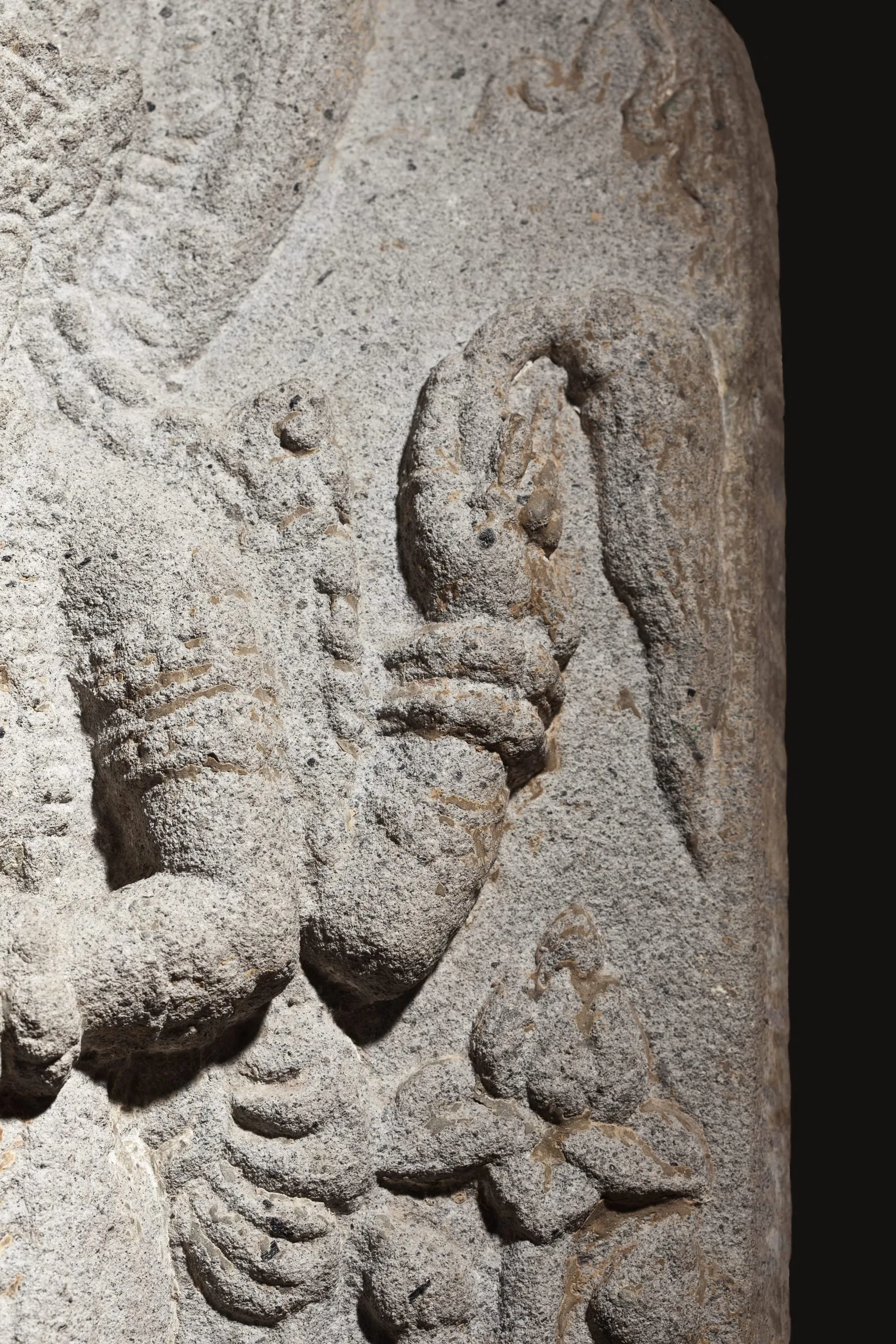
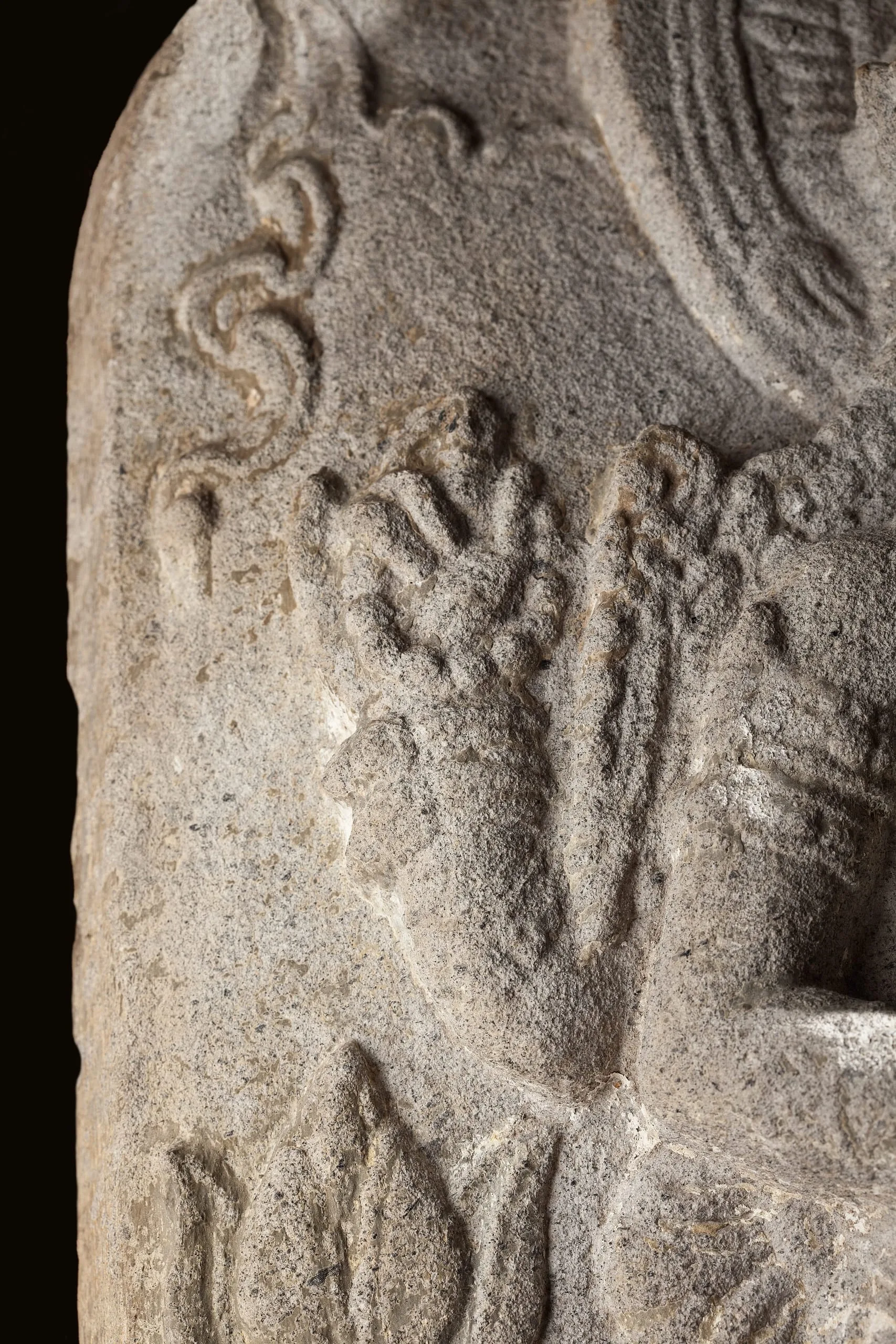
"This Javanese sculpture is a deification image that represents Supreme Divinity. It dates to the fourteenth–fifteenth century and comes from Eastern Java. The formula for this image type developed during the Majapahit period (1293–1519) and was used for both males and females. Characteristics include the lotuses that grow out of pots on each side of the figure, the flying ribbons of the headdress, the downturned eyes, and the way the body disappears under the thick clothing and heavy decoration. The figures are meant to represent an abstracted supreme knowledge and deification that was initially open only to royalty but was increasingly expanded to include everyone. The depictions had both Hindu and Buddhist qualities, and this figure holds prayer beads and a fly whisk in her upper hands, attributes primarily associated with Shiva.

Sculptures such as this were intended to represent asceticism and abstraction, indicating their ultimate accomplishment of oneness with a supreme deity. The image’s formal characteristics and lack of body definition (her deemphasized breasts are the only indication of her gender) produce an ambiguous figure in which sexual identification is not of importance. Indeed, it can be difficult to identify some deification figures as either male or female."

Quoted from Robert L. Brown, "Female Deities in Ancient Cambodian and Indonesian Art," Southeast Asian Art at LACMA: An Online Scholarly Catalogue (Los Angeles: Los Angeles County Museum of Art, 2013), Figure 9. http://seasian.catalog.lacma.org/#section/340/p-340-15

A comparable idealized portrait of a Majapahit deified queen is in the Metropolitan Museum of Art, New York (2001.407). Another portrait statue of a Majapahit queen, purported to be Queen Regent Tribhuwana (r. 1328-1350), originally from Chandi Rimbi in Jombang, East Java, is in the National Museum of Indonesia, Jakarta.

See also AC1993.239.13 and AC1994.234.3.
Selected Bibliography
  • Brown, Robert L. Southeast Asian Art at LACMA: An Online Scholarly Catalogue. Los Angeles: Los Angeles County Museum of Art, 2013. Accessed June 25, 2024. http://seasian.catalog.lacma.org/.