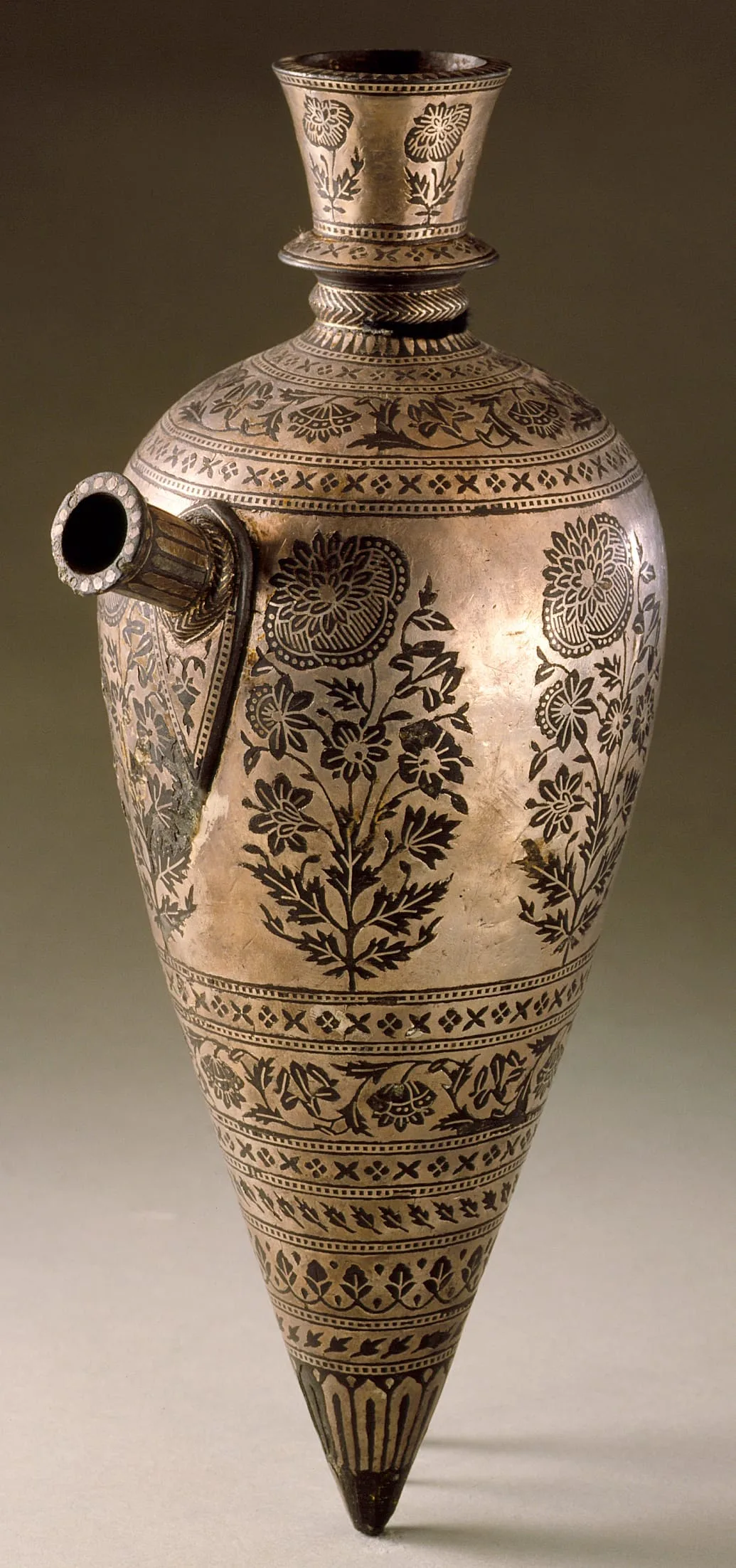
This distinctively shaped hookah base is fashioned in the form of an inverted flower bud. Its pointed base renders it impractical for being placed on a hard floor or tabletop. Rather, it was meant to be handheld by the smoker or a servant, or supported in a stand. The hookah base has separate spouts for connecting the combustion bowl on the top and the inhalation tube on the side. Both the inverted bud shape and the individualized spouts were likely inspired by a contemporaneous type of Iranian waterpipe with the same features.
Bidri ware is made from a predominately zinc-based alloy, along with smaller amounts of lead, copper, and/or tin. The ornamentation of bidri ware is produced through several varying and often combined techniques and materials. In the Deccan and eastern India, bidri ware is most typically made by the inlaying of sheets of precious metals (tehnishan) or by the inlaying of single strands of wire (tarkashin), and the inlaid designs are then rendered flush and burnished (zarnishan). The primary ornamentation technique here is overlaid silver sheet (aftabi) with silhouetted representations of large flowering poppy plants and concentric bands of scrolling vines, foliate forms, and geometric motifs. Poppy flowers first appear in Hyderabad painting during the first half of the 18th century and on Deccani bidri ware after c. 1775. They continued to be an extremely popular decorative motif throughout the 19th century.