LACMA

ShopMembershipMyLACMATickets
LACMA
Los Angeles County Museum of Art
5905 Wilshire Blvd.
Los Angeles, CA 90036
info@lacma.org
(323) 857-6000
Sign up to receive emails
Subscribe
© Museum Associates 2025

Museum Hours

Monday

11 am–6 pm

Tuesday

11 am–6 pm

Wednesday

Closed

Thursday

11 am–6 pm

Friday

11 am–8 pm

Saturday

10 am–7 pm

Sunday

10 am–7 pm


  • About LACMA
  • Jobs
  • Building LACMA
  • Host An Event
  • Unframed
  • Press
  • FAQs
  • Log in to MyLACMA
  • Privacy Policy
© Museum Associates 2025
Collections

Unknown
Brahmanrupa Mahakala (Tibetan: Gonpo Bramzehi)circa 15th century

On view:
Resnick Pavilion, floor 1
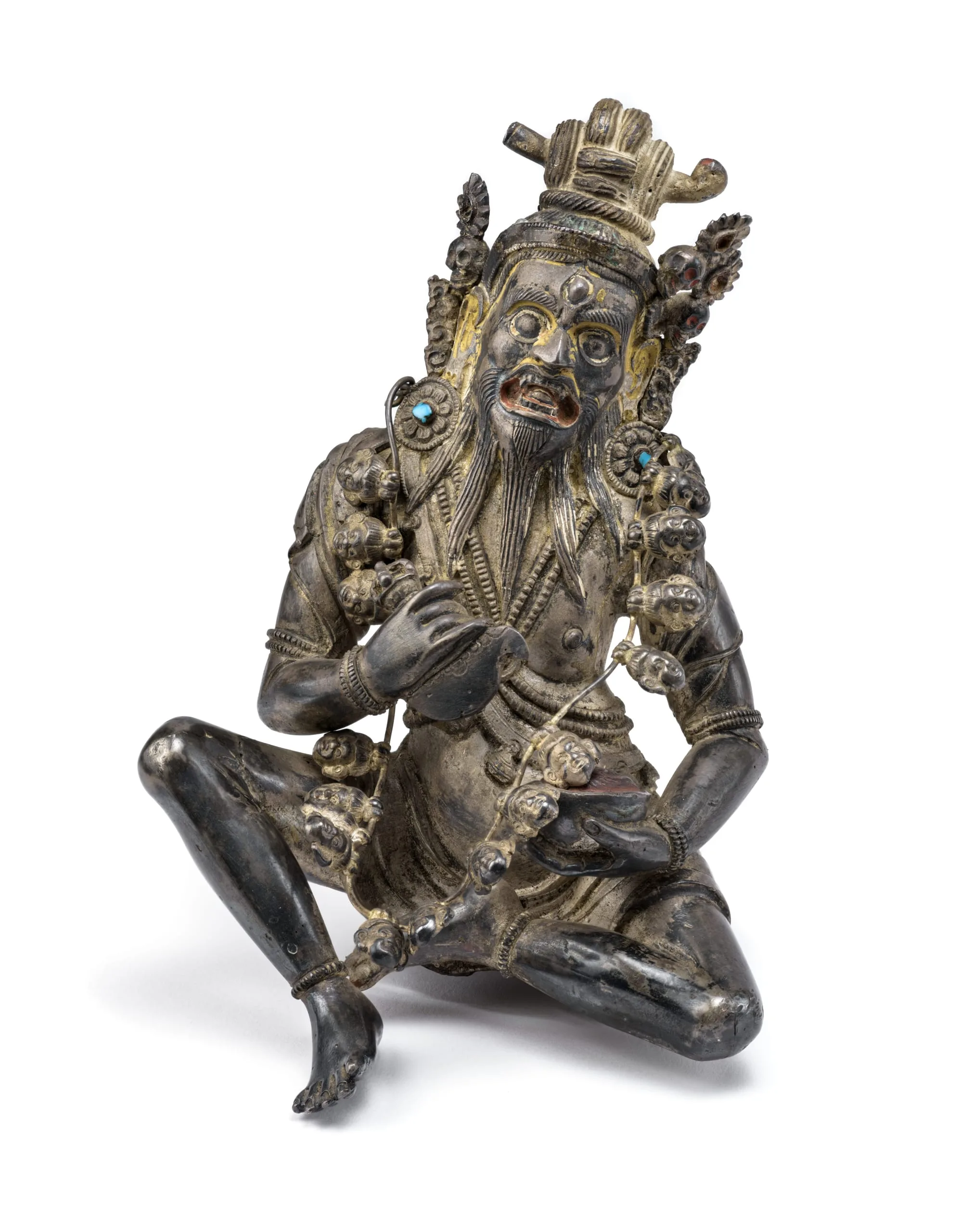
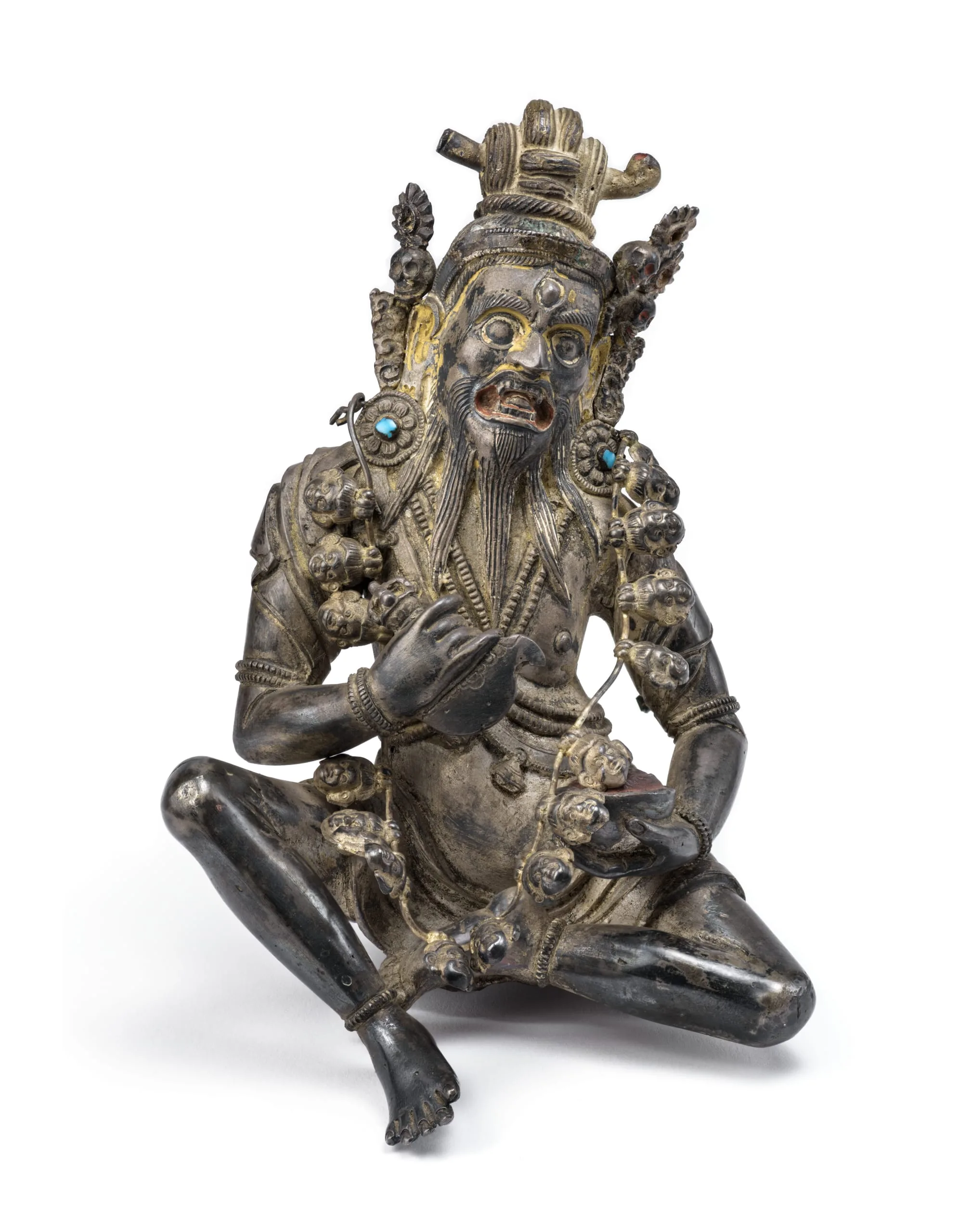
Bronze sculpture of a seated four-armed wrathful deity with gilded face, wide-open mouth, turquoise-inlaid eyes, and a tall crown, adorned with skull motifs
Cast metal sculpture of a wrathful deity seated in lalitasana, dark patinated surface with gilded highlights. Elaborate crown with skulls, turquoise inlays, open mouth with fangs, beard, and multiple small figures adorning the body and arms.
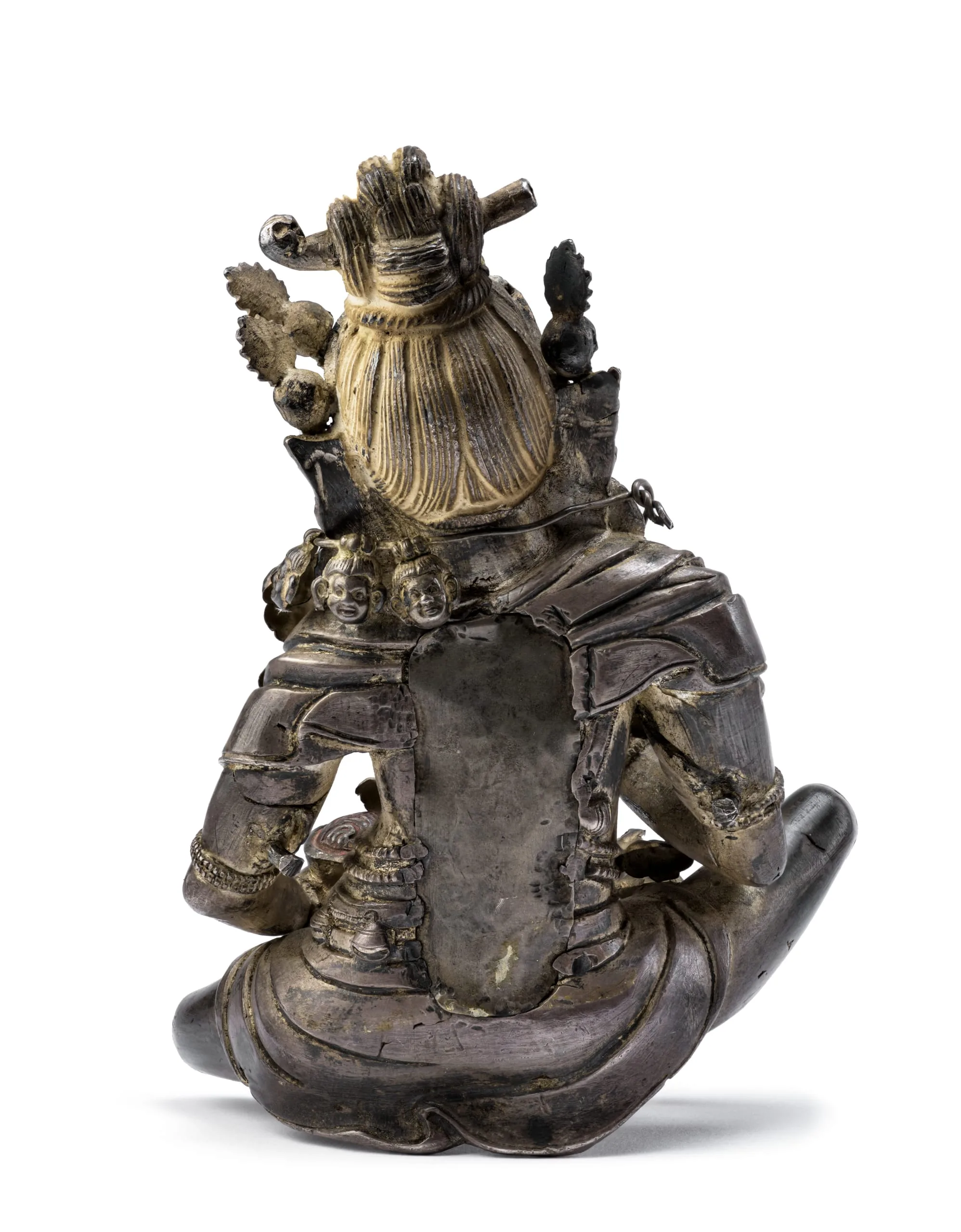
Bronze sculpture viewed from the back, seated deity figure in cross-legged posture on a lotus base, with elaborate crown of matted hair adorned with small figures and implements, ornate jewelry including a necklace of small faces, darkly patinated surface with areas of gilding.
Artist or Maker
Unknown
Title
Brahmanrupa Mahakala (Tibetan: Gonpo Bramzehi)
Place Made
Central Tibet (Sakyapa Monastery)
Date Made
circa 15th century
Medium
Silver inlaid with turquoise; traces of paint
Dimensions
6 1/4 x 4 x 3 1/4 in. (15.4 x 10.2 x 7.9 cm)
Credit Line
From the Nasli and Alice Heeramaneck Collection, purchased with funds provided by the Jane and Justin Dart Foundation
Accession Number
M.81.90.19
Classification
Sculpture
Collecting Area
South and Southeast Asian Art
Curatorial Notes

Mahakala, a major Buddhist Dharmapala (Protector of the Dharma), was a meditational deity (yidam) of the Sakya sect and is credited with helping introduce the important Eastern Indian Vajrayana text, the Hevajra Tantra (late 8th-early 10th century).

Mahakala is represented in this superbly crafted silver sculpture as Brahmanrupa Mahakala (Mahakala in the form of a Brahman). He sits in the relaxed posture (lalita asana) and has two arms holding a flaying knife (kartrika) in his right hand and a skullcup full of blood in his left hand. He is fearsome with glaring eyes, fangs, and a snarling mouth painted red on the inside, perhaps from drinking blood. Wearing a loincloth, shawl, and the cross-chest belt (chanavira) characteristic of ascetics and perfected beings (mahasiddhas), he has bone ornaments, including round lotiform earrings inlaid with turquoise, armlets, bracelets, anklets, and a long garland of freshly severed human heads. His ascetic’s matted hair is tied in a topknot pinned with a thighbone and adorned with a skull crown. The originally five skulls (two now lost) represent the transmutation of the five negative mental afflictions (kleshas) into the five transcendental Jina Buddhas. On the back of the figure, there is a large, plugged opening used to insert objects during consecration rites.

When he appears in Brahman form, there are variations in Mahakala’s attributes. Typically, he is depicted with a thighbone trumpet in his right hand. When he does not hold the trumpet, he often uses it to secure his topknot, as done here. Harvested from the charnel fields, the human thighbone trumpet is used not only in Tantric rituals, but also by shamans in the Himalayas. The sound of the trumpet is said to appease the wrathful deities. The presence of the thighbone in the hair of this Brahmanrupa identifies him as a Brahman ascetic.

A comparable brass image of Brahmanrupa Mahakala attributed to Tibet, 17th century, is in the Metropolitan Museum of Art, New York (2007.1).
Selected Bibliography
  • Little, Stephen, Tushara Bindu Gude, Karina Romero Blanco, Silvia Seligson, Marco Antonio Karam. Las Huellas de Buda. Ciudad de México : Instituto Nacional de Antropología e Historia, 2018.
  • Little, Stephen, and Tushara Bindu Gude. Realms of the Dharma: Buddhist Art across Asia. Los Angeles: Los Angeles County Museum of Art, 2025.