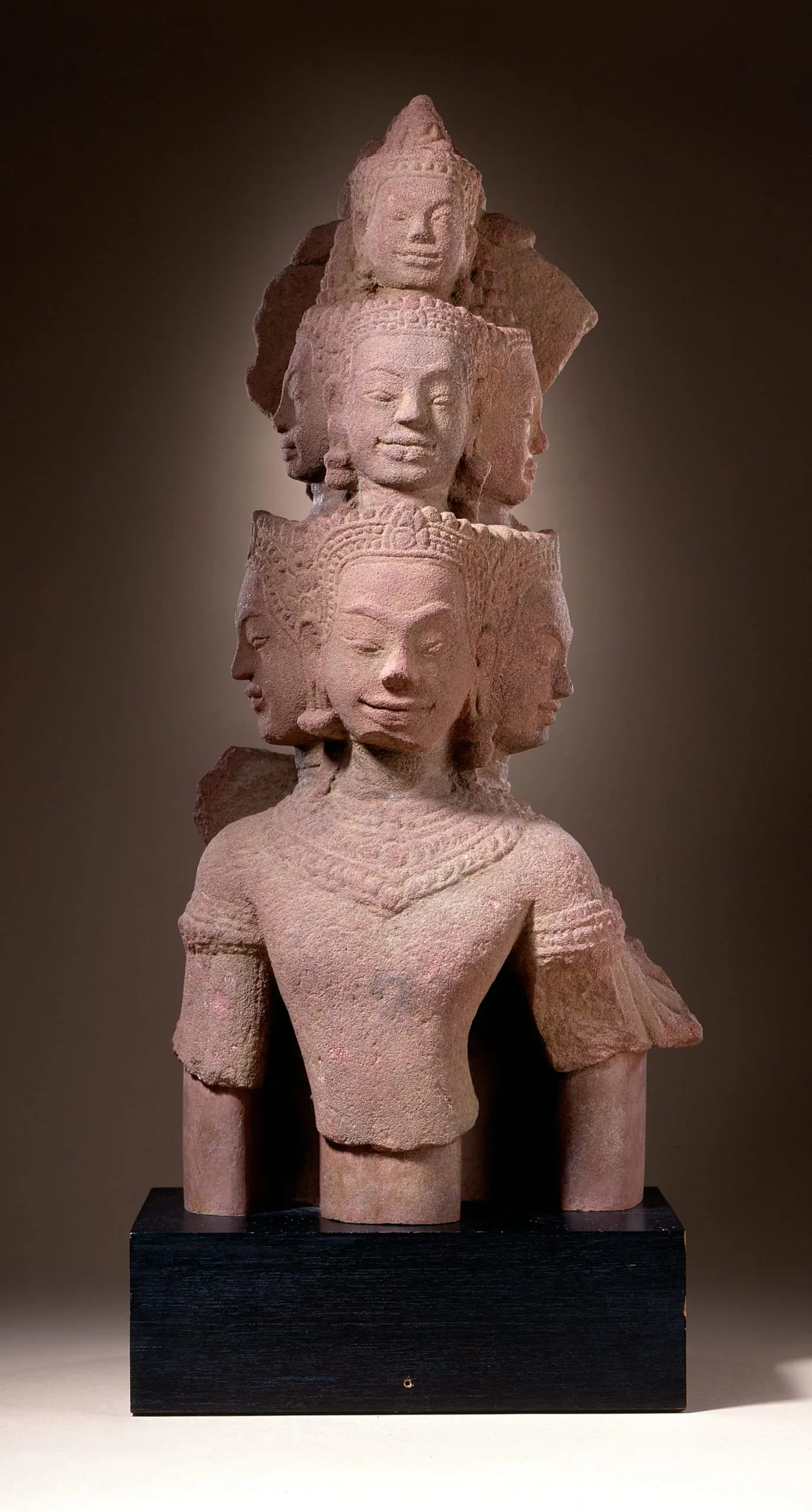
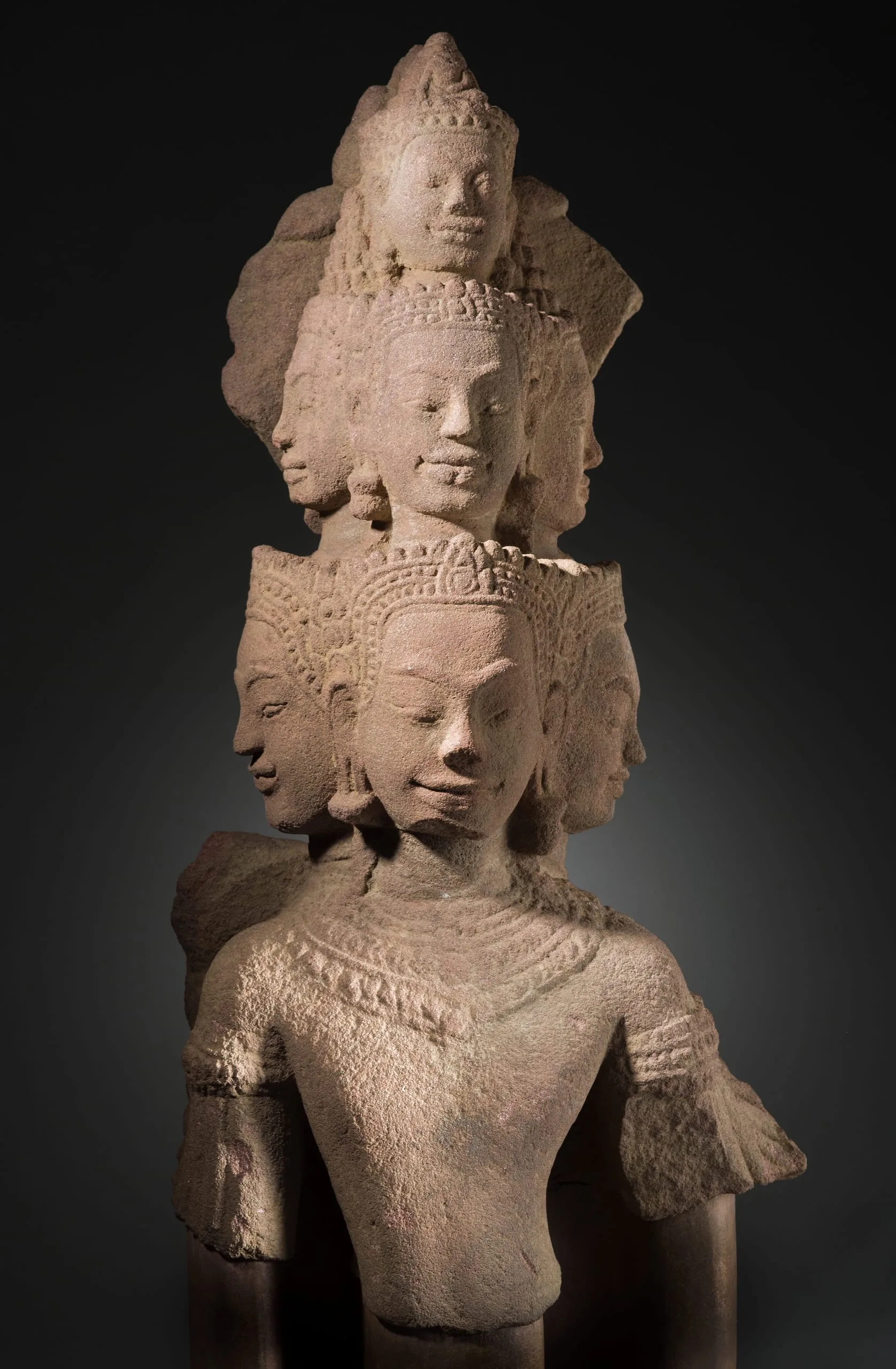
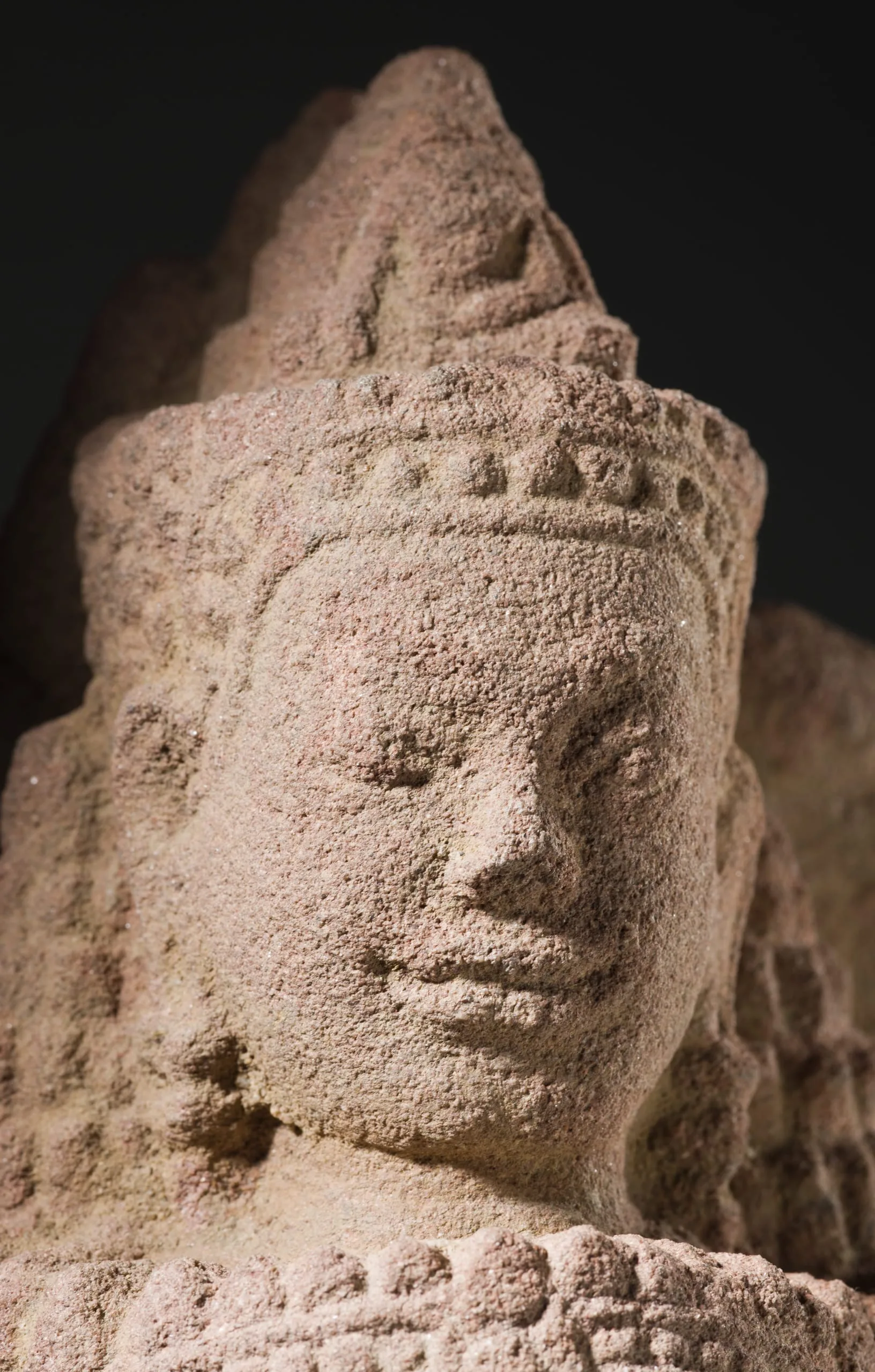
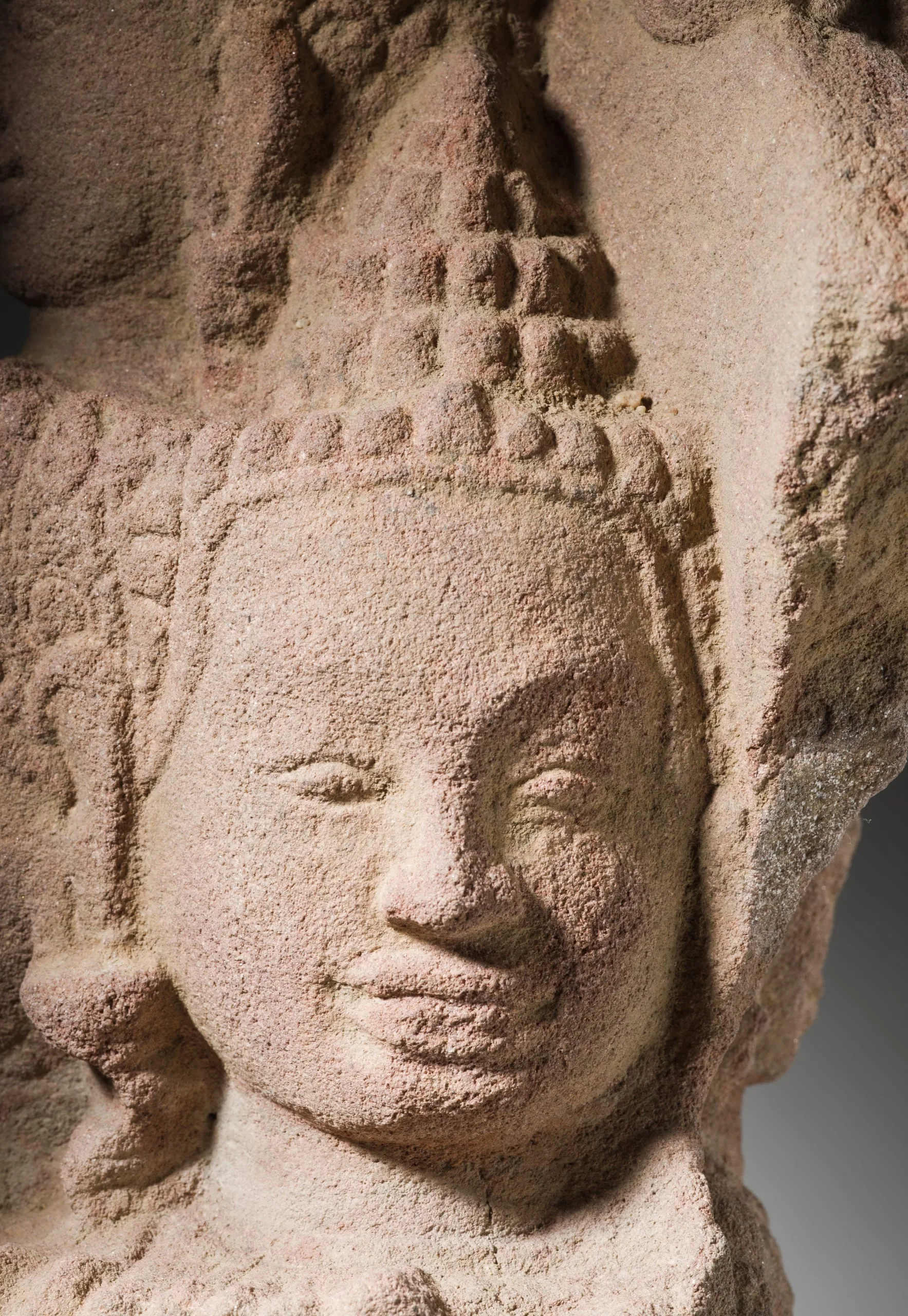
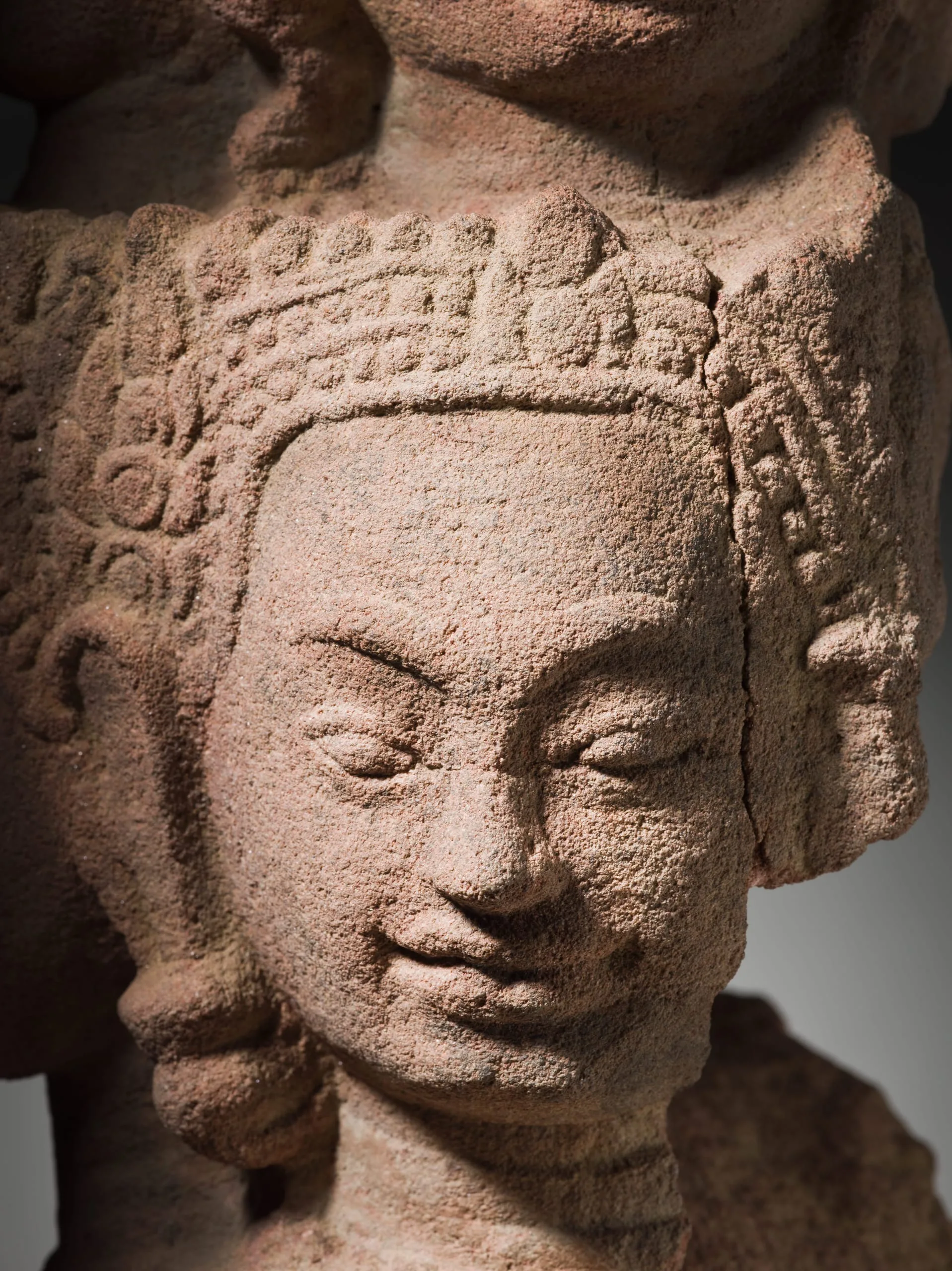
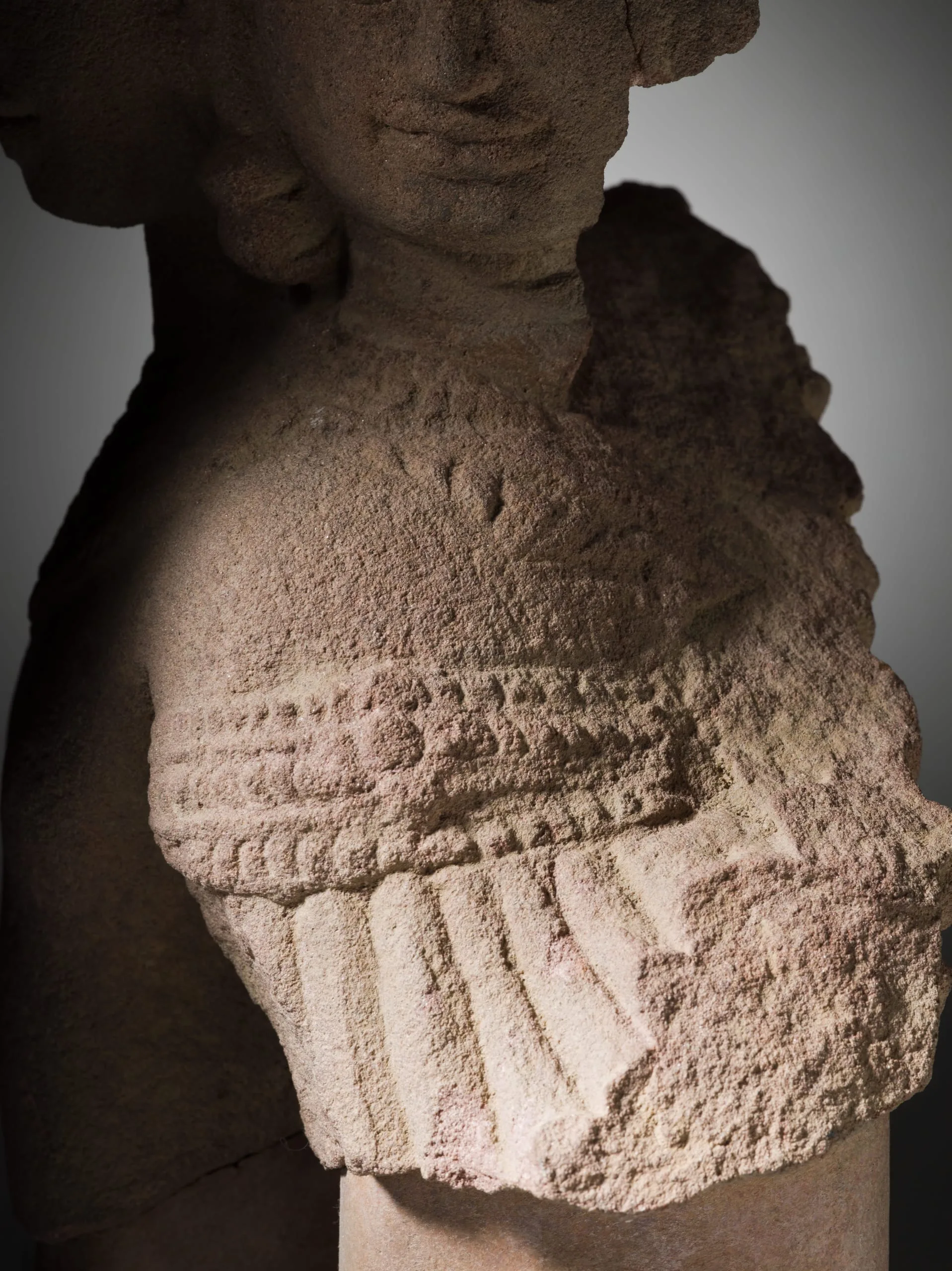
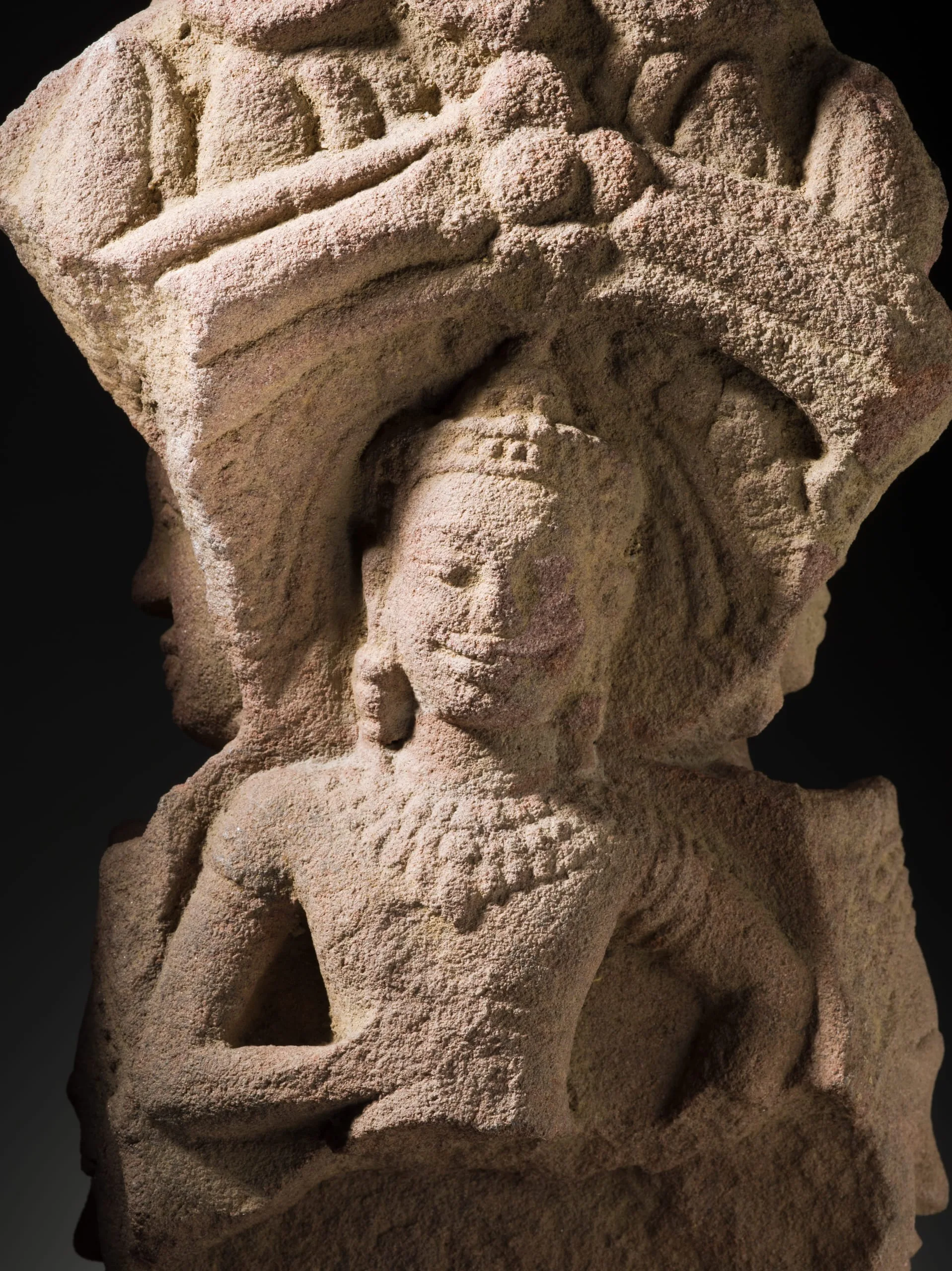
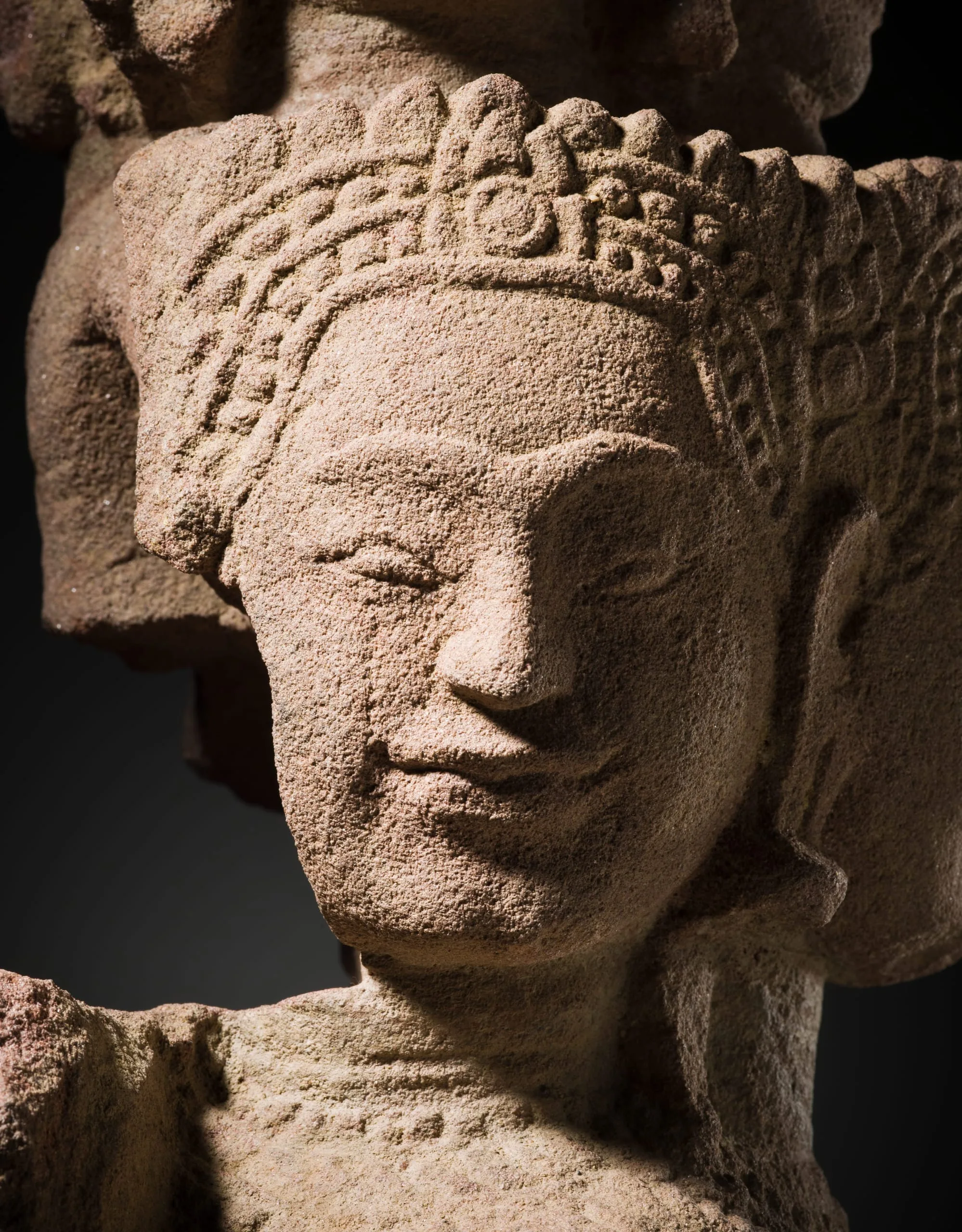
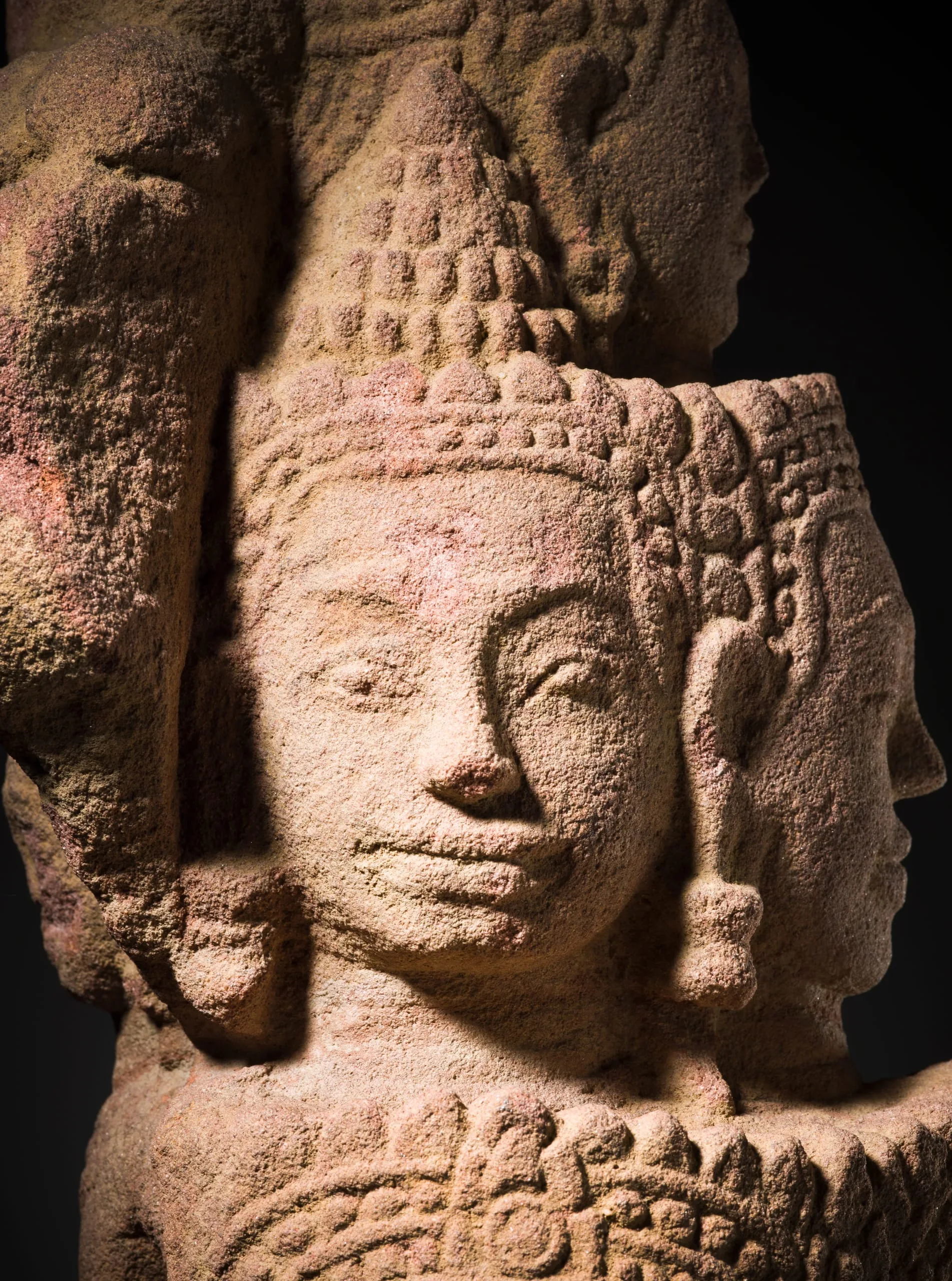
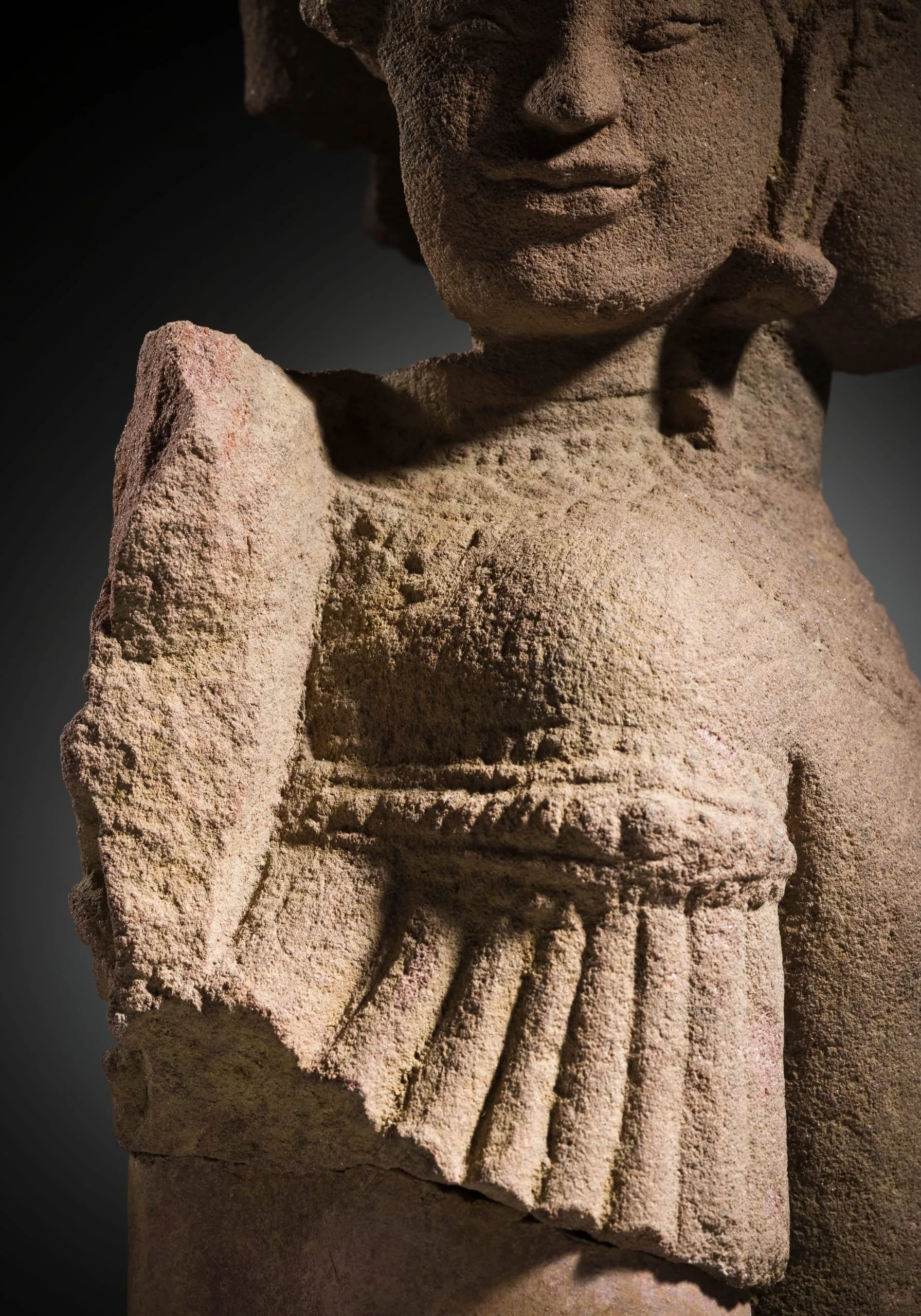
The deity Hevajra is associated with the esoteric form of Buddhism known as Tantric Buddhism, the practice of which is usually associated with eastern India, Nepal and Tibet. In the 12th-13th centuries, however, Tantric Buddhism was also practiced in Burma, Cambodia, Indonesia, and areas of northeastern Thailand, which at that time was under Khmer rule. This image is a superb example of the sophisticated Khmer Tantric Buddhist images produced in this period.
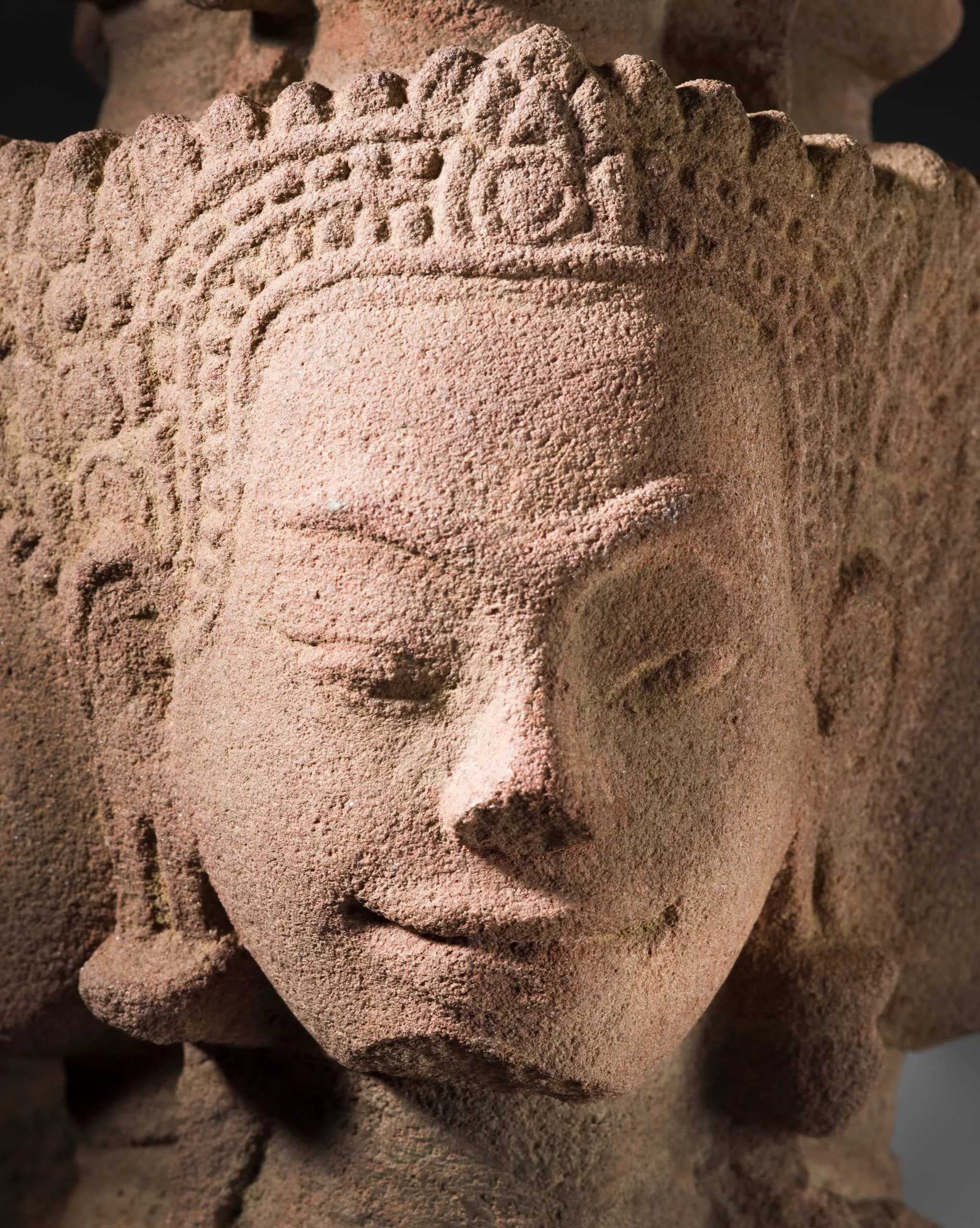
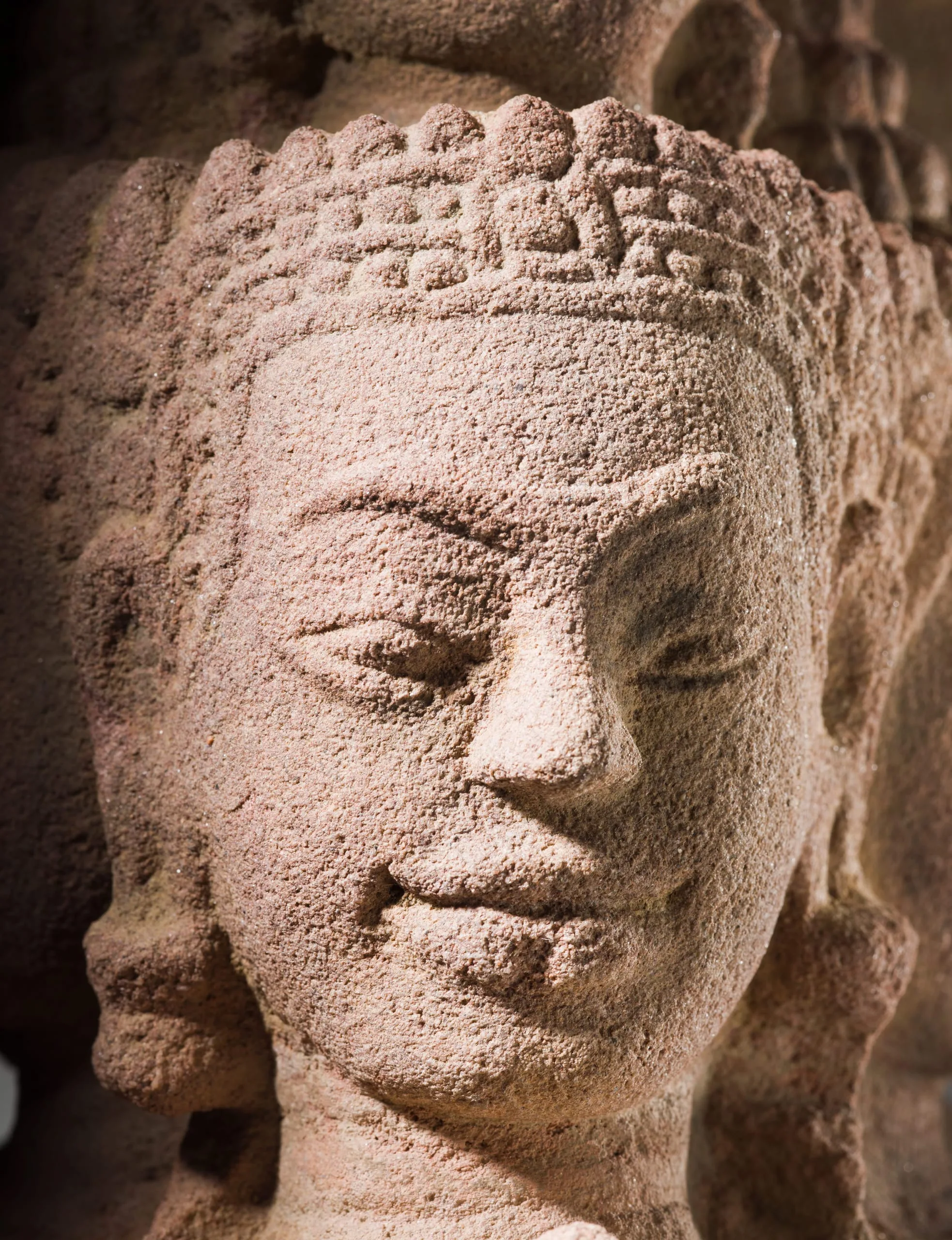
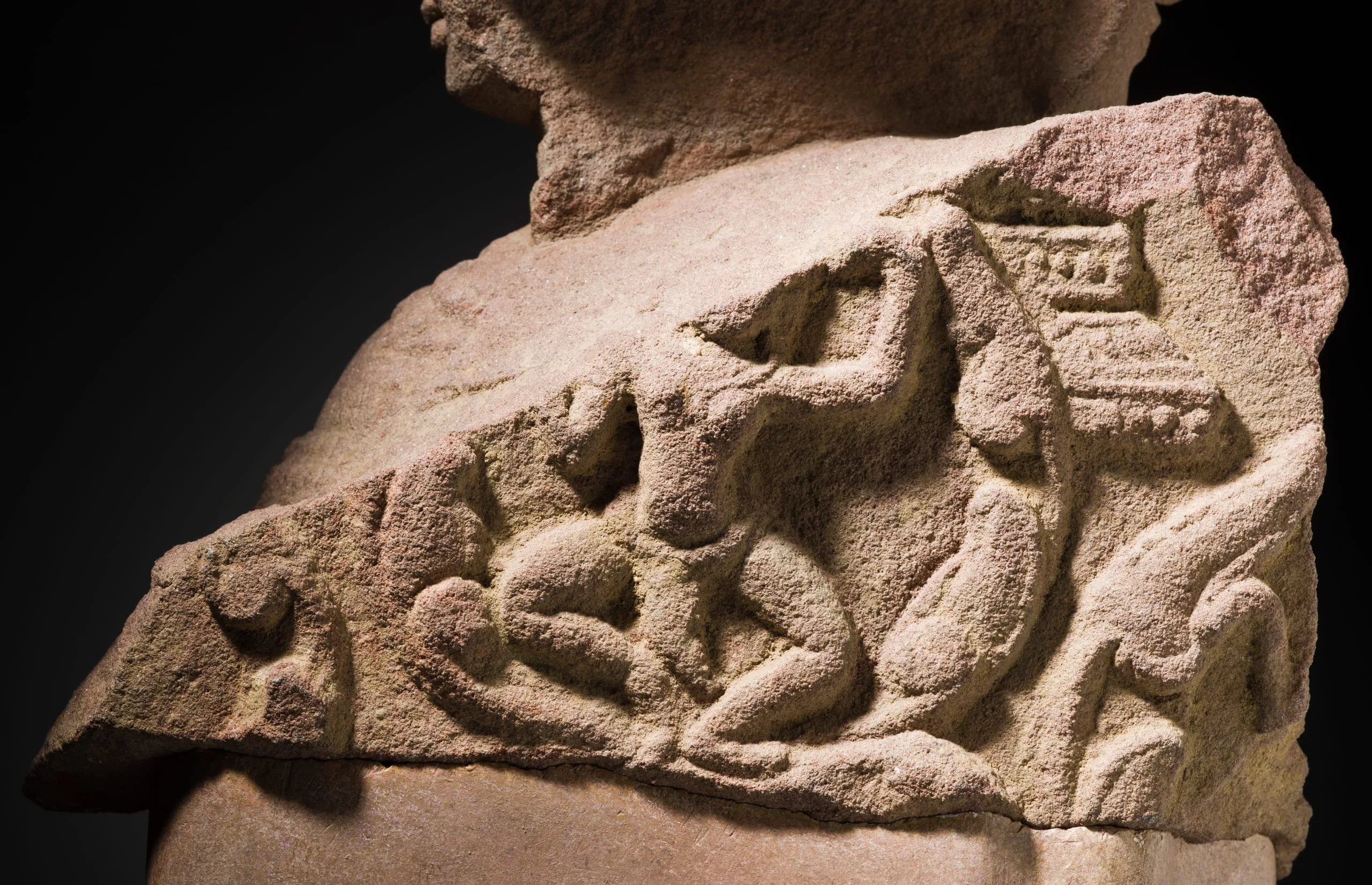
Hevajra typically has eight heads, sixteen arms, and is portrayed in a dance pose. This image has seven faces with the eighth perhaps being understood. A small once seated figure of Vajrasattva or Vajrapani is carved on the reverse above a dancing female who is perhaps a yogini.