- Title
- Bhaishajyaguru, The Medicine Buddha
- Date Made
- 18th century
- Medium
- Copper alloy
- Dimensions
- 10 1/2 x 4 3/4 x 2 3/4 in. (26.67 x 12.07 x 6.99 cm)
- Accession Number
- M.80.228.3
- Curatorial Notes
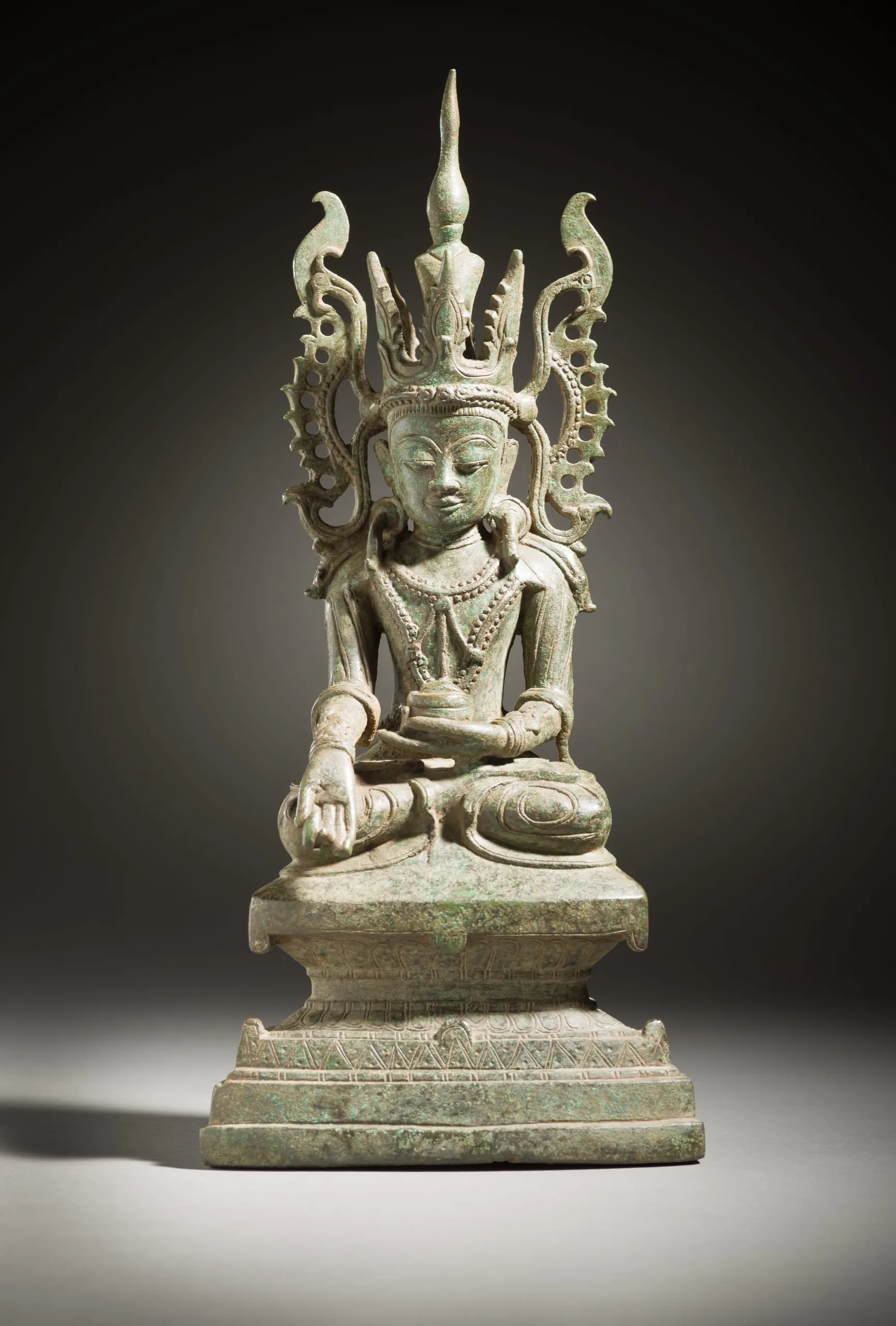
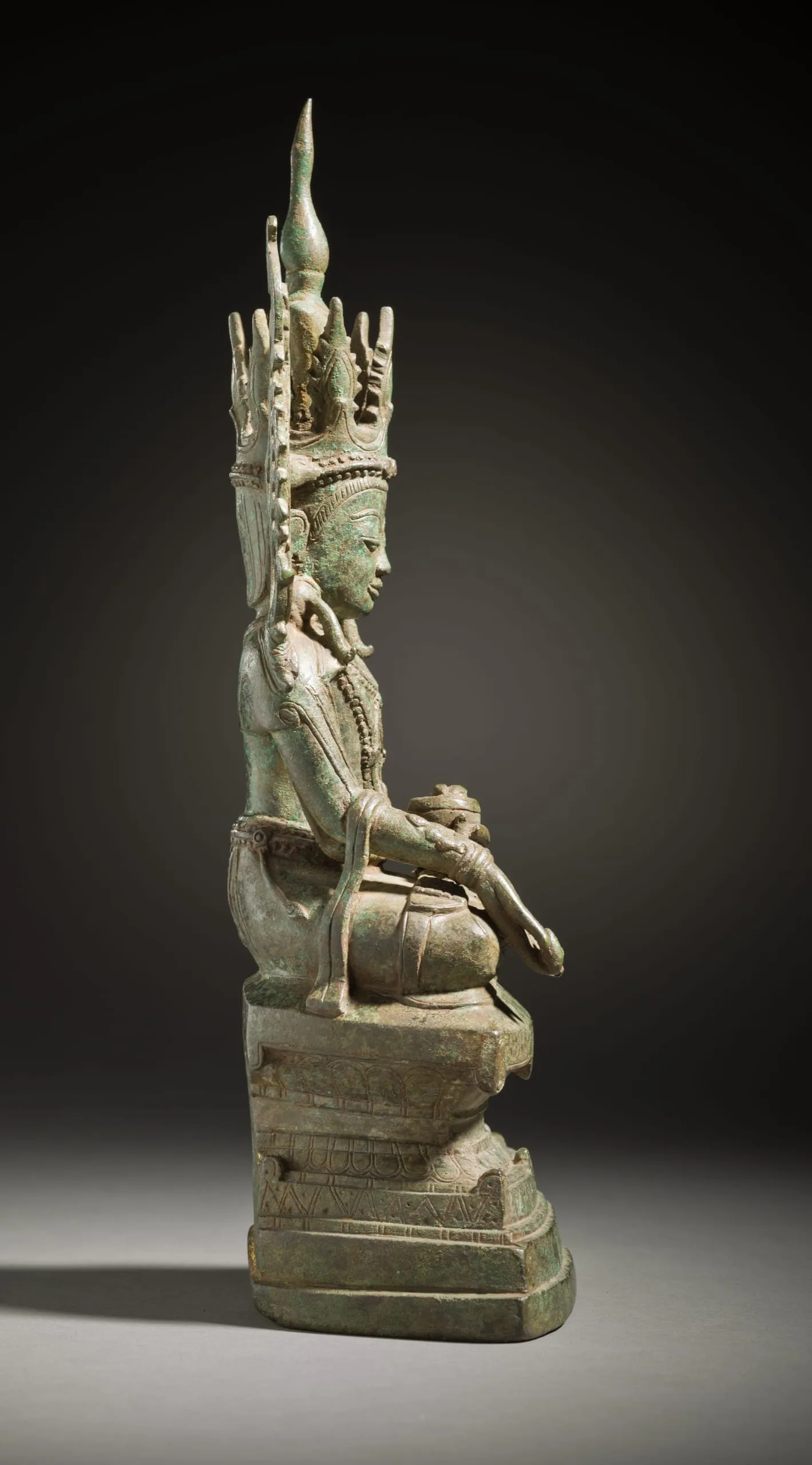
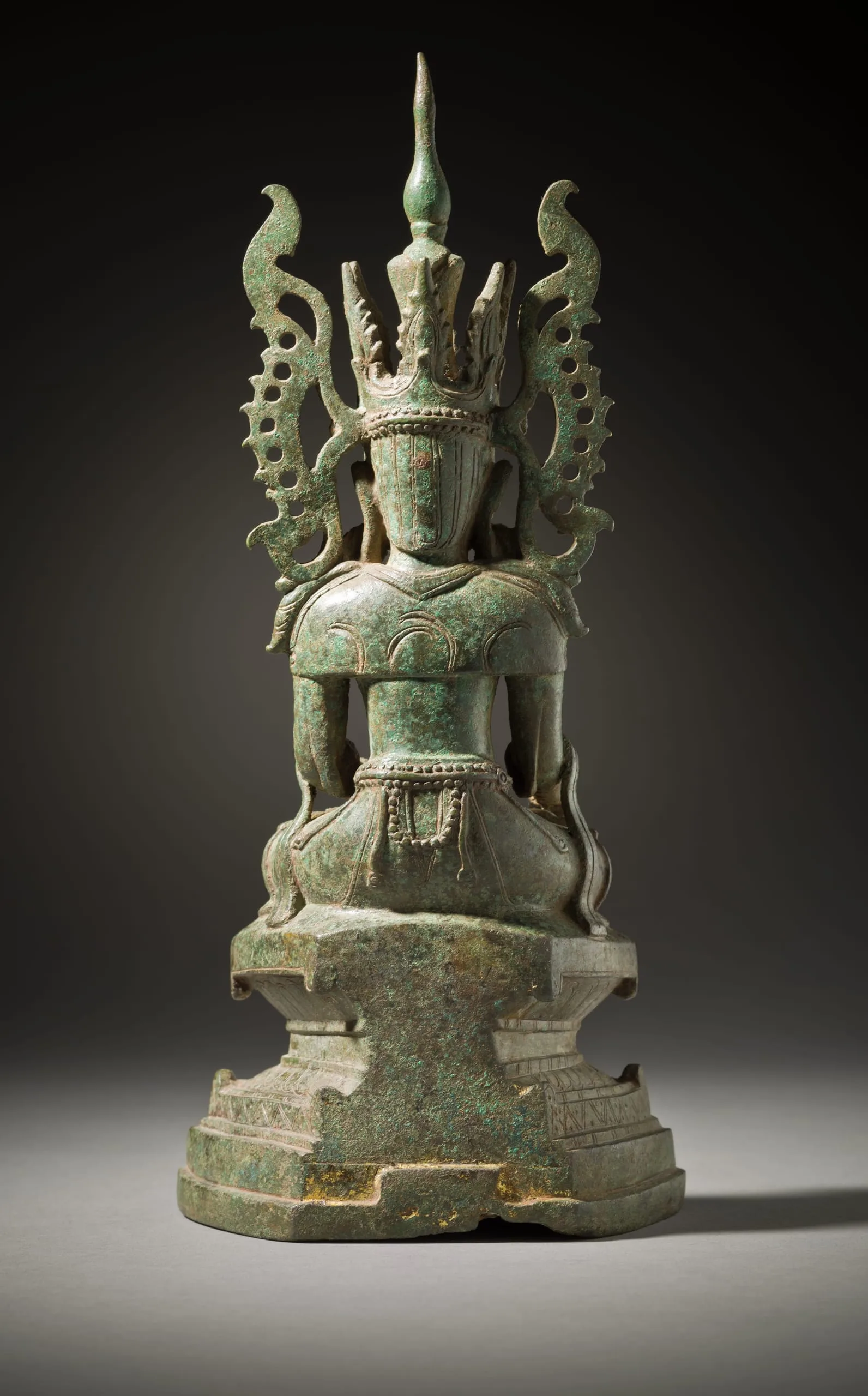
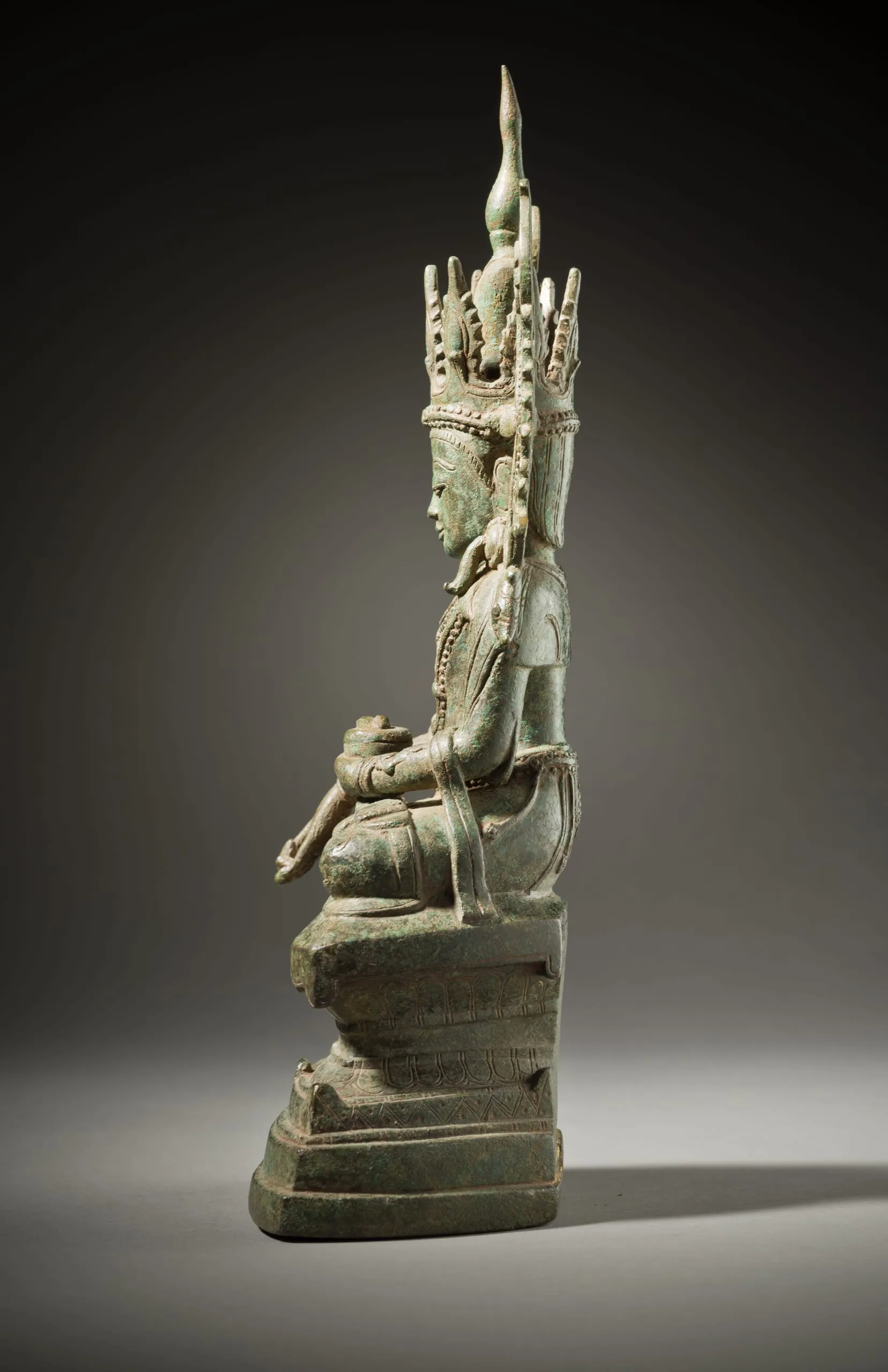
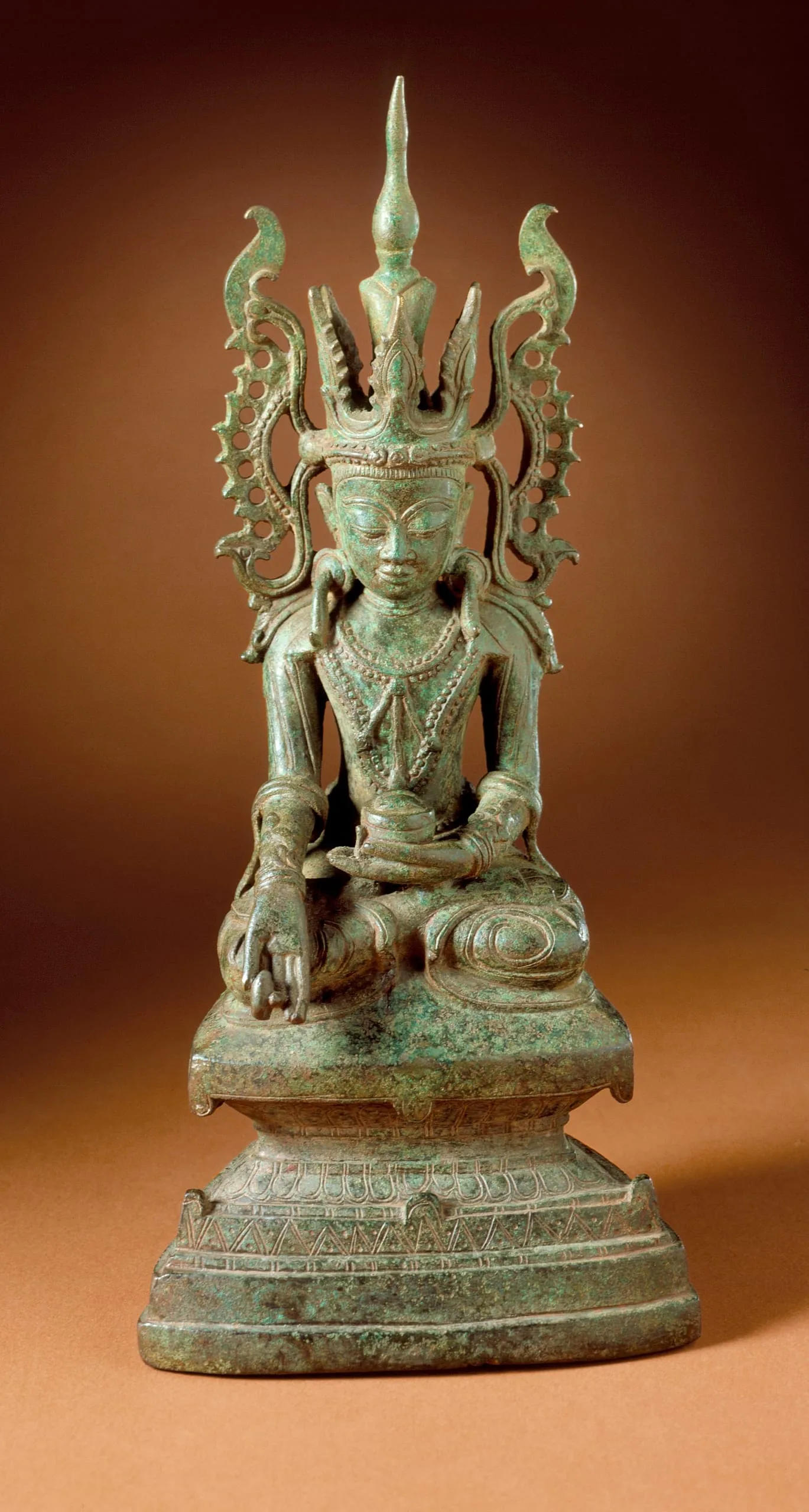
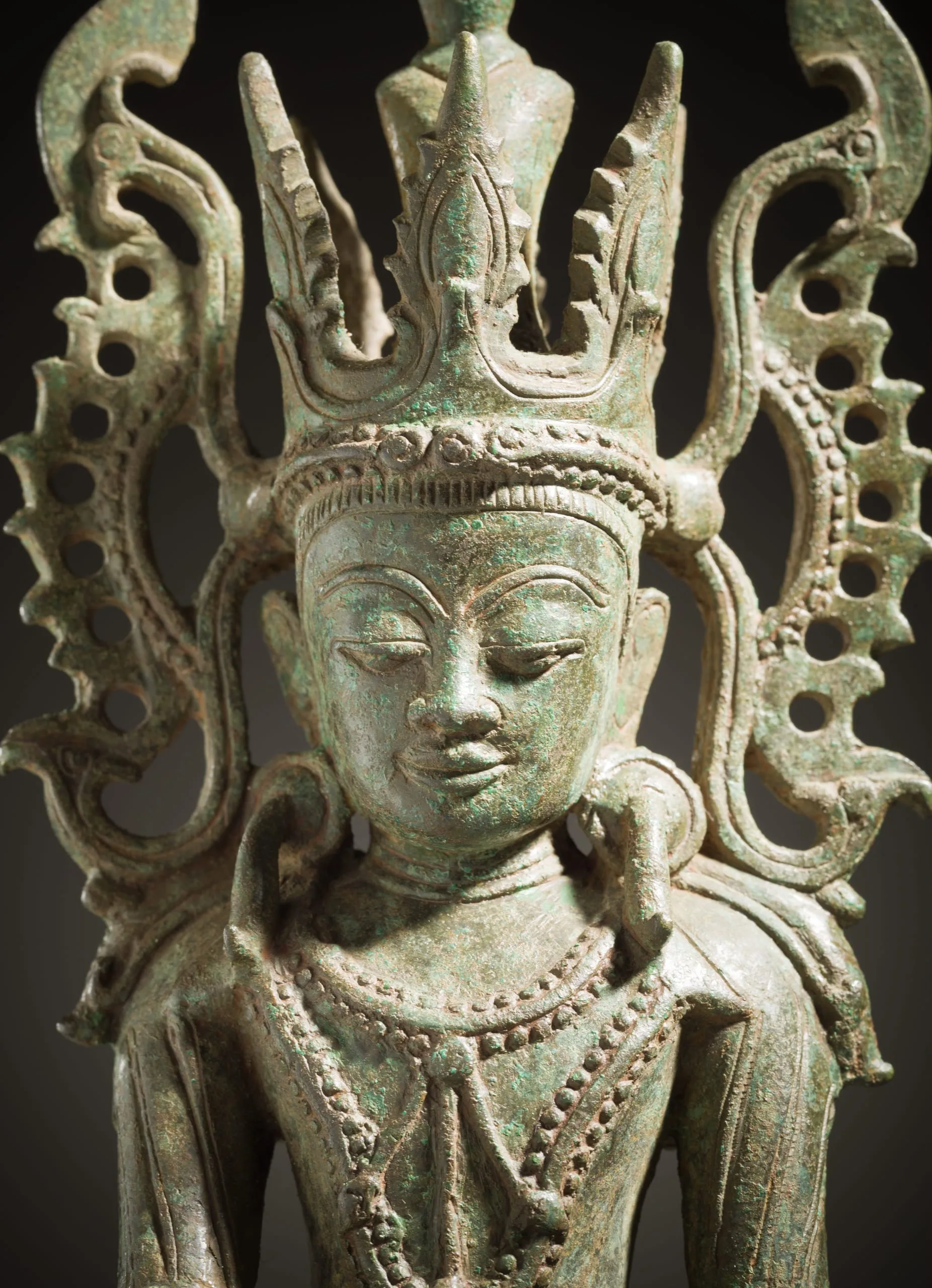
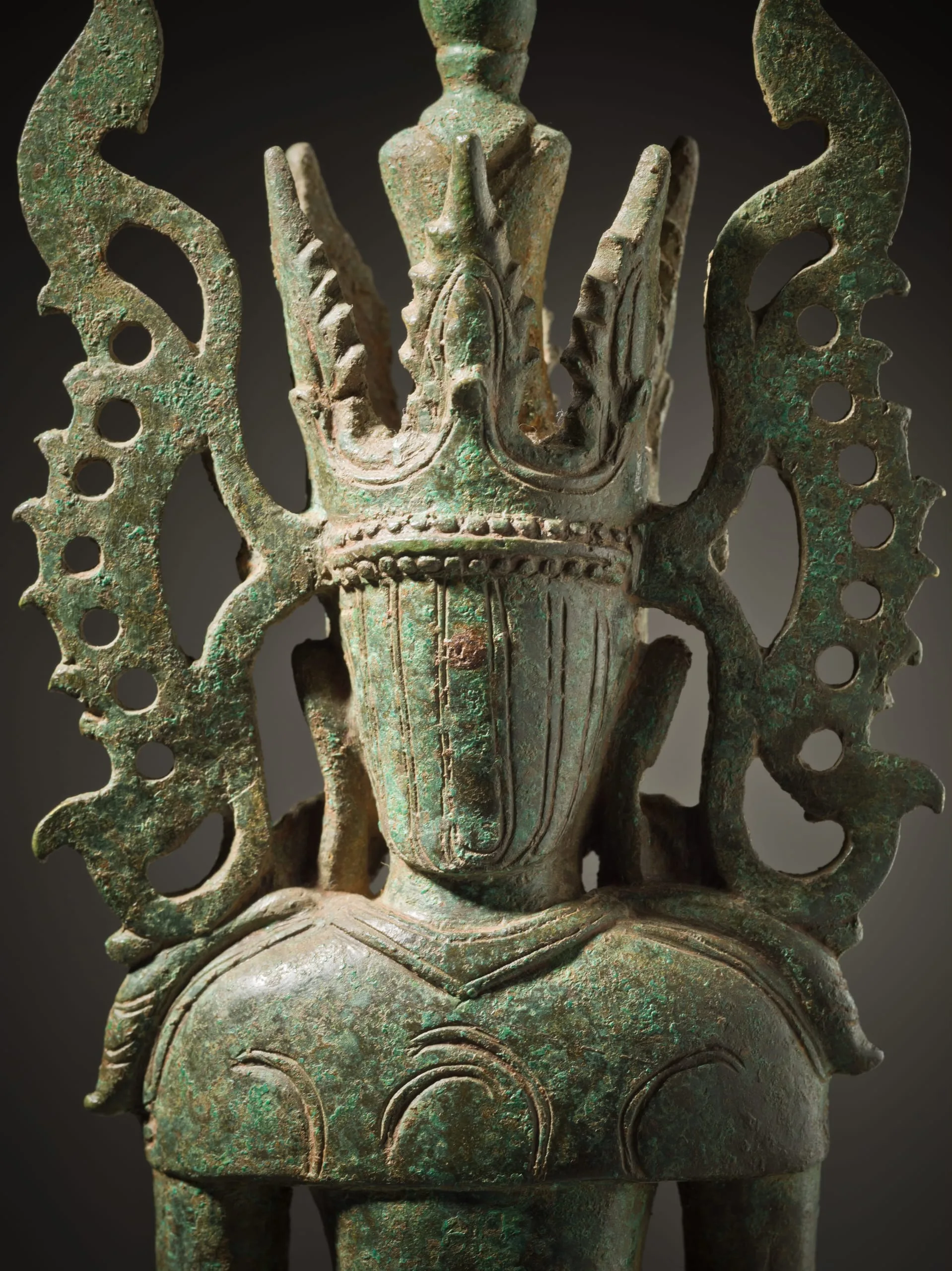
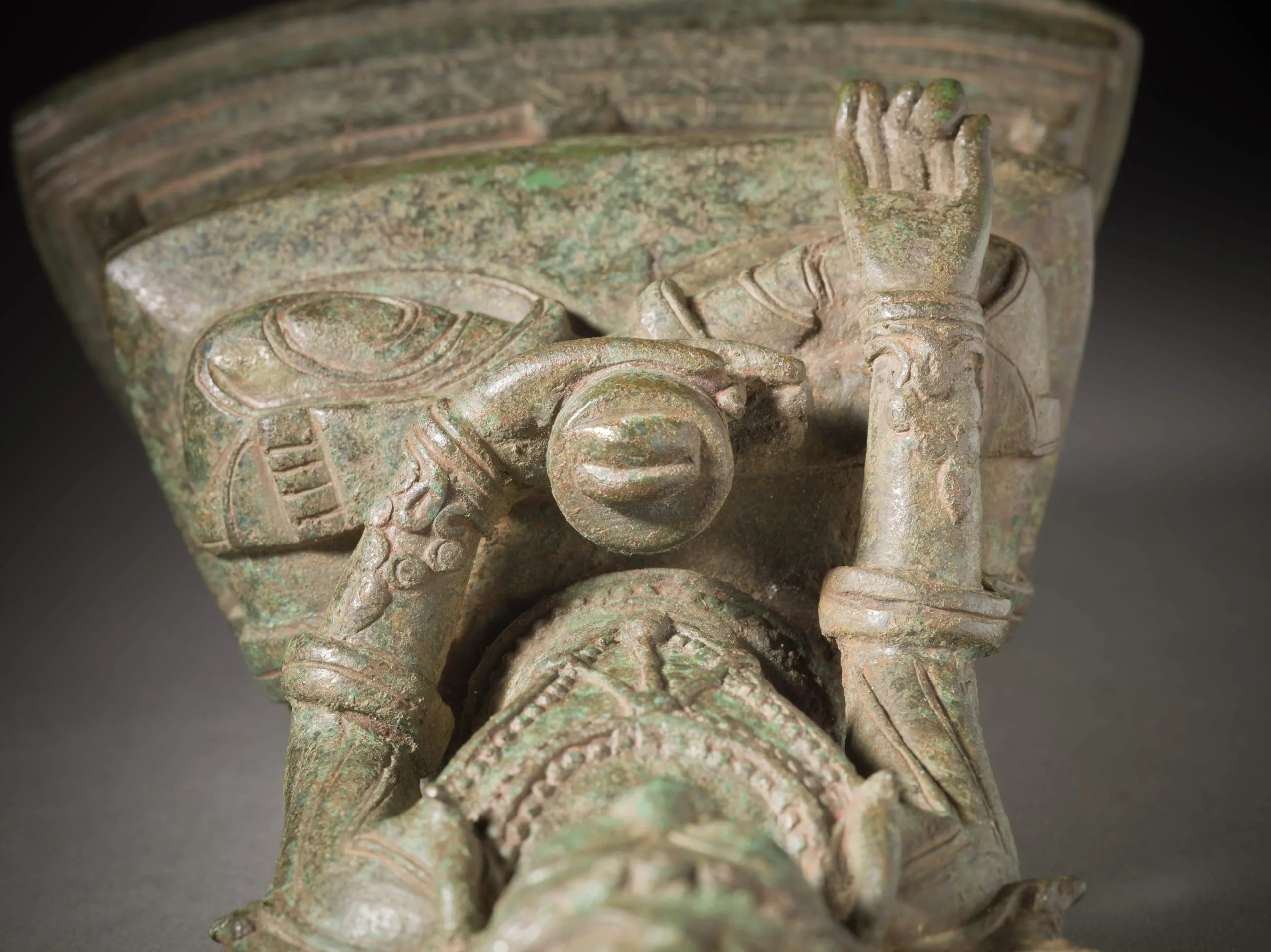
This bronze sculpture represents Bhaishajyaguru, the Medicine Buddha. He holds a medicine bowl (patra) in his left hand displaying the gesture of meditation (dhyana mudra). His right hand holds a myrobalan fruit, which is believed to have medicinal properties. The Buddha is adorned with copious jewelry and wears a distinctive crown composed of a circlet of openwork foliate appendages with a high chignon and jewel finial. The stylized crown form is said to be derived from the flowing ribbons attached to crowns in the Pala Dynasty of Eastern India (750–1161) and, thence, the art of Bagan (Pagan), Burma in the 9th-13th centuries. Crowned seated Buddhas of this type are popularly called Jambupati (Lord of the Rose Apple) in Burma and Thailand. Unknown in Indian sources, it relates to the story of the skeptical Indian king Jambupati who the Buddha awed and converted by manifesting in the sumptuous royal garb of a Universal Monarch (chakravartin). He is seated on a throne in the form of lotus base and multitiered pedestal. The structure of the throne is similar to that of M.78.129.
A comparable image is in the British Museum, London (1969,0211.1).
- Selected Bibliography
- Pal, Pratapaditya; Dehejia, Vidya; Slusser, Mary Shepherd; Fisher, Robert E.; Brown, Robert L. Arts of Asia 15 (6): 68-125 (November- December 1985).
- Brown, Robert L. 2013. Three wood Buddha sculptures from Myanmar (Burma) in the Los Angeles County Museum of Art. Artibus Asiae 73(1): 219-29.
Brown, Robert L. Southeast Asian Art at LACMA: An Online Scholarly Catalogue. Los Angeles: Los Angeles County Museum of Art, 2013. Accessed June 25, 2024. http://seasian.catalog.lacma.org/.
- Xingyun, editor. Encyclopedia of Buddhist Arts. Los Angeles: Buddha's Light Publications USA, 2018.
- Little, Stephen, Tushara Bindu Gude, Karina Romero Blanco, Silvia Seligson, Marco Antonio Karam. Las Huellas de Buda. Ciudad de México : Instituto Nacional de Antropología e Historia, 2018.
- Little, Stephen, and Tushara Bindu Gude. Realms of the Dharma: Buddhist Art across Asia. Los Angeles: Los Angeles County Museum of Art, 2025.