LACMA

ShopMembershipMyLACMATickets
LACMA
Los Angeles County Museum of Art
5905 Wilshire Blvd.
Los Angeles, CA 90036
info@lacma.org
(323) 857-6000
Sign up to receive emails
Subscribe
© Museum Associates 2026
  • About LACMA
  • Jobs
  • Building LACMA
  • Host An Event
  • Unframed
  • Press
  • FAQs
  • Log in to MyLACMA
  • Privacy Policy
© Museum Associates 2026
Collections

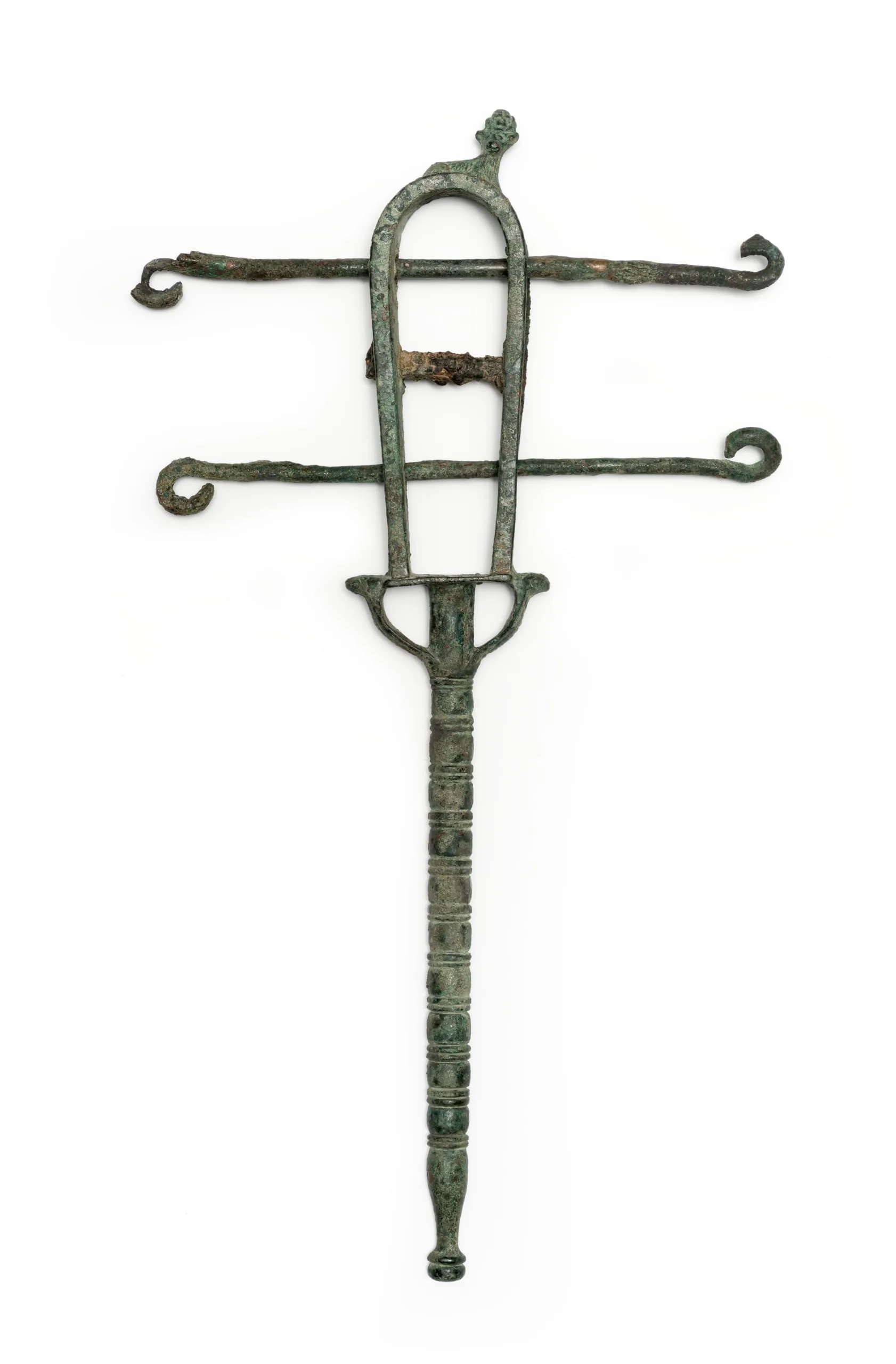
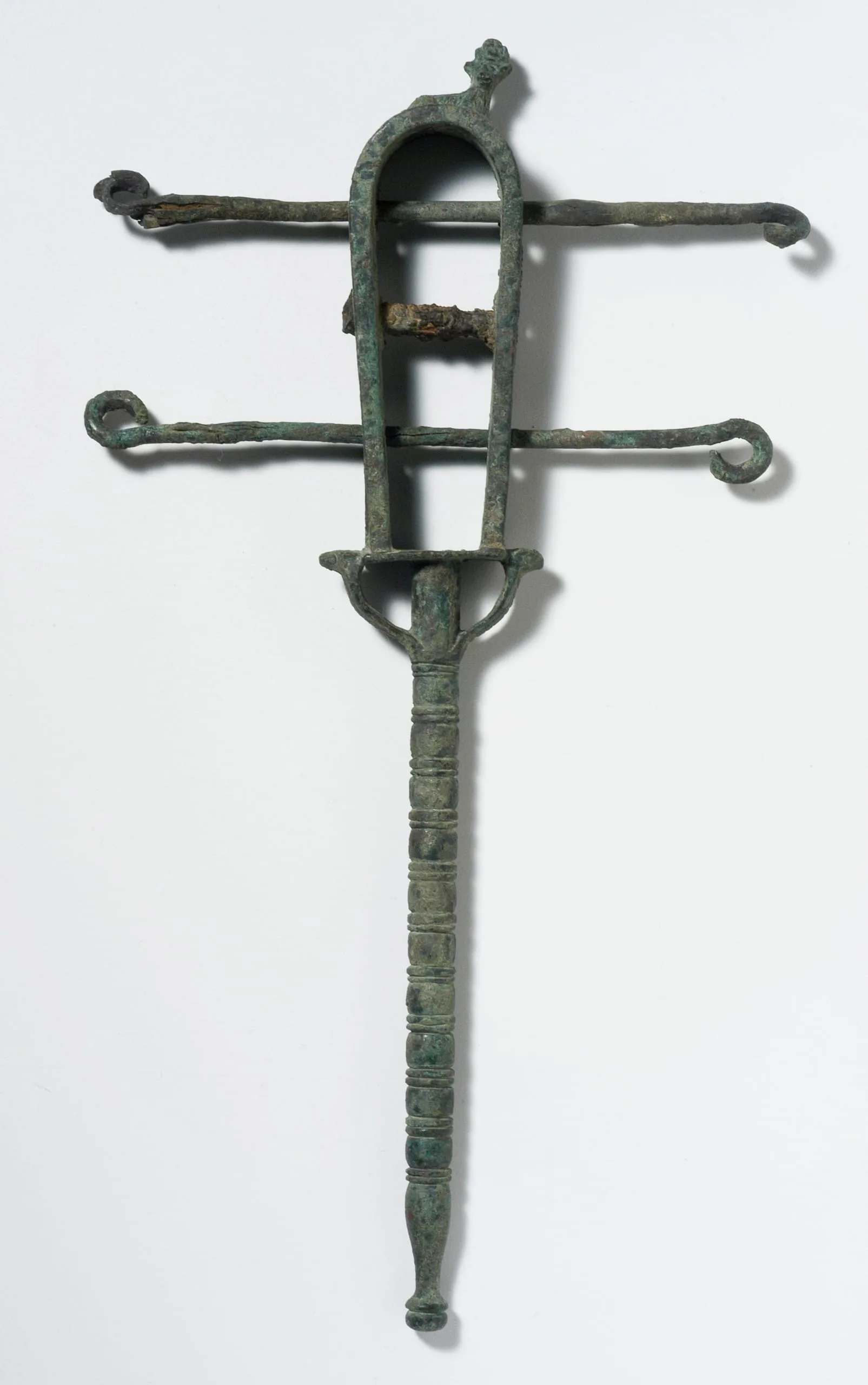
SistrumLate Period to Roman period (712 BCE–2nd century CE)

On view:
Geffen Galleries, floor 1
Bronze object with arched ladder-like frame, four curling spiral-tipped arms, and a long banded handle terminating in a knob, covered in verdigris patina
Cast bronze object with green patina, featuring a vertical shaft with a ribbed grip and two pairs of horizontal projections with coiled terminals; an arched frame at top encloses a ladder-like structure.

Unknown, Sistrum with Recumbant Cow, 664-30 BCE, Los Angeles County Museum of Art, Gift of Carl W. Thomas, photo © Museum Associates/LACMA

Title
Sistrum
Place Made
Egypt
Date Made
Late Period to Roman period (712 BCE–2nd century CE)
Medium
Bronze
Dimensions
8 3/4 × 4 13/16 × 1/2 in. (22.23 × 12.22 × 1.27 cm)
Credit Line
Gift of Carl W. Thomas
Accession Number
M.80.203.135
Classification
Tools and Equipment
Collecting Area
Egyptian Art
Curatorial Notes

Sistra were used in ancient Egypt and the wider outside world during the Roman Period as a percussion instrument, a rattle shaken during religious ceremonies to dispel evil and punctuate the observance of mystery cults such as the worship of Isis. Statues of Isis often depict her holding a sistrum. The sound elements, now lost in this example, were disklike pieces of metal threaded on the crossbars of the instrument. A common element of sistra was a recumbent cat with kittens whose head was topped with a crescent and solar disk, shown here at the top of the uppermost arc.