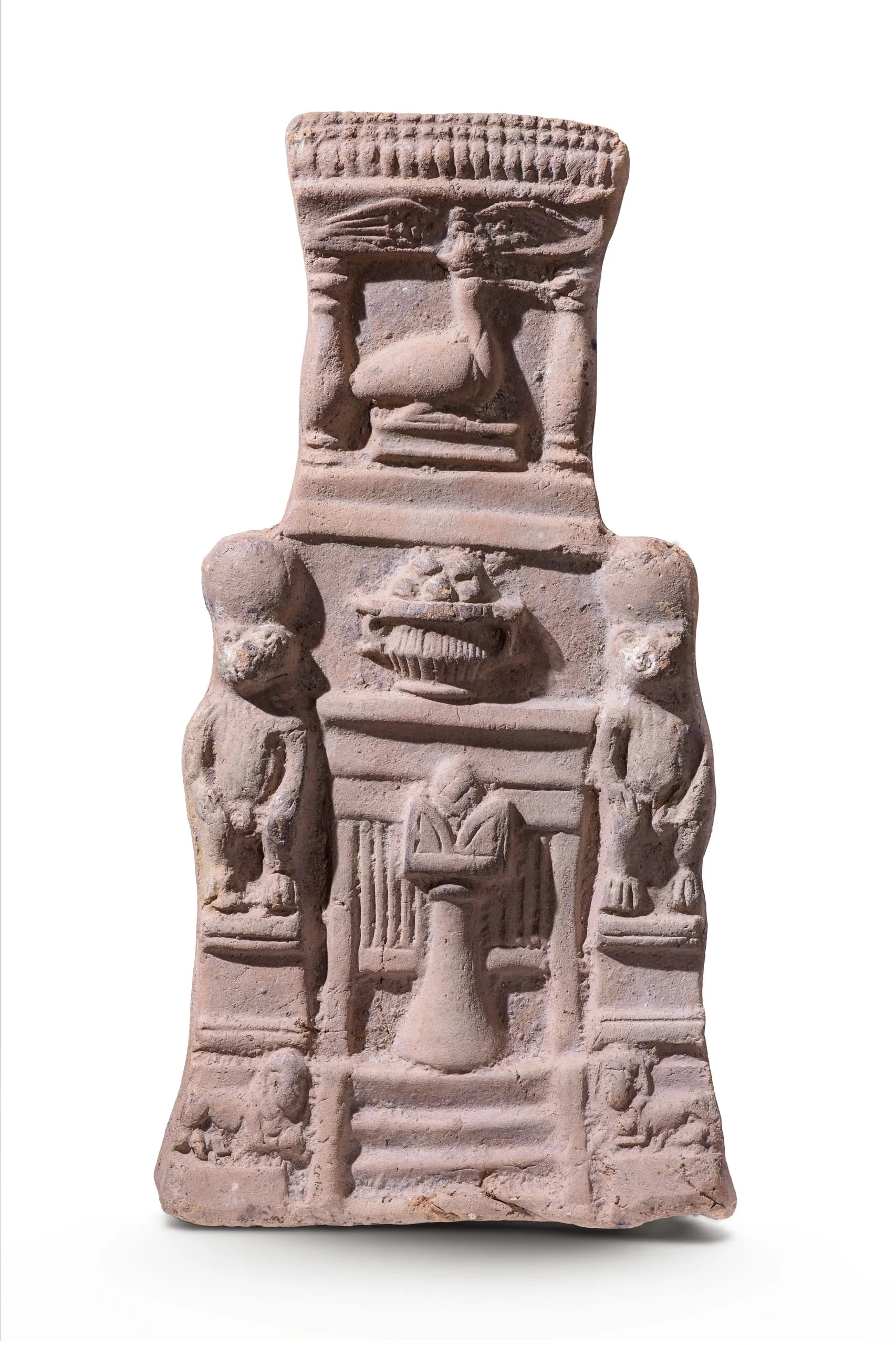
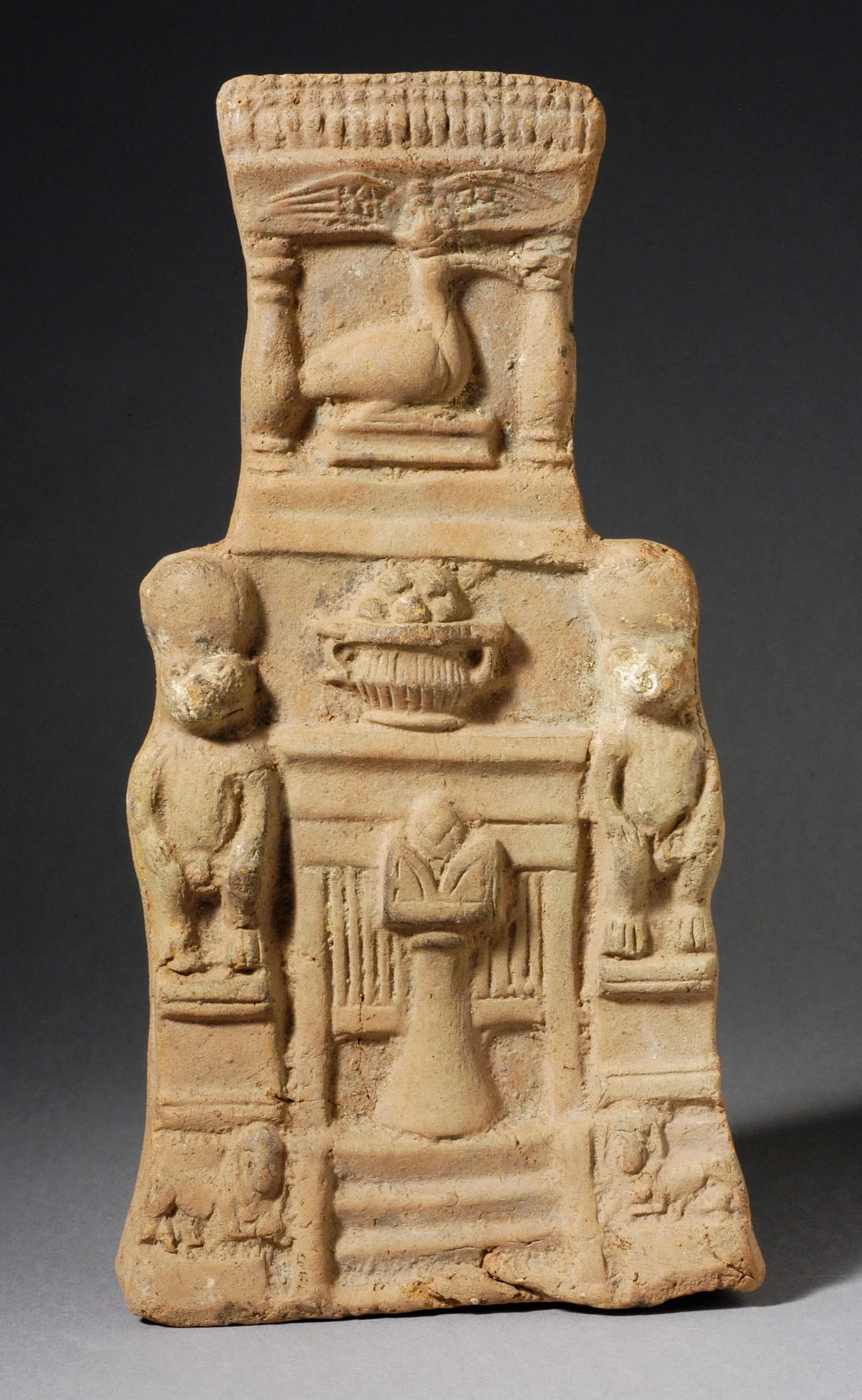
Mold-made Greco-Roman Egyptian terracottas provide valuable information to scholars documenting aspects of daily life in ancient times. Terracottas were molded of inexpensive clay and, when baked, could serve as grave goods or devotional images for domestic shrines. Some examples are believed to have been articulated toys for children. This multitiered terracotta shrine displays complex imagery. At the top, a birdlike creature, possibly the god Thoth, sits within a columned shrine topped with a uraeus frieze. On the stepped shrine below are a central element of a pedestal with offerings and a vessel holding fruit. To either side, seated figures with hands on knees, possibly baboons topped with a sun disk, act as witnesses. At the base of each seated figure, a recumbent animal, likely a cat with kittens, reclines adjacent to the steps. The iconography is difficult to determine on this weathered terracotta, but the overall impact is of a votive image reflecting the blended religion of this period.