- Title
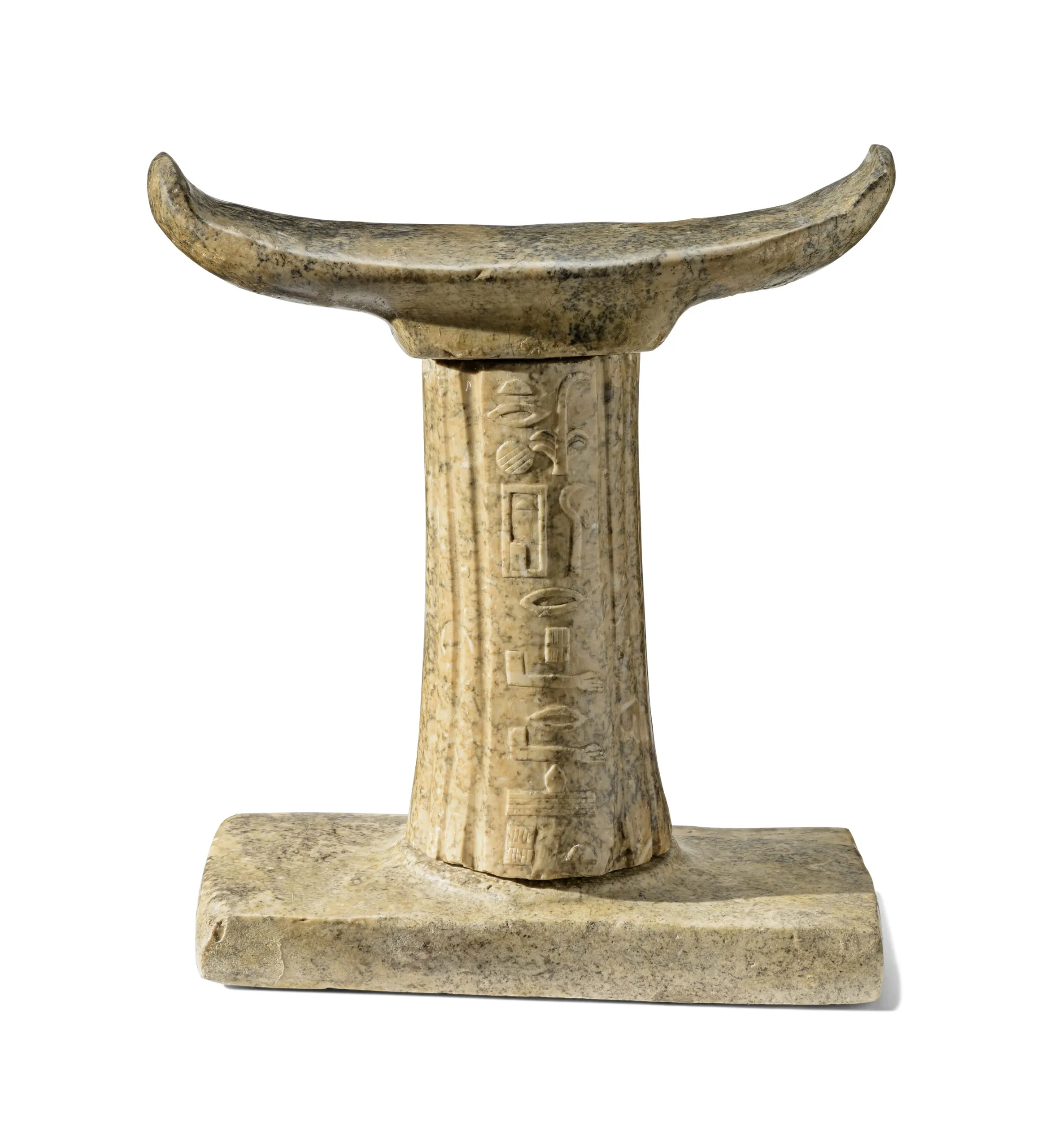
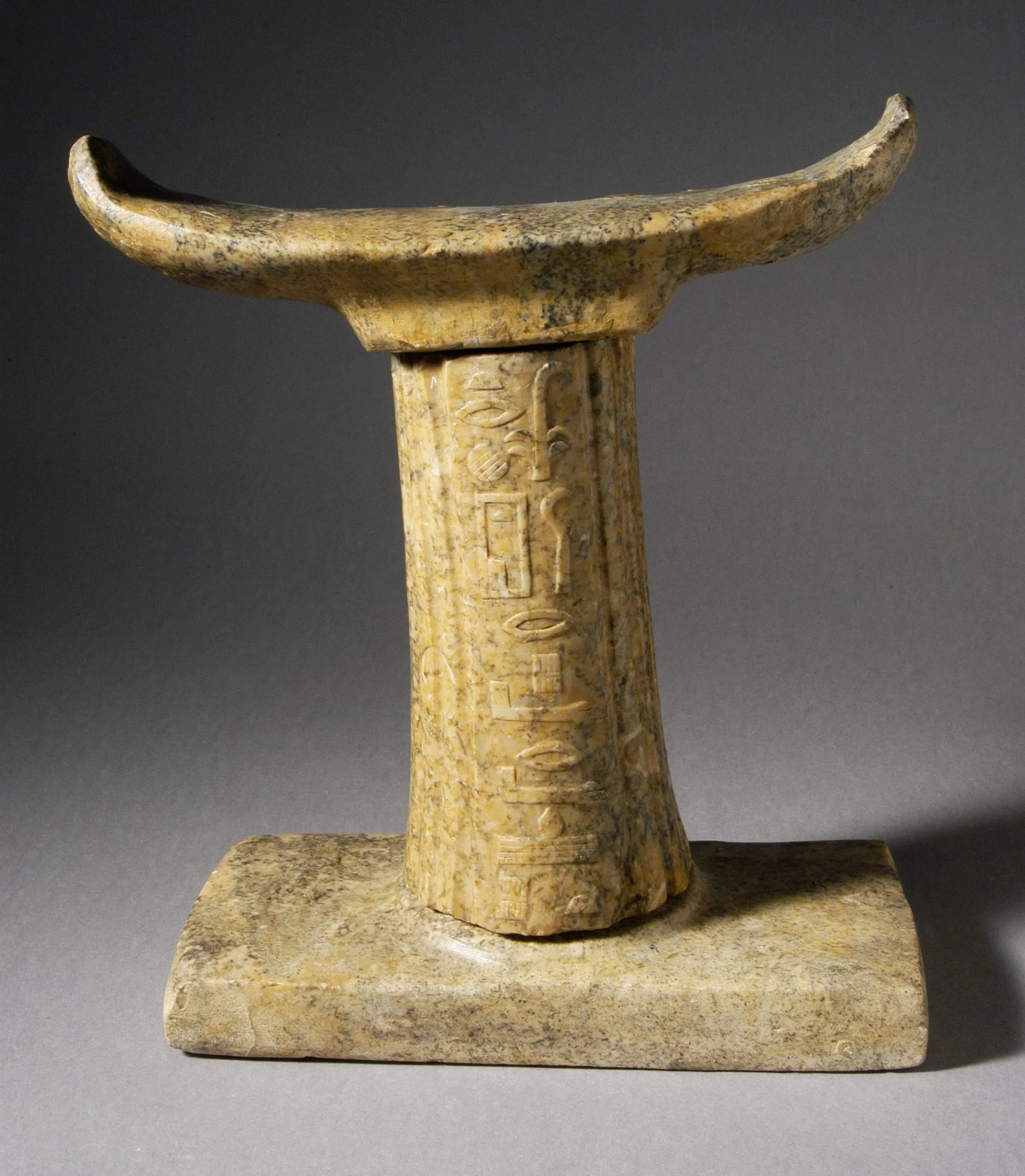
- Funerary Headrest
- Date Made
- Old Kingdom (2543-2120 BCE), 5th dynasty (2435-2306 BCE)
- Medium
- Granite
- Dimensions
- Diameter: 6 5/8 in. (16.83 cm)
Height: 7 1/2 in. (19.05 cm)
- Accession Number
- M.80.199.107
- Curatorial Notes
During the Old Kingdom (c. 25432120 BCE), stone headrests were placed in tombs to support the head of a mummy, often within a sarcophagus. Several examples have been found in the intact tombs of the Giza necropolis. The central column of this headrest bears an inscription in raised relief naming its owner and his titles: “The king’s acquaintance, the district governor, the hereditary prince, Rahotep.” During this period, stone headrests were often made in three parts, a rectangular base, a fluted stem, and a curved top, while earlier and some later examples were made from pieced or a solid piece of wood. As with many components of Egyptian tomb furniture, elements of the headrest may have had additional meaning, with the curving section of the top echoing the shape of the hieroglyph for the horizon (akhet). The horizon would be the place where the sun rises each morning, providing a reference to the tomb owner’s ongoing rebirth and eternal life.