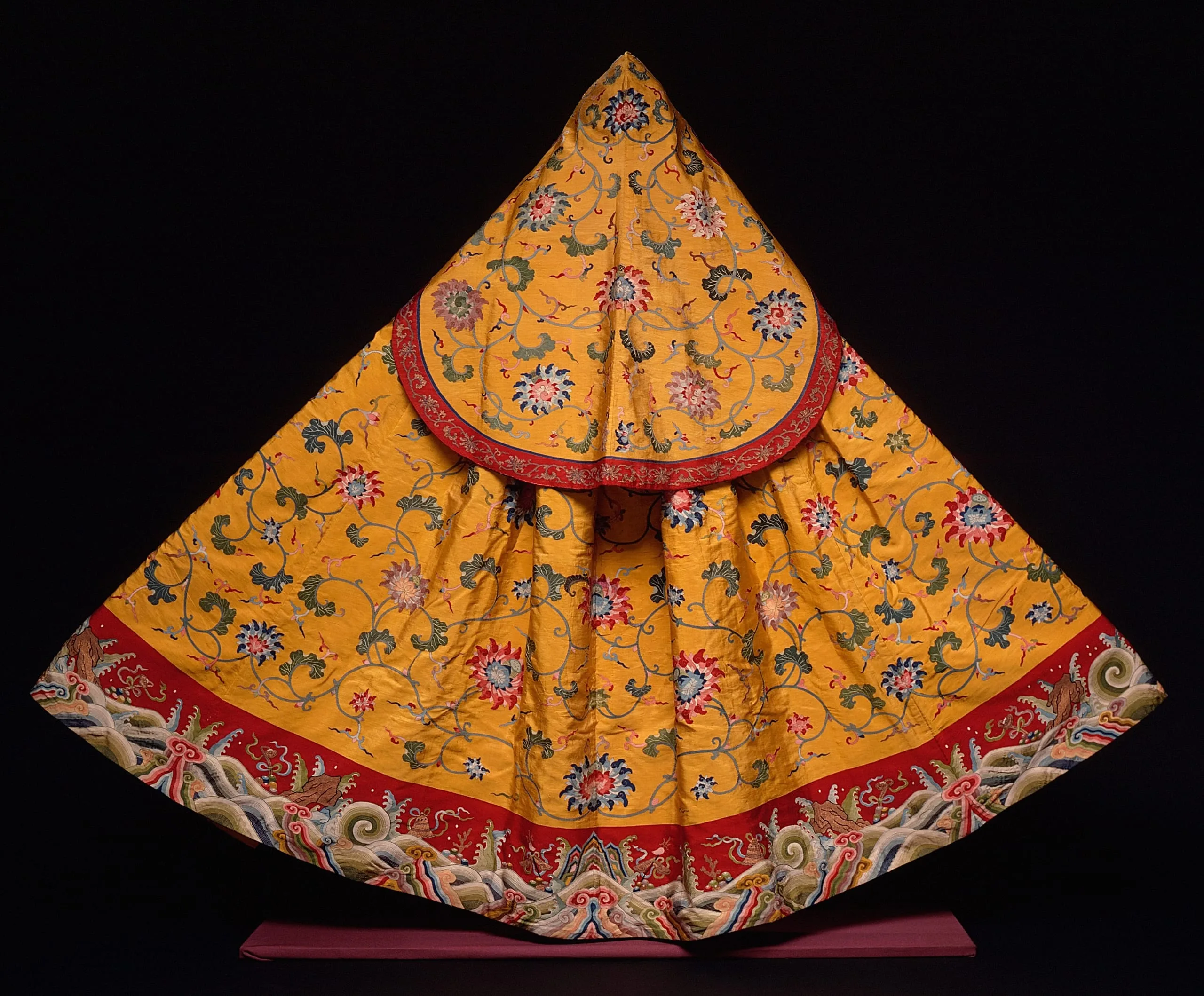
Elements of the allegorical vocabulary of Chinese ceremonial garb appear in this imperial hunting cloak, which is ornamented with some of the many traditional sacred Buddhist symbols that pervade Chinese art.
The body of the cloak is a silk tapestry fabric woven in the kesi technique. Over its ground of yellow, a color the Manchu rulers reserved for their sole use, twines a graceful, naturalistic network of many-colored lotuses, stems, and leaves. The religious and allegorical allusions of the design begin in the high collarband, where an angular interlace pattern signifies the endless knot, a symbol for Buddha, and the circular rebus incorporates characters for happiness and long life.
Two red front panels depict paired symbols (top to bottom): the wheel of the law, indicating life's endless cycle, and the conch shell, whose sound summons all to worship; the umbrella of state, for incorruptibility, and the canopy of the monarch, who shelters all living things; the sacred vase, containing the water of life, and the tree peony, for summer and prosperity; the endless knot and the paired fish, a rebus for abundance. All are linked by scrolling cloud banderoles. The wide hem border contains still more Buddhist references: waves for the cosmos, coral branches signifying riches, a mountain at the center back for the earth, flanked by castanets symbolizing good fortune.
The cape not only depicts emblems of virtue but also partakes of their power. In donning such a robe, the imperial person became invested with power in a complex interaction of magic, ritual, authority, and responsibility.