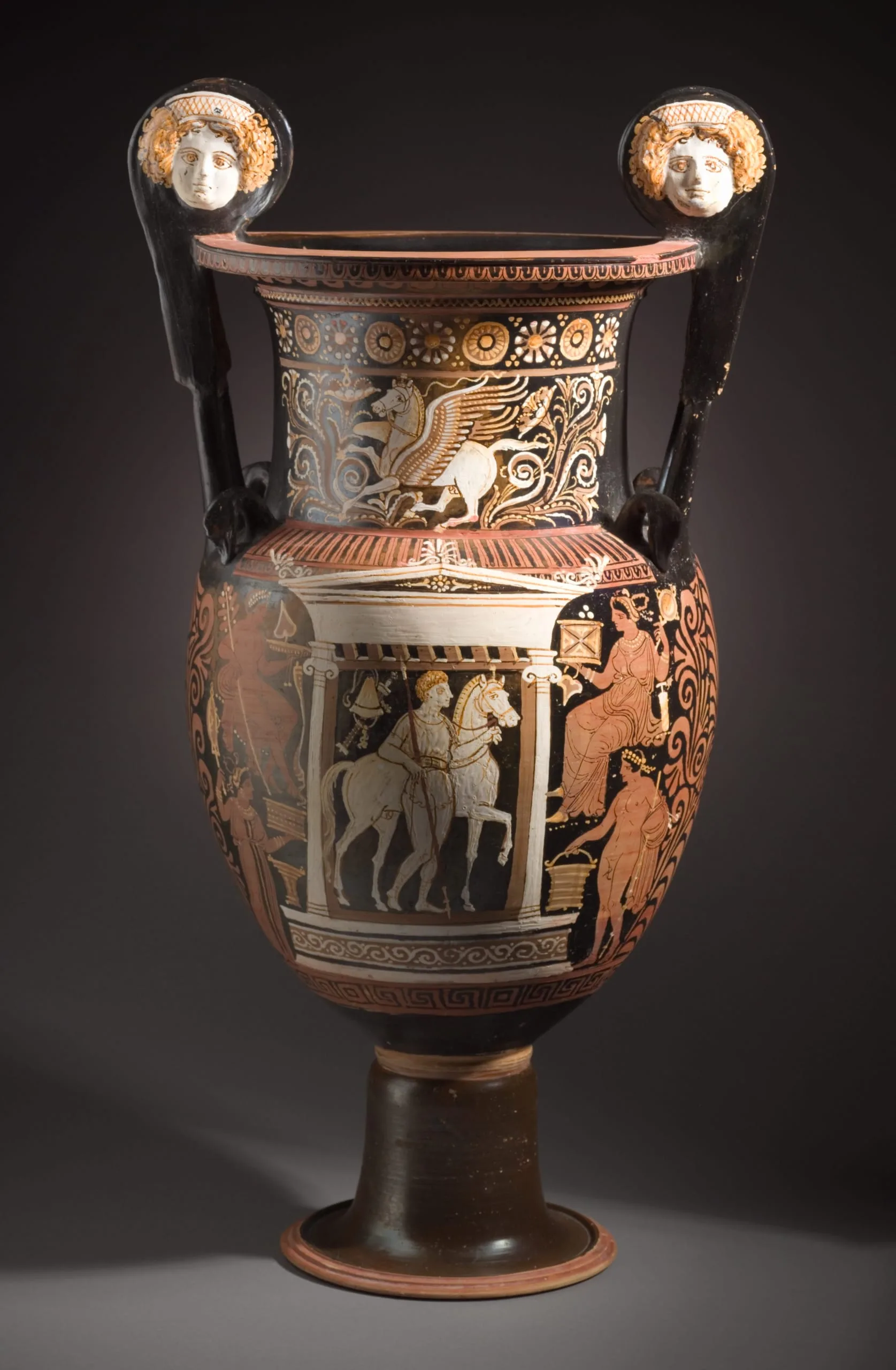
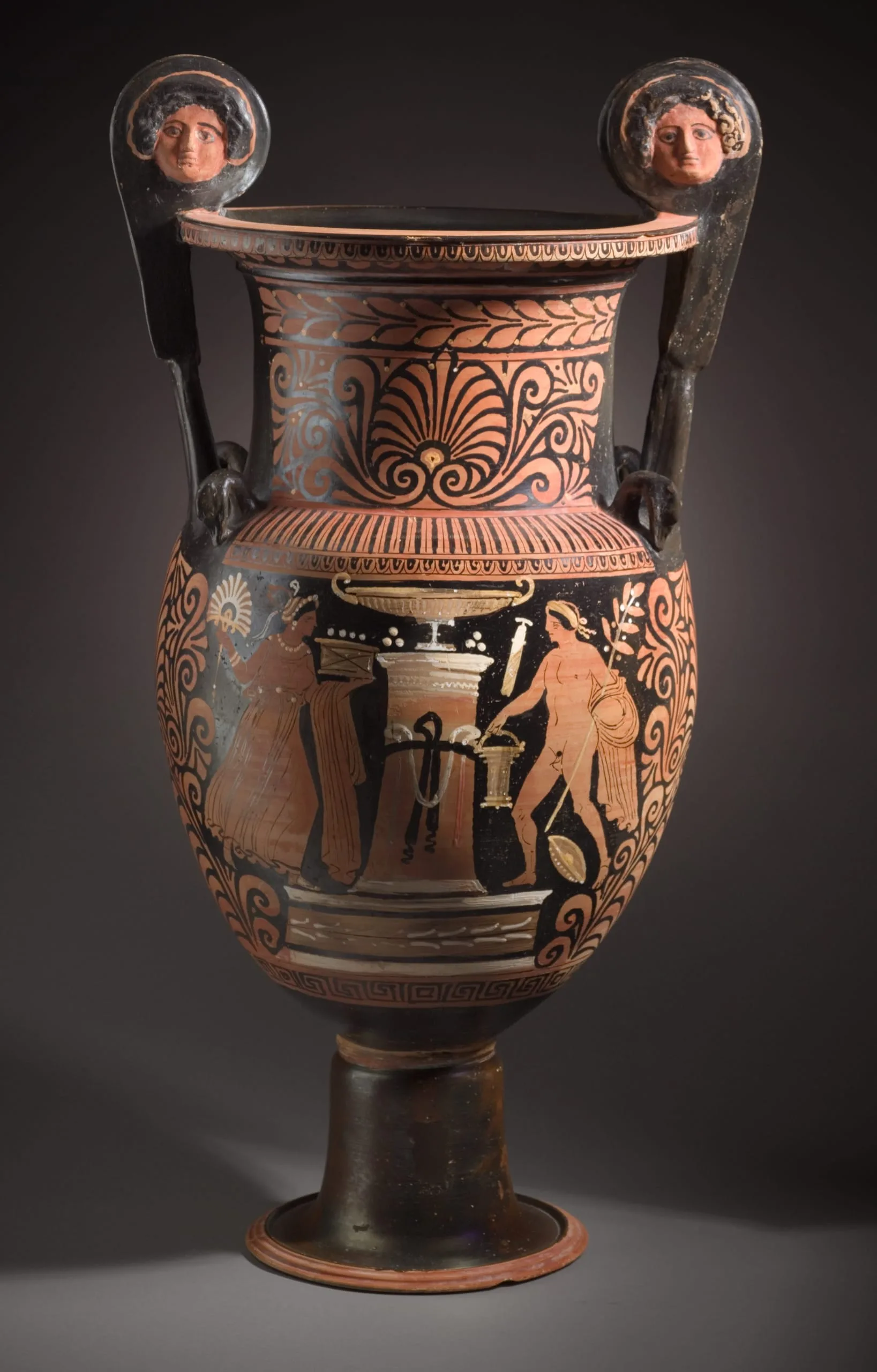
The red-figure volute-krater, named for its spiral-shaped handles, is a vessel type produced in the Apulia region in southern Italy between 440 and 300 BCE. The monumental size of volute-kraters sets them apart from other krater types, which were typically used for mixing wine. The functionality of such a large vessel of this shape was diminished, and they were primarily used as tomb markers. The funerary theme extends to the iconography of this krater, which depicts two different grave monuments: the deceased within a naiskos (an architectural form similar to a small temple with columns or pillars and a roof) on the front, and a grave stela surrounded by fillets and offerings on the reverse.
The deceased man and his horse are white in color, to visually distinguish them from the living and perhaps to mimic a marble grave sculpture. There are two figures on each side of the naiskos (clockwise from top left): a nude male sitting on a cloak while holding a branch and a phiale; a seated woman holding a box and a mirror with a perfume flask (alabastron) hanging from her arm; a nude male holding a staff and placing a situla (pail) on the steps of the naiskos; and a standing woman holding a fan and a rectangular vessel. The reverse depicts a grave stela topped by a large kylix (cup), with a nude male to the right carrying a situla and a branch while a woman approaches from the left, carrying a large fan and a box.
Paintings cover much of the body and neck of the krater. On the front of the neck, a pegasus (winged horse) is set into a field of reserve and white flowers and scrolls, while the back features a large palmette with scrolls and a laurel band. The volutes feature mascarons, ornaments in the shape of a face, white with yellow hair on the front and reserve with black hair on the back.
LACMA’s collection holds two other works by the Baltimore Painter (M.80.196.2; M.81.256.10), an important and prolific Apulian vase painter best known for volute-kraters depicting sepulchral scenes and for his highly ornamented style.