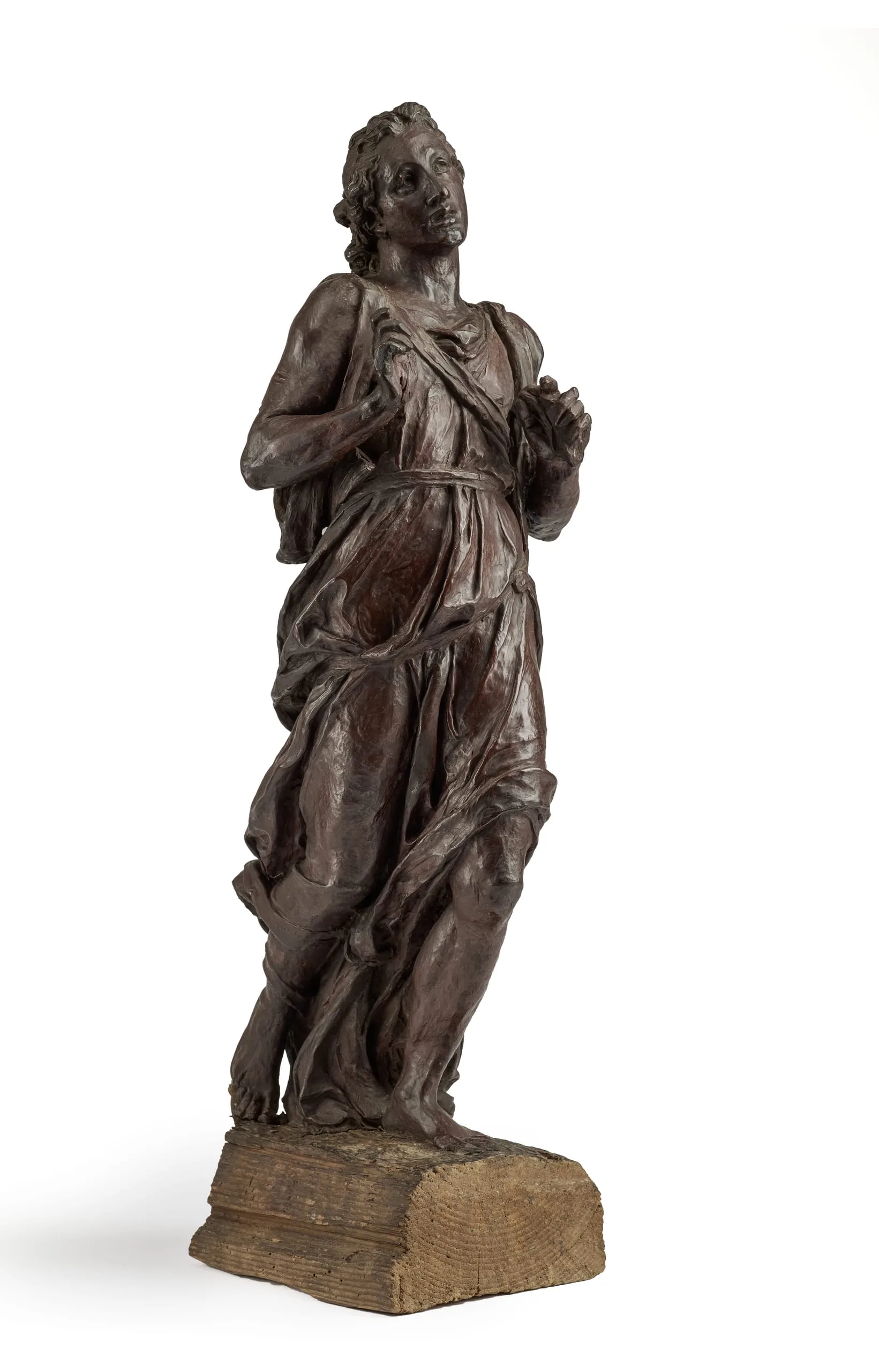
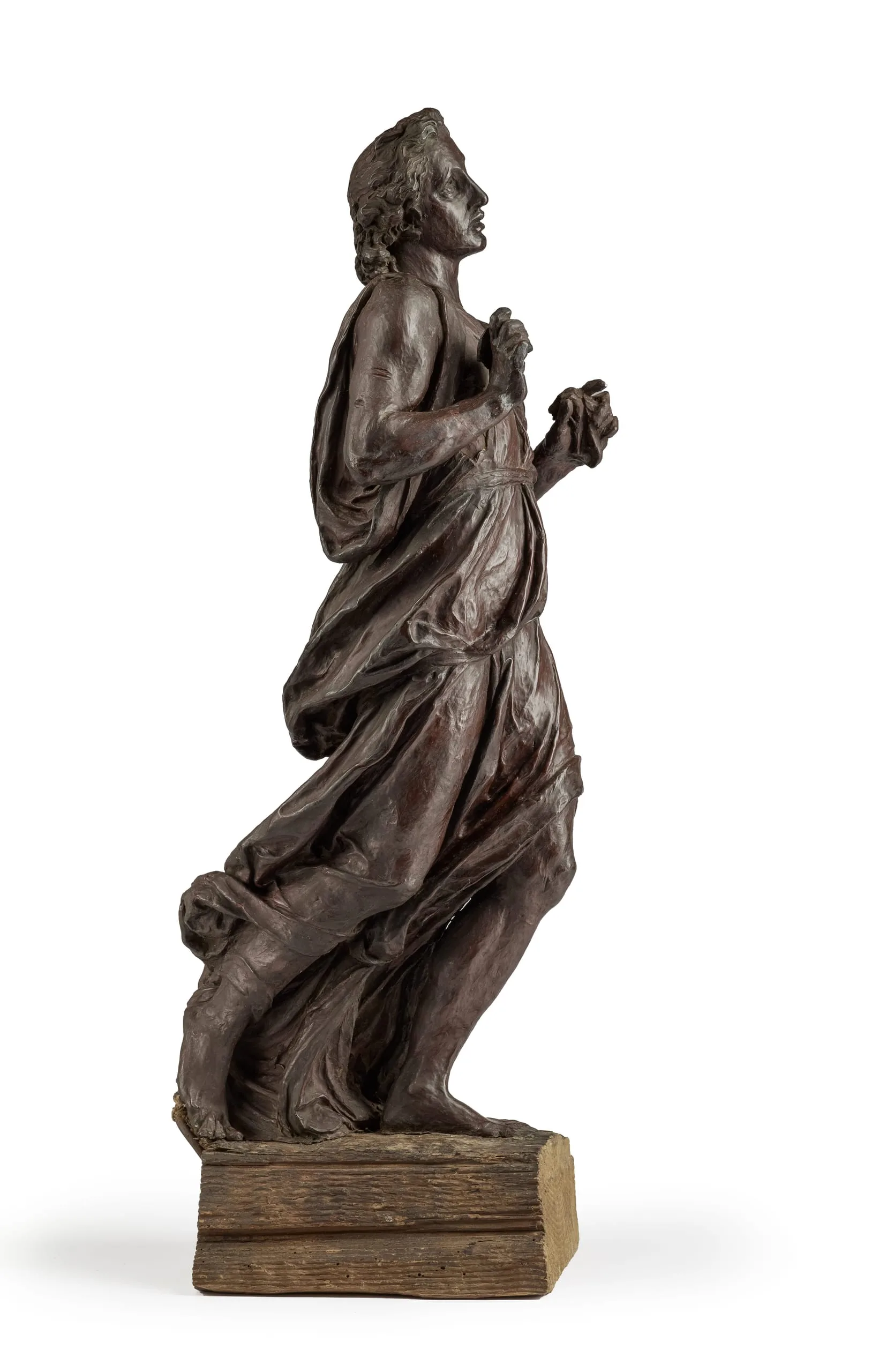
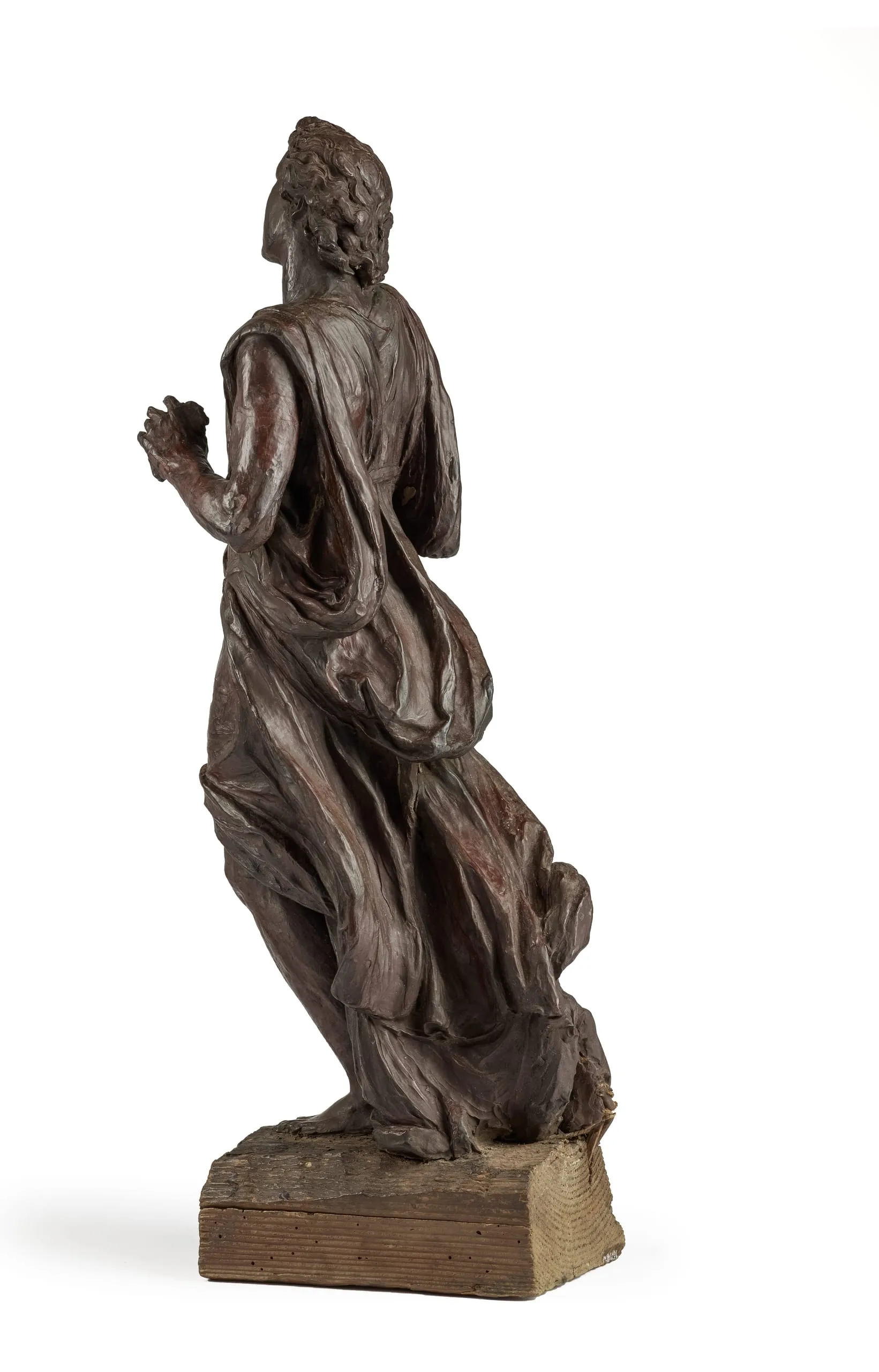
Creating models in wax, usually beeswax, was common practice for sculptors in sixteenth-century Europe. Given the medium’s extreme malleability, a sculptor could achieve intricate detail; furthermore, wax hardens quickly without the use of high heat, reducing the risk of shrinking or cracks. A downside to the use of wax is its fragility, which is why so few models in this material are extant. It is therefore remarkable that a sculpture of the quality seen here survived for 400 years before entering the controlled environment of a museum.
At the time of its purchase, the Adoring Angel was attributed to Jacopo Sansovino. Subsequent research by former LACMA curator Peter Fusco revealed that the wax statuette was in fact a sketch for a monumental statue by Annibale Fontana made for the church of Santa Maria presso San Celso in Milan. A major artistic force in the city, Fontana produced medals and engravings on rock crystal and hardstones—highly specialized and prized work. LACMA’s exquisite study of an angel corresponds to the Adoring Angel sculpture on the left of the church facade, which differs from the model in the inclusion of wings, which were fabricated in metal and attached to the marble. Fontana’s finesse of the drapery movement and his ability to produce a sense of earnest wonderment in the features of the angel’s face attest to the sculptor’s skill in working on a small scale.
2025