- Title
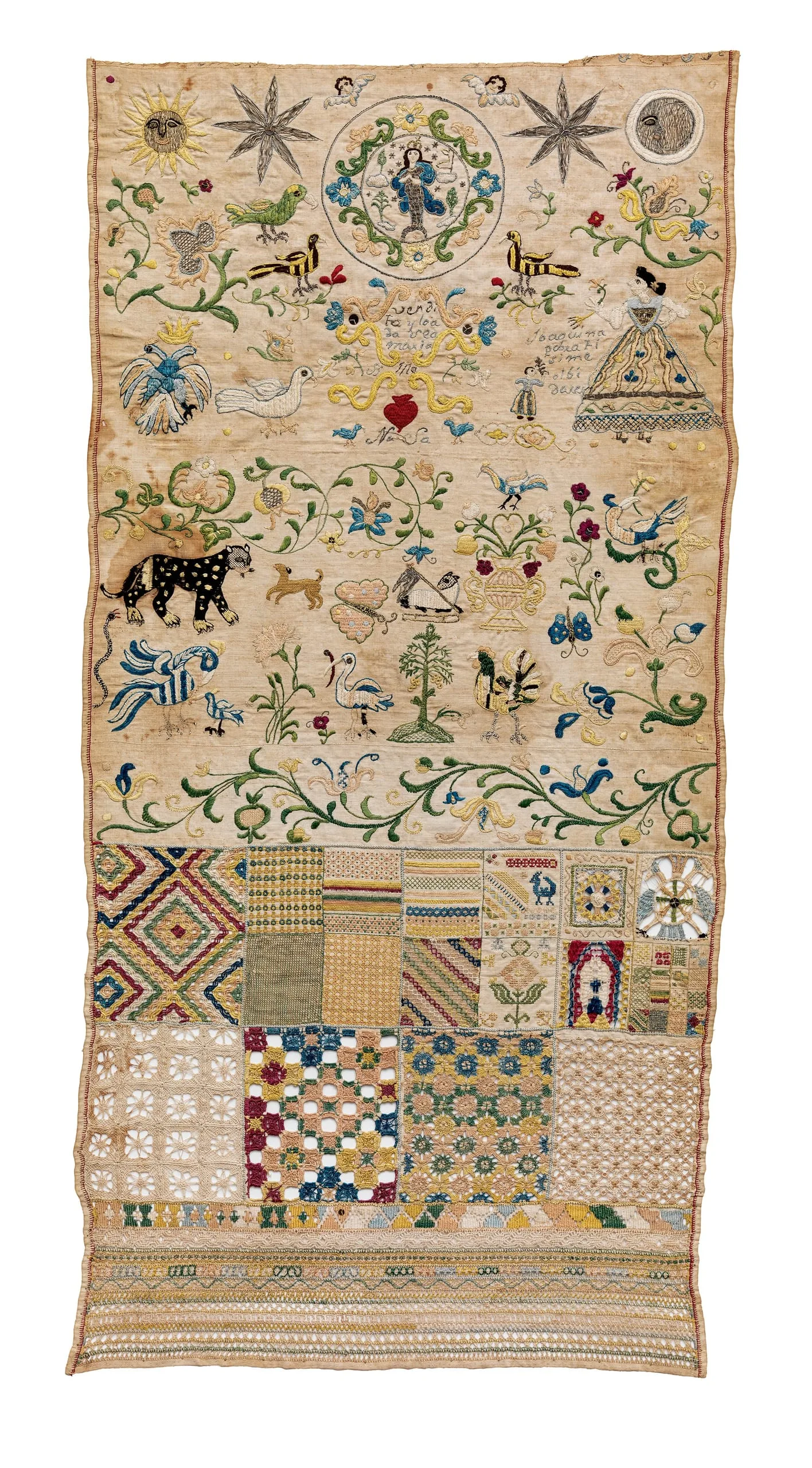
- Sampler (Dechado)
- Date Made
- circa 1785
- Medium
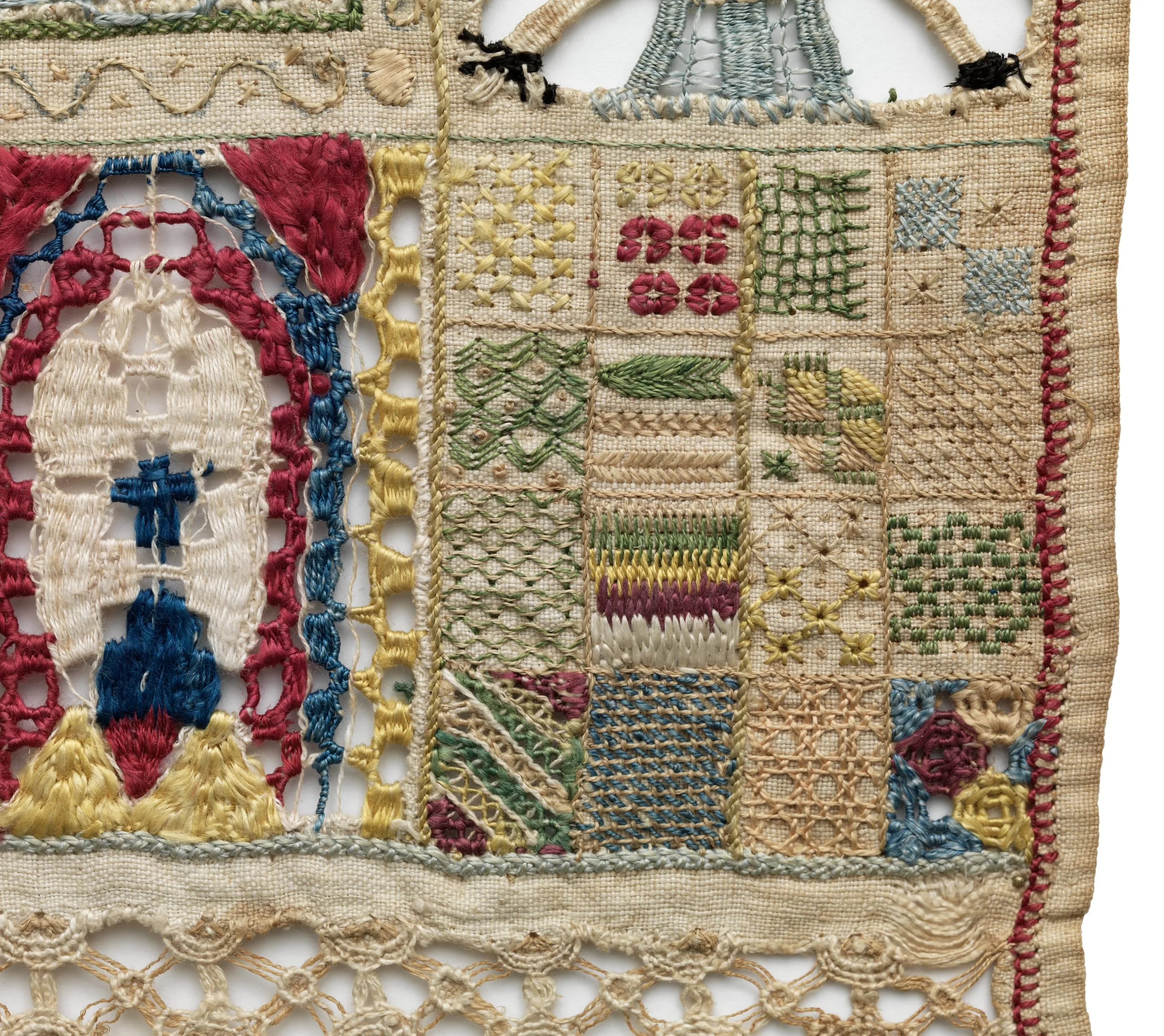
- Linen plain weave with silk and metallic-thread embroidery, drawn work, needle lace, and metal sequins
- Dimensions
- 40 7/8 × 20 1/4 in. (103.8 × 51.4 cm)
- Accession Number
- M.82.105.1
- Collecting Area
- Costume and Textiles
- Curatorial Notes
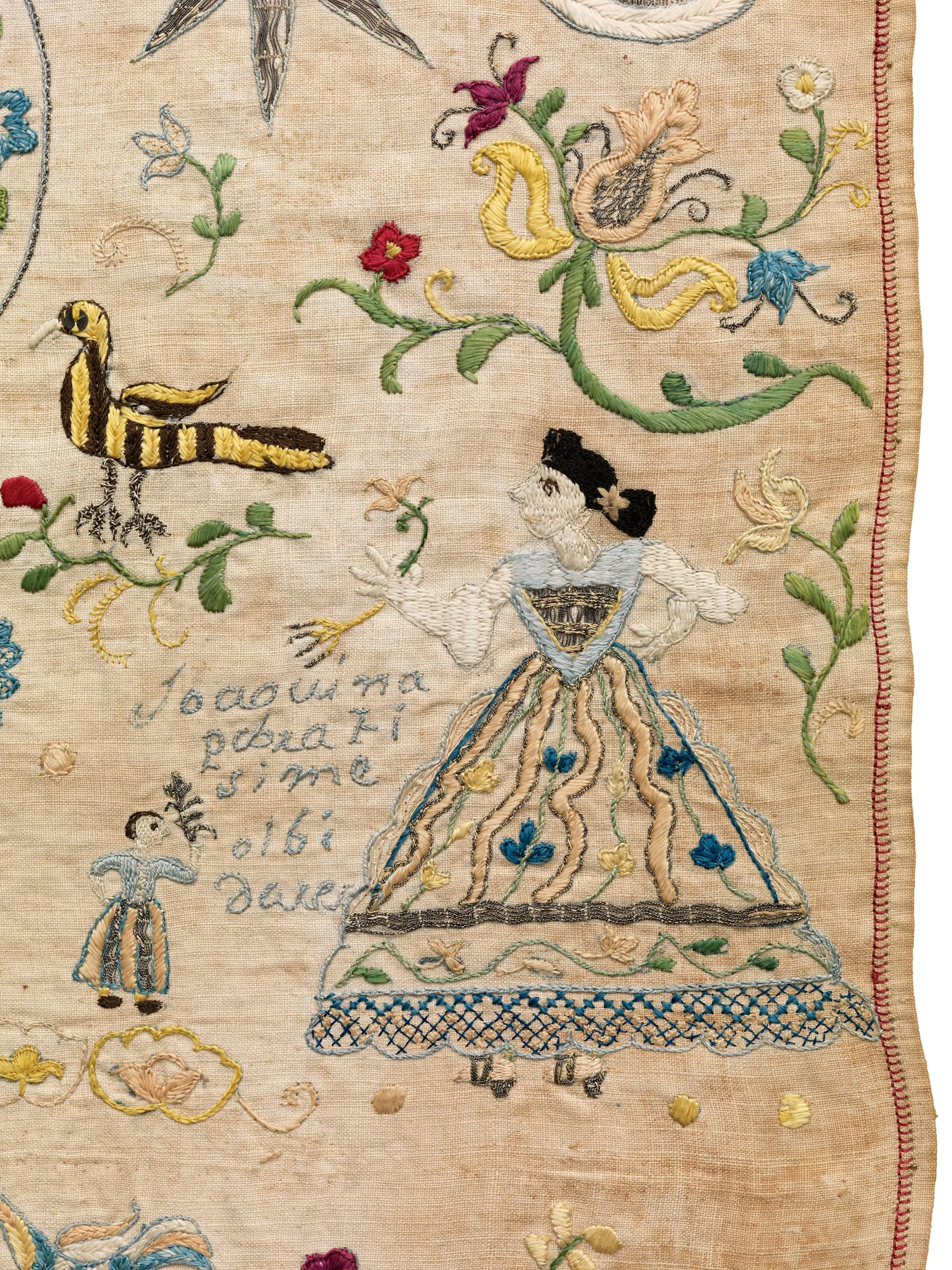
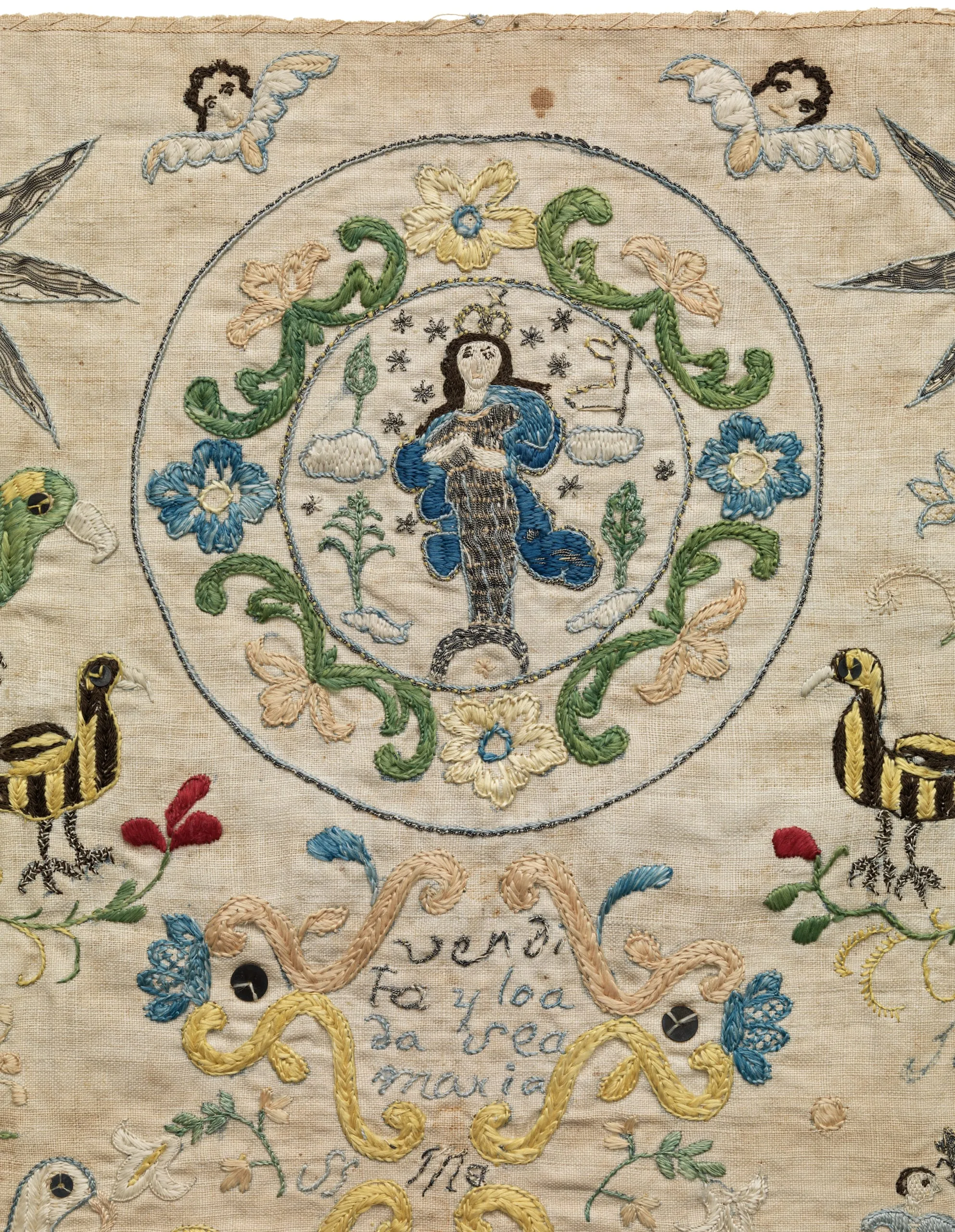
Elaborate embroidered panels such as this, known as samplers, were made by young girls as a compendium of needlework. By the sixteenth century, the tradition was firmly established in Europe. This is one of the two earliest known Mexican samplers. The inclusion of a roundel with the Immaculate Conception suggests it was made in a convent school. It also includes a pelican feeding its young, a symbol of the Eucharist, as well as embroidered images of the sun, moon, and stars—motifs associated with the Immaculate Conception— among other whimsical details.
From exhibition Archive of the World, 2022 (for more information see the catalogue entry by Alejandra Mayela Flores Enríquez in the accompanying publication, cat. no. 92, pp. 346–50)
- Provenance
Abell Auction Company, Commerce, California, 1982; Douglas Morse, Pasadena, California, 1982; Loewi-Robertson Inc., Los Angeles, 1982; LACMA, 1982.
- Selected Bibliography
- Katzew, Ilona, ed. Archive of the World: Art and Imagination in Spanish America, 1500–1800: Highlights from LACMA’s Collection. Exh. Cat. Los Angeles: Los Angeles County Museum of Art; New York: DelMonico Books/D.A.P., 2022.
- Selected Exhibition History
- Archive of the World: Art and Imagination in Spanish America, 1500–1800. October 20, 2023 - January 28, 2024
- Archive of the World: Art and Imagination in Spanish America, 1500–1800. June 22, 2024 - September 08, 2024