LACMA

ShopMembershipMyLACMATickets
LACMA
Los Angeles County Museum of Art
5905 Wilshire Blvd.
Los Angeles, CA 90036
info@lacma.org
(323) 857-6000
Sign up to receive emails
Subscribe
© Museum Associates 2025

Museum Hours

Monday

11 am–6 pm

Tuesday

11 am–6 pm

Wednesday

Closed

Thursday

11 am–6 pm

Friday

11 am–8 pm

Saturday

10 am–7 pm

Sunday

10 am–7 pm


  • About LACMA
  • Jobs
  • Building LACMA
  • Host An Event
  • Unframed
  • Press
  • FAQs
  • Log in to MyLACMA
  • Privacy Policy
© Museum Associates 2025
Collections

Pablo Picasso
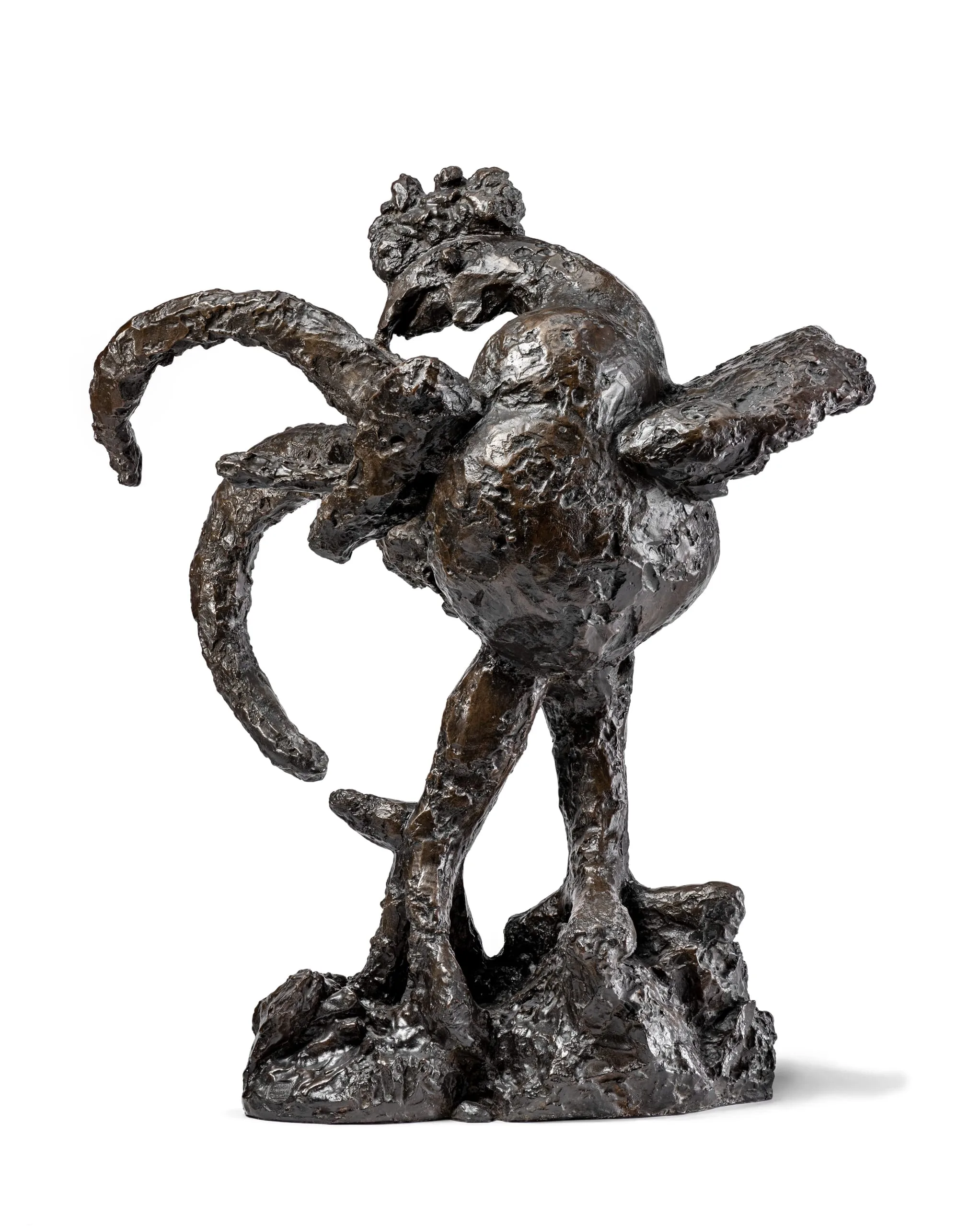
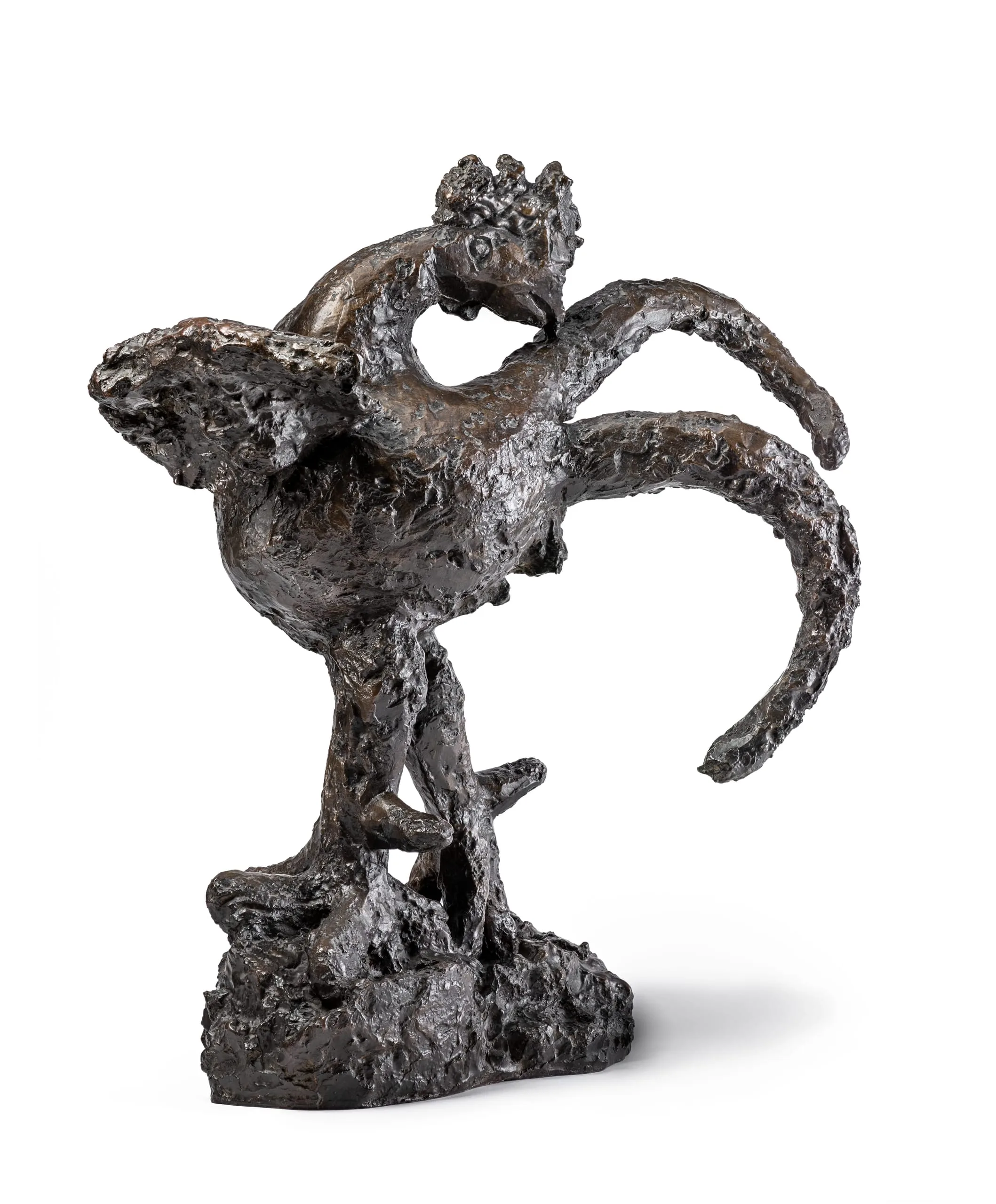
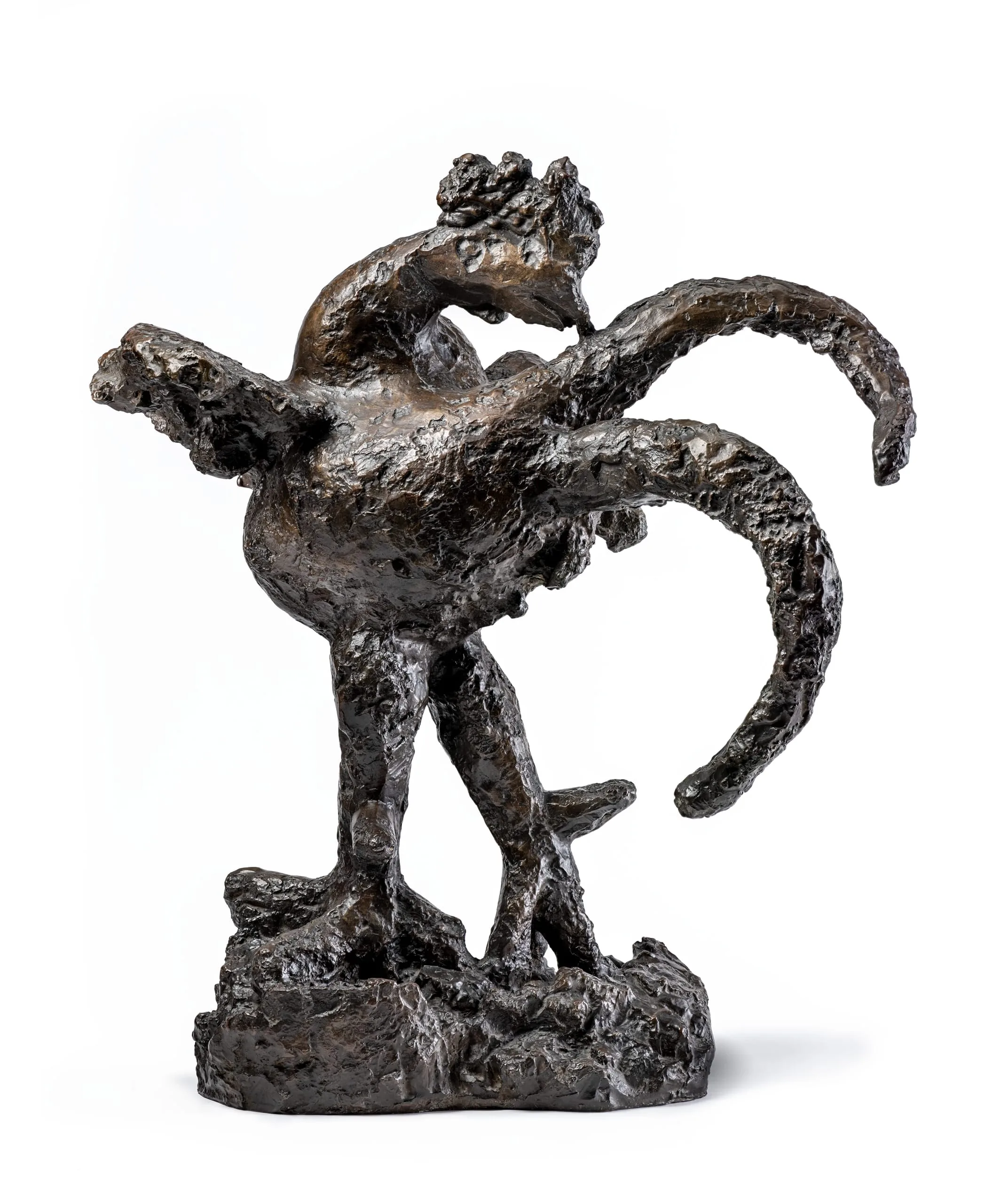
The Cock1932

On view:
Broad Contemporary Art Museum, floor 3
Bronze sculpture of two interlocked animal figures in a twisting struggle, with rough expressionistic surface texture and dark brown patina, on a craggy base
Bronze sculpture of a rearing horse with dramatically outstretched legs and flowing mane, mounted on a rough textured base, with heavily worked surface showing expressive, gestural modeling.
Bronze sculpture of a rearing horse with a figure clinging to its back, both forms merging in rough, heavily textured modeling; dark brown patina; mounted on a rocky base.
Artist or Maker
Pablo Picasso
Spain, 1881-1973, active France
Title
The Cock
Place Made
Spain
Date Made
1932
Medium
Bronze, cast number 2/6
Dimensions
26 × 25 × 15 in. (66.04 × 63.5 × 38.1 cm)
Credit Line
Gift of Lucille Ellis Simon in Honor of Camilla Chandler Frost
Accession Number
M.82.85
Classification
Sculpture
Collecting Area
Modern Art
Curatorial Notes

Much of Picasso’s career can be charted by the succession of his relationships with women and his depictions of them. These portraits variously reflect affection, passion, conflict, and hostility. While still married to Ukrainian ballet dancer Olga Khokhlova, he had begun an affair with Marie-Thérèse Walter, whom he met in 1927 when she was still a teenager. For most of the nine years they were involved, Picasso’s potent references to Walter were encoded in visual clues such as initials, hats, body parts, and items of clothing worn by his young girlfriend.


Here, the choice of animal motif is rife with symbolism: it may be connected to Picasso’s recent move to the countryside, but it is also a symbol of France and alludes to the artist’s libido. The preening male rooster has feathers that arch suggestively, creating a negative space that may also reference the outline of Walter’s identifiable profile—high forehead, short haircut, and pronounced facial features.


Wall label, 2021.


Provenance
The artist (1881-1973). [Kahnweiler’s Galerie Louise Leiris, Paris]. [Curt Valentin Gallery, New York]. Mr. G. David Thompson (1899-1965), Pittsburgh; Estate of Mr. G. David Thompson; [sold 1966, Parke-Bernet Galleries, New York, March 23, 1966]; [to Perls Gallery, New York]; sold circa 1967 to Mr. and Mrs. Norton Simon, Los Angeles, until 1970; Lucille Ellis Simon (1911-2000), Los Angeles; given in 1982 to LACMA.
Selected Bibliography
  • Spies, Werner. Picasso: the Sculptures. Ostfildern: Hatje Cantz, 2000.
  • Wight, Frederick S. 20th Century Sculpture from Southern California Collections. Los Angeles: UCLA Art Galleries, 1972.