LACMA

ShopMembershipMyLACMATickets
LACMA
Los Angeles County Museum of Art
5905 Wilshire Blvd.
Los Angeles, CA 90036
info@lacma.org
(323) 857-6000
Sign up to receive emails
Subscribe
© Museum Associates 2025

Museum Hours

Monday

11 am–6 pm

Tuesday

11 am–6 pm

Wednesday

Closed

Thursday

11 am–6 pm

Friday

11 am–8 pm

Saturday

10 am–7 pm

Sunday

10 am–7 pm


  • About LACMA
  • Jobs
  • Building LACMA
  • Host An Event
  • Unframed
  • Press
  • FAQs
  • Log in to MyLACMA
  • Privacy Policy
© Museum Associates 2025
Collections

Unknown
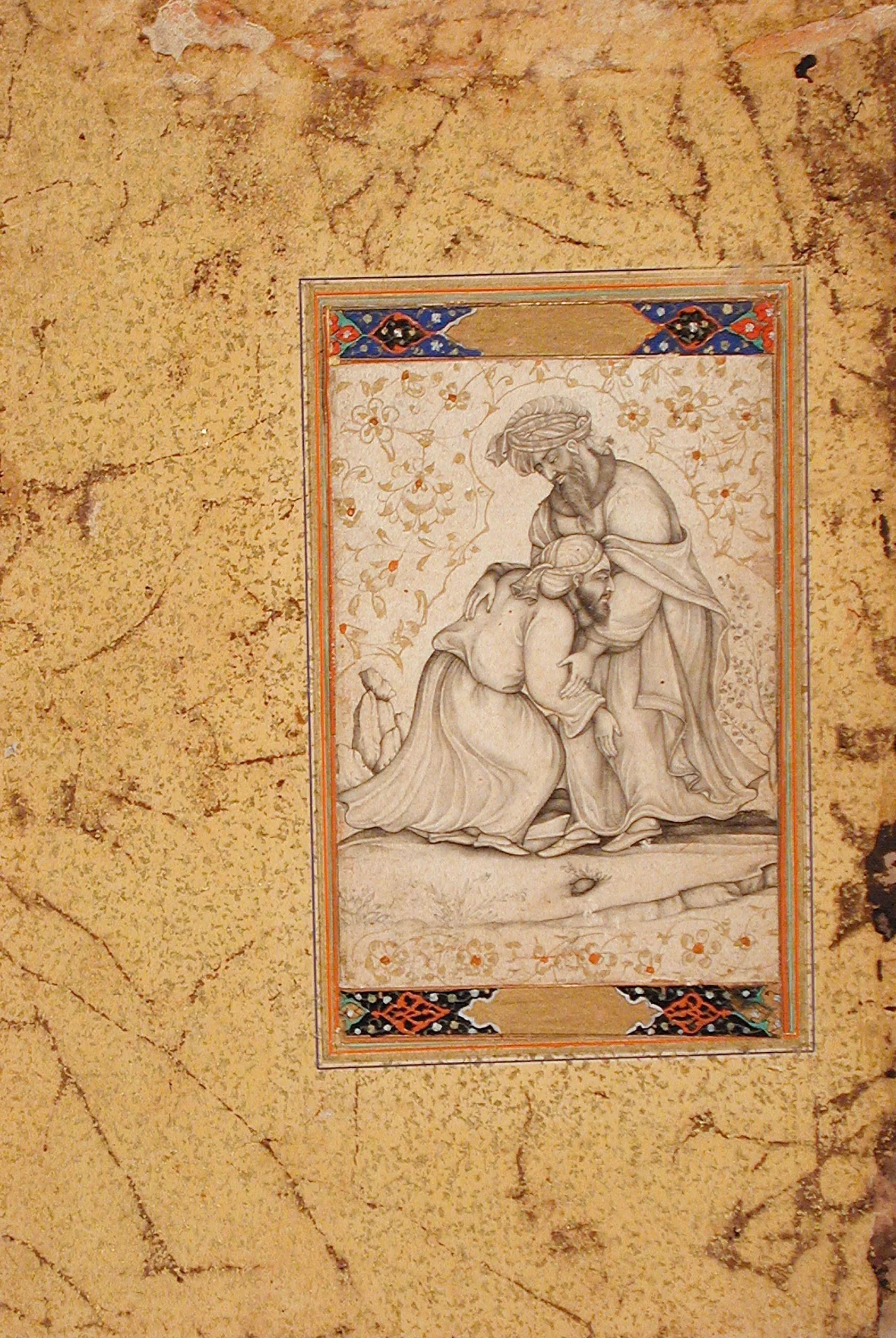
Mordecai at the Feet of King Ahasuerus, Folio from the Story of Esthercirca 1610

Not on view
Persian manuscript drawing in grisaille ink and wash, two robed and turbaned figures embracing, set within a decorative geometric border on marbled amber paper
Artist or Maker
Unknown
Title
Mordecai at the Feet of King Ahasuerus, Folio from the Story of Esther
Place Made
India, Mughal Empire
Date Made
circa 1610
Medium
Ink with opaque watercolor and gold
Dimensions
Image: 4 3/4 x 3 in. (12.07 x 7.62 cm); Sheet: 9 3/8 x 6 3/8 in. (23.81 x 16.19 cm)
Credit Line
Paul Rodman Mabury Collection
Accession Number
39.12.76
Classification
Drawings
Collecting Area
South and Southeast Asian Art
Curatorial Notes

This copy of a European print was made by an unidentified Mughal artist during the reign of Emperor Jahangir (r. 1605-1627). It depicts the Biblical character Mordecai paying obeisance to King Ahasuerus (or Xerxes I, r. 486-465 BCE), who ruled from the Achaemenid Empire from the Iranian capital of Susa (or Shushan). The story is recounted in the Book of Esther (Chapters 2-10), which is in the third section of the Hebrew Bible (Tanakh). Mordecai had refused to bow to the king’s grand vizier, Haman, who out of revenge plotted to kill him along with all the Jewish subjects in Iran. Mordecai appealed to his cousin, Queen Esther, who was secretly Jewish. Esther foils Haman’s plan by interceding with her husband, King Ahasuerus, who then has Haman executed and authorizes the Jews to kill their enemies instead. The Jewish festival of Purim, also called the Day of Mordecai, commemorates this deliverance.

The drawing was likely intended for inclusion in an album and may have faced the page containing the original print of which it was a copy. The golden flowering vines around the two figures, which form a lobed cartouche to emphasize their religious stature, and those in the foreground were probably added later.
Selected Bibliography
  • Pal, Pratapaditya. Indian Painting, vol.1. Los Angeles: Los Angeles County Museum of Art, 1993.