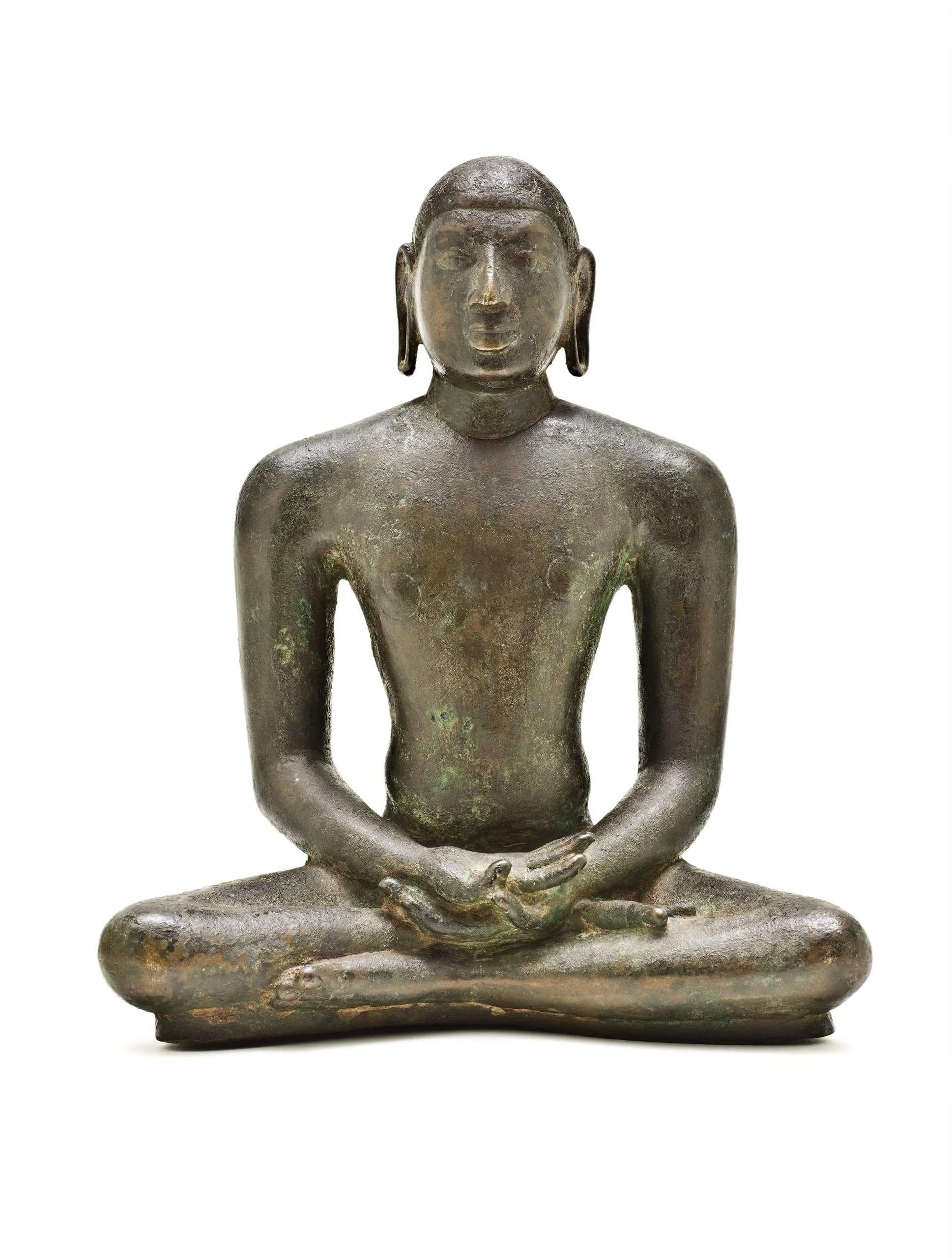
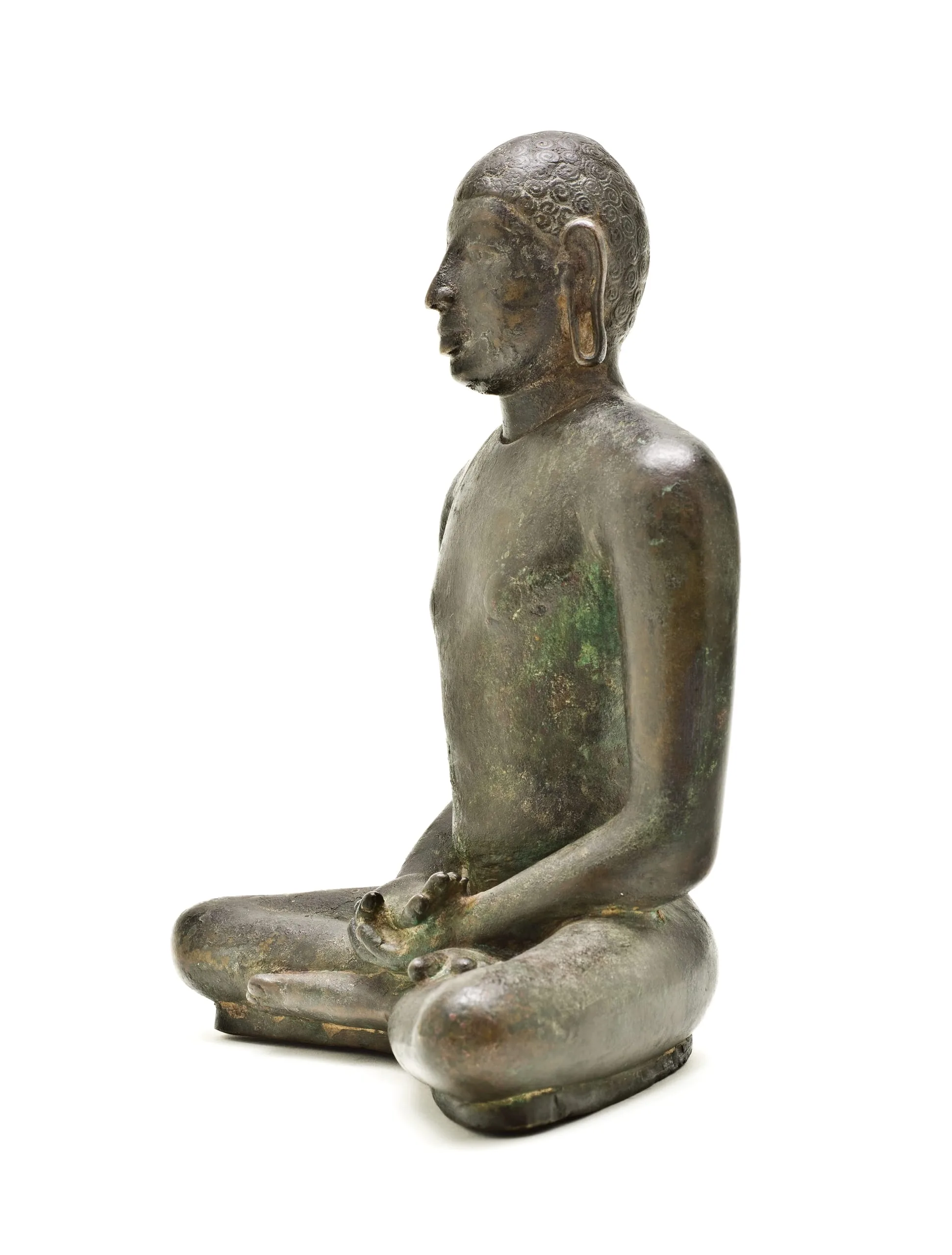
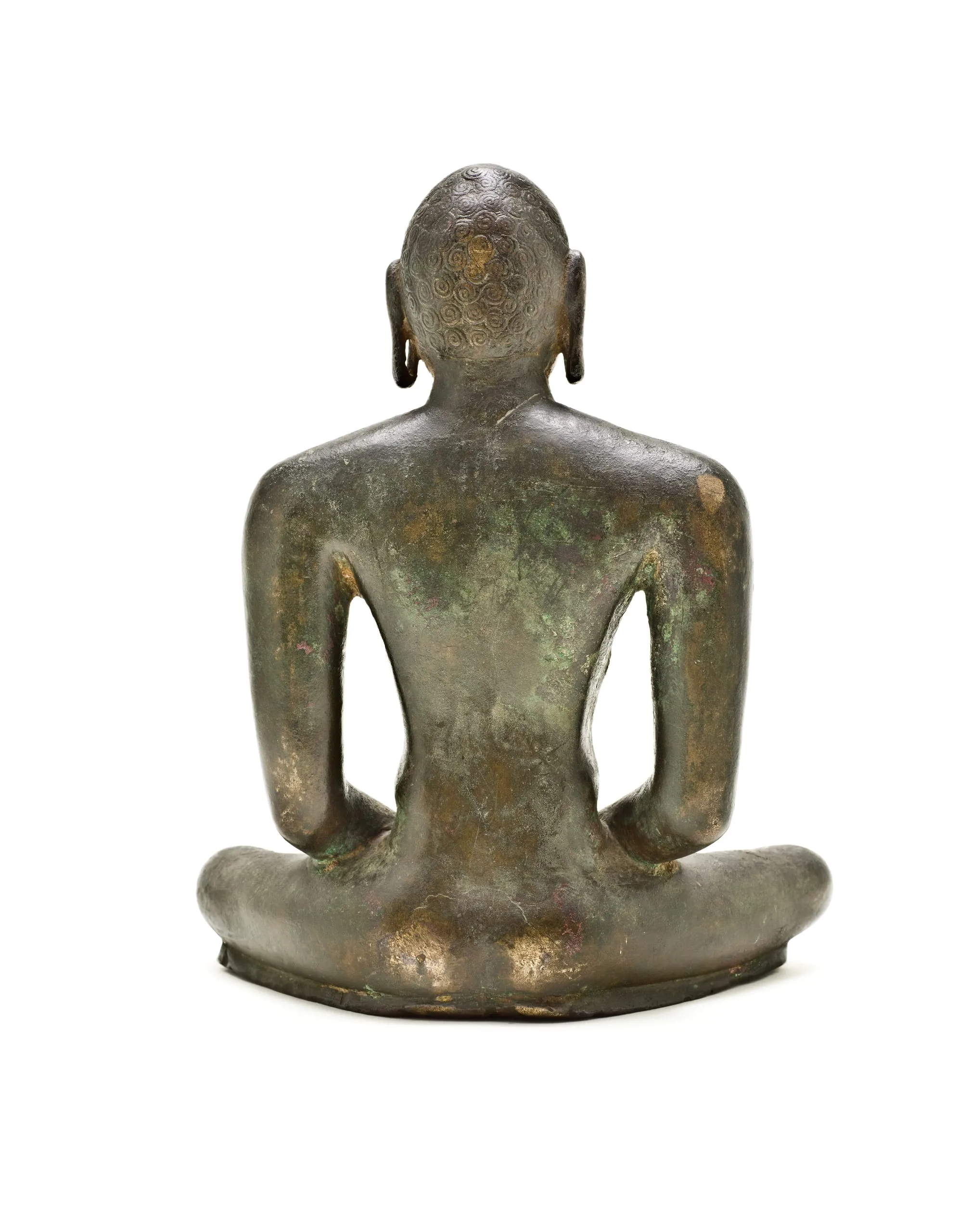
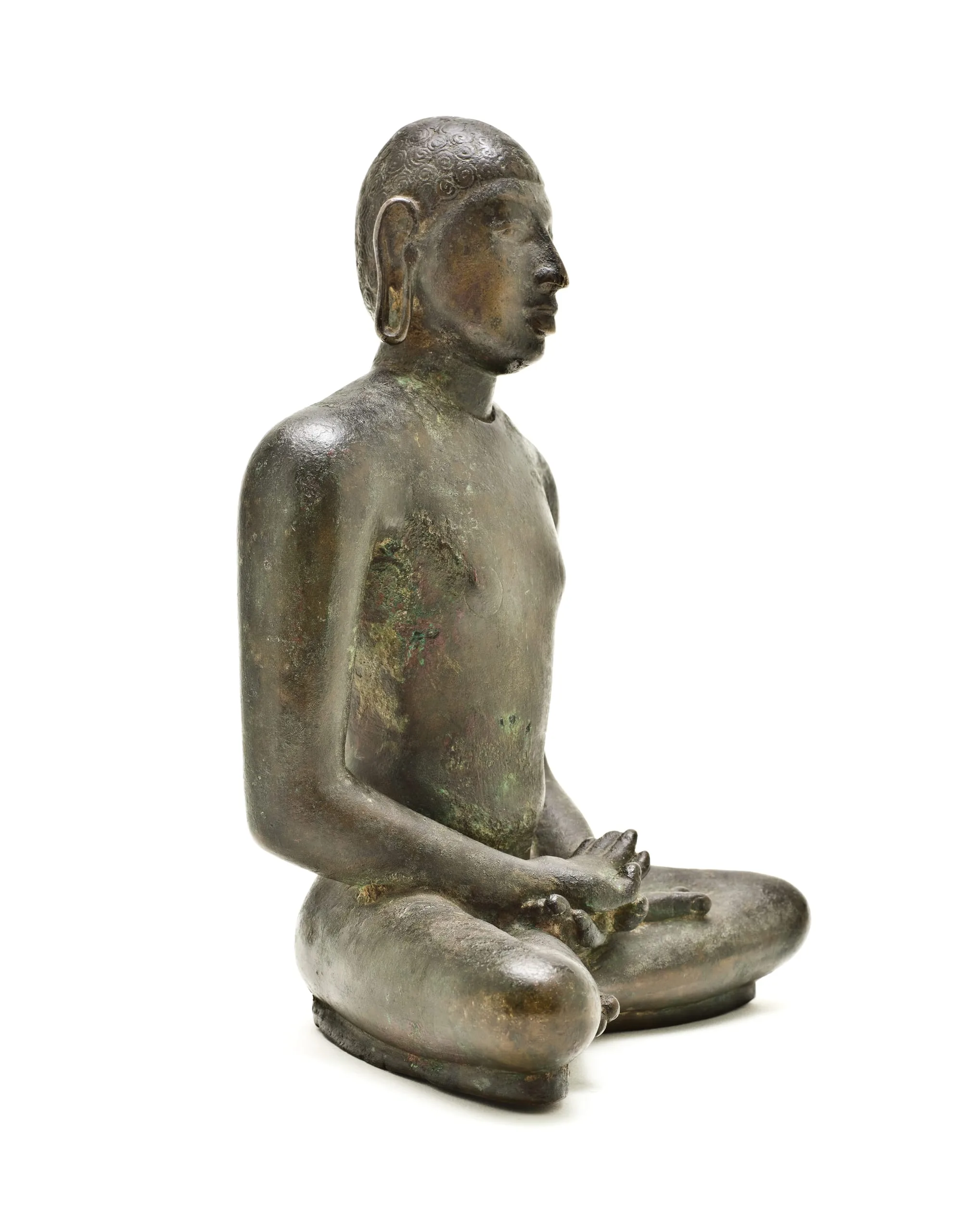
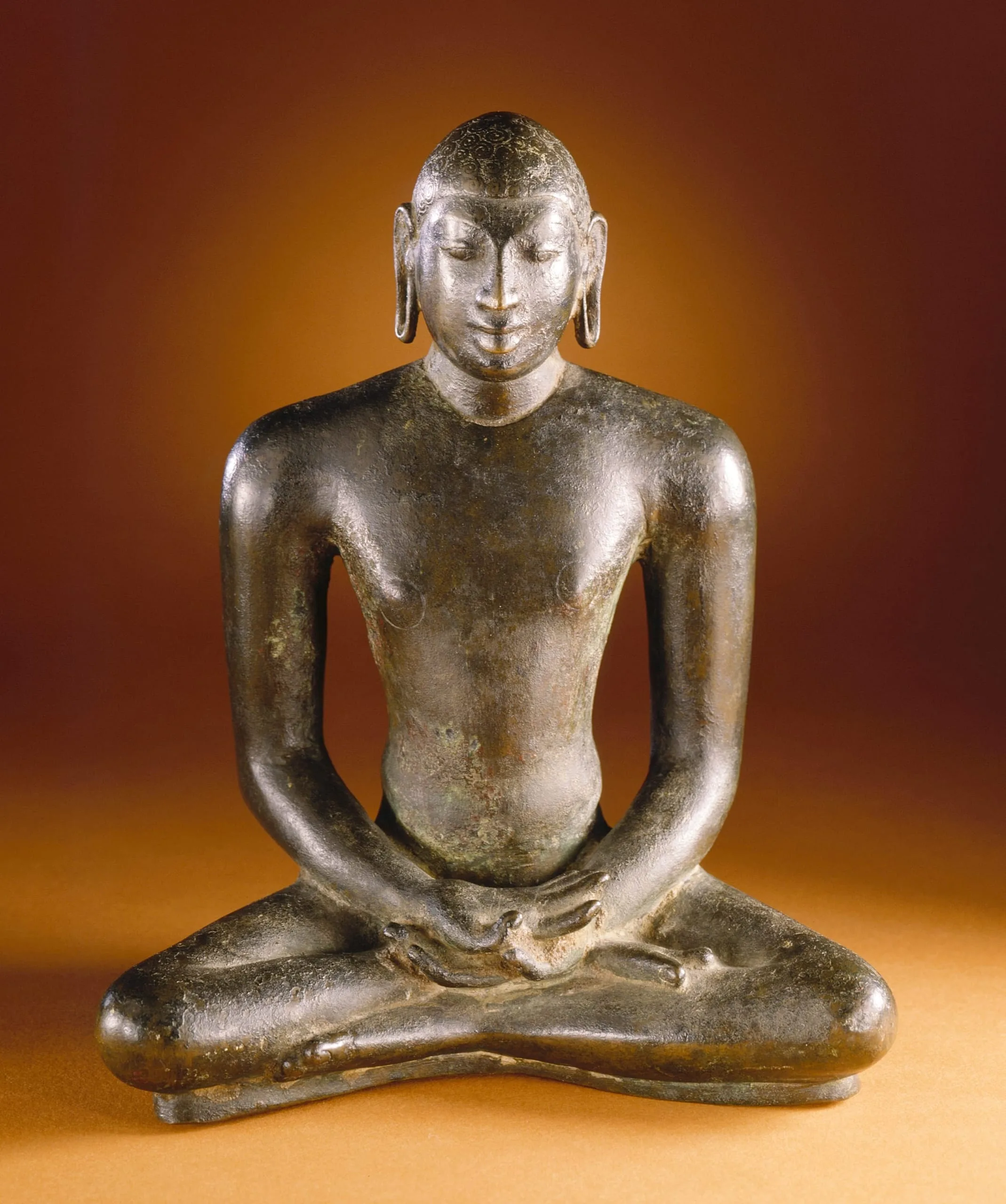
Jina Mahavira (circa 599-527 BCE) was born a prince of the Lichchhavi clan of Vaishali, Bihar. He became the 24th Jain savior (Jina or tirthankara [‘forder’ between the phenomenal world and enlightenment]). Conceived as an ideal yogi, the Jina gazes serenely while seated in the meditation posture (dhyana asana) with his legs crossed beneath him and his hands laid on top of one another in his lap (dhyana mudra). He has short snail curl hair and distended earlobes, both symbolizing his renunciation from the princely realm when he previously had long locks and wore heavy golden ear ornaments. This representation of Jina Mahavira depicts him totally naked in accordance with the rules of the Digambara (‘sky-clad’) Jain order. This sectarian affiliation is corroborated by the atypical depiction of the Jina’s genitalia on the underside of the sculpture.