LACMA

ShopMembershipMyLACMATickets
LACMA
Los Angeles County Museum of Art
5905 Wilshire Blvd.
Los Angeles, CA 90036
info@lacma.org
(323) 857-6000
Sign up to receive emails
Subscribe
© Museum Associates 2026
  • About LACMA
  • Jobs
  • Building LACMA
  • Host An Event
  • Unframed
  • Press
  • FAQs
  • Log in to MyLACMA
  • Privacy Policy
© Museum Associates 2026
Collections

Francesco Picano
Saint Michael Casting Satan into Hell1715 - 1716

On view:
Geffen Galleries, floor 2
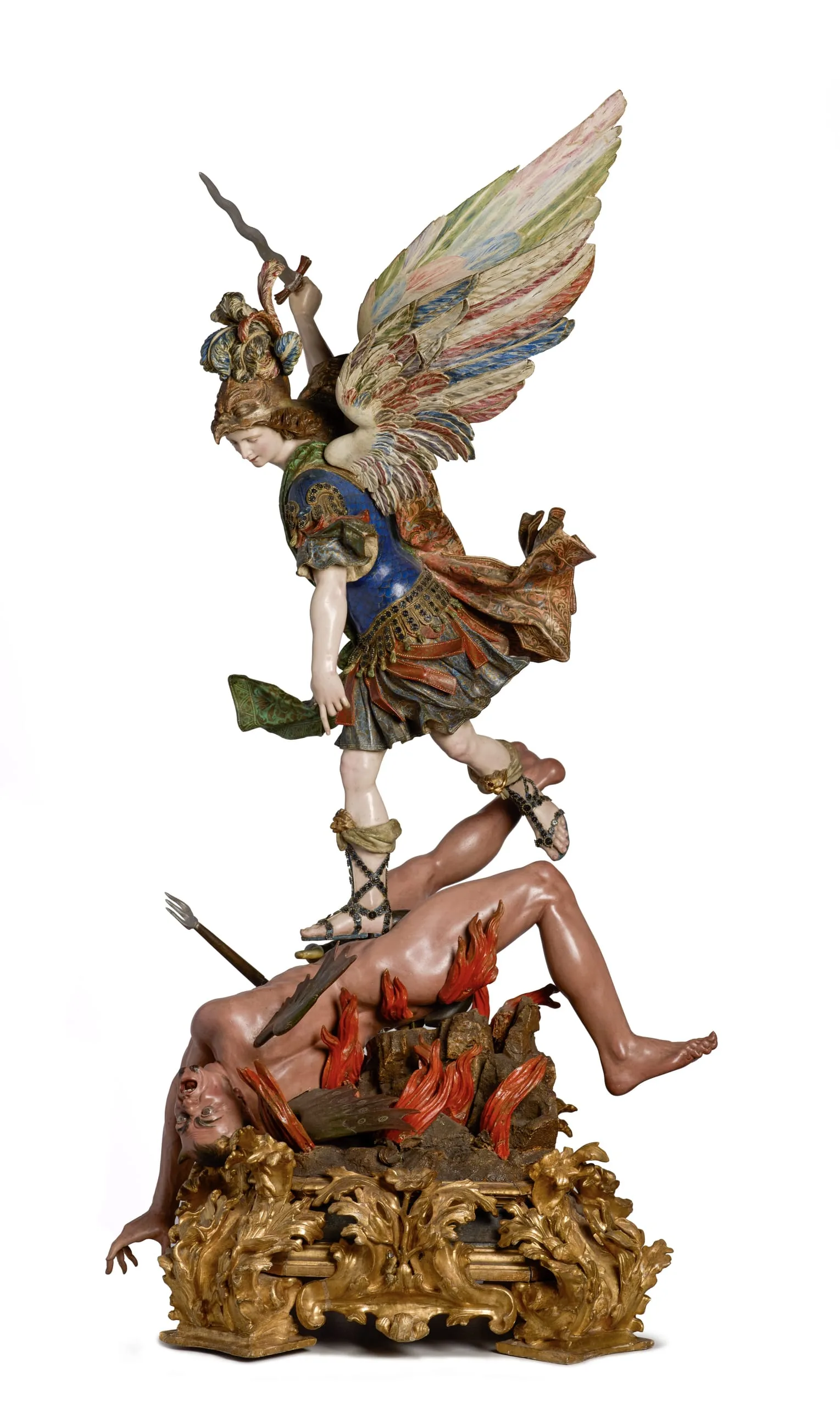
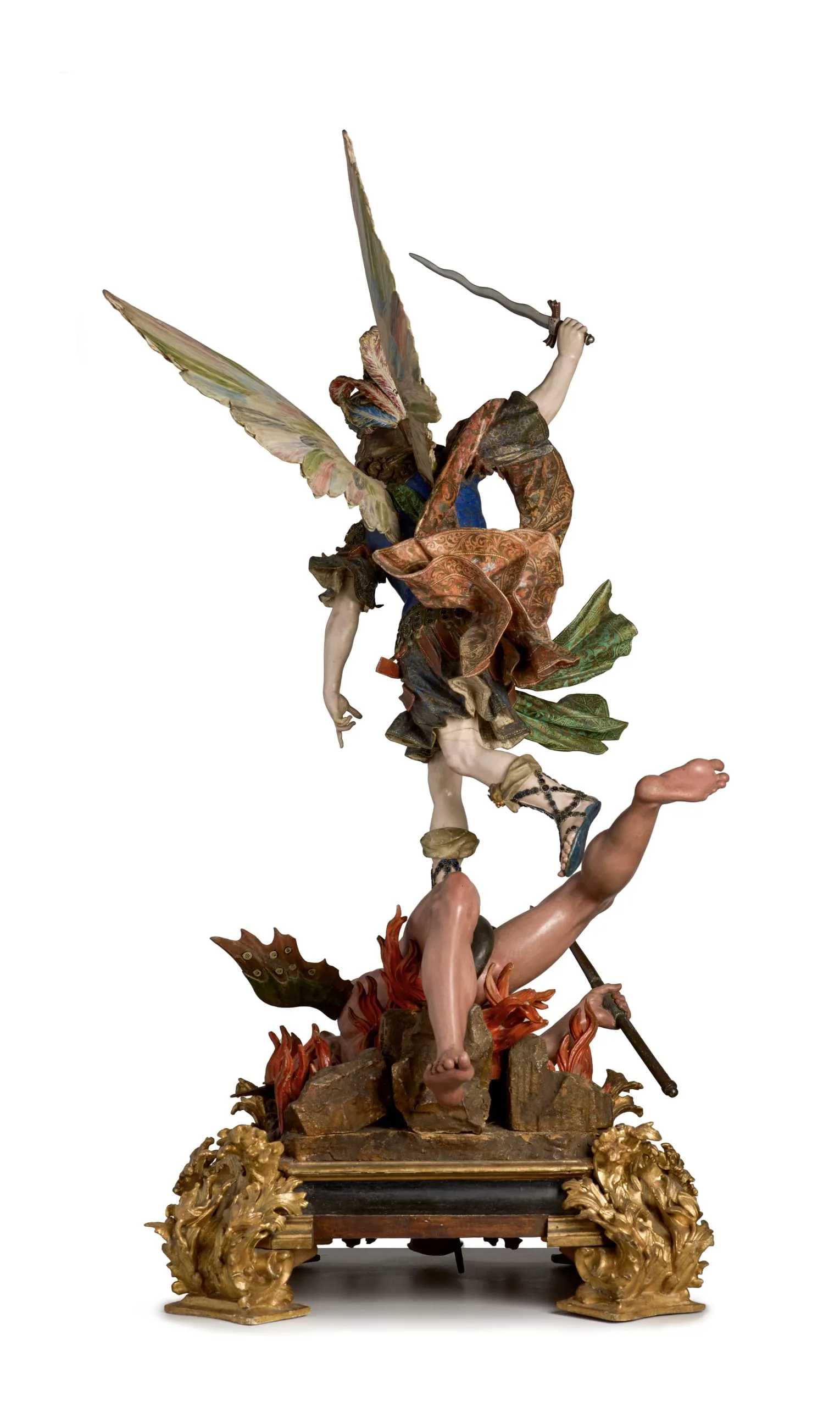
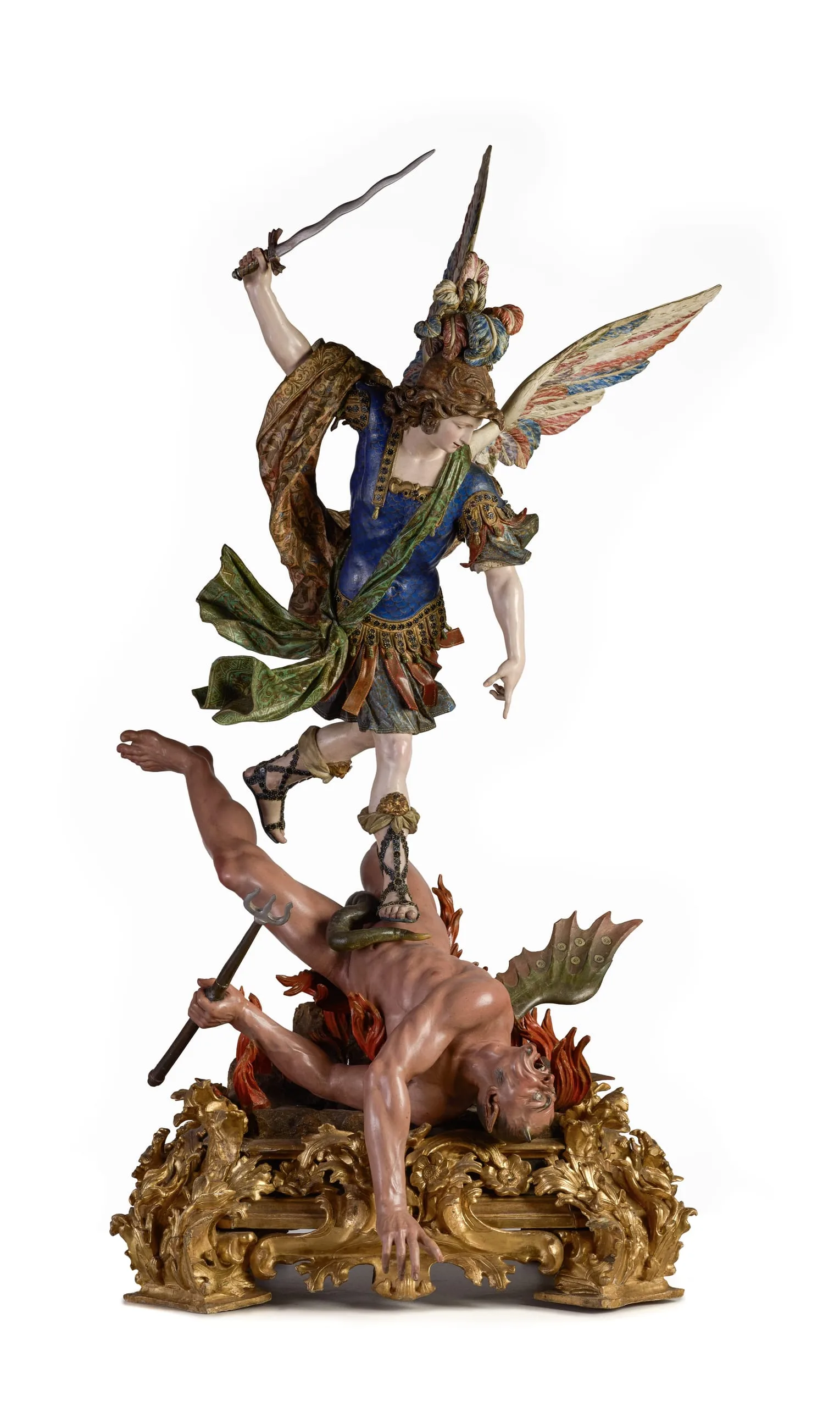
Polychrome sculpture of a winged, armored figure standing over a prostrate muscular figure, mounted on a gilded Rococo base with carved scrollwork and painted flames
Polychrome wood sculpture of a winged armored figure standing triumphant atop a prostrate figure amid red flames, on a gilded Baroque base. The wings are painted in multicolored feathers of red, blue, and green; the armor in blue and gold. The standing figure raises a sword overhead while the figure below lies sprawled with a trident nearby.
Polychrome sculpture of a winged figure raising a sword overhead, standing atop a prostrate figure amid painted flames, with elaborate gilded base featuring acanthus scrollwork.

Francesco Picano, Circle of Domenico Antonio Vaccaro, After a design byLorenzo Vaccaro, Saint Michael Casting Satan into Hell, 1715 - 1716, Los Angeles County Museum of Art, Gift of The Ahmanson Foundation, photo © Museum Associates/LACMA

Possibly
Francesco Picano
Italy, Sant' Elia, 1677/78-1743
After a design by
Lorenzo Vaccaro
Italy, Naples, 1655-1706
Title
Saint Michael Casting Satan into Hell
Place Made
Italy, Naples
Date Made
1715 - 1716
Medium
Wood, painted and gilded, metal and glass
Dimensions
52 1/2 × 27 1/4 × 24 3/4 in. (133.35 × 69.22 × 62.87 cm)
Credit Line
Gift of The Ahmanson Foundation
Accession Number
M.82.7
Classification
Sculpture
Collecting Area
European Painting and Sculpture
Curatorial Notes

This dramatic polychrome wood sculpture depicts the moment from the Apocalypse when the archangel Michael casts the rebel Satan out of heaven and into hell. Michael is dressed in the highly detailed garb of a Roman soldier, and his rainbow wings reflect the varied palette and exquisite attention to painting across the sculpture. Ruby glass accents are visible on his sandals and armor, and the eyes of both devil and saint are made of glass. Michael’s noble bearing and elegant features contrast with Satan’s twisting limbs and agonized expression. The complexity of the figures is matched in the technique to produce such a lively composition: it is comprised of forty sections carefully painted and puzzled together. In nearly pristine condition, with few repainted areas (rare for a religious sculpture of this type and age), it follows in the tradition of polychromed wood carving that persisted in Naples at this time. The medium, which lends itself to dramatic realism, remained popular there due to the city’s geographic proximity and political ties to Spain, where polychromed wood was the preferred material for sculptors over the terracotta and stone used primarily throughout Italy.

More broadly, the sculpture’s drama and movement are characteristic of the Counter-Reformation period, when a reenergized Catholic church commissioned paintings and sculptures designed to inspire awe and wonder. Michael’s victory was a popular theme during this time of reinvigoration, symbolizing the triumph of the church over heresy, and of good over evil. Saint Michael was also one of the protectors of Naples following a major earthquake in 1688. A silver sculpture by Lorenzo Vaccaro of the same theme and similar composition was exhibited publicly at the end of the seventeenth century in the Treasury of San Gennaro, located in the Cathedral of Naples, where it became a model for several smaller sculptures, this one among them.

2025
Provenance

Spain, said to have been the gift of Don Juan Domingo de Haro y Guzmán (1639– 1716), 7th count of Monterrey, to the Convent of the Religiosas Agustinas de Recoletas. Salamanca, Spain, convent of the Religiosas Agustinas until 1938, sold to; Private collector, Spain, by descent to her daughter, sold to; [Galería Velázquez, Madrid, to]; [Silvano Lodi, Lugano, and Enzo Costantini, Rome, sold 1982 to]; LACMA.

Selected Bibliography
  • Los Angeles County Museum of Art. New York: Thames and Hudson, 2003.
  • Conisbee, Philip et al. The Ahmanson Gifts: European Masterpieces in the Collection of the Los Angeles County Museum of Art. Los Angeles: Los Angeles County Museum of Art, 1991.


  • Phil Freshman. Los Angeles County Museum of Art Report, July 1, 1981-June 30, 1983. Los Angeles: Los Angeles County Museum of Art, 1984.
  • Schaefer, Scott, and Peter Fusco. European Painting and Sculpture in the Los Angeles County Museum of Art: an Illustrated Summary Catalogue. Los Angeles: Los Angeles County Museum of Art, 1987.
  • Petrucci, Giovanni. Francesco Antonio Picano: Nella Scultura del Settecento Napoletano. Montecassino: Pubblicazioni Cassinesi, 2005.
  • Martínez Leiva, Gloria. "St. Michael defeating the Devil by Lorenzo Vaccaro: a sculpture to intercede for the souls of several important owners." Journal of the History of Collections 30, no.1 (2018): 113-125.
  • Lehmbeck, Leah, editor. Gifts of European Art from The Ahmanson Foundation. Vol. 1, Italian Painting and Sculpture. Los Angeles: Los Angeles County Museum of Art, 2019.
  • King, Jennifer, ed. Vera Lutter: Museum in the Camera. Los Angeles: Los Angeles County Museum of Art; Munich: DelMonico Books-Prestel, 2020.

Related Unframed

Related Unframed

Halloween Means It's Time for the LACMA Costume Ball!
  • October 21, 2014
  • Meghan McCauley