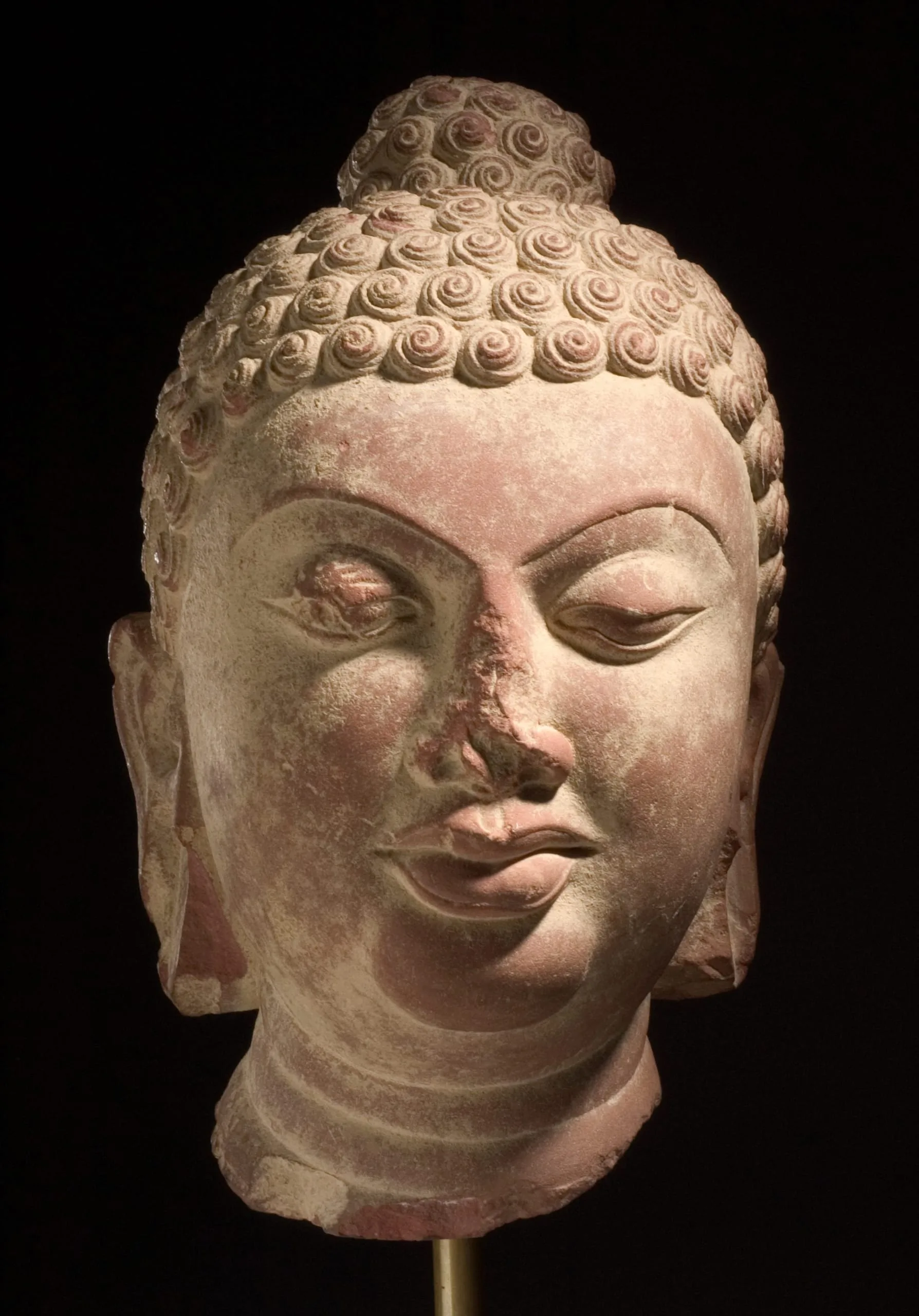
This is a classic representation of the Buddha Shakyamuni’s head made in Mathura, Uttar Pradesh, in circa 450 during the mature stylistic phase of the Gupta Dynasty (319-467 CE). Although it is the same subject as the earlier Buddha head made during the Kushan Dynasty (circa 30-375) in circa 150-200 (M.69.13.9), its physiognomic iconography exhibits the evolved artistic and theological preferences of the Gupta era. Rather than the earlier image’s open eyes staring straight ahead to engage the devotee, the later work’s eyes are half shut and look downward to convey his inner contemplation and compassion. Both depictions feature empty distended earlobes representing his renunciation of the material world. Each head has a cranial protuberance symbolizing the Buddha’s omniscience and enlightened insight, but the Gupta head has crisp snail-shell curls in place of the topknot and otherwise nondescript cropped hair of the Kushan head. The later head’s countenance has fuller, more sensuous lips than the thinner pursed lips of the earlier head. Finally, the circular sacred marking (urna) on the Kushan head’s brows is absent on the Gupta visage.