LACMA

ShopMembershipMyLACMATickets
LACMA
Los Angeles County Museum of Art
5905 Wilshire Blvd.
Los Angeles, CA 90036
info@lacma.org
(323) 857-6000
Sign up to receive emails
Subscribe
© Museum Associates 2025

Museum Hours

Monday

11 am–6 pm

Tuesday

11 am–6 pm

Wednesday

Closed

Thursday

11 am–6 pm

Friday

11 am–8 pm

Saturday

10 am–7 pm

Sunday

10 am–7 pm


  • About LACMA
  • Jobs
  • Building LACMA
  • Host An Event
  • Unframed
  • Press
  • FAQs
  • Log in to MyLACMA
  • Privacy Policy
© Museum Associates 2025
Collections

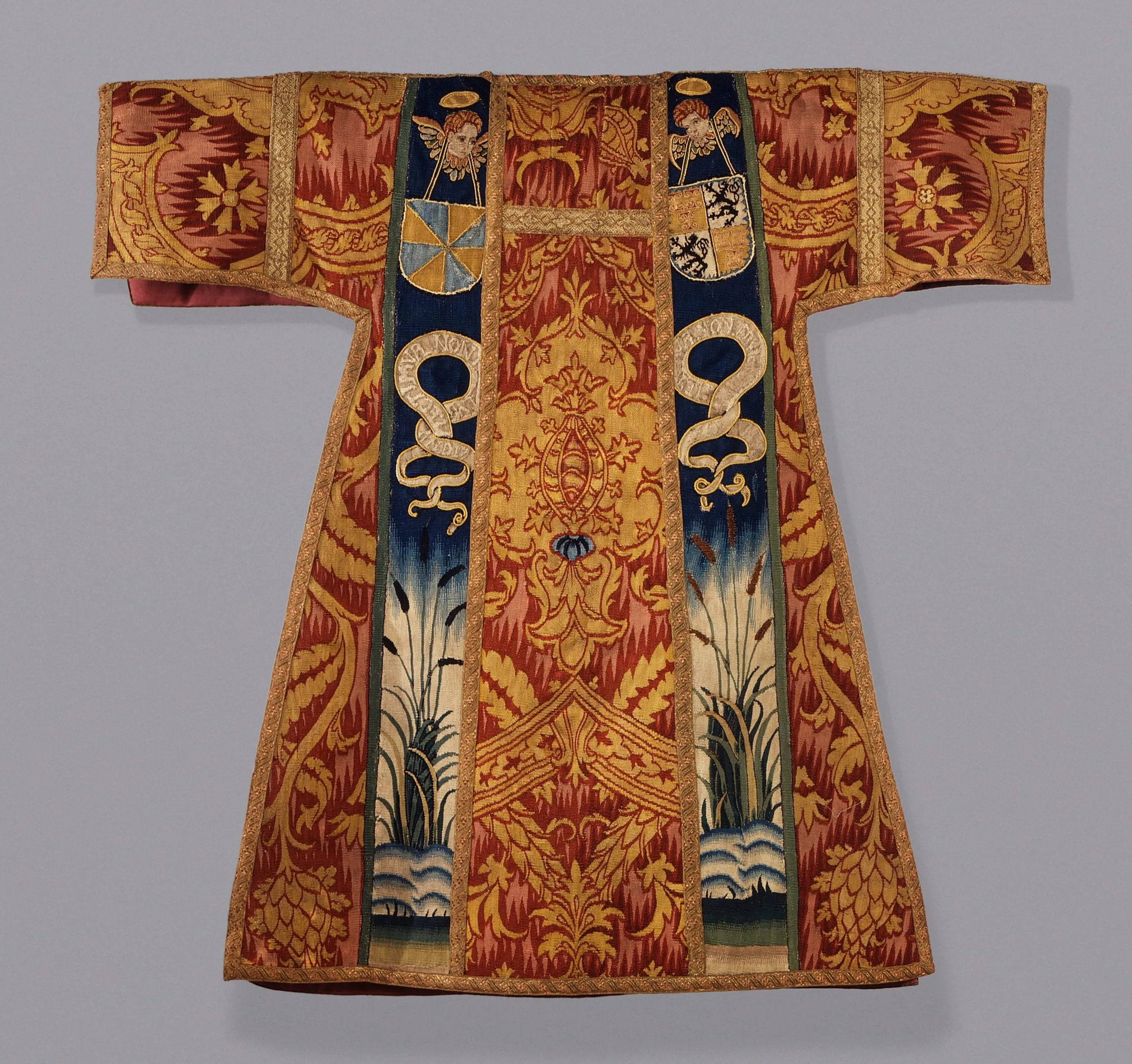
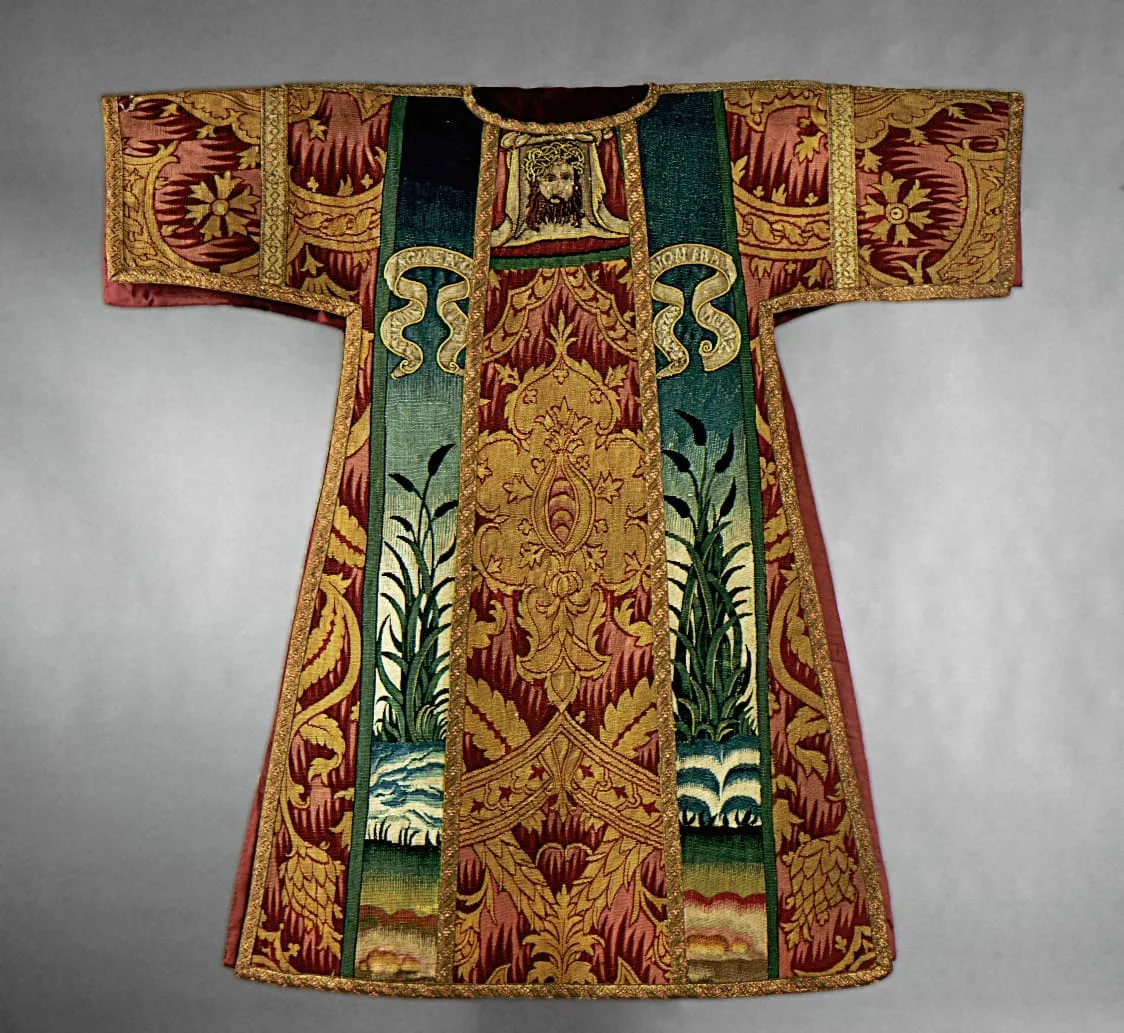
Dalmaticcirca 1570

Not on view
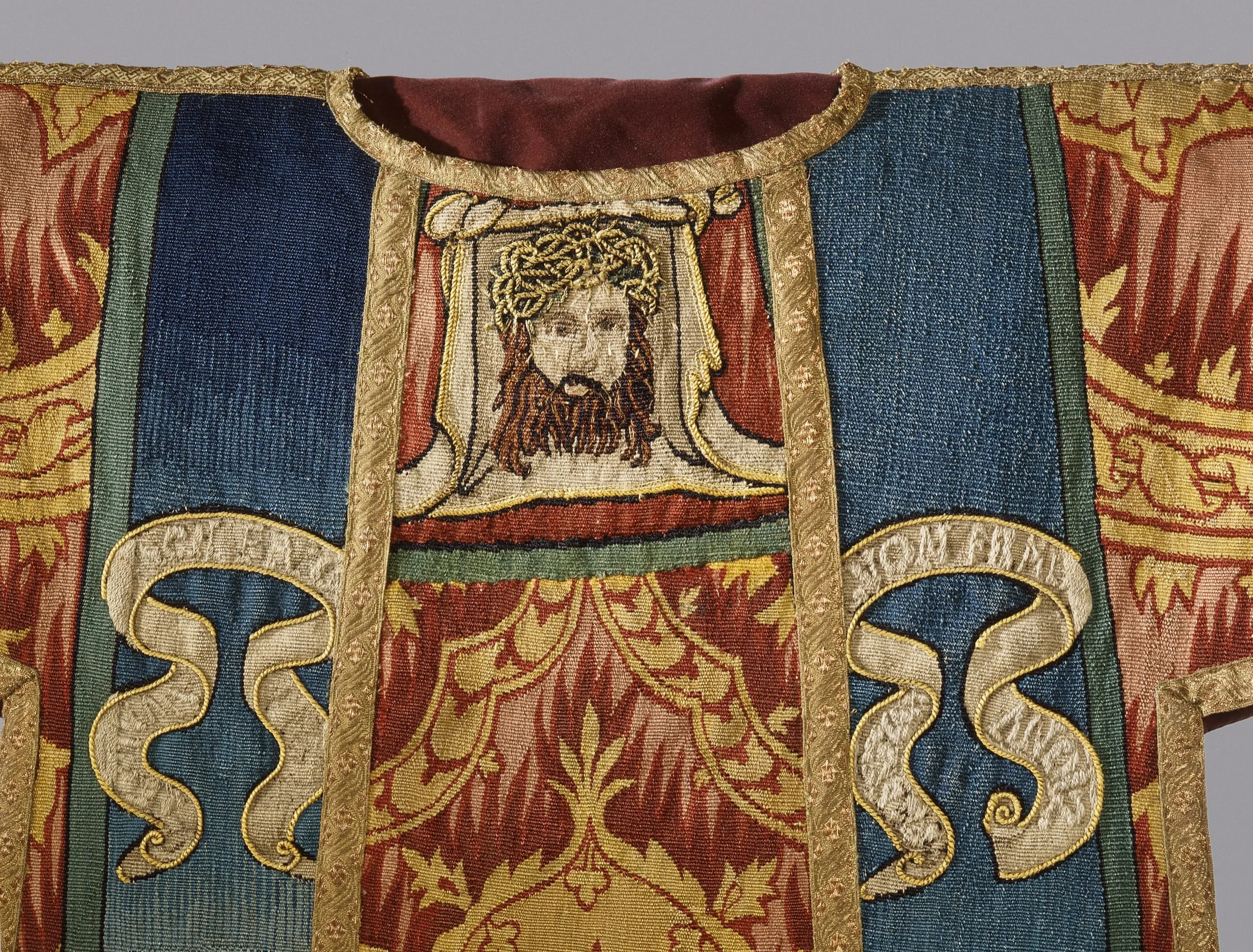
Liturgical dalmatic vestment in crimson silk with gold metallic embroidery, featuring a central vertical orphrey panel with an embroidered face in a crown of thorns, landscape panels with reeds, and large-scale woven floral and flame motifs
Liturgical dalmatic in red and gold damask with wide vertical orphrey bands in deep blue, embroidered with two winged angels holding heraldic shields, scrolling ribbon inscriptions, and naturalistic marsh plants with reeds and water at lower panels; gold braid trim throughout.
Embroidered liturgical vestment in red, blue, and gold woven silk, featuring a central embroidered face with crown of thorns on a cloth, flanked by scrolling banners with Latin text and foliate patterns.
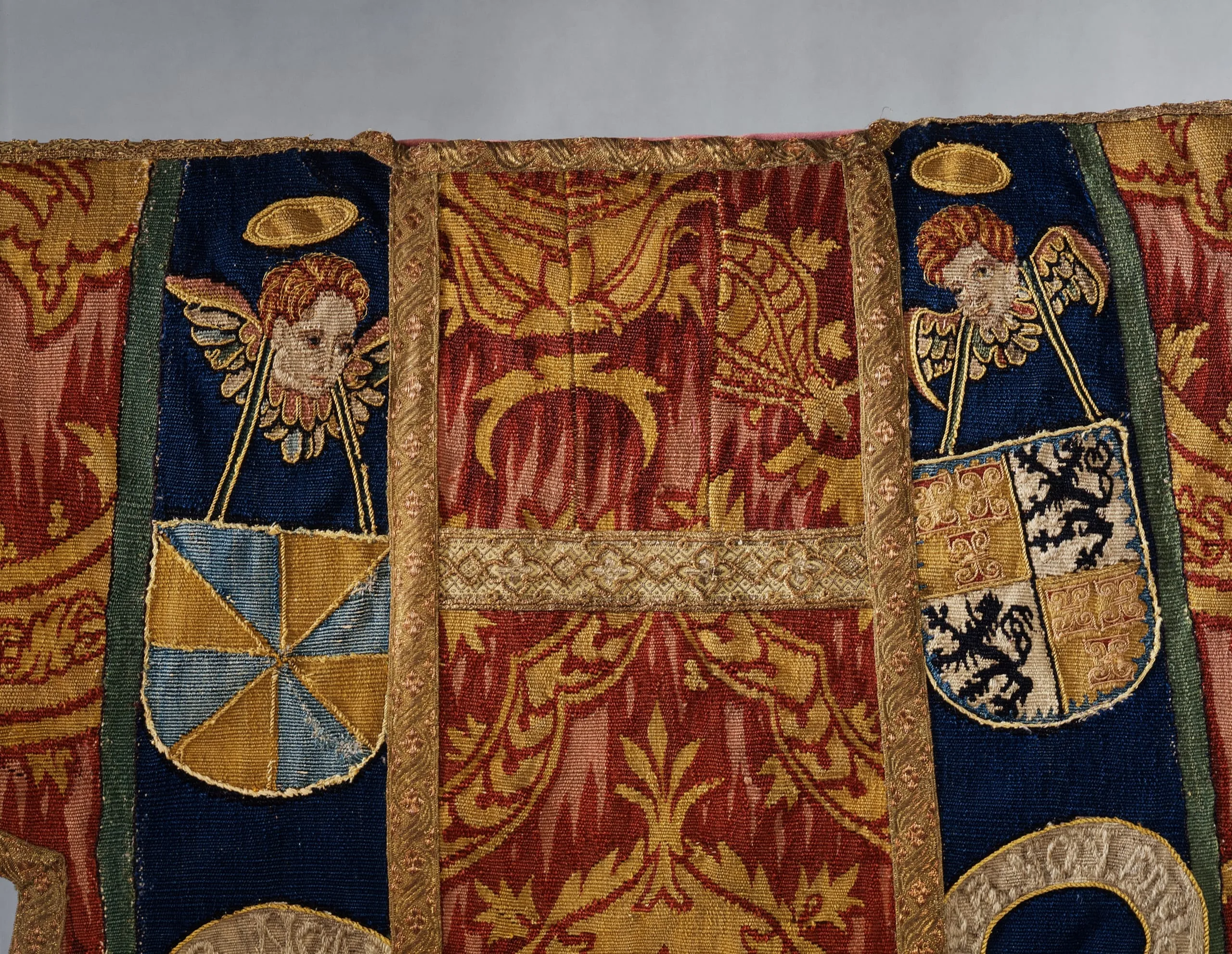
Embroidered textile fragment with deep blue vertical bands on a red and gold brocade ground; two winged angel figures with gold halos hold heraldic shields bearing quartered coats of arms, worked in fine needlework with metallic gold thread.
Title
Dalmatic
Place Made
Netherlands
Date Made
circa 1570
Medium
Linen, silk, and wool tapestry weave with linen and metallic-thread passementerie
Dimensions
Center back length: 43 3/8 in. (110.17 cm)
Credit Line
Gift of Mrs. Ellie Stern, Bullocks Wilshire, the Costume Council, and Mrs. Madeline B. Nelson
Accession Number
M.79.117
Classification
Costumes
Collecting Area
Costume and Textiles
Curatorial Notes
This dalmatic is part of a rare complete set of ecclesiastical vestments surviving the troubled period of the Protestant Reformation in sixteenth-century Holland. Its preservation and that of its companion pieces—today in the Metropolitan Museum of Art—are of special interest because the robes share a linked symbolism and can be dated to 1570 from an inscription on one of the Metropolitan garments.
"We are bent, not broken by the waves", reads the motto woven on the banderoles of the design, a particularly appropriate sentiment for Dutch Catholics. From the 1560s they had endured Protestant hostility against the church and its clergy, a situation prevailing in Utrecht until 1580, when Roman Catholic public worship was finally suppressed.
This robe bears the coats of arms of the Van Der Geer and Van Culenborch families of Utrecht, probably confirming that the set was commissioned for use in a private chapel, a timely decision in light of events. The biblical imagery is also fitting; the bulrushes rising above the waves allude both to the inscription and to Moses, who led the Israelites out of their bondage in Egypt.
This message of salvation has been interpreted with technical virtuosity. The dalmatic is done in a flat tapestry weave, but its design imitates piled Italian velvets. The fabric panels also include embroidery accentuating details of the design, suggesting that this unusual combination of techniques was an effort to achieve a richness of surface normally associated with more costly imported textiles.
Selected Bibliography
  • Los Angeles County Museum of Art. New York: Thames and Hudson, 2003.