LACMA

ShopMembershipMyLACMATickets
LACMA
Los Angeles County Museum of Art
5905 Wilshire Blvd.
Los Angeles, CA 90036
info@lacma.org
(323) 857-6000
Sign up to receive emails
Subscribe
© Museum Associates 2025

Museum Hours

Monday

11 am–6 pm

Tuesday

11 am–6 pm

Wednesday

Closed

Thursday

11 am–6 pm

Friday

11 am–8 pm

Saturday

10 am–7 pm

Sunday

10 am–7 pm


  • About LACMA
  • Jobs
  • Building LACMA
  • Host An Event
  • Unframed
  • Press
  • FAQs
  • Log in to MyLACMA
  • Privacy Policy
© Museum Associates 2025
Collections

Unknown
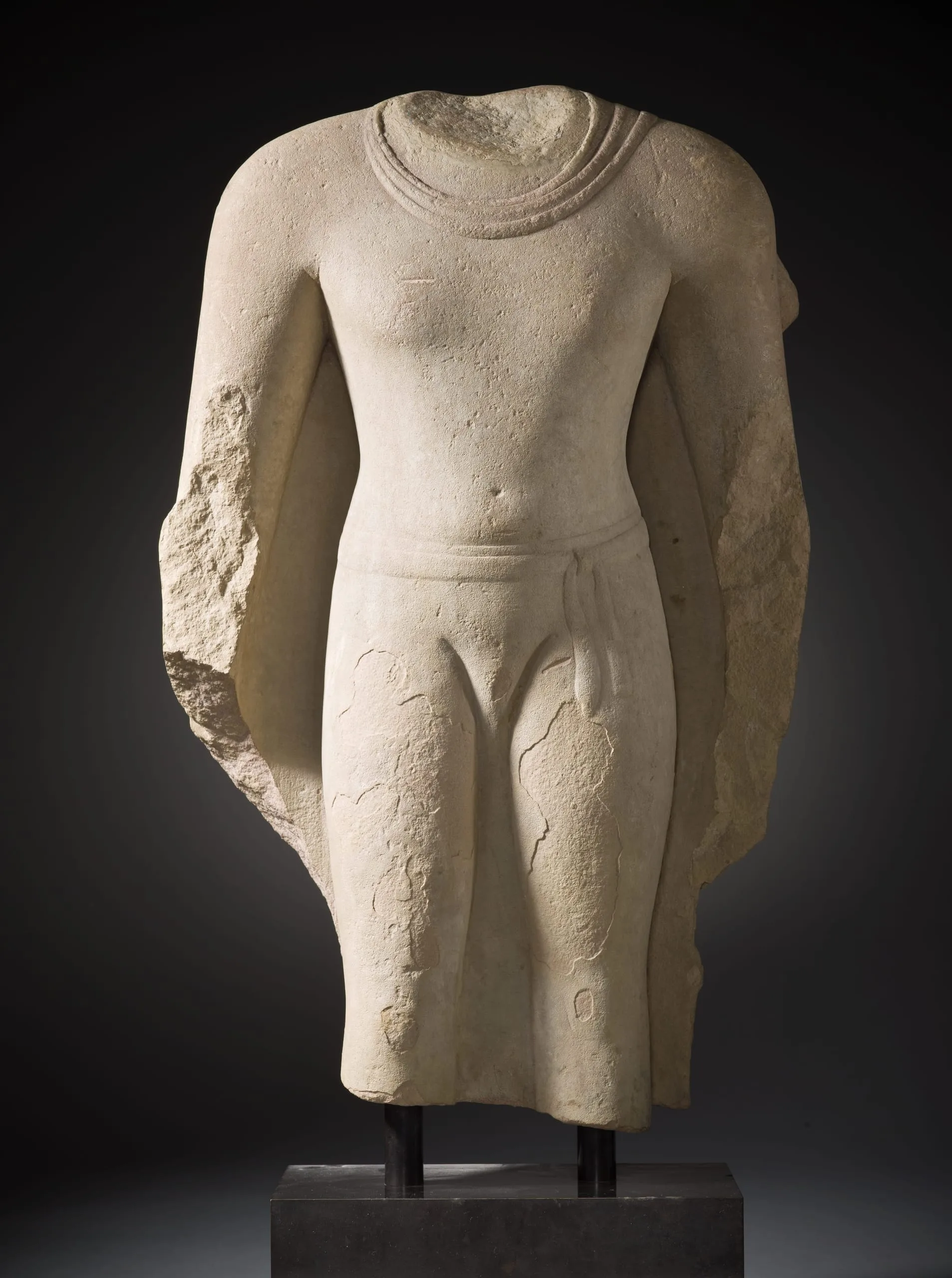
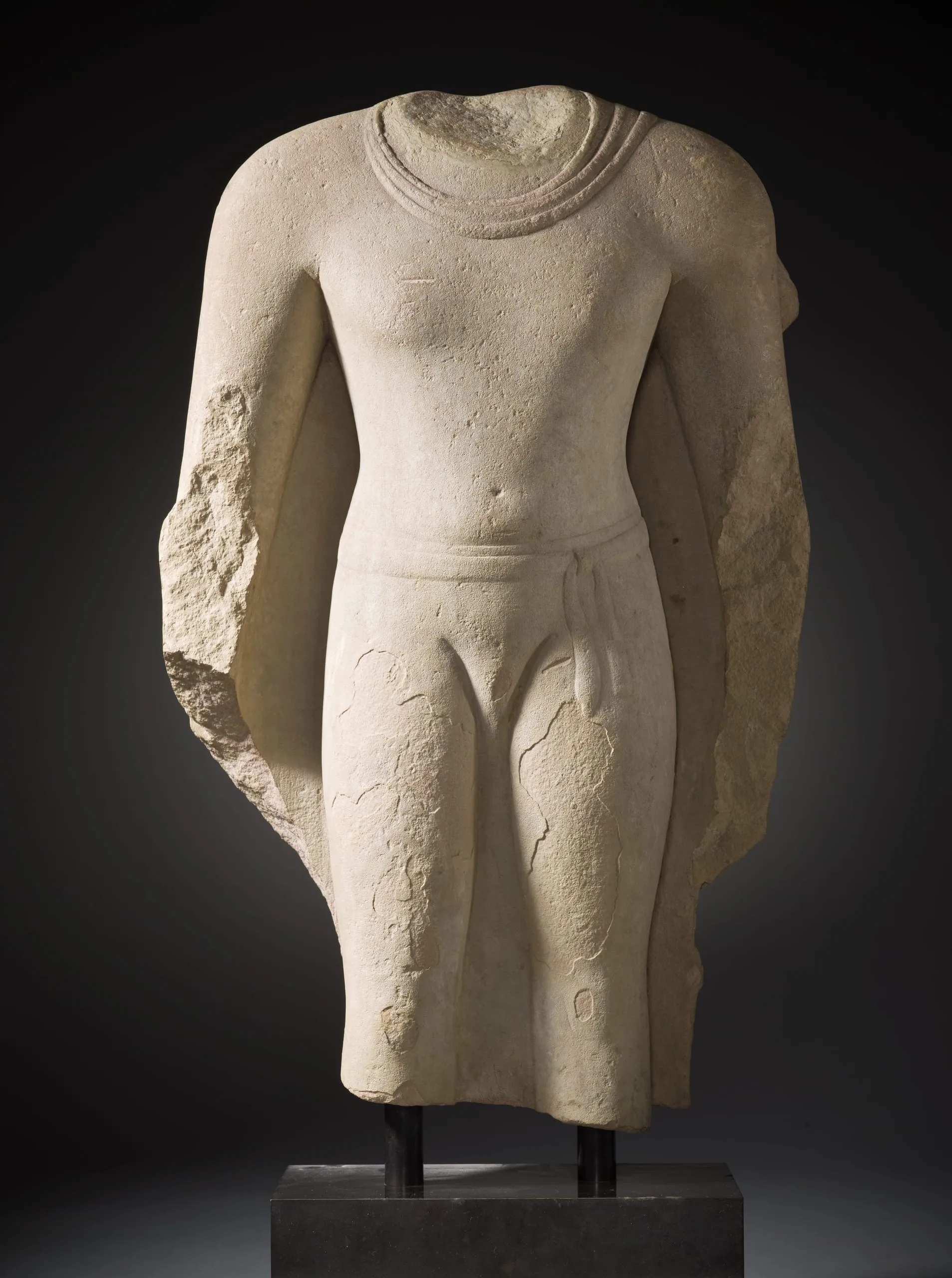
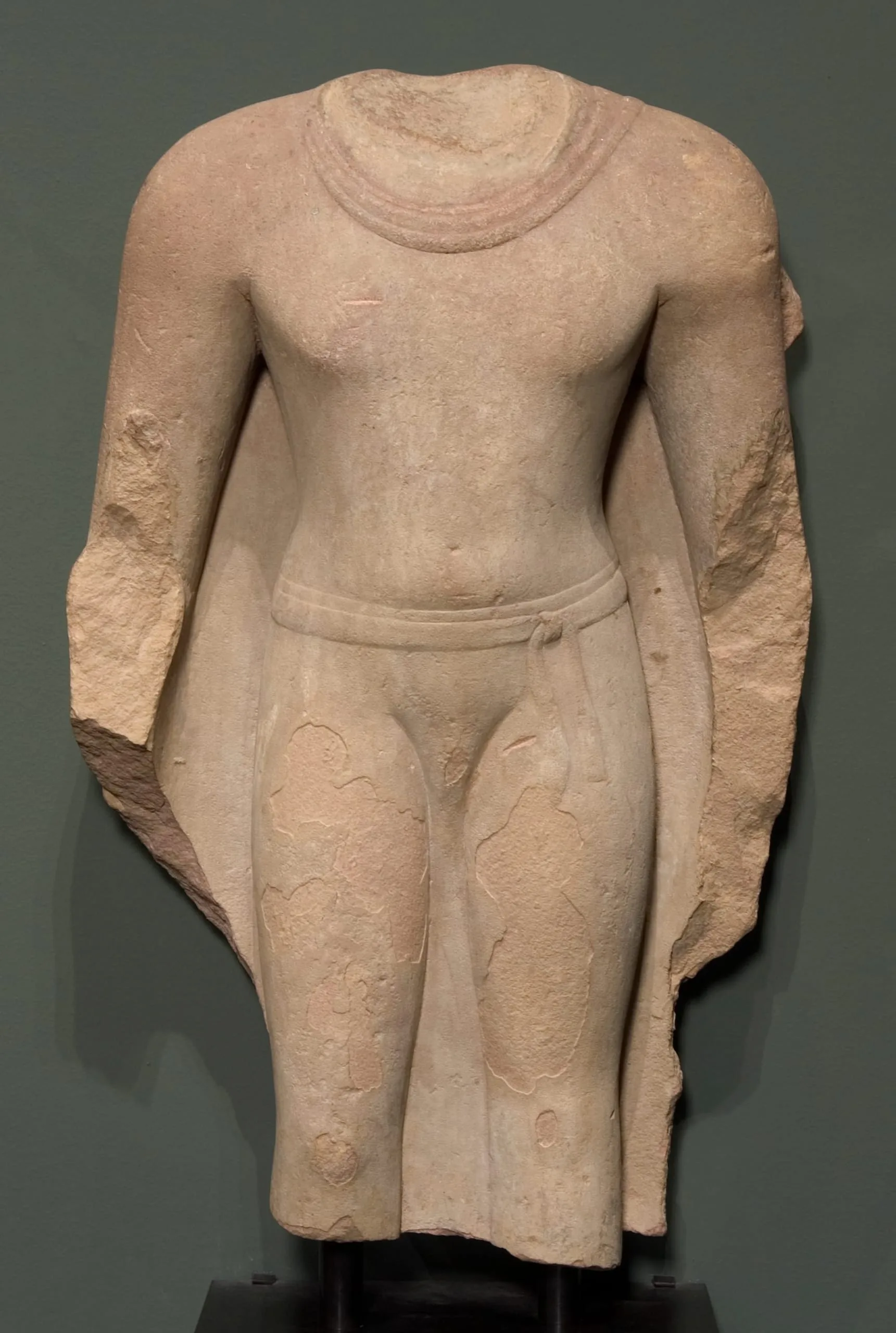
Buddha Shakyamunicirca 450

On view:
Resnick Pavilion, floor 1
Sandstone sculpture of a headless, armless male torso in pale cream stone, with a draped lower garment and carved necklace ridges at the chest
Sandstone torso sculpture, headless and missing lower legs, depicting a standing figure wearing a dhoti with a tied waistband and triple-strand necklace, with faint carved floral motifs on the garment; weathered pale beige surface.
Sandstone torso fragment of a standing figure, headless and missing forearms, wearing a thin dhoti with carved folds; smooth modeling of chest and abdomen with three-strand necklace indicated at neck; pale beige stone with weathered surface.
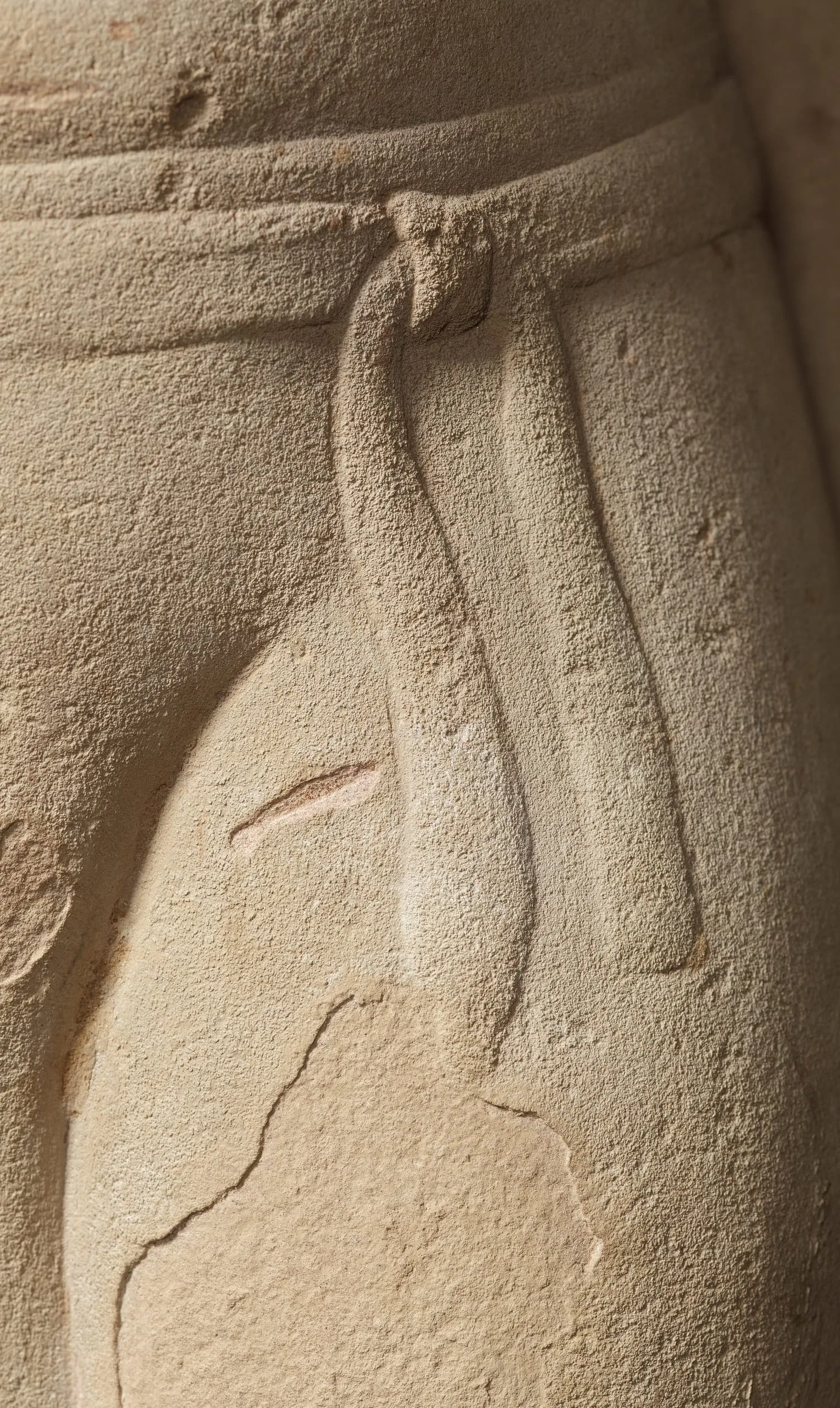
Close-up of a sandstone relief or sculpture showing a knotted sash or belt at the waist with hanging straps, surface weathered and cracked.
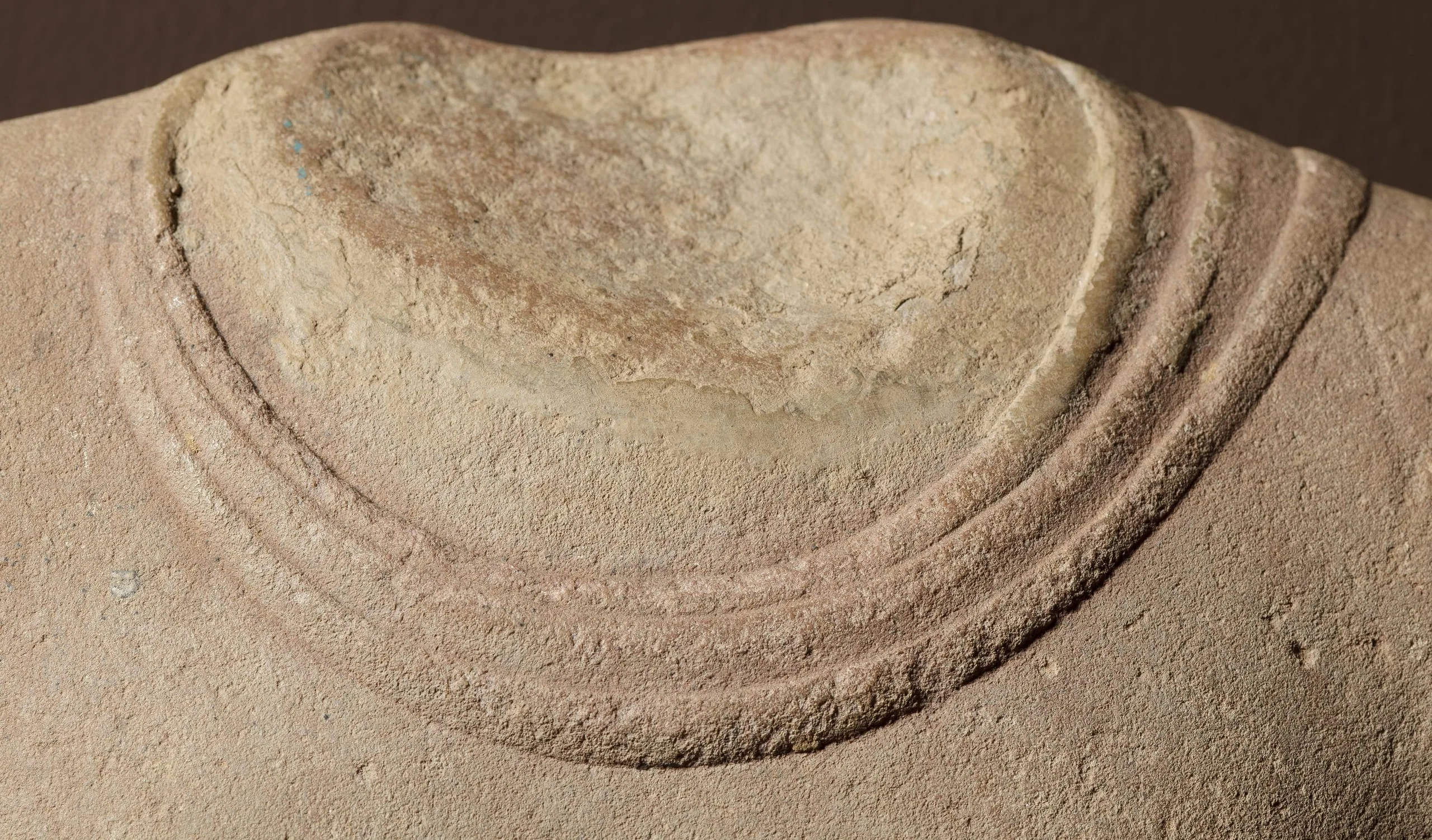
Stone sculpture fragment, close-up of a neck and upper chest area with three concentric carved ridges, pale beige sandstone with rough, weathered texture.
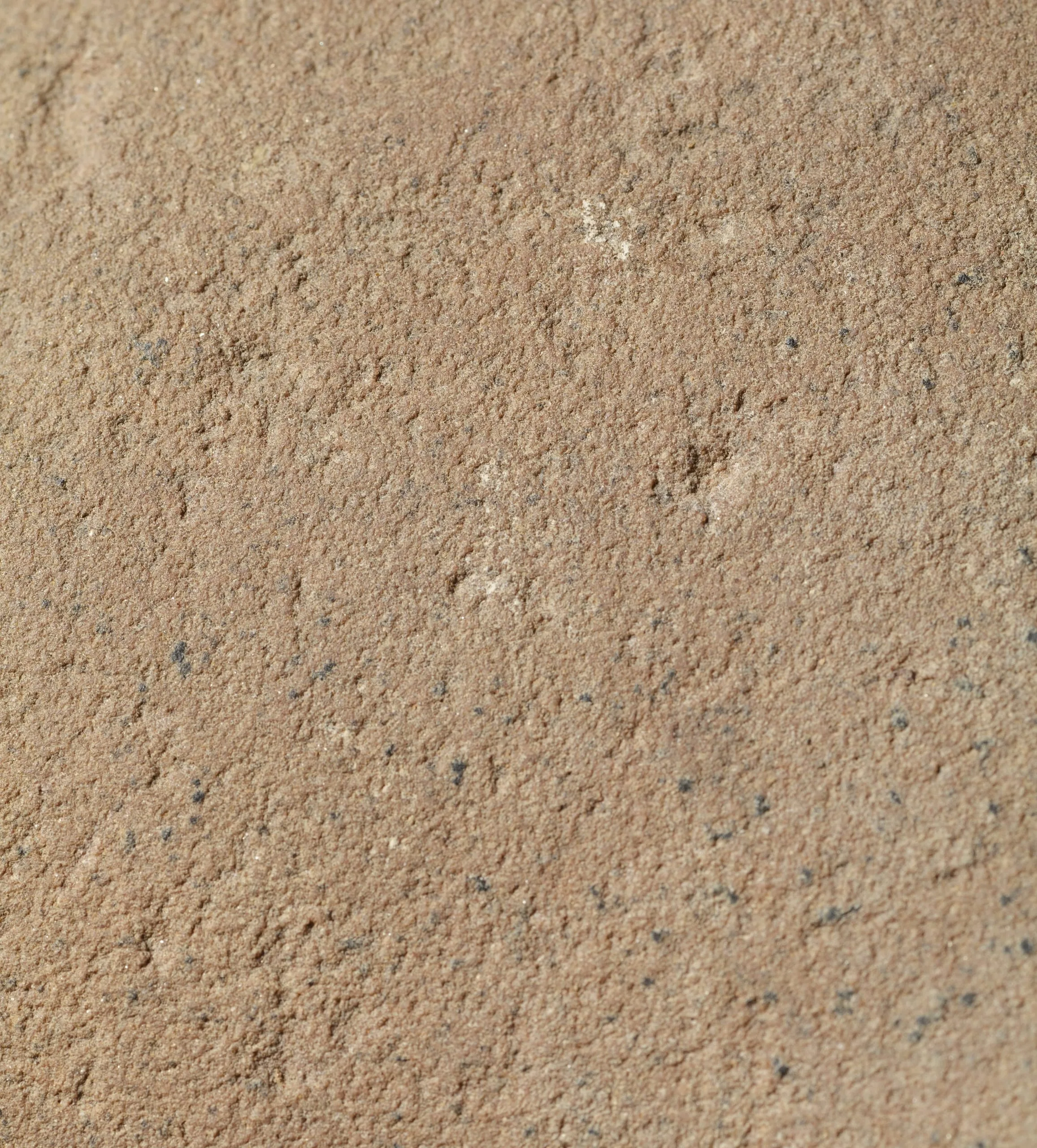
Close-up detail of a stone surface with rough, granular texture in warm tan and beige tones, with scattered dark mineral flecks throughout.
Artist or Maker
Unknown
Title
Buddha Shakyamuni
Place Made
India, Uttar Pradesh, Sarnath region
Date Made
circa 450
Medium
Pale grayish pink sandstone with black inclusion spots (quartz/quartzrose wacke)
Dimensions
27 x 17 x 5 in. (68.58 x 43.18 x 12.7 cm)
Credit Line
Art Museum Council Fund
Accession Number
M.79.83
Classification
Sculpture
Collecting Area
South and Southeast Asian Art
Curatorial Notes

The sculpture is made of a distinctive pale grayish pink sandstone with black inclusion spots (quartz/quartzrose wacke). Known as ‘Chunar’ sandstone, it was used in the 3rd century BCE to make the highly polished edict pillars of the Mauryan King Ashoka and several extant early sculptures from Sarnath dating from the 3rd–1st century BCE, and myriad Buddhas from Sarnath dating from the 5th century CE. Formerly believed to be from the Chunar quarry in the Mirzapur District, it is now thought to be from the Pabosa (Pabhosa) quarry in the Allahabad District (Harry Falk 2006).

Stylistically, the LACMA sculpture shares many of the classic characteristics of a Sarnath Buddha from their mature phase beginning in the mid-470s. The Buddha’s robe is transparent and contours to the elegantly swayed body, resulting in the famous ‘wet look.’ The diaphanous garb is chiefly discernible by the bunched folds of the upper garment encircling the neckline and by the cloth belt used to secure the lower garment, the tied ends of which fall naturalistically onto the upper left thigh. Significantly, the presence of the belt is a probative chronological and visual marker for a small group of belted Buddhas that predates the mature phase of Sarnath Buddhas, which are depicted without belts (Joanna Williams 1982). It is also one of the primary iconographic indicators of the sectarian affiliation of Sarvastivadin Buddhist monks and, hence, the Buddha images they patronized.

See Stephen Markel, "Reattribution of an Important Early Indian Buddha Image in the Los Angeles County Museum of Art." In Temple Architecture and Imagery of South and Southeast Asia: Prāsādanidhi: Papers Presented to Professor M.A. Dhaky, eds. P. Dhar and G. Mevissen (New Delhi: Aryan Books International, 2016), pp. 262-272.
Selected Bibliography
  • Little, Stephen, and Tushara Bindu Gude. Realms of the Dharma: Buddhist Art across Asia. Los Angeles: Los Angeles County Museum of Art, 2025.