LACMA

ShopMembershipMyLACMATickets
LACMA
Los Angeles County Museum of Art
5905 Wilshire Blvd.
Los Angeles, CA 90036
info@lacma.org
(323) 857-6000
Sign up to receive emails
Subscribe
© Museum Associates 2025

Museum Hours

Monday

11 am–6 pm

Tuesday

11 am–6 pm

Wednesday

Closed

Thursday

11 am–6 pm

Friday

11 am–8 pm

Saturday

10 am–7 pm

Sunday

10 am–7 pm


  • About LACMA
  • Jobs
  • Building LACMA
  • Host An Event
  • Unframed
  • Press
  • FAQs
  • Log in to MyLACMA
  • Privacy Policy
© Museum Associates 2025
Collections

Unknown
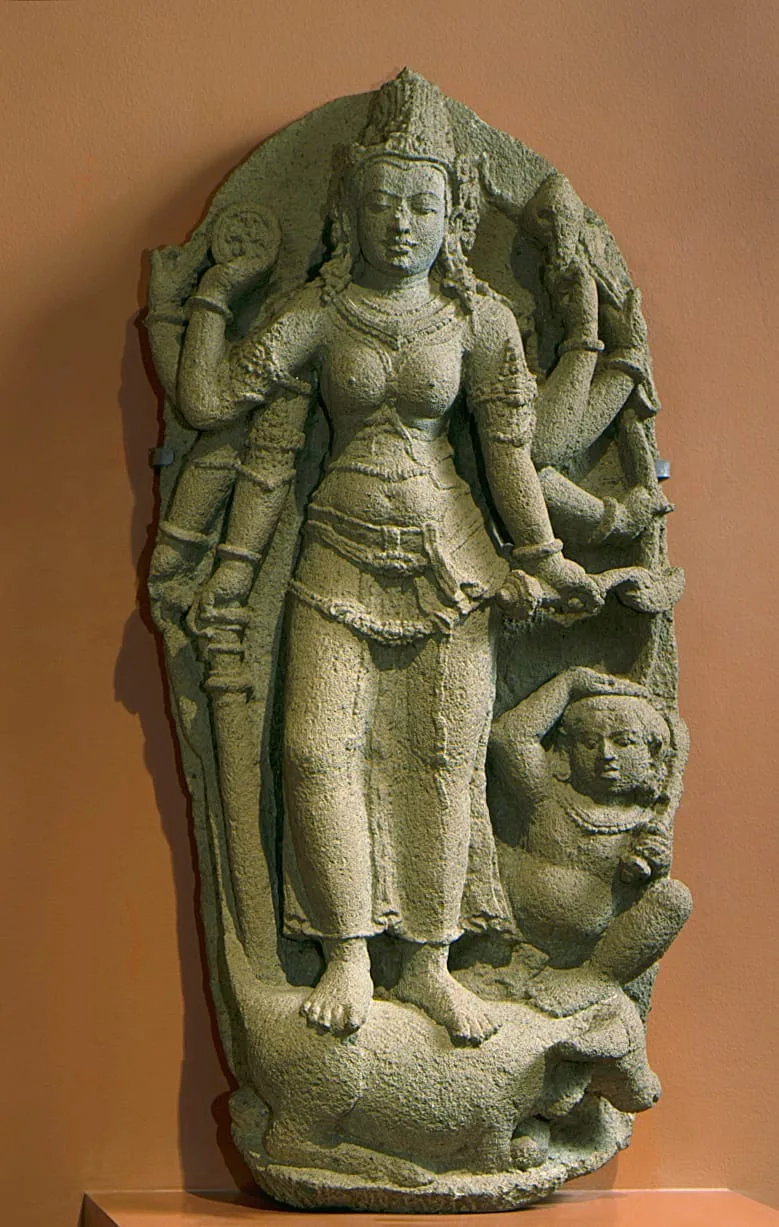
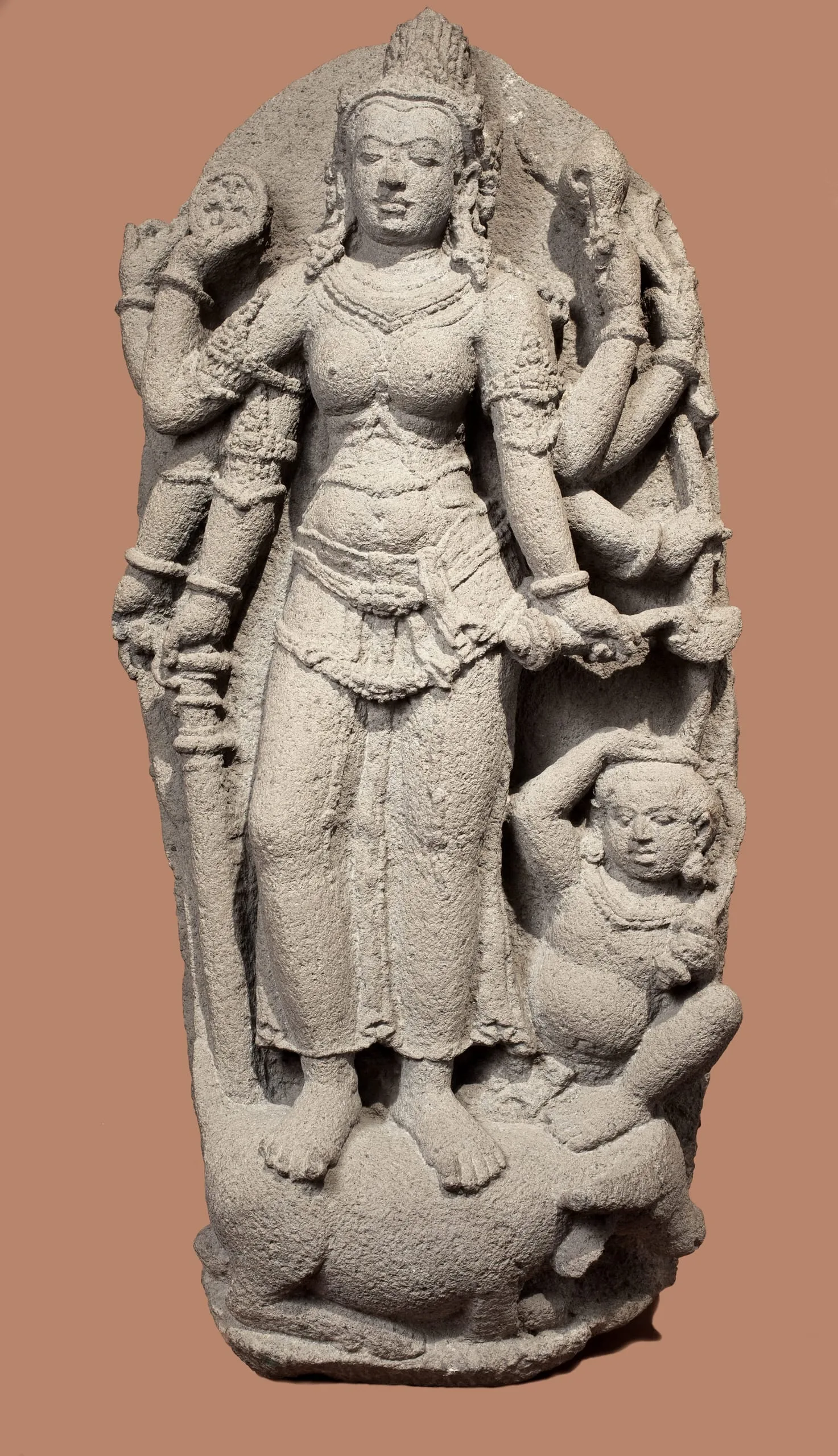
Durga Slaying the Buffalo Demon9th-10th century

Not on view
Gray stone relief sculpture of a multi-armed standing deity with elaborate headdress and jewelry, standing on a rounded base, with a small crouching figure at lower right
Stone relief sculpture of a multi-armed standing deity wearing a crown, jewelry, and draped lower garment, standing atop a recumbent animal with a smaller figure crouching at lower right, carved from gray-green volcanic stone with a pointed arch-shaped background slab.
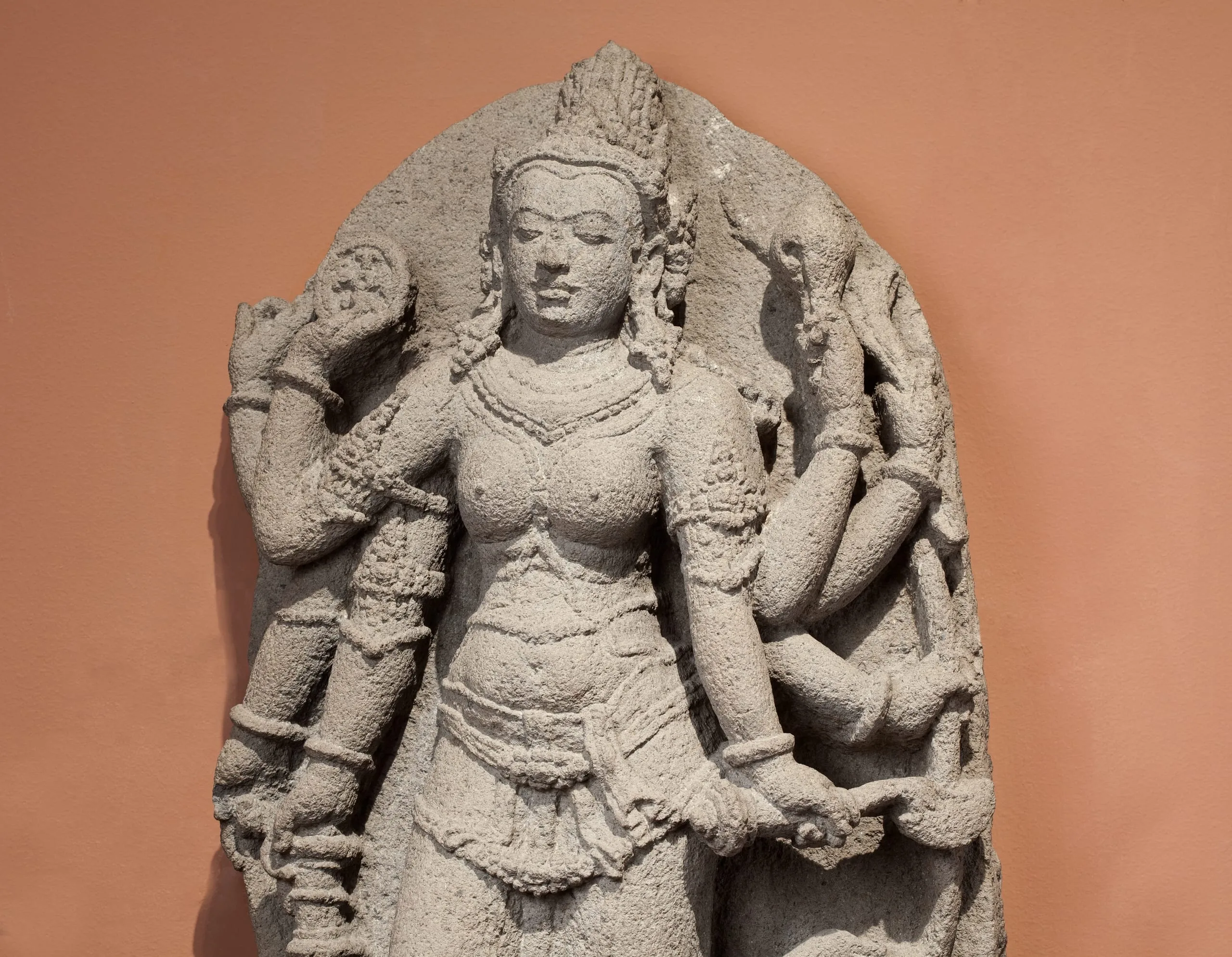
Stone relief sculpture of a multi-armed standing deity adorned with crown, beaded jewelry, and ornamental belt, set against an arched aureole, with weathered gray volcanic stone surface.
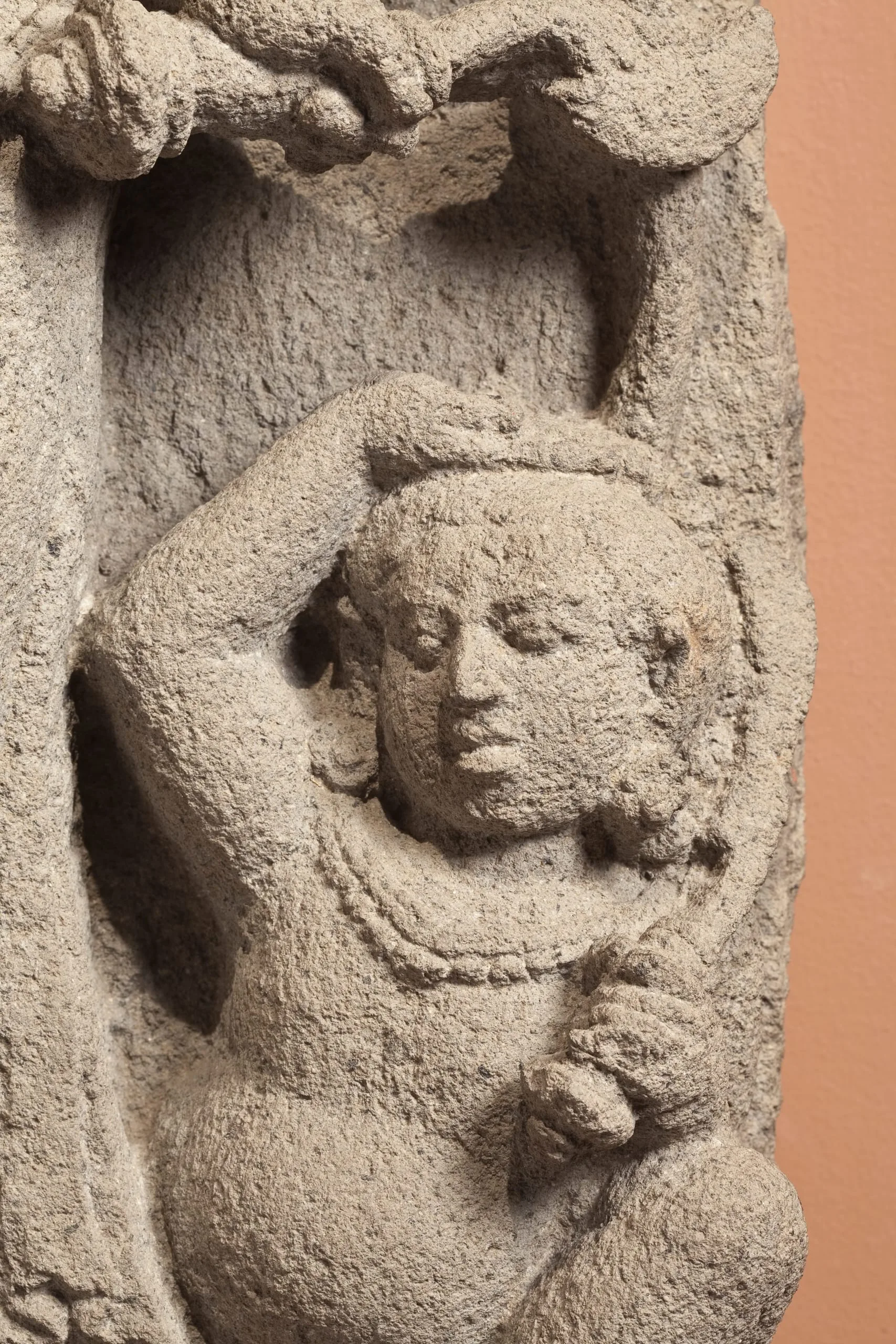
Stone relief carving of a female figure in a dynamic pose, one arm raised overhead, wearing a beaded necklace, with elaborately dressed hair and foliated architectural elements above.
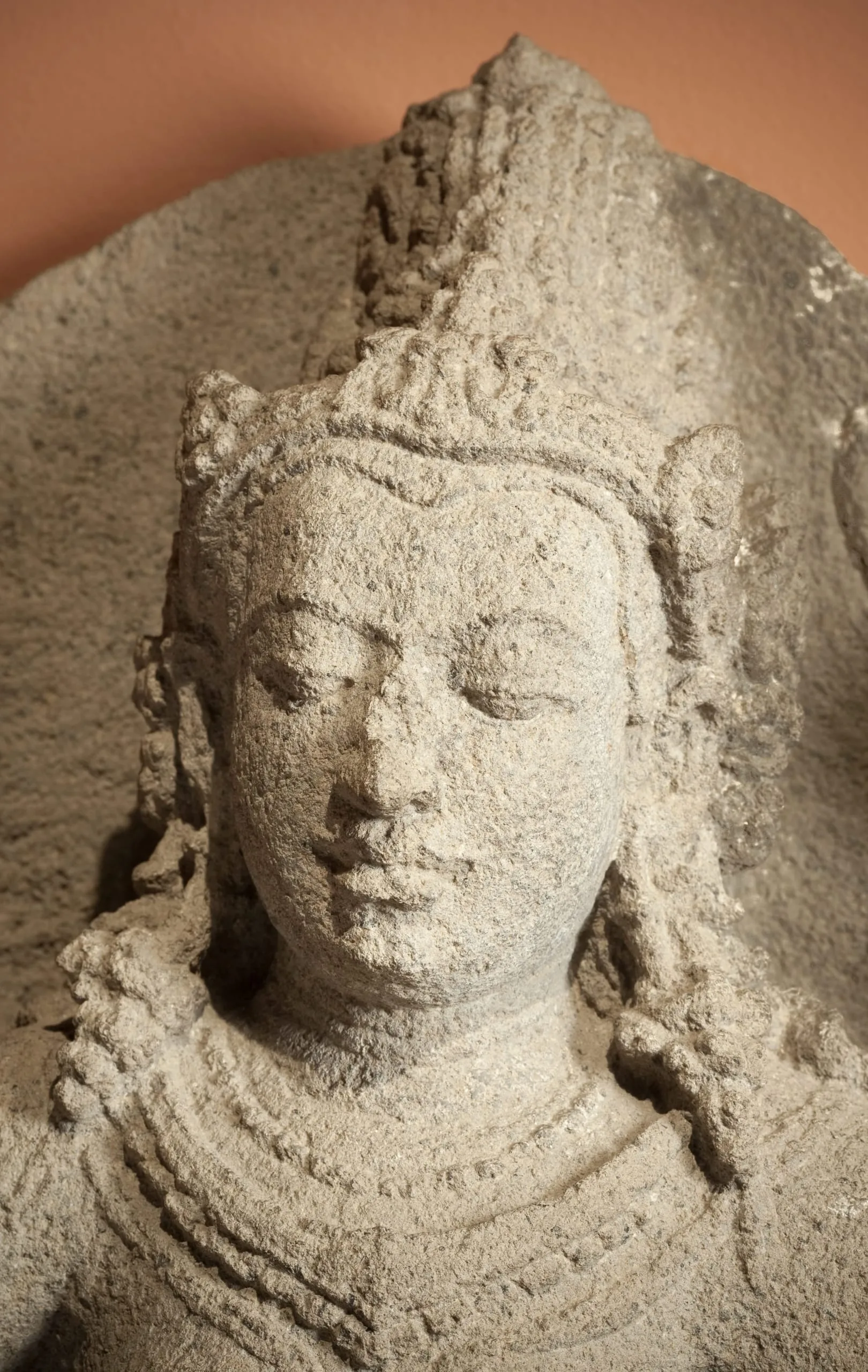
Stone sculpture, close-up of a deity's face with downcast eyes, elaborate crown with stacked coils, braided hair falling at sides, and layered necklaces; weathered gray surface with rough texture.
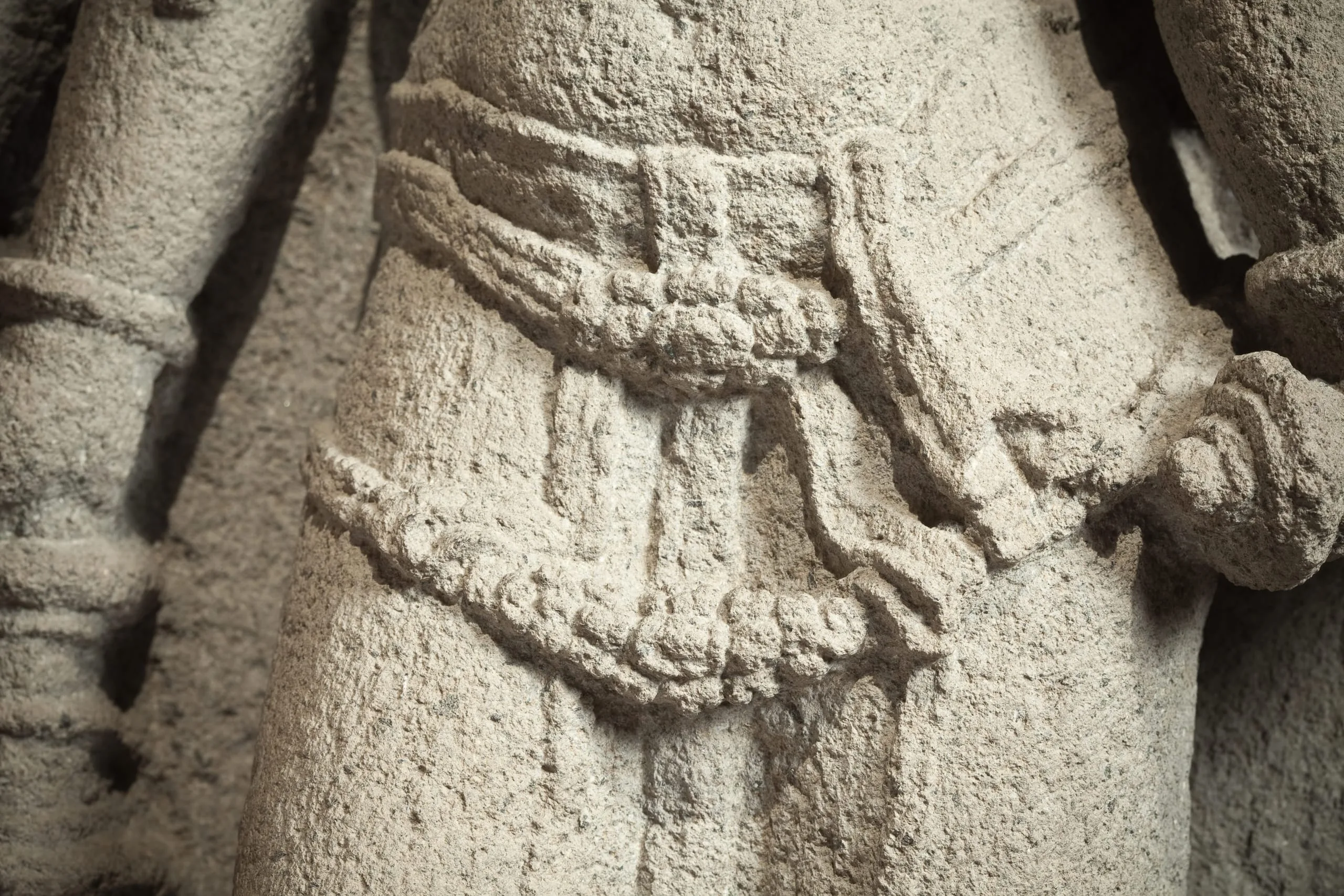
Close-up of a stone relief carving showing a decorative belt or girdle with a winged or floral clasp and beaded lower border, on the torso of a figure; pale limestone with weathered, textured surface.
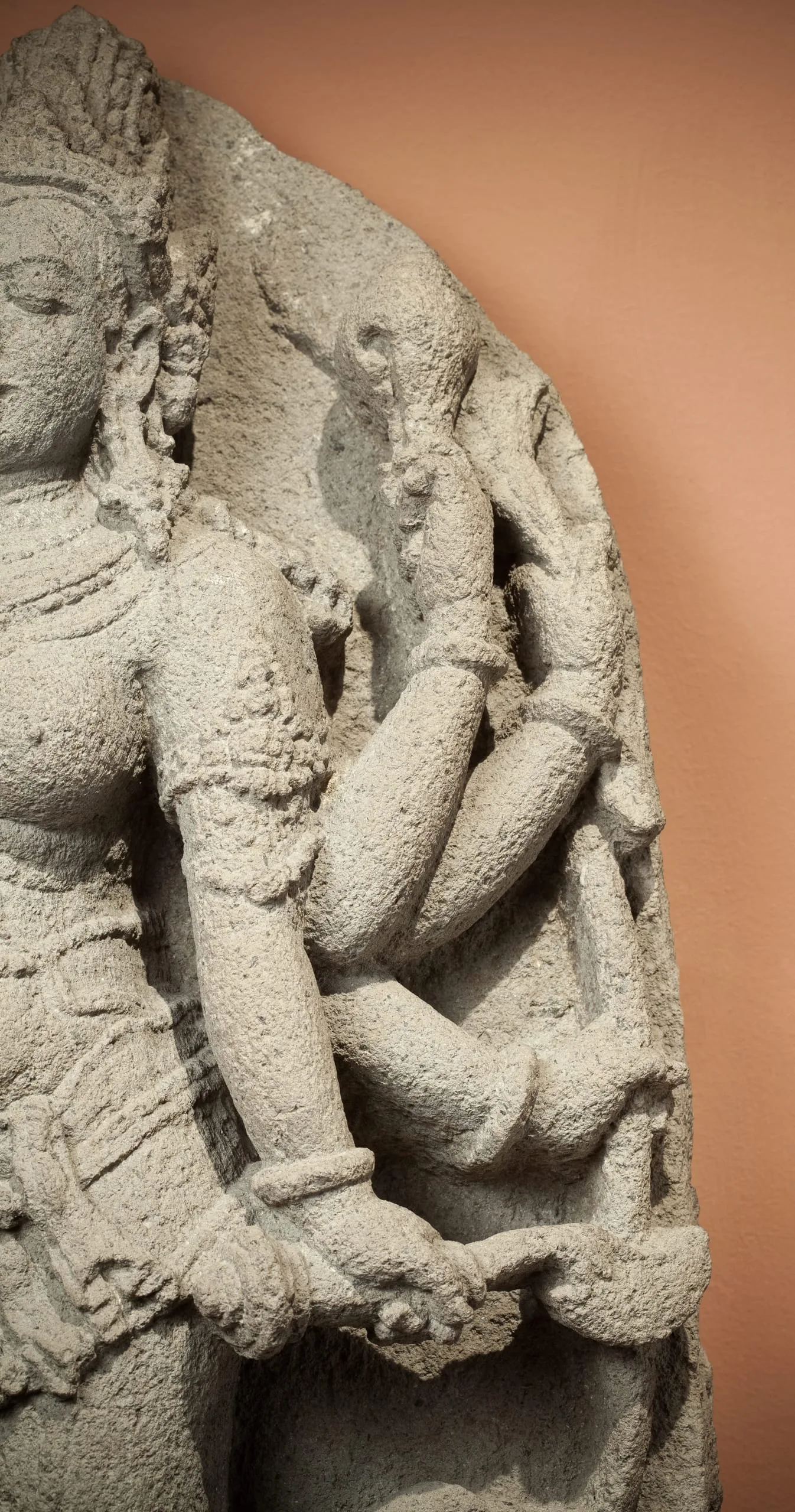
Stone relief sculpture of a multi-armed deity in gray granite, shown from the torso up, with ornamental jewelry, an elaborate headdress, and multiple hands holding attributes; weathered surface with visible erosion.
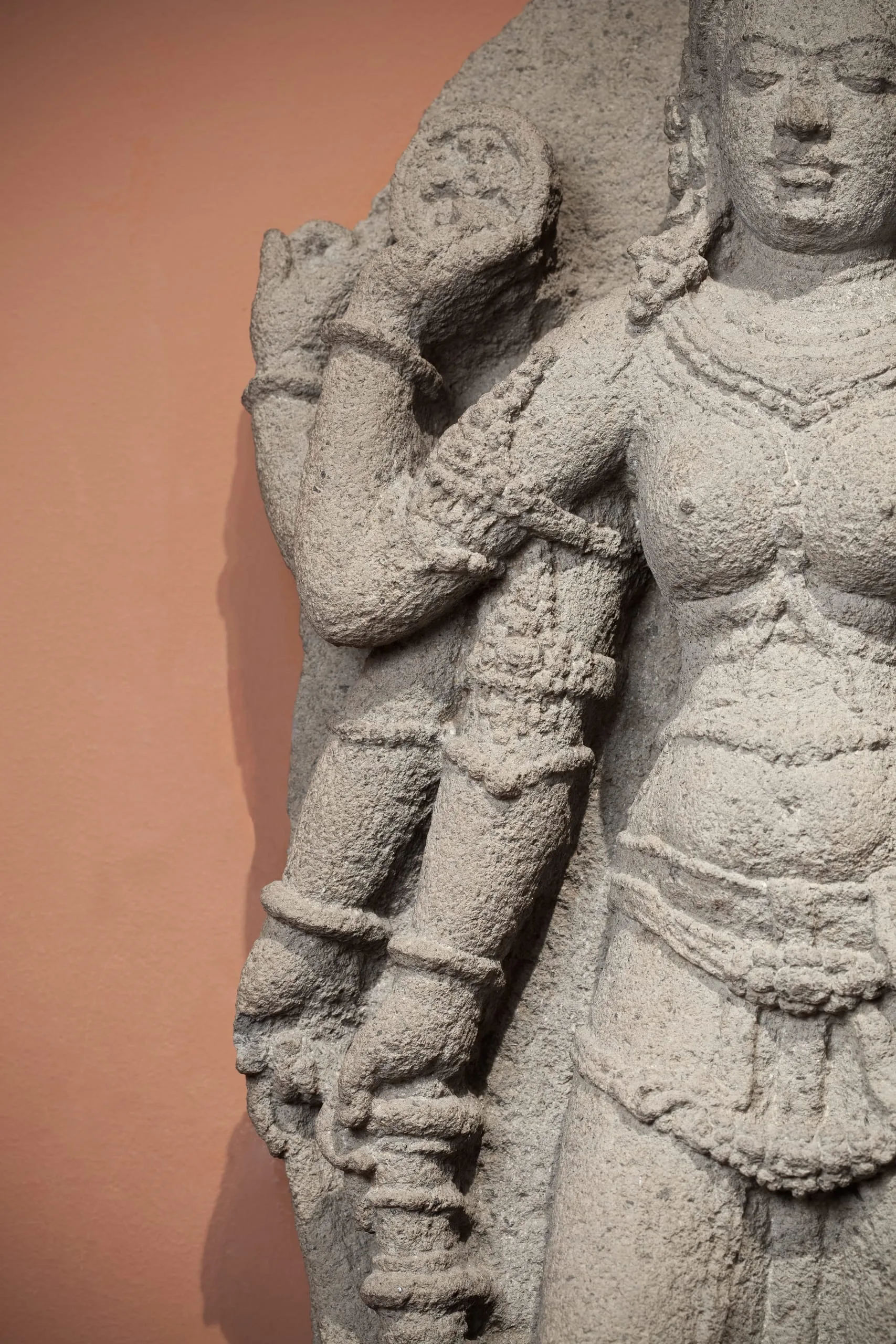
Granite sculpture, partial view of a standing figure adorned with intricately carved jewelry including armlets, bangles, necklaces, and a beaded waistband, one arm raised with fingers raised in a gesture, rough-hewn stone texture throughout.
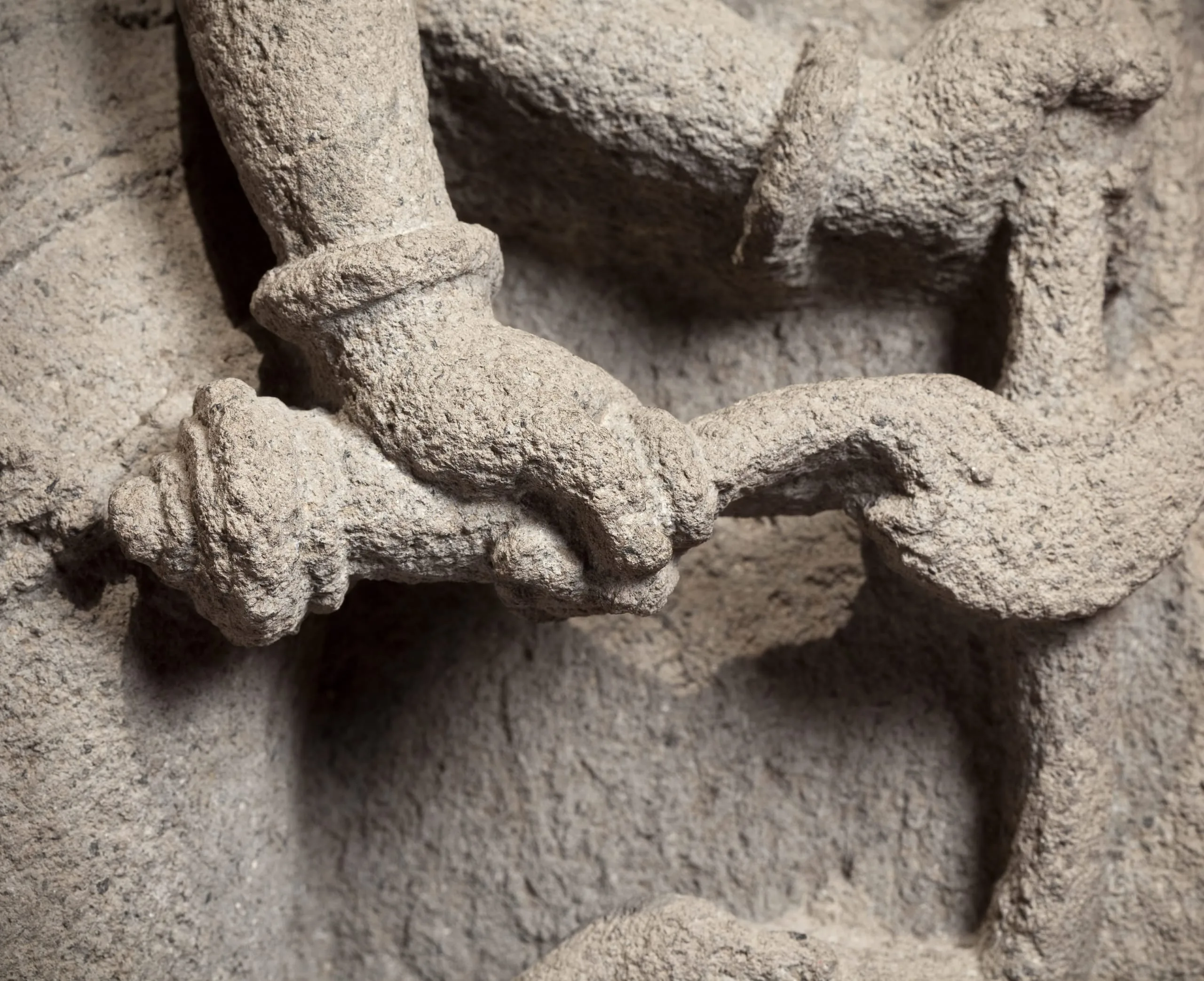
Close-up of a stone relief carving showing two hands clasped or grasping a slender object, with rough-textured gray stone surface and deeply carved negative space.
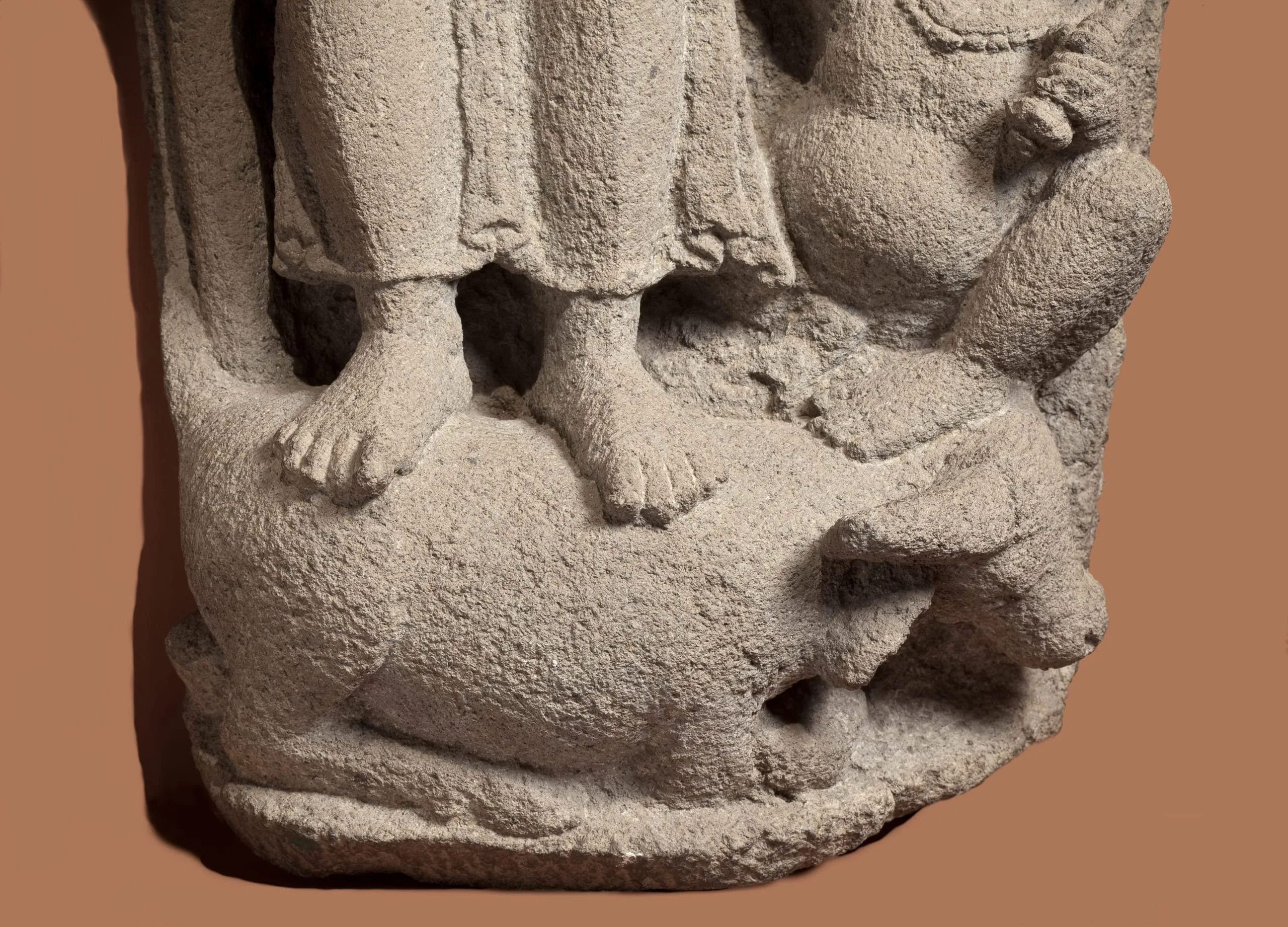
Stone relief fragment showing the lower portion of a standing figure with bare feet resting atop a large rounded form, with a crouching subsidiary figure at right; worn sandstone surface with rough texture.
Artist or Maker
Unknown
Title
Durga Slaying the Buffalo Demon
Place Made
Indonesia, Central Java
Date Made
9th-10th century
Medium
Volcanic stone
Dimensions
33 x 15 x 5 in. (83.82 x 38.1 x 12.7 cm)
Credit Line
Gift of Anna Bing Arnold
Accession Number
M.79.7
Classification
Sculpture
Collecting Area
South and Southeast Asian Art
Curatorial Notes
The goddess Durga is an aspect of the magna mater, the great mother or goddess of Near Eastern cultures, and goes back to paleolithic times. Associated with fecundity and abundance, this goddess entered India with the Indo-Greeks, becoming a cult figure and the subject of many small stone icons in the Kushan period (first-third centuries). By the Gupta era (320-600) Durga was a supreme goddess to her devotees. She embodies sakti, the creative or cosmic energy underlying all of creation.
According to legend, Durga was created by the male gods of the Hindu pantheon, who formed her from the sum of their combined energies for the purpose of defending their tranquility, which was being threatened by the armies of the demon Mahisa. When confronted, Mahisa transformed himself into a buffalo, but Durga was not deceived; she kicked him to his knees, pierced him with her trident, and struck off his head as he tried to resume human form.
Here Mahisa encounters Durga with eight arms and numerous powerful weapons the gods gave her: a conch shell, bow, snake noose, axe, club, and mace. Although Indian representations of this battle are graphic, Javanese depictions are much less lurid. This sculpture lacks Durga's fierce companion and vehicle, the lion, and the buffalo is not mutilated, perhaps in acknowledgment of its essential role in Javanese culture, where it was indispensable in the cultivation of rice. The animal lies almost placidly under Durga's feet. Durga stands serene and graceful in her triumph as the cherubic demon emerges, gesturing with an upraised hand to ward off her wrath.
Selected Bibliography
  • Brown, Robert L. Southeast Asian Art at LACMA: An Online Scholarly Catalogue. Los Angeles: Los Angeles County Museum of Art, 2013. Accessed June 25, 2024. http://seasian.catalog.lacma.org/.