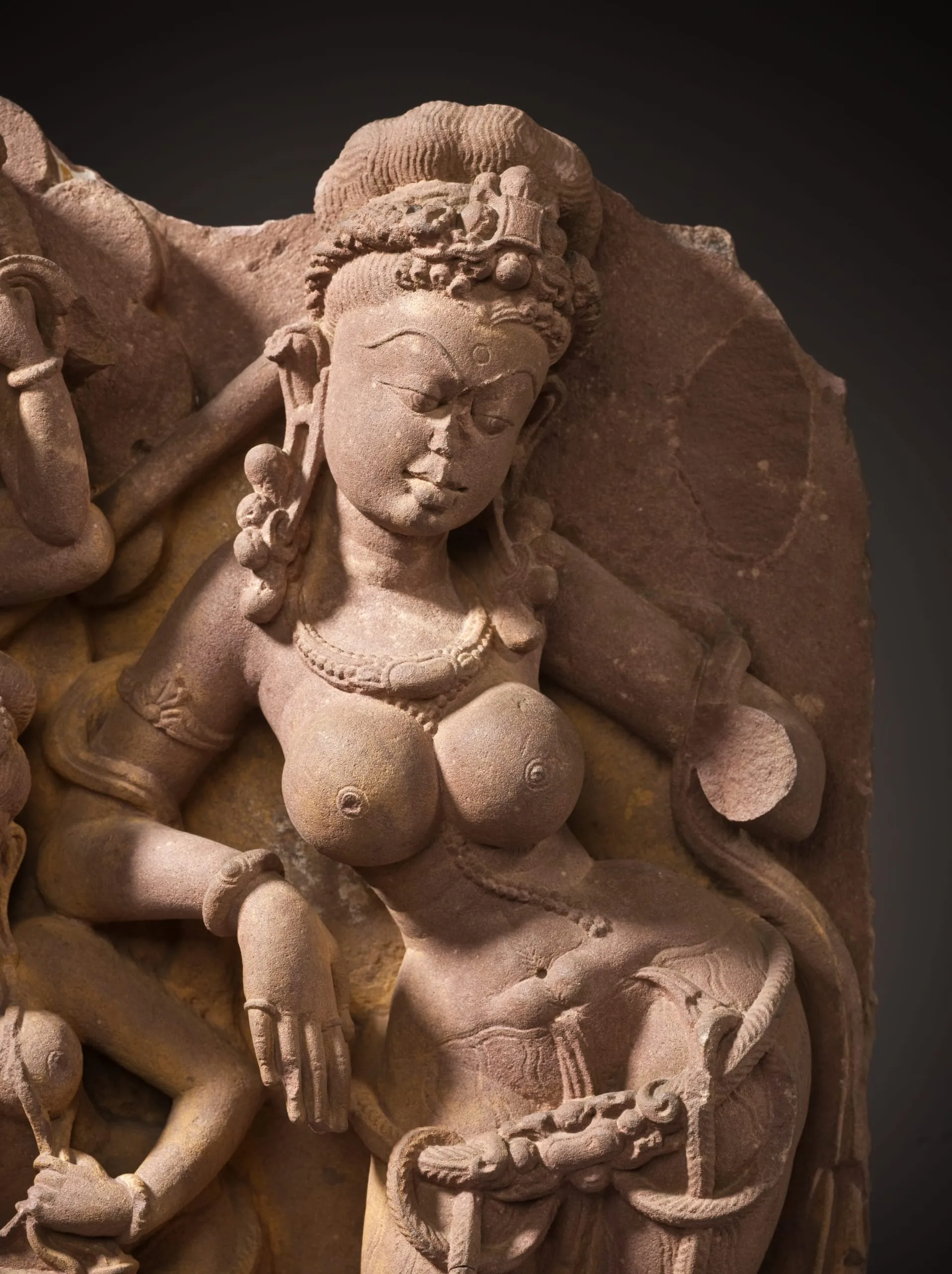
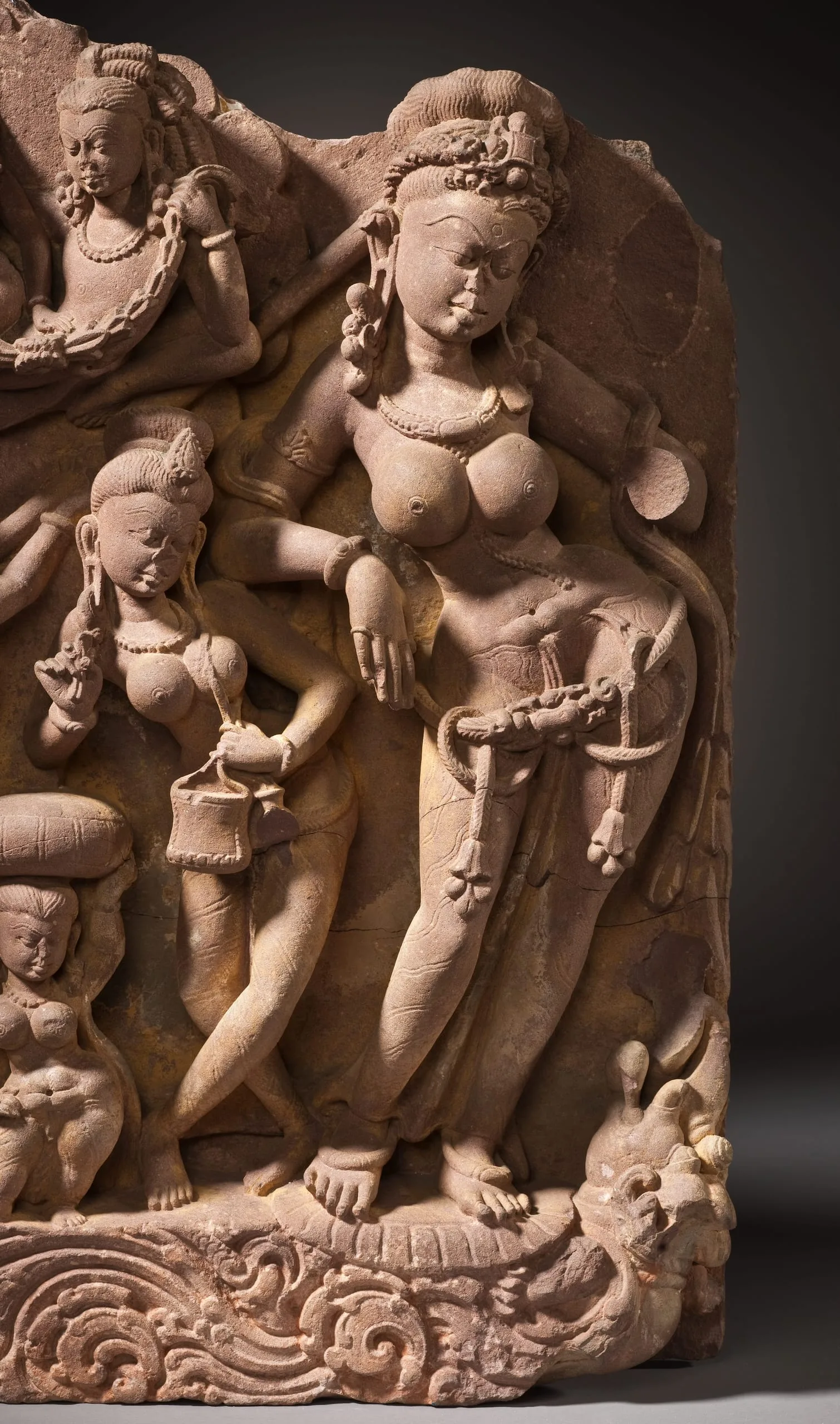
Beginning as early as the renowned Gupta Dynasty (319-467 CE) and continuing through the early medieval period (6th-13th century), the door jambs of northern and central Indian Hindu temples are typically graced with deified personifications of the Indian rivers Ganga (Ganges River) and Yamuna (formerly Jumna River). At first, they were place near the lintel but were later shifted to the base of the door jamb. The goddesses serve to demarcate the threshold into the sacred space within and to purify the worshippers who enter the sanctum.
The Ganga originally flowed in heaven and was brought to earth by the performance of rigorous austerities for one thousand years by King Bhagiratha of the legendary Solar Dynasty, which claimed a direct lineage from the Sun. Bhagiratha had propitiated Ganga to descend to earth to purify the ashes of his ancestor King Sagara’s 60,000 sons, who had been incinerated by the sage Kapila after interrupting his slumber. In order to break Ganga’s tumultuous cascade of water that would have crushed the earth, the god Shiva intercepted her raging torrent by catching it in his long hair to dissipate the force of the divine deluge.
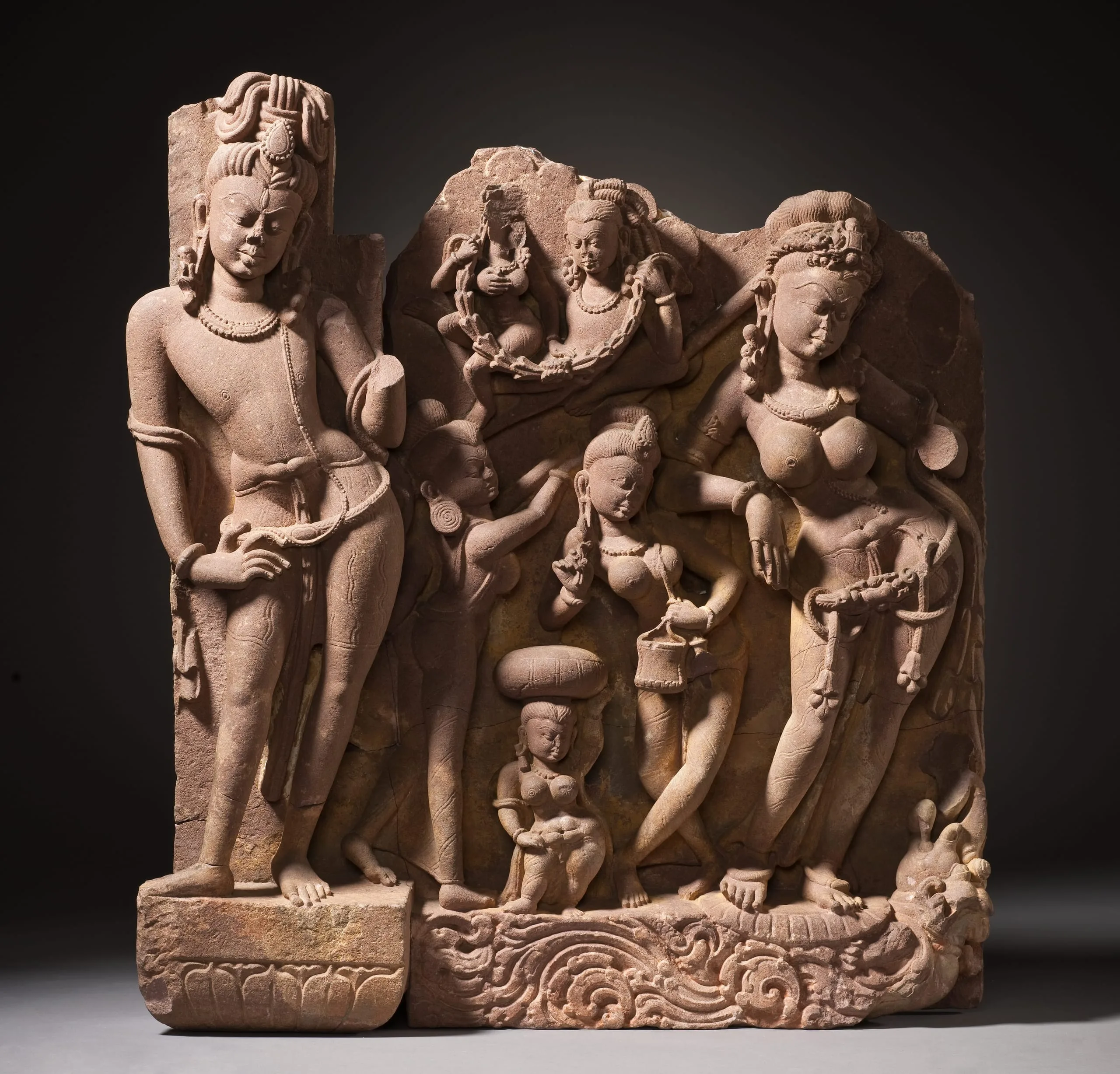
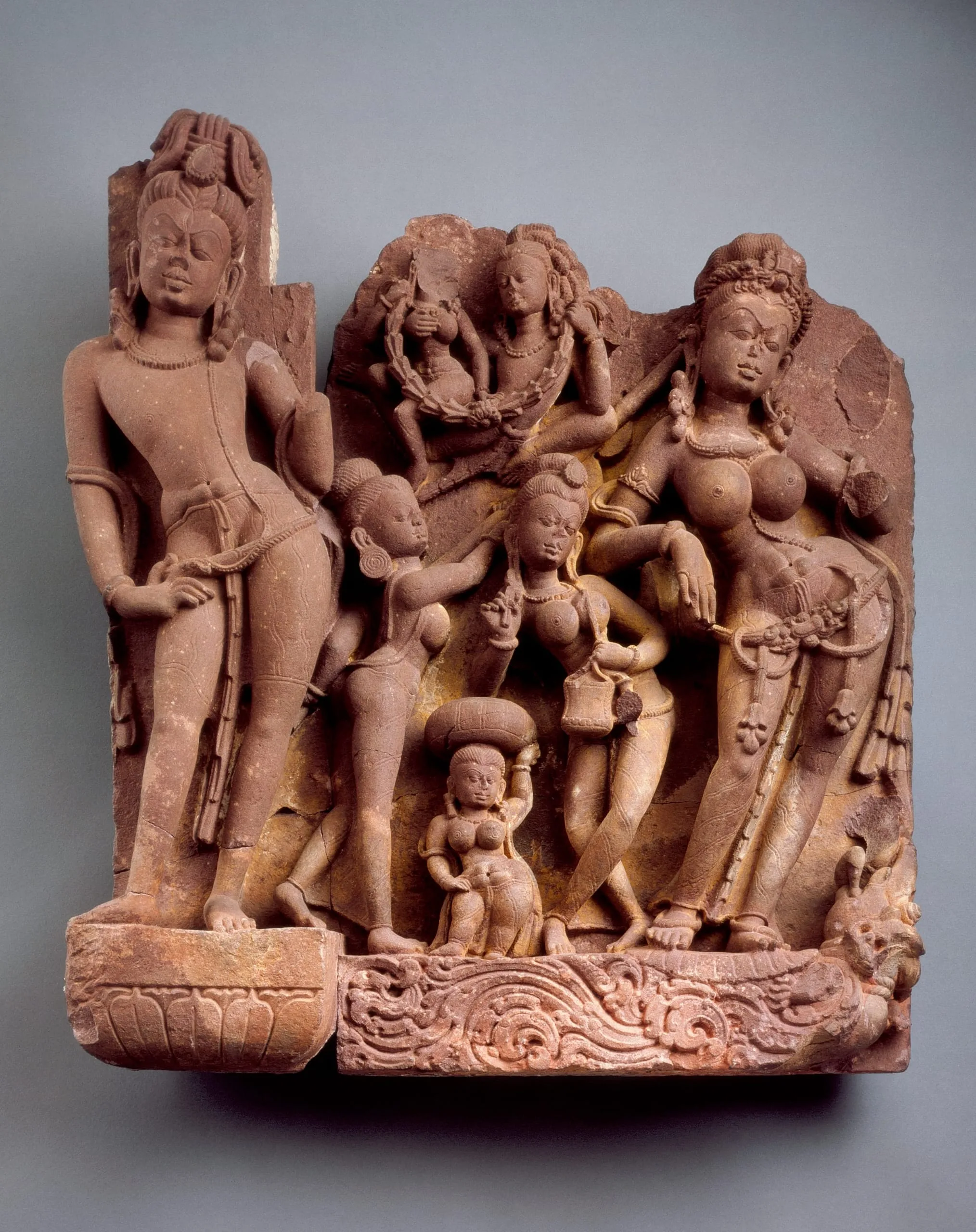
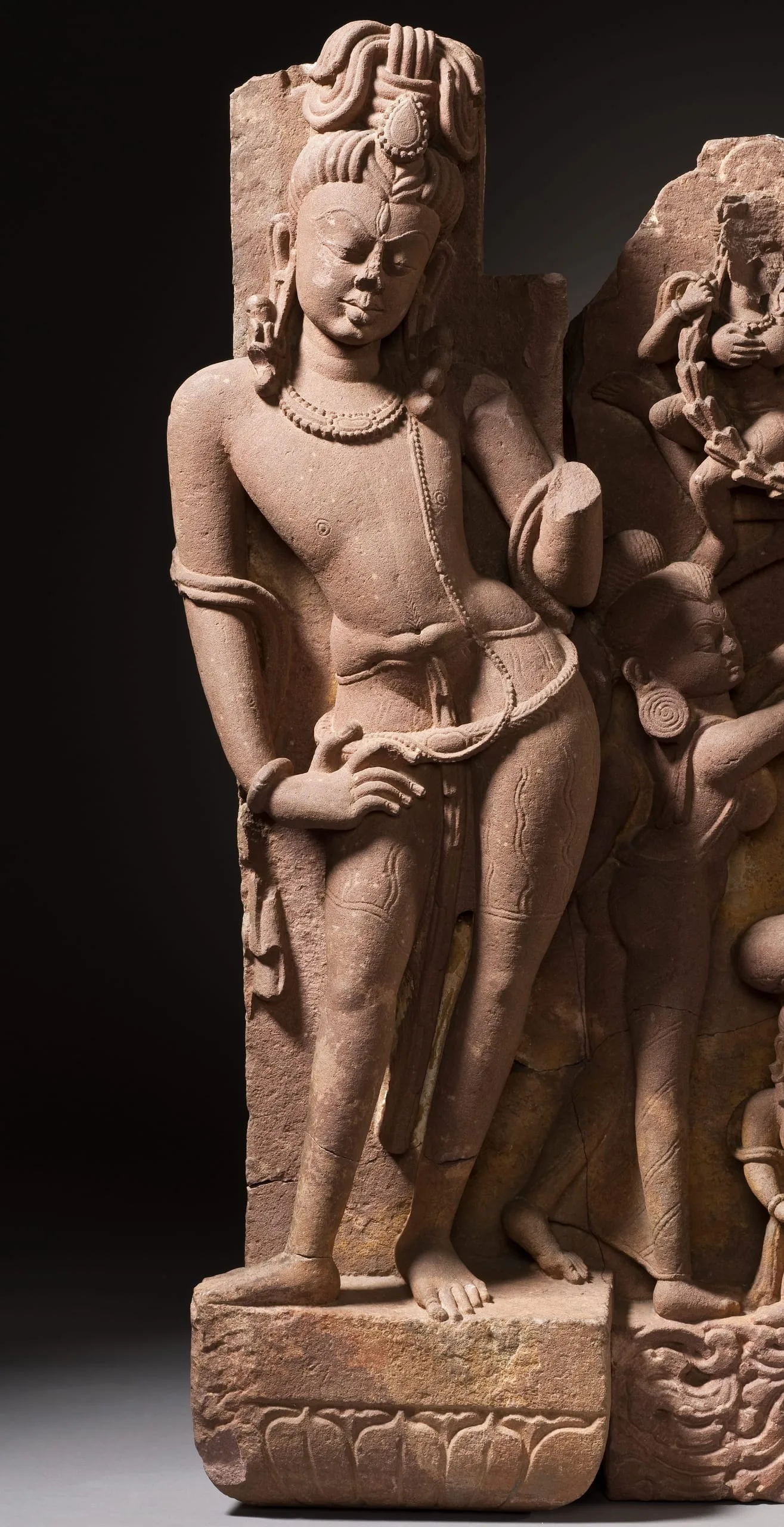
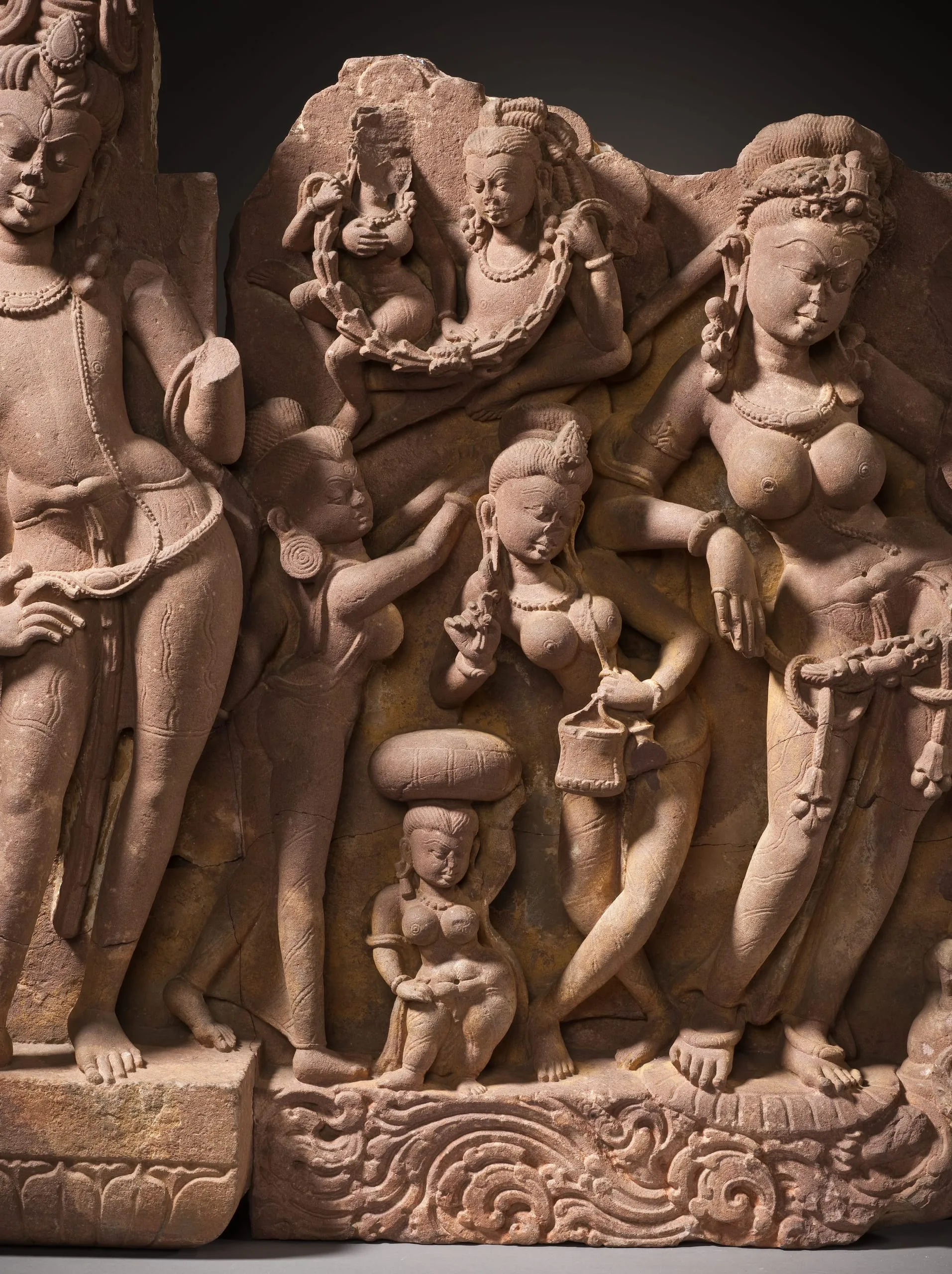
Ganga stands on her mount, a mythical aquatic creature (makara). She is accompanied at the opposite end of the relief by a Shaiva door guardian bearing Shiva’s ascetic hairstyle and third eye of wisdom. Between them are female attendants of the goddess’s retinue and two flying celestials carrying an honorific floral garland.
See the paired sculpture of Yamuna (M.79.9.10.2a-b).