- Title
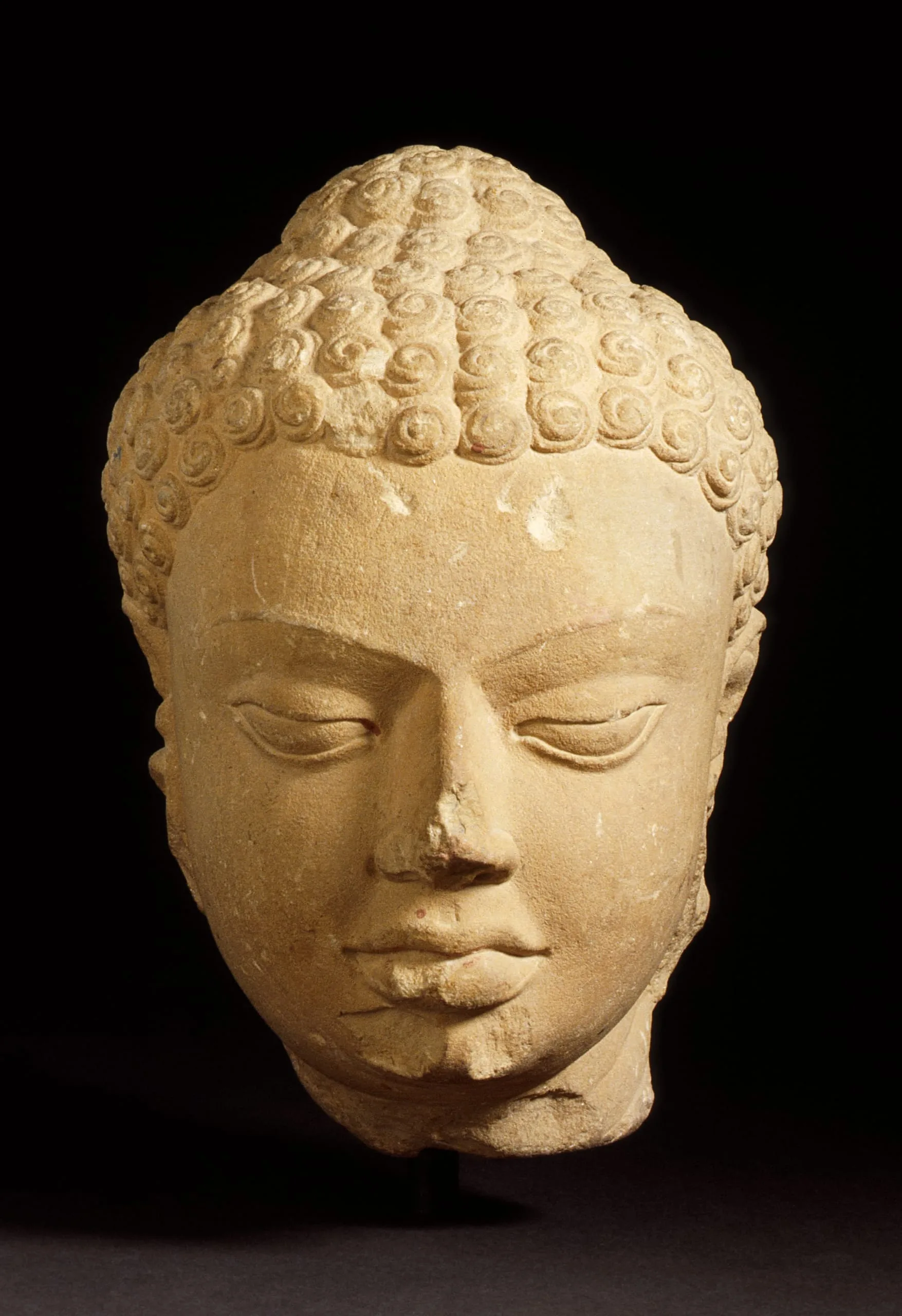
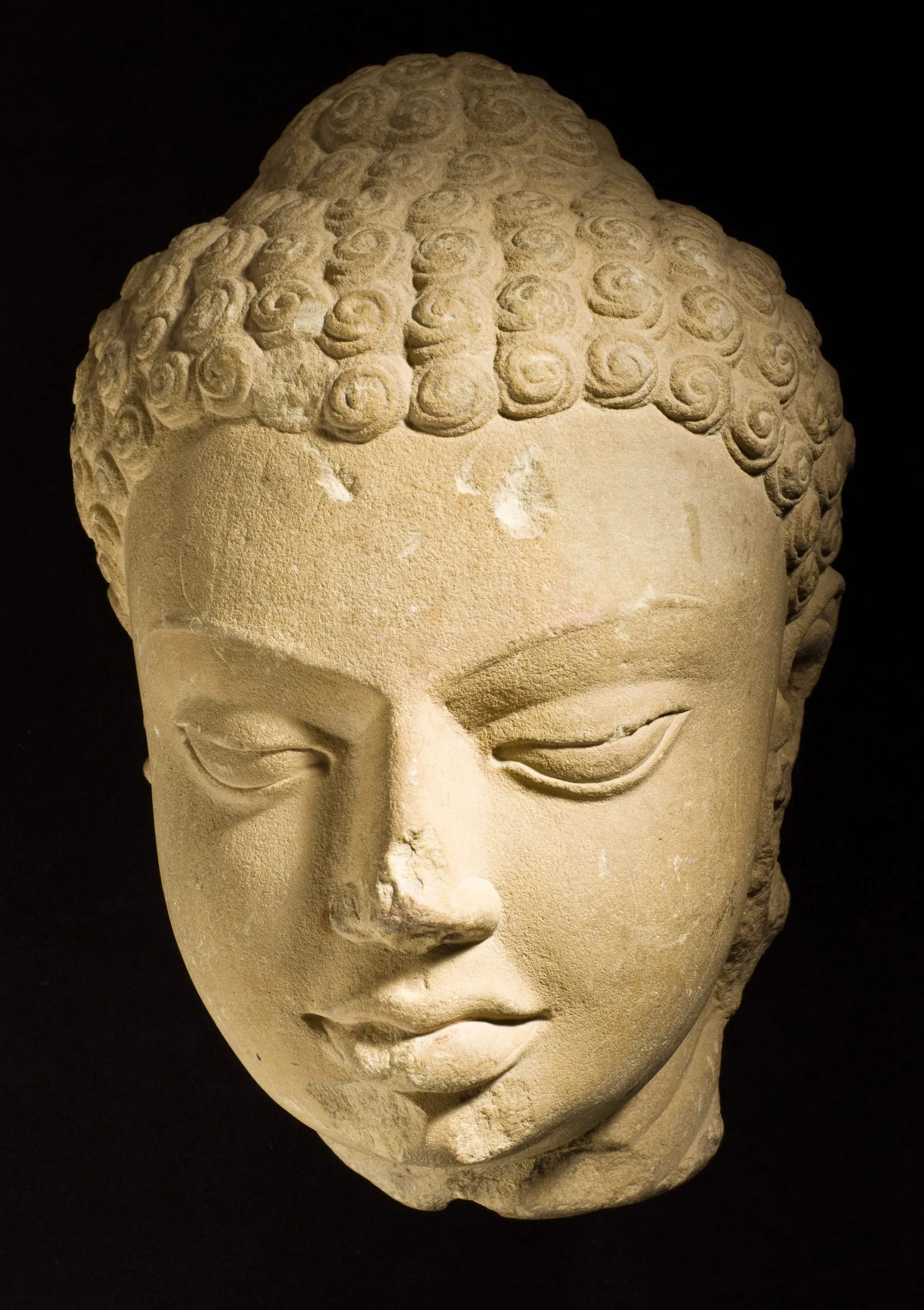
- Head of Buddha Shakyamuni
- Date Made
- circa 475
- Medium
- Sandstone
- Dimensions
- overall: 10 × 7 × 5 1/2 in. (25.4 × 17.78 × 13.97 cm)
- Accession Number
- M.79.9.2
- Curatorial Notes
This elegant head of Buddha Shakyamuni epitomizes the restrained stylistic ideal of Buddha images created during the mid-5th century in the artistic and religious center of Sarnath, Uttar Pradesh, where the Buddha preached his First Sermon. It would have originally surmounted a Buddha torso with a robe fashioned in the unpleated ‘wet look’ drapery style (see 69.3 and M.79.83).
This Buddha head displays several of the standard iconographic features. It has snail-curl hair, the cranial protuberance (ushnisha) emblematic of his omniscience, elongated earlobes symbolizing his renunciation of the material world, and heavily-lidded pensive eyes conveying his compassion for all sentient beings. There is no sacred forehead marking (urna).
- Selected Bibliography
- Pal, Pratapaditya. Indian Sculpture, vol.1. Los Angeles: Los Angeles County Museum of Art; University of California Press, 1986.
- Art of India and Southeast Asia. University of Illinois, Champaign: Krannert Art Museum, 1964.
- Pal, Pratapaditya. The Ideal Image : The Gupta Sculptural Tradition and Its Influence. New York : Asia Society in association with J. Weatherhill, 1978.
- Rosenfield, John. The Arts of India and Nepal: The Nasli and Alice Heeramaneck Collection. Boston: Museum of Fine Arts, Boston, 1966.
- Little, Stephen, and Tushara Bindu Gude. Realms of the Dharma: Buddhist Art across Asia. Los Angeles: Los Angeles County Museum of Art, 2025.