LACMA

ShopMembershipMyLACMATickets
LACMA
Los Angeles County Museum of Art
5905 Wilshire Blvd.
Los Angeles, CA 90036
info@lacma.org
(323) 857-6000
Sign up to receive emails
Subscribe
© Museum Associates 2025

Museum Hours

Monday

11 am–6 pm

Tuesday

11 am–6 pm

Wednesday

Closed

Thursday

11 am–6 pm

Friday

11 am–8 pm

Saturday

10 am–7 pm

Sunday

10 am–7 pm


  • About LACMA
  • Jobs
  • Building LACMA
  • Host An Event
  • Unframed
  • Press
  • FAQs
  • Log in to MyLACMA
  • Privacy Policy
© Museum Associates 2025
Collections

Unknown
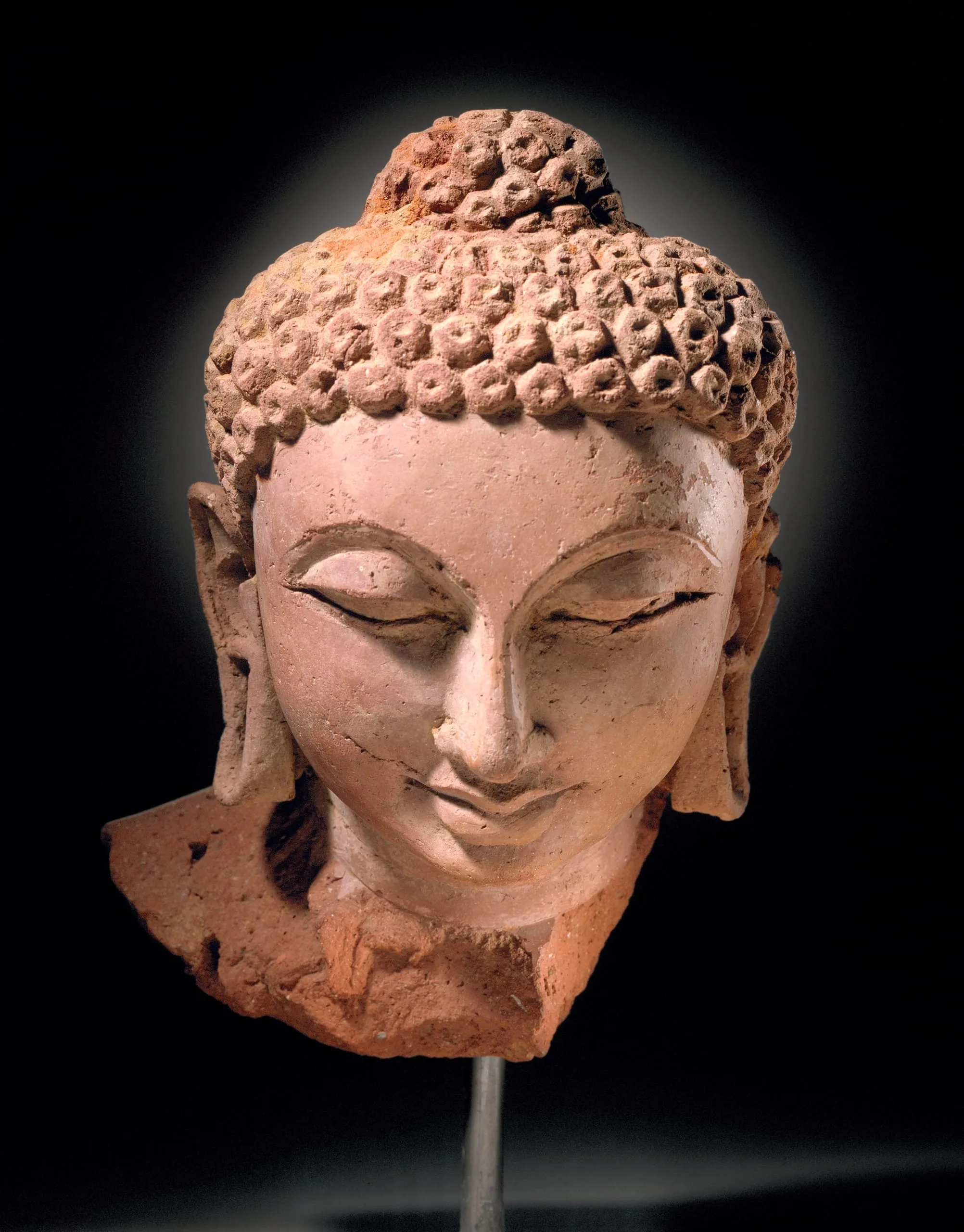
Head of Buddha Shakyamunicirca 400-415

Not on view
Terracotta or stucco sculptural head with smooth face, nearly closed eyes, and rows of tight coiled curls topped with a rounded ushnisha, fragment broken at the neck and mounted on a display rod
Artist or Maker
Unknown
Title
Head of Buddha Shakyamuni
Place Made
India, Gujarat, Devni Mori
Date Made
circa 400-415
Medium
Earthenware
Dimensions
8 x 5 x 5 1/2 in. (20.32 x 12.7 x 13.97 cm)
Credit Line
Purchased with funds provided by Mr. and Mrs. Paul E. Manheim and Mr. Rexford Stead
Accession Number
M.79.8
Classification
Sculpture
Collecting Area
South and Southeast Asian Art
Curatorial Notes

Devni Mori is in northern Gujarat near Shamlaji. Now submerged in the Meswo reservoir, the Buddhist site consisted of a brick stupa (funerary monument) and a monastery (vihara). The core of the stupa has been dated to circa 375-400. Slightly later earthenware Buddha images attributed to circa 400-415 were recovered during an excavation in 1960-1963. Presumably, they were once installed on the exterior walls of platform II of the stupa for worship by devotees during their ritual circumambulation of the stupa. Based on comparisons to complete Buddha images now housed in the Baroda Museum & Picture Gallery, the Buddhas were seated on a lotus base in the meditation posture (padma asana) and their hands were held in the gesture of meditation (dhyana mudra). They wore a pleated robe over both shoulders. The Buddha heads may have been cast in a separate mold and then attached to their bodies.

This Buddha head displays several of the standard iconographic features. It has snail-curl hair, the cranial protuberance (ushnisha) emblematic of his omniscience, elongated earlobes symbolizing his renunciation of the material world, and heavily-lidded pensive eyes conveying his compassion for all sentient beings. There is no sacred forehead marking (urna).
Selected Bibliography
  • Little, Stephen, and Tushara Bindu Gude. Realms of the Dharma: Buddhist Art across Asia. Los Angeles: Los Angeles County Museum of Art, 2025.