LACMA

ShopMembershipMyLACMATickets
LACMA
Los Angeles County Museum of Art
5905 Wilshire Blvd.
Los Angeles, CA 90036
info@lacma.org
(323) 857-6000
Sign up to receive emails
Subscribe
© Museum Associates 2025

Museum Hours

Monday

11 am–6 pm

Tuesday

11 am–6 pm

Wednesday

Closed

Thursday

11 am–6 pm

Friday

11 am–8 pm

Saturday

10 am–7 pm

Sunday

10 am–7 pm


  • About LACMA
  • Jobs
  • Building LACMA
  • Host An Event
  • Unframed
  • Press
  • FAQs
  • Log in to MyLACMA
  • Privacy Policy
© Museum Associates 2025
Collections

Unknown
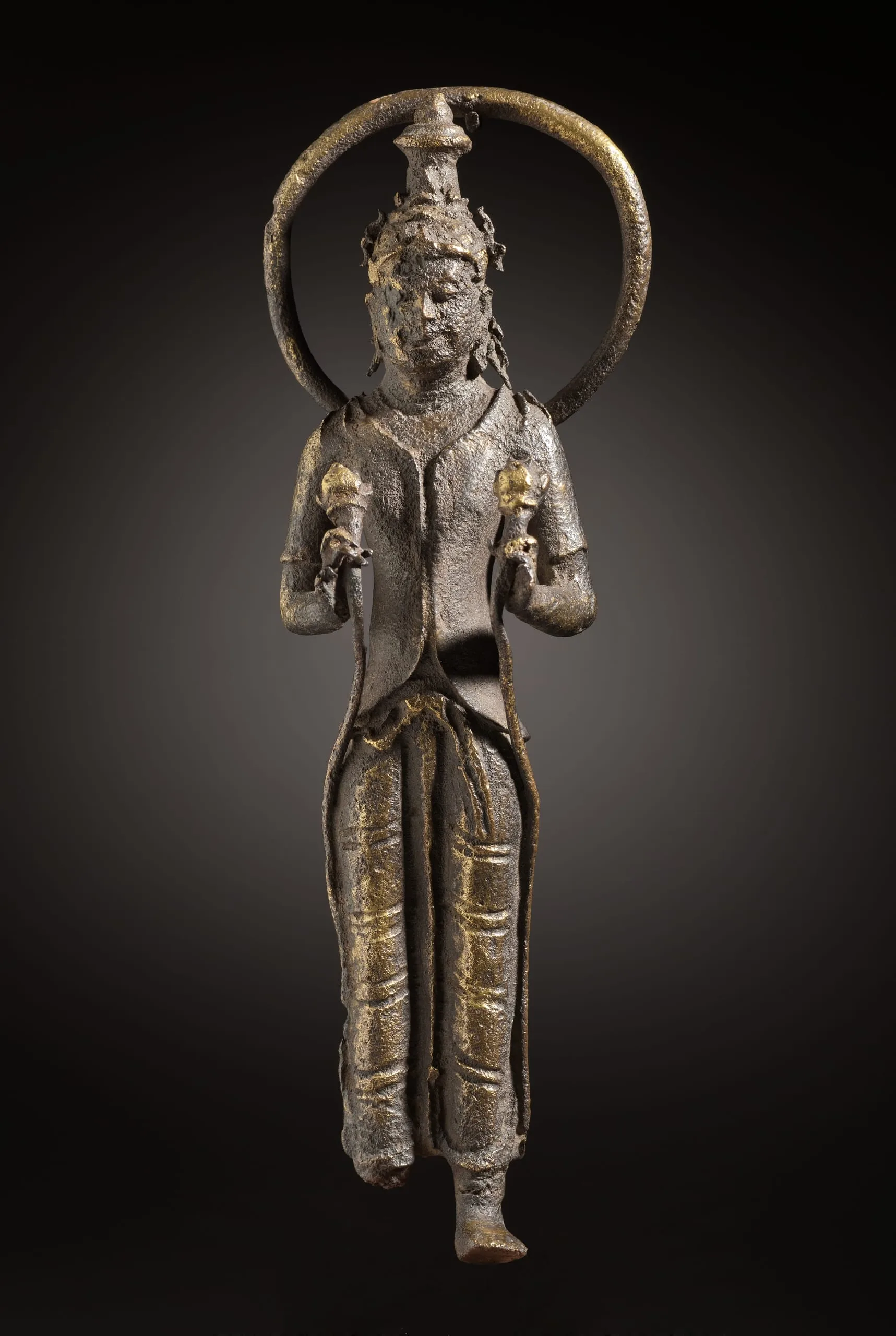
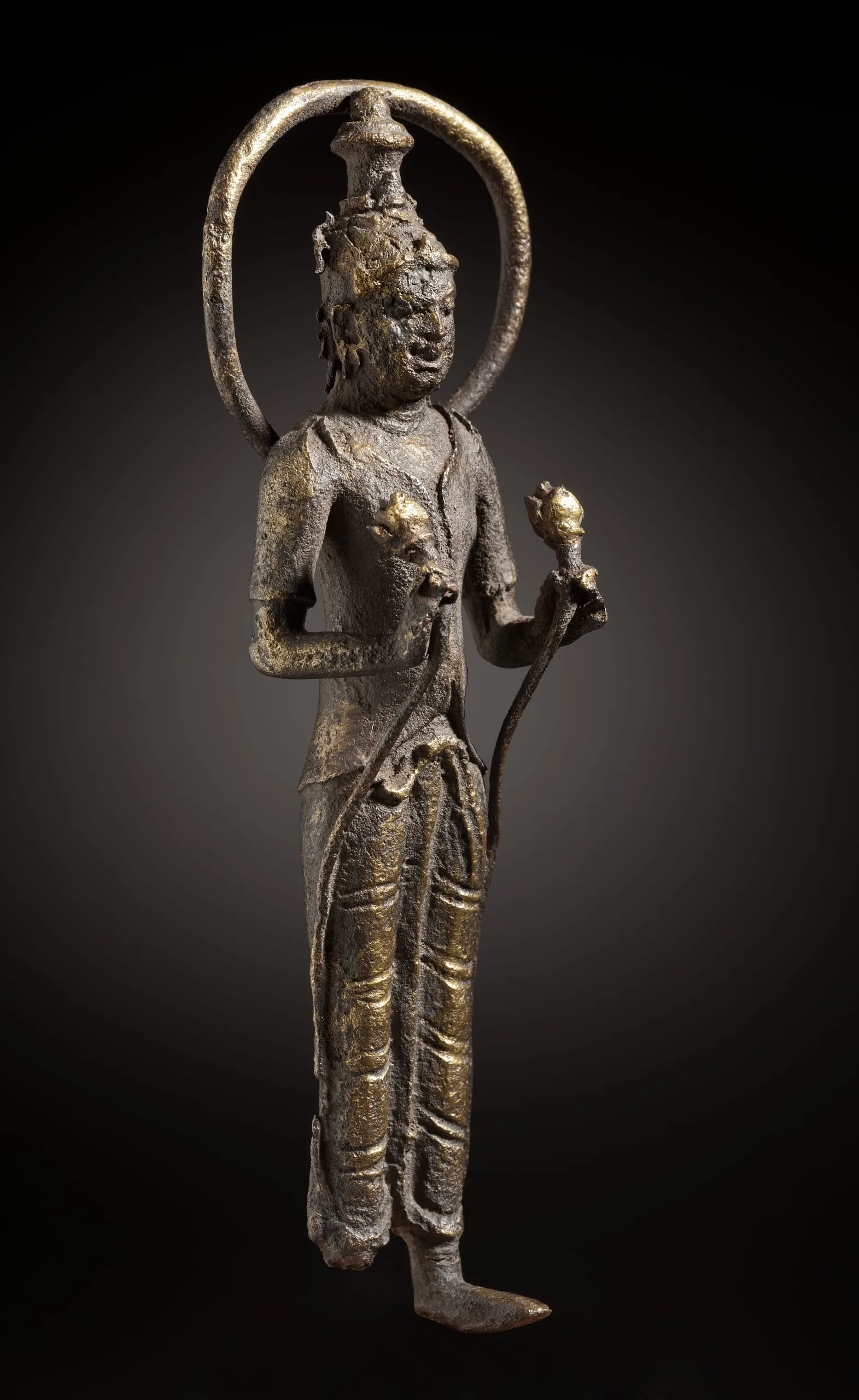
The Sun God Surya9th century

Not on view
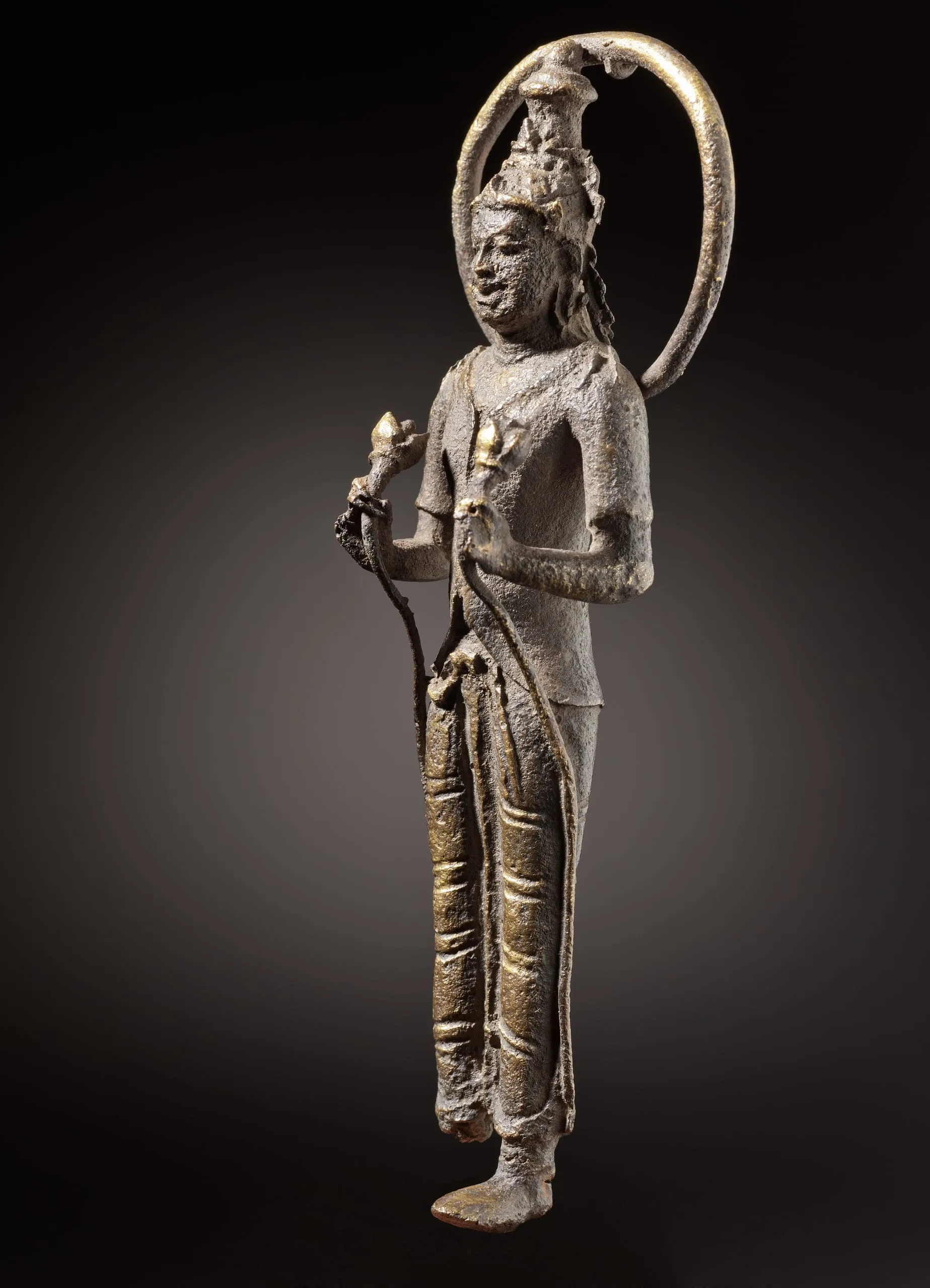
Small bronze standing figure with circular halo, elaborate crown, and raised hands holding objects, with traces of gilt across the surface
Bronze standing bodhisattva figure with traces of gilding, wearing draped dhoti and elaborate crown, with a large circular prabhavali halo behind the head, holding a fly whisk or staff in one hand.
Bronze standing bodhisattva figure with an arching circular halo, elaborate crown, and draped lower garment; one hand holds a small vessel, surface shows aged patina with traces of gilding
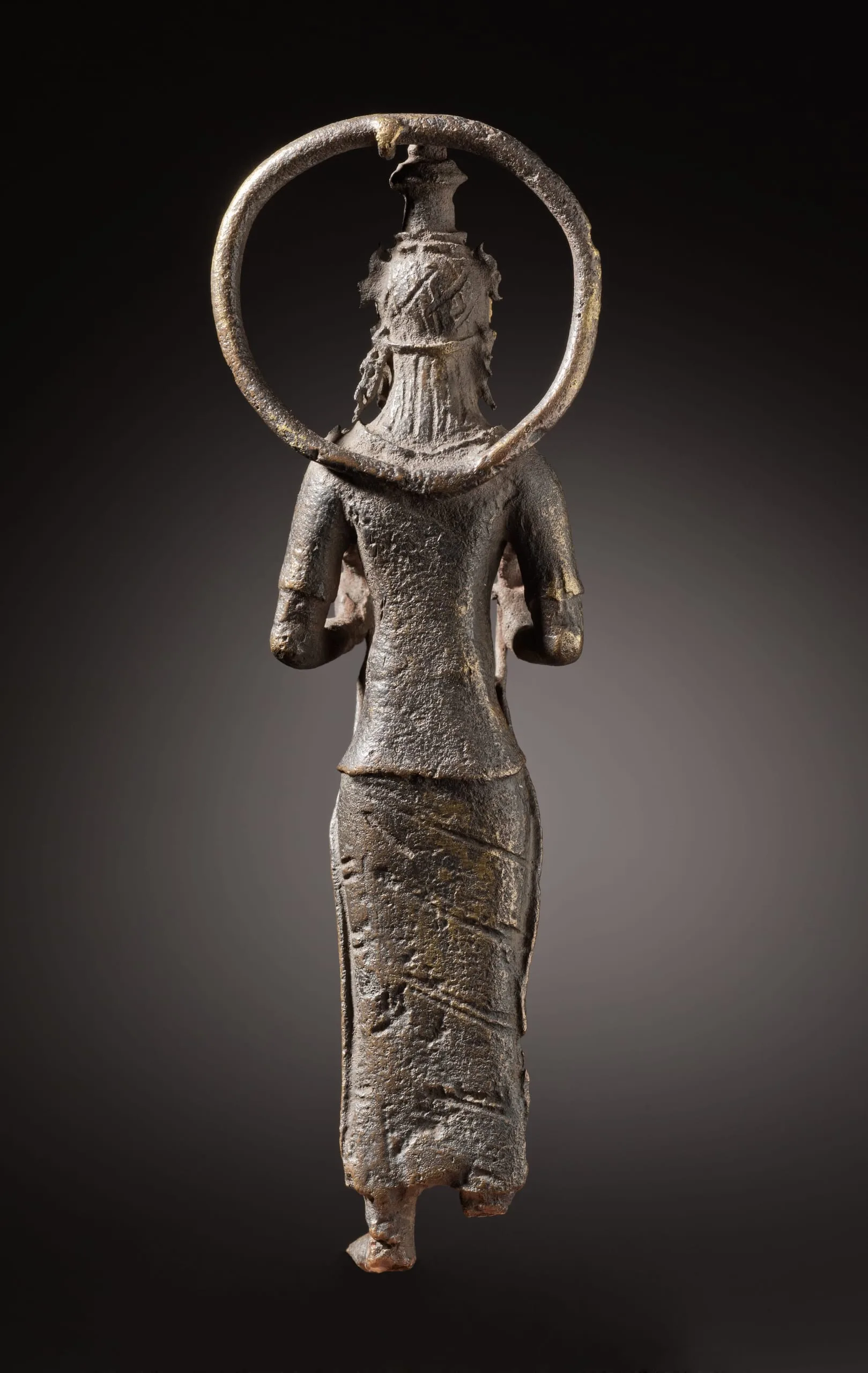
Small bronze figurine of a standing robed figure with arms at sides, surmounted by a large circular ring rising above the head; dark patinated surface with corroded texture visible throughout.
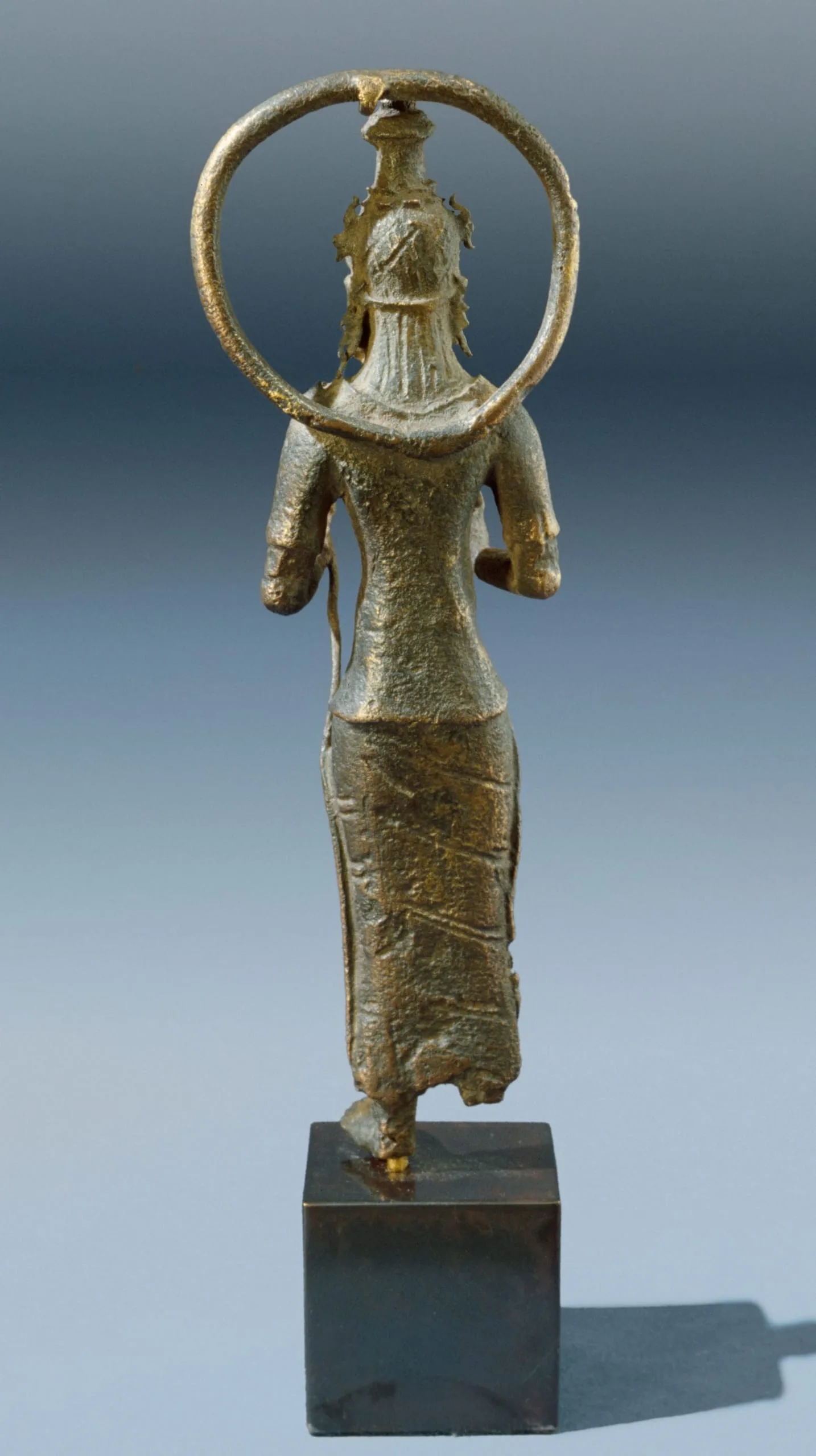
Small gilt bronze standing figure seen from behind, wearing a long draped garment and elaborate headdress with a large circular halo or ring, mounted on a dark square base.
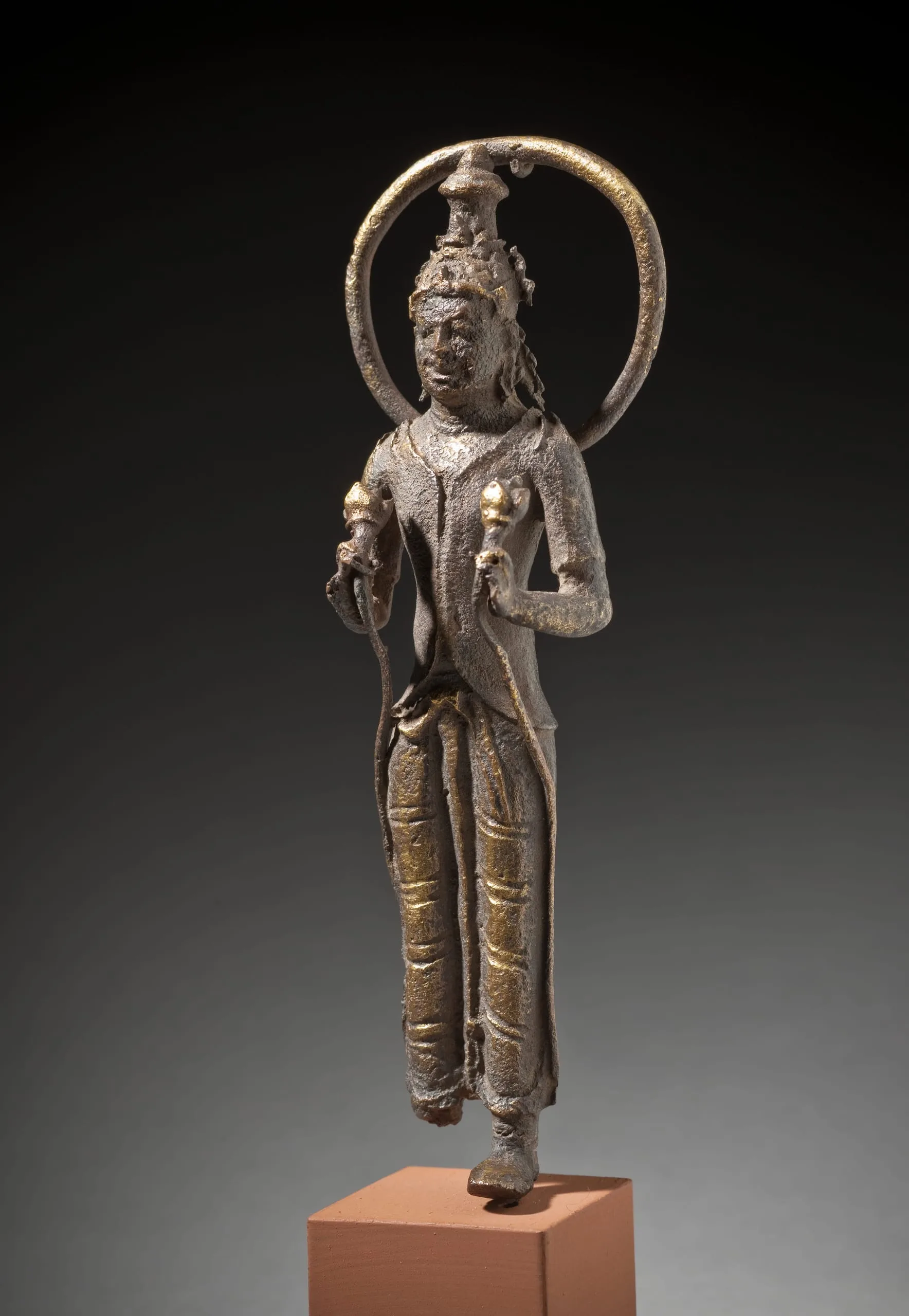
Small bronze figure of a standing bodhisattva with a circular halo, wearing a tall crown and draped garments, holding objects in both hands, with dark patina and traces of gilding, displayed on a terracotta-colored pedestal.
Artist or Maker
Unknown
Title
The Sun God Surya
Place Made
Indonesia, Central Java or Shrivijaya, Sumatra
Date Made
9th century
Medium
Copper alloy with traces of gilding
Dimensions
5 1/2 x 2 x 1 3/8 in. (13.97 x 5.08 x 3.49 cm)
Credit Line
Gift of Michael Phillips
Accession Number
M.79.189.9
Classification
Sculpture
Collecting Area
South and Southeast Asian Art
Curatorial Notes

Vedic (proto-Hindu) religious literature is replete with references to the Sun God Surya and his many manifestations or aspects. Dating from circa 1500-500 BCE, these early hymns and incantations variously personify the Sun as a golden god, a great bird or eagle, a shining steed, or a spirited bull. In anthropomorphic form as Savit, symbolizing the abstract qualities of the Sun and connected with sacrificial rites, the Sun God is imagined as being made of gold, wearing golden armor, and riding in a golden chariot. The earliest known anthropomorphic representations of Surya in South Asia date from the late 3rd-1st century BCE. The Sun God is depicted as riding in a chariot as he makes his daily circuit across the heavens. The solar chariot is drawn by four horses, which probably reflects Hellenistic influence derived from images of the Greek Sun God, Helios, who was often shown riding a quadriga. Around the 1st century BCE, certain forms of Iranian solar religion were introduced by Zoroastrian worshippers of the Sun and Fire who had migrated to India. Subsequent images of Surya made in the 1st-3rd centuries CE depict him dressed in an Indo-Scythian costume consisting of knee-length boots, a long tunic, trousers, and a waist girdle or chest armor. Surya first holds a lotus bud during this formative phase of imagery.

Rather than replicating these early South Asian prototypes, however, this rare image of Surya generally follows early Southeast Asian conventions in its hairstyle and clothing. He is nimbate and has a distinctive conical hairstyle surmounted by a rounded bulb. Rippled forms projecting from his head are likely flames suggesting his effulgence. He wears a waist-length tailored jacket that recalls the deity’s ancestral Indo-Scythian tunic. But in place of his earlier knee-length boots appropriate for a cold northern climate, here Surya is barefoot appropriate for the tropics and wears a long dhoti. He holds his primary attribute of lotus buds in both hands by their stalk.

For a detailed discussion of this Surya’s stylistic characteristics, see Robert L. Brown, "Sun God Surya," Southeast Asian Art at LACMA: An Online Scholarly Catalogue (Los Angeles: Los Angeles County Museum of Art, 2013). http://seasian.catalog.lacma.org/#section/130/p-130-1
Selected Bibliography
  • Brown, Robert L. Southeast Asian Art at LACMA: An Online Scholarly Catalogue. Los Angeles: Los Angeles County Museum of Art, 2013. Accessed June 25, 2024. http://seasian.catalog.lacma.org/.