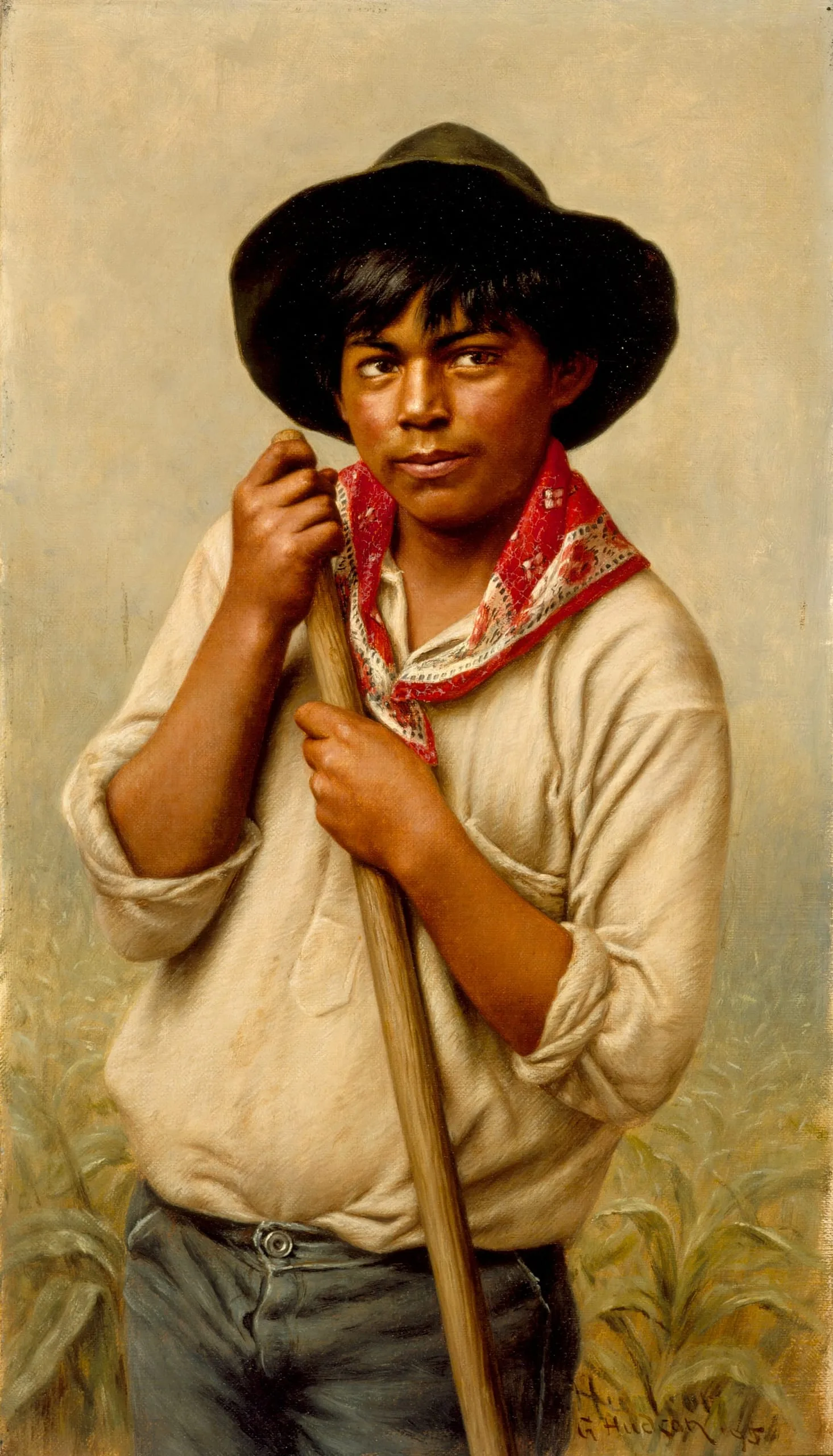
In 1895 Hudson painted Powley’s Sweetheart (unlocated). Supposedly enough viewers of the painting asked, "Who’s Powley?" that in response Hudson painted this picture of Powley, a young Pomo Indian who worked for white settlers, helping them plant corn, hops, and other crops. Hudson carefully detailed Powley as he stood at rest in a field of corn. Despite her provincial training, Hudson was proficient at drafting and at her best excelled in the academic rendering of the figure, as in this painting. Powley, on the verge of manhood, is a chubby, handsome boy, his dark, smooth skin and eyes standing out before the soft yellow field of corn surrounding him. Powley satisfied the late nineteenth-century taste for a sentimental and saccharine portrayal of innocence, as did the paintings of street urchins by Hudson’s urban counterpart, John G. Brown (1831-1913). Powley’s life, however, did not fulfill this ideal. His success as a performer in a tourist attraction led him to abandon traditional ways, change his name to Jeff Dick, and neglect his wife and child. Eventually he became an alcoholic, killed a man, and died of syphilis (Ukiah, The Sun House and Grace Hudson Museum, Grace Hudson Papers, "The Rise and Fall of Powley," manuscript).
Hudson left a diary in which she listed her paintings chronologically and assigned them numbers. Entitled Indian Boy with Hoe when it was donated to the museum, the painting was later correctly identified by the number "43" written on its verso.