LACMA

ShopMembershipMyLACMATickets
LACMA
Los Angeles County Museum of Art
5905 Wilshire Blvd.
Los Angeles, CA 90036
info@lacma.org
(323) 857-6000
Sign up to receive emails
Subscribe
© Museum Associates 2025

Museum Hours

Monday

11 am–6 pm

Tuesday

11 am–6 pm

Wednesday

Closed

Thursday

11 am–6 pm

Friday

11 am–8 pm

Saturday

10 am–7 pm

Sunday

10 am–7 pm


  • About LACMA
  • Jobs
  • Building LACMA
  • Host An Event
  • Unframed
  • Press
  • FAQs
  • Log in to MyLACMA
  • Privacy Policy
© Museum Associates 2025
Collections

Attributed to Gursahai
The Court of Yama, God of Deathcirca 1800

Not on view
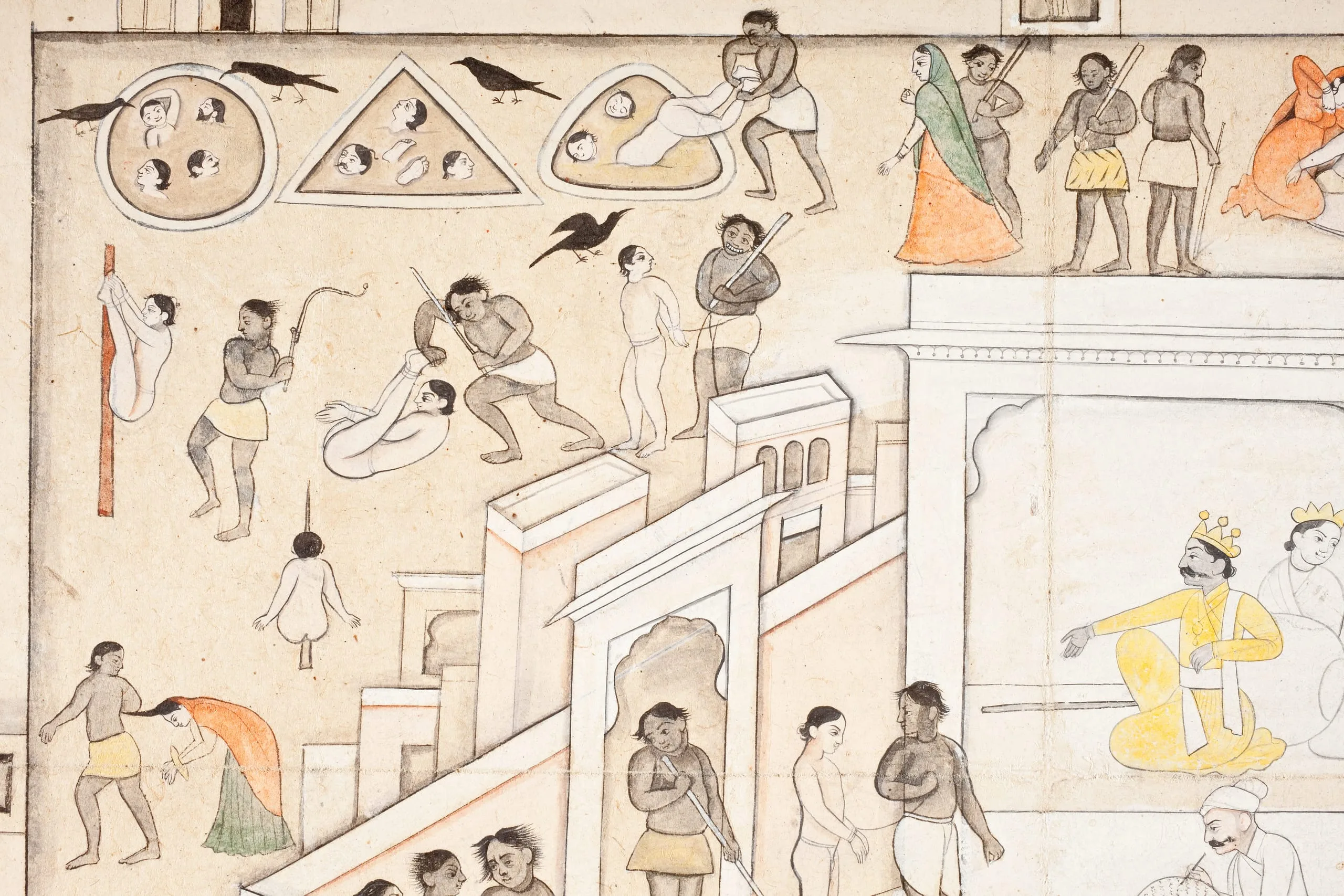
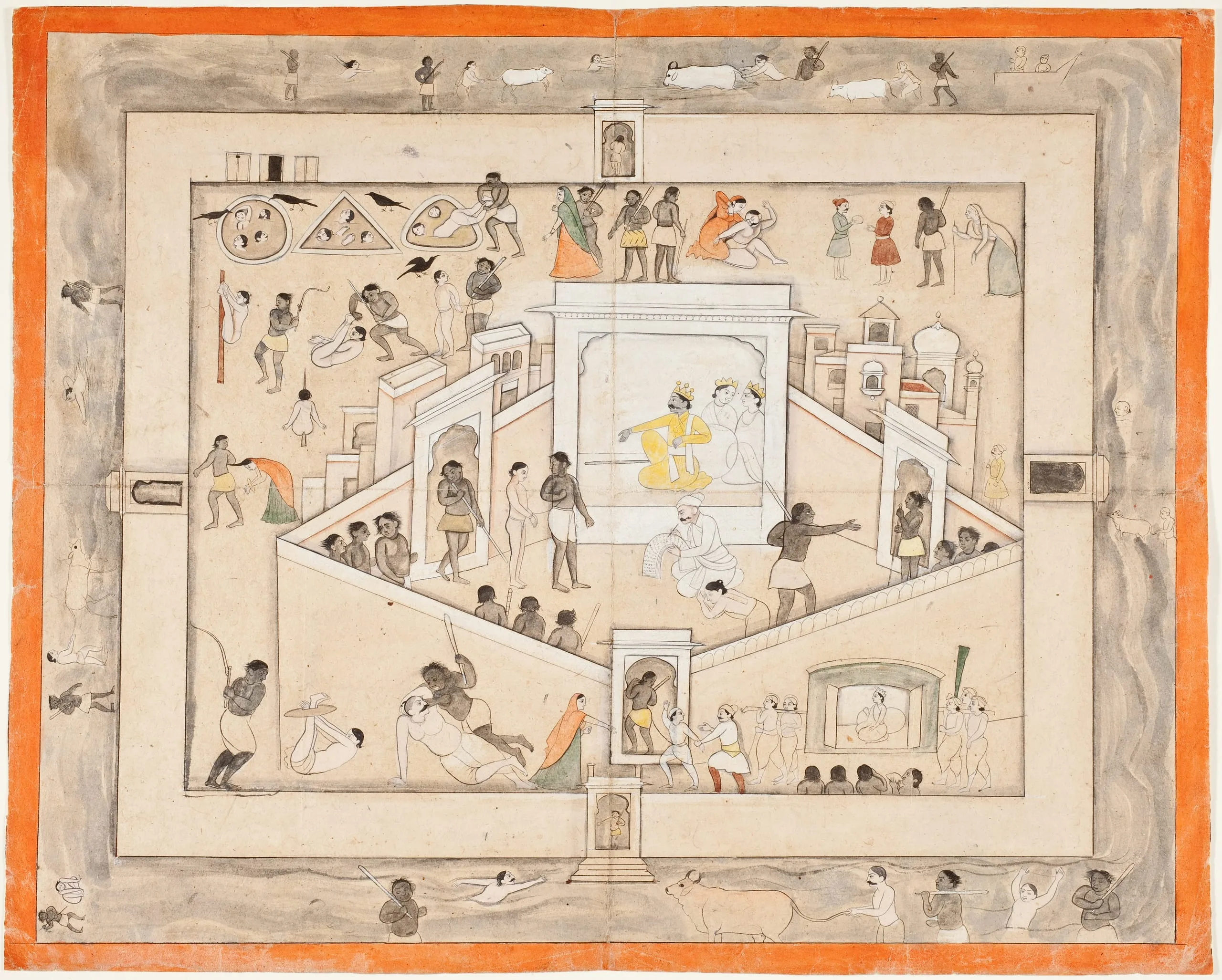
Indian narrative painting in ink and watercolor showing a walled courtyard complex from above, with dozens of small figures in multiple scenes around a central pavilion
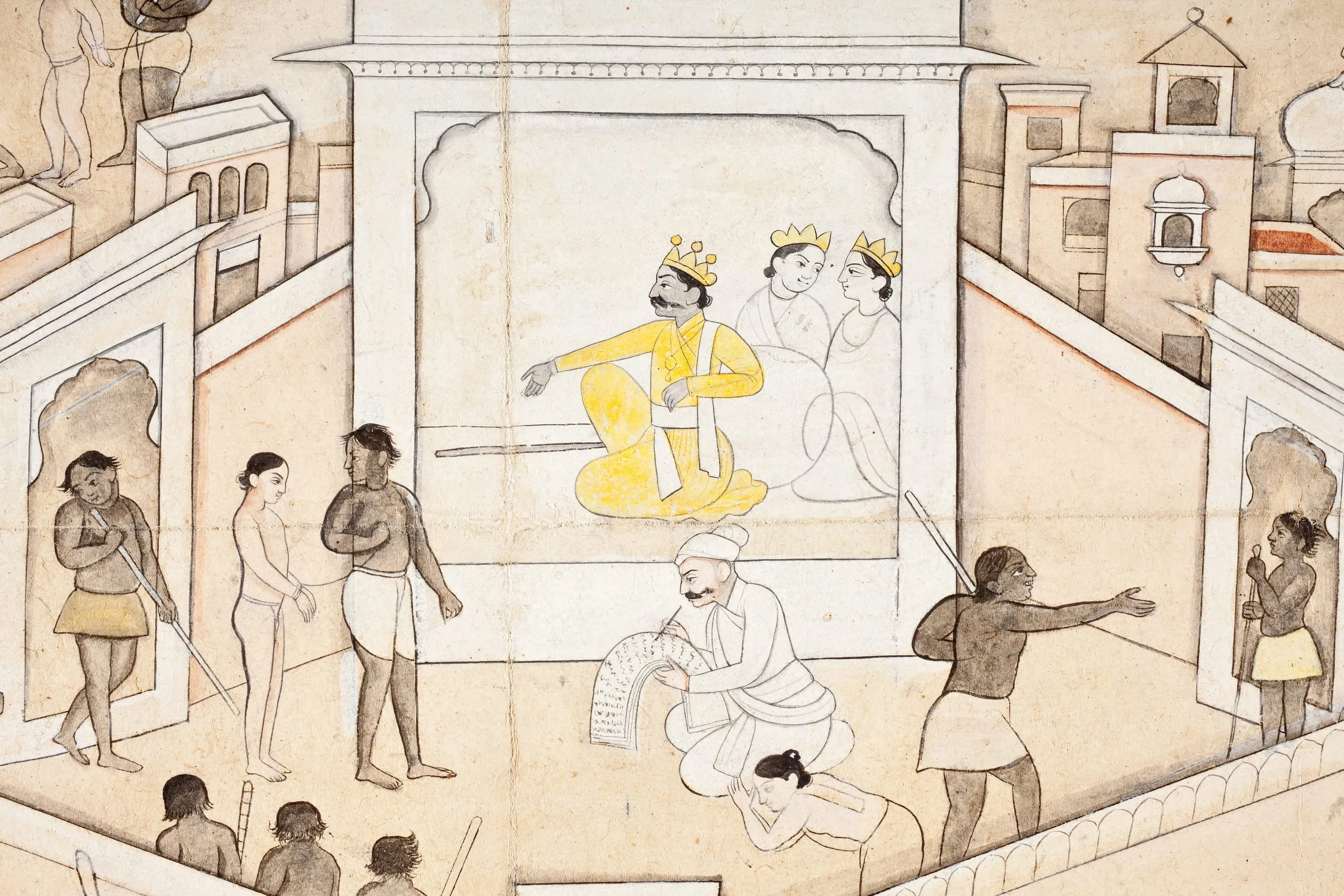
Indian manuscript painting with ink and watercolor; two crowned figures in yellow robes seated within an arched palace niche, surrounded by attendants and standing figures in a courtyard; a seated figure below reads from a scroll, with architectural elements framing the scene
Indian ink and watercolor manuscript painting with multiple scenes across a cream ground; figures in various poses on and around multi-tiered white architecture, crows perched near circular and triangular panels containing small heads, and crowned figures in yellow at lower right
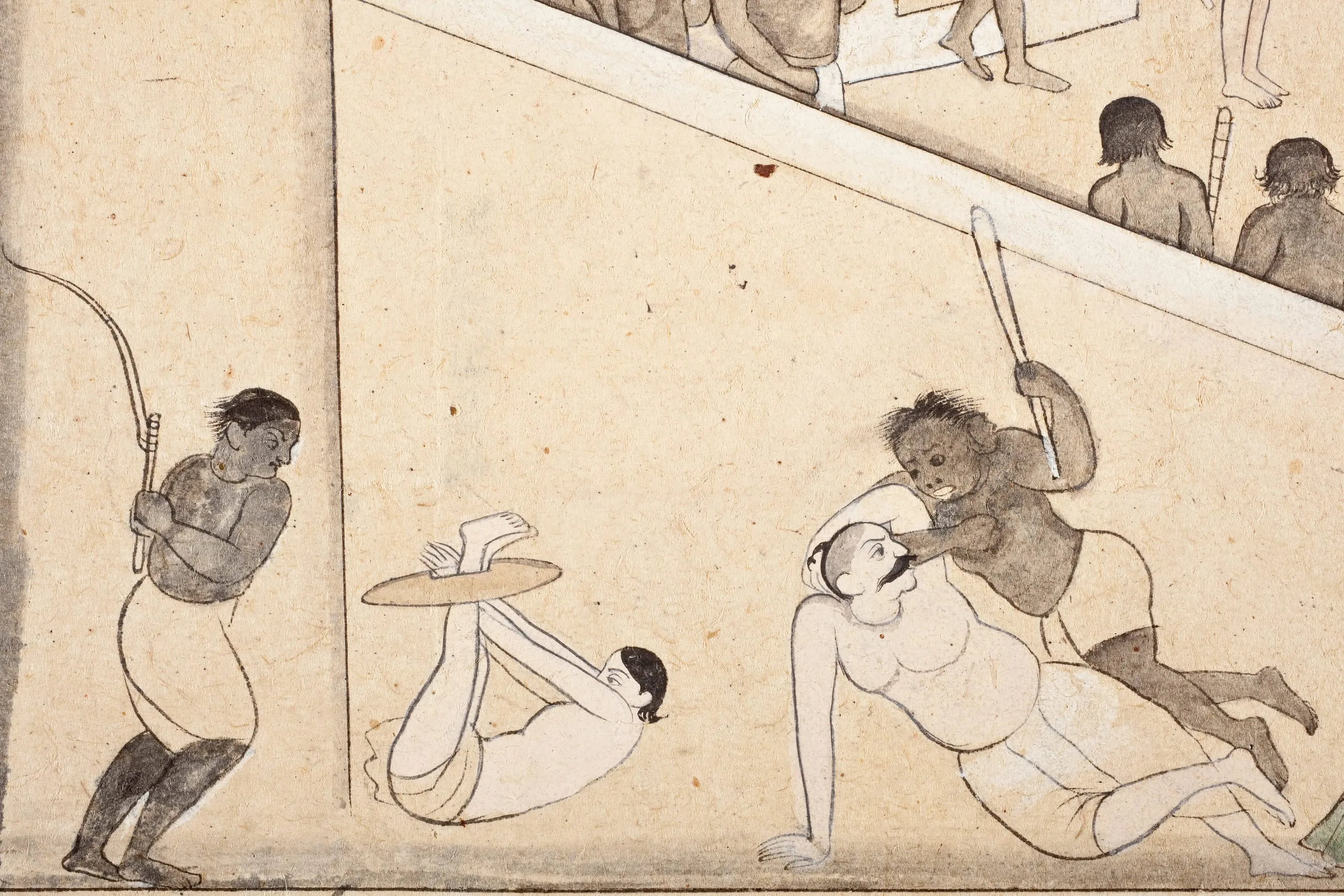
Indian manuscript painting with fine ink and wash, depicting a wrestling or combat scene: a crouching figure holding a circular object faces an attacker mounted on a kneeling figure raising a stick, while a standing figure with a whip looks on; spectators visible along a diagonal wall in the upper register.
Artist or Maker
Attributed to Gursahai
India, active circa 1800-1830
Title
The Court of Yama, God of Death
Place Made
India, Himachal Pradesh, Guler
Date Made
circa 1800
Medium
Ink and opaque watercolor on paper
Dimensions
19 1/4 x 23 7/8 in. (48.89 x 60.64 cm)
Credit Line
Gift of Paul F. Walter
Accession Number
M.75.113.8
Classification
Drawings
Collecting Area
South and Southeast Asian Art
Curatorial Notes

Yama is the Hindu God of Death. He rules over hell (naraka) where he judges the souls of the dead and punishes sinners. He is also the guardian of the direction (dikpala) of the South. Here, the crowned Yama sits in a pavilion in his Kalichi Palace presiding over hell. His right hand is held in the symbolic gesture of ‘gift-giving’ (varada mudra). Beside him is his primary attribute, his staff (yama-danda), representative of Yama’s chastisement. In front of him is a scribe who reads aloud each sinner’s deeds and misdeeds before judgment is rendered. Depending upon their actions, souls are consigned to hell, sent back to be reborn on earth, or admitted to Pitriloka, the nether-world realm of the ancestors. In the compound surrounding Yama’s palace are numerous scenes of sinners being tormented or tortured by Yama’s demonic servants. Outside of the compound are subterranean waters with more afflicted souls and bovines.

This folio has been attributed by B. N. Goswamy to Gursahai (active circa 1800-1830). Gursahai was the eldest son of Ranjha (active circa 1778-1827) and grandson of the celebrated artist Nainsukh of Guler (circa 1710-1778, active circa 1730-1778). The angular architecture and geometric composition typify Gursahai’s artistic style.
Selected Bibliography
  • Proser, Adriana, editor. Comparative Hell: Arts of Asian Underworlds. New York: Asia Society, 2022.