- Title
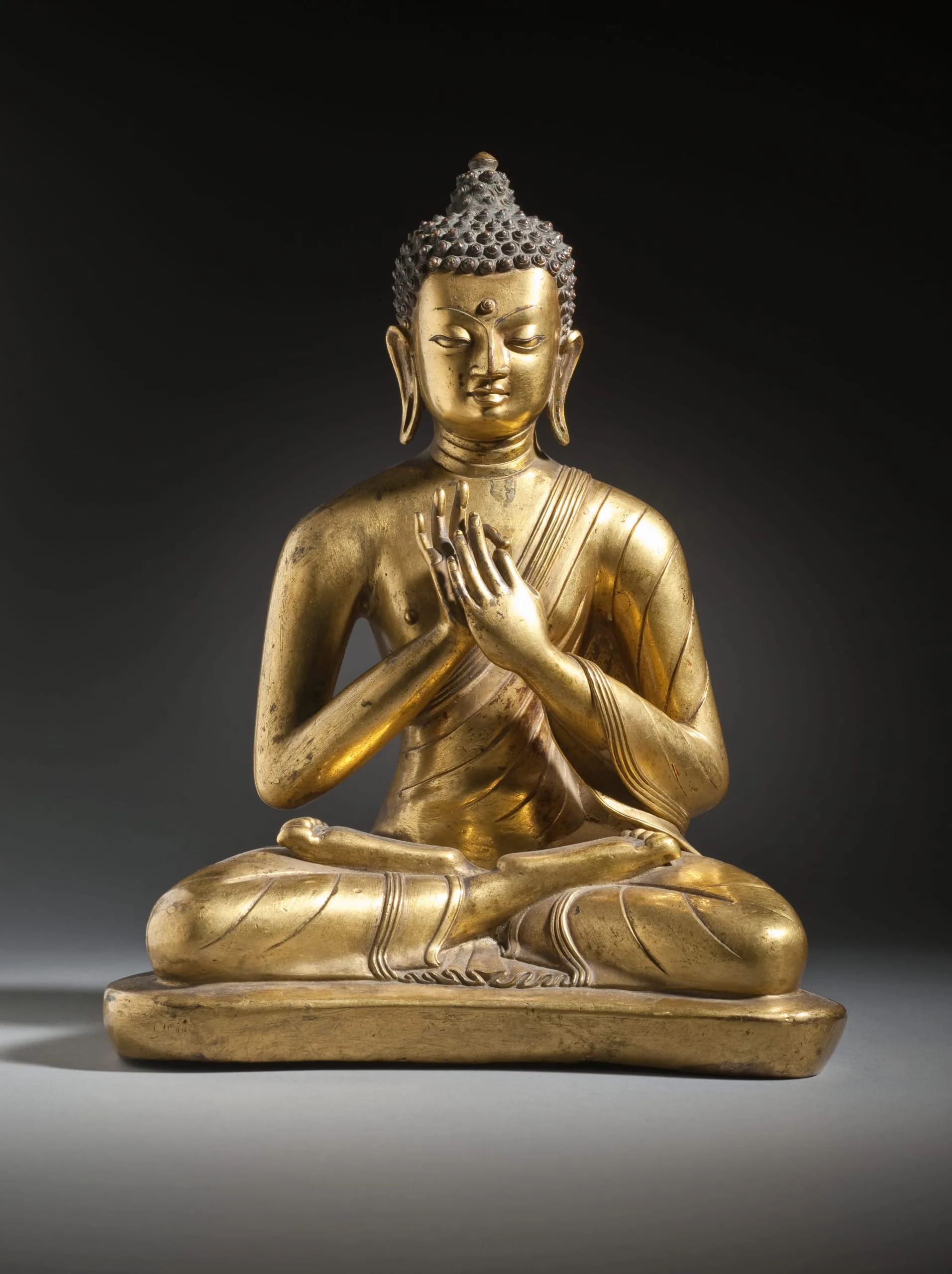
- Shuradatta, the Buddha of Alms-Giving
- Date Made
- circa 17th century
- Medium
- Gilt brass and paint
- Dimensions
- 10 x 7 1/2 x 5 in. (25.4 x 19.05 x 12.7 cm)
- Accession Number
- M.75.4.21
- Curatorial Notes
Shuradatta, the Buddha of Alms-Giving, is one of the Thirty-five Confession Buddhas of Mahayana Buddhism popular in Tibet and worshipped by a visualization of the Thirty-five Buddhas and a recitation of the purification confessions contained in the Triskhandhadharma Sutra (Three Heaps Sutra [text]). The Three Heaps are the three Buddhist ethical precepts: Abstaining from negative deeds, Performing positive deeds, and Accomplishing beneficial results.
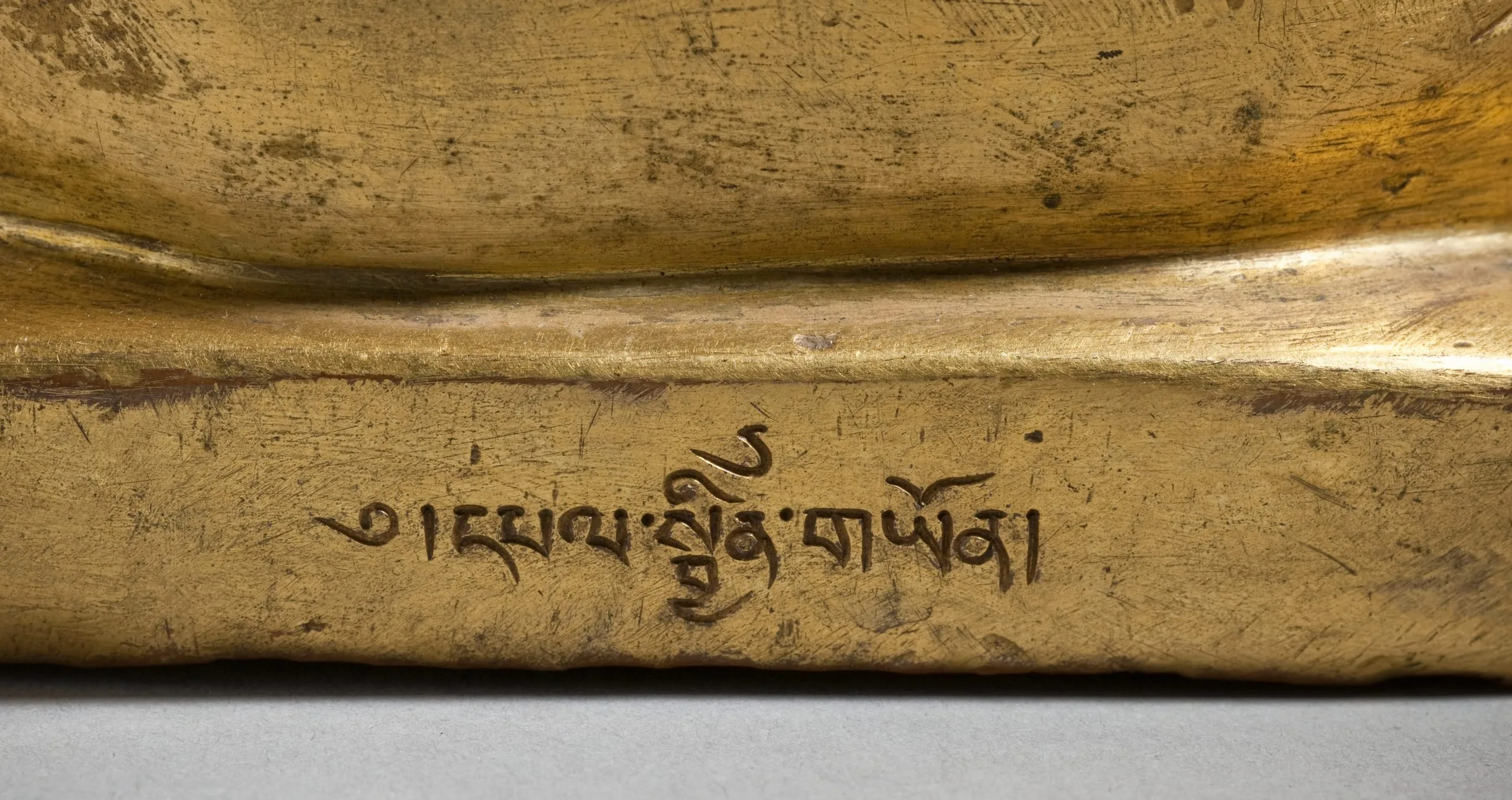
Identified by a Tibetan inscription on the back of the base, this serene representation of Shuradatta envisions him with the standard iconographic conventions of a Buddha: a cranial protuberance (ushnisha) emblematic of his omniscience, elongated earlobes symbolizing his renunciation of the material world, and a circular sacred marking (urna) on his forehead. He wears a monastic robe with stylized pleats over his left shoulder. His hands are held in the gesture of the ‘turning of the wheel of the law’ (dharmachakrapravartana mudra). His snail-curl hair is embellished with indigo paint, characteristic of sculptures in Tibet. This image was likely produced by a Newar artist from Nepal working for a monastery in central Tibet.
- Selected Bibliography
- Rosenfield, John. The Arts of India and Nepal: The Nasli and Alice Heeramaneck Collection. Boston: Museum of Fine Arts, Boston, 1966.
- Reedy, Chandra L. Himalayan Bronzes: Technology, Style and Choices. Newark: University of Delaware Press, 1997.
- Pal, Pratapaditya. Art of Nepal. Los Angeles: Los Angeles County Museum of Art; University of California Press, 1985.