LACMA

ShopMembershipMyLACMATickets
LACMA
Los Angeles County Museum of Art
5905 Wilshire Blvd.
Los Angeles, CA 90036
info@lacma.org
(323) 857-6000
Sign up to receive emails
Subscribe
© Museum Associates 2025

Museum Hours

Monday

11 am–6 pm

Tuesday

11 am–6 pm

Wednesday

Closed

Thursday

11 am–6 pm

Friday

11 am–8 pm

Saturday

10 am–7 pm

Sunday

10 am–7 pm


  • About LACMA
  • Jobs
  • Building LACMA
  • Host An Event
  • Unframed
  • Press
  • FAQs
  • Log in to MyLACMA
  • Privacy Policy
© Museum Associates 2025
Collections

Unknown
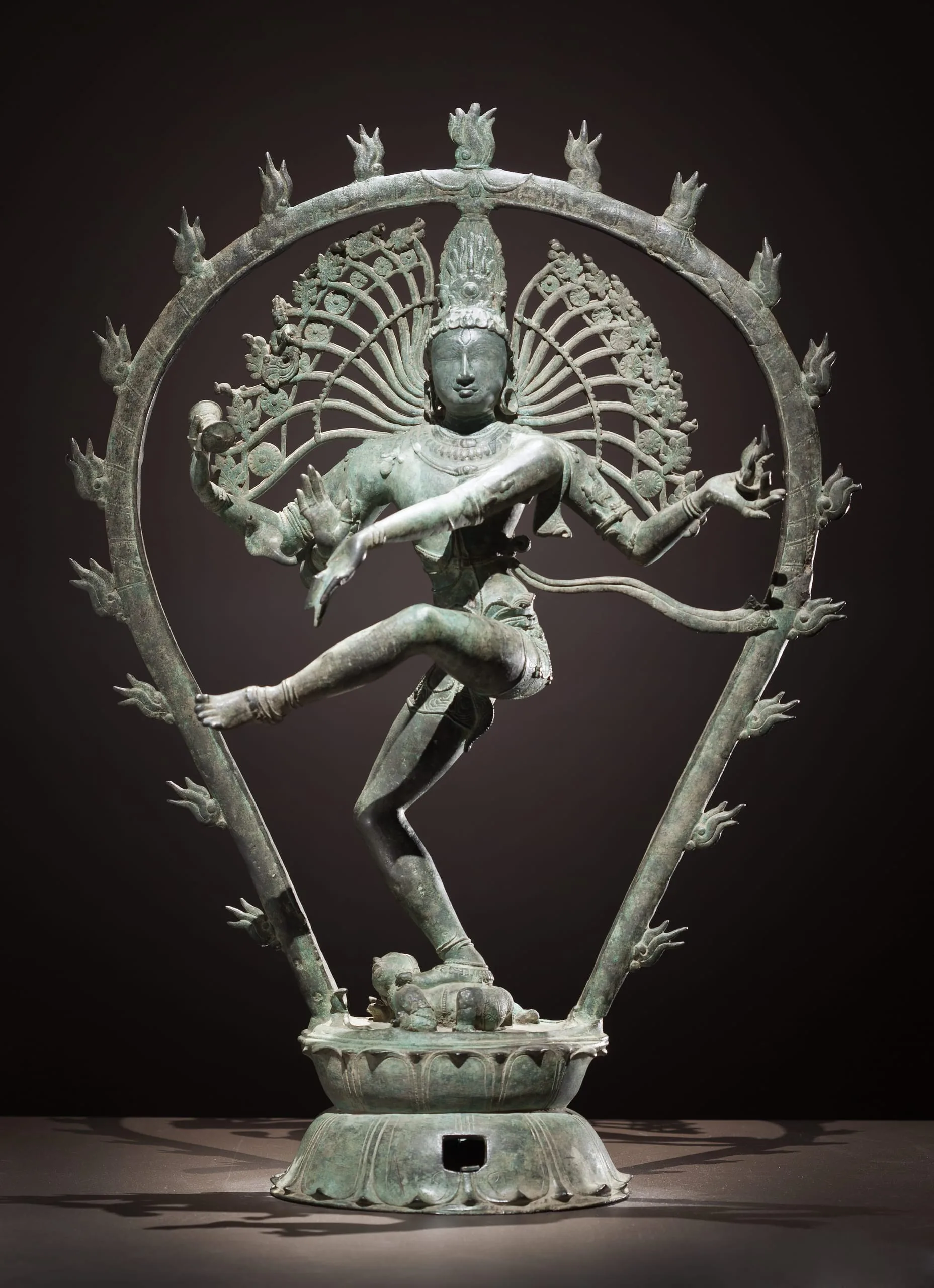
Shiva as the Lord of Dancecirca 950-1000

Not on view
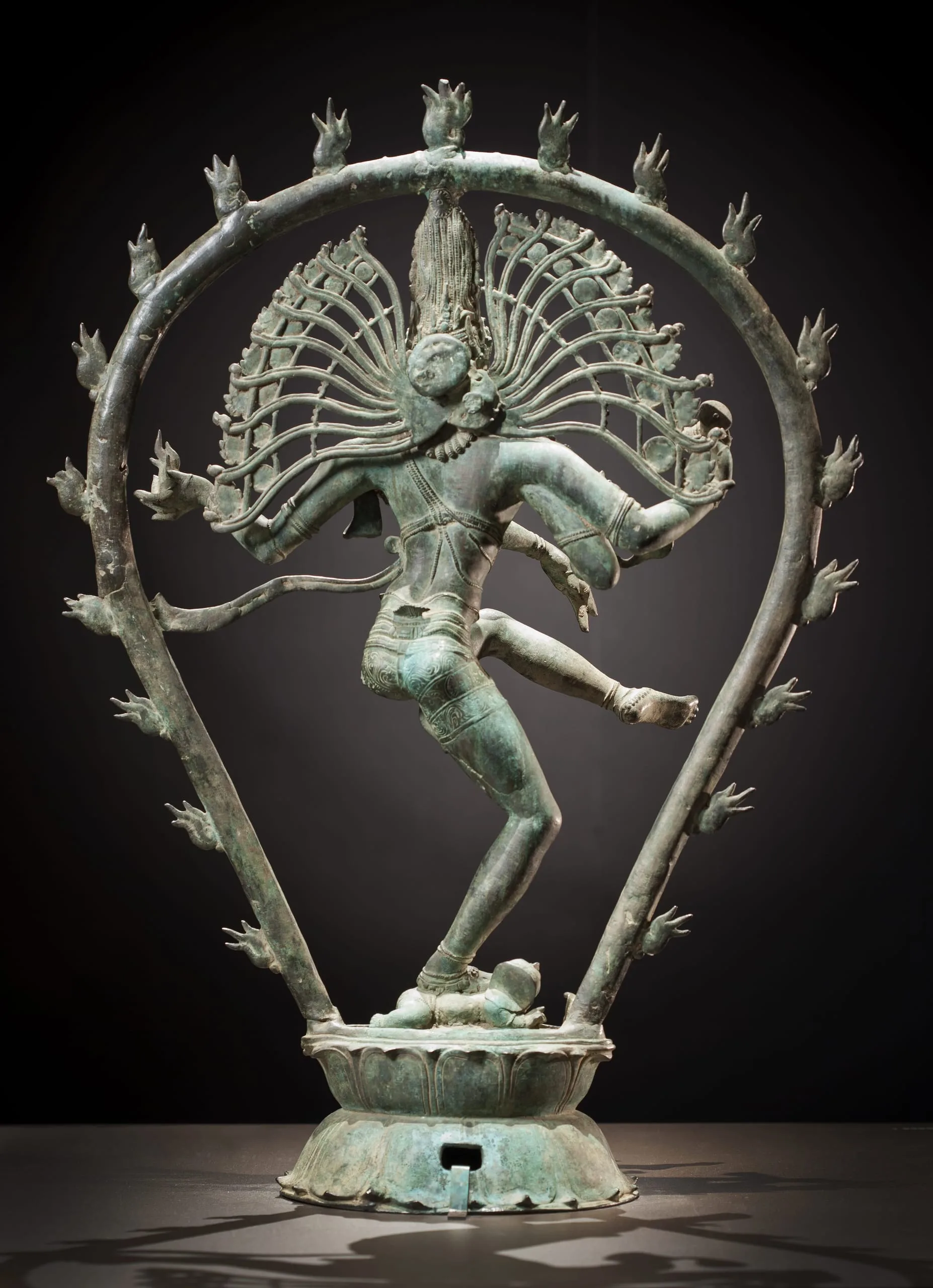
Bronze sculpture of a multi-armed dancing figure within a circular flame ring, standing on one leg atop a lotus base, with blue-green patina throughout
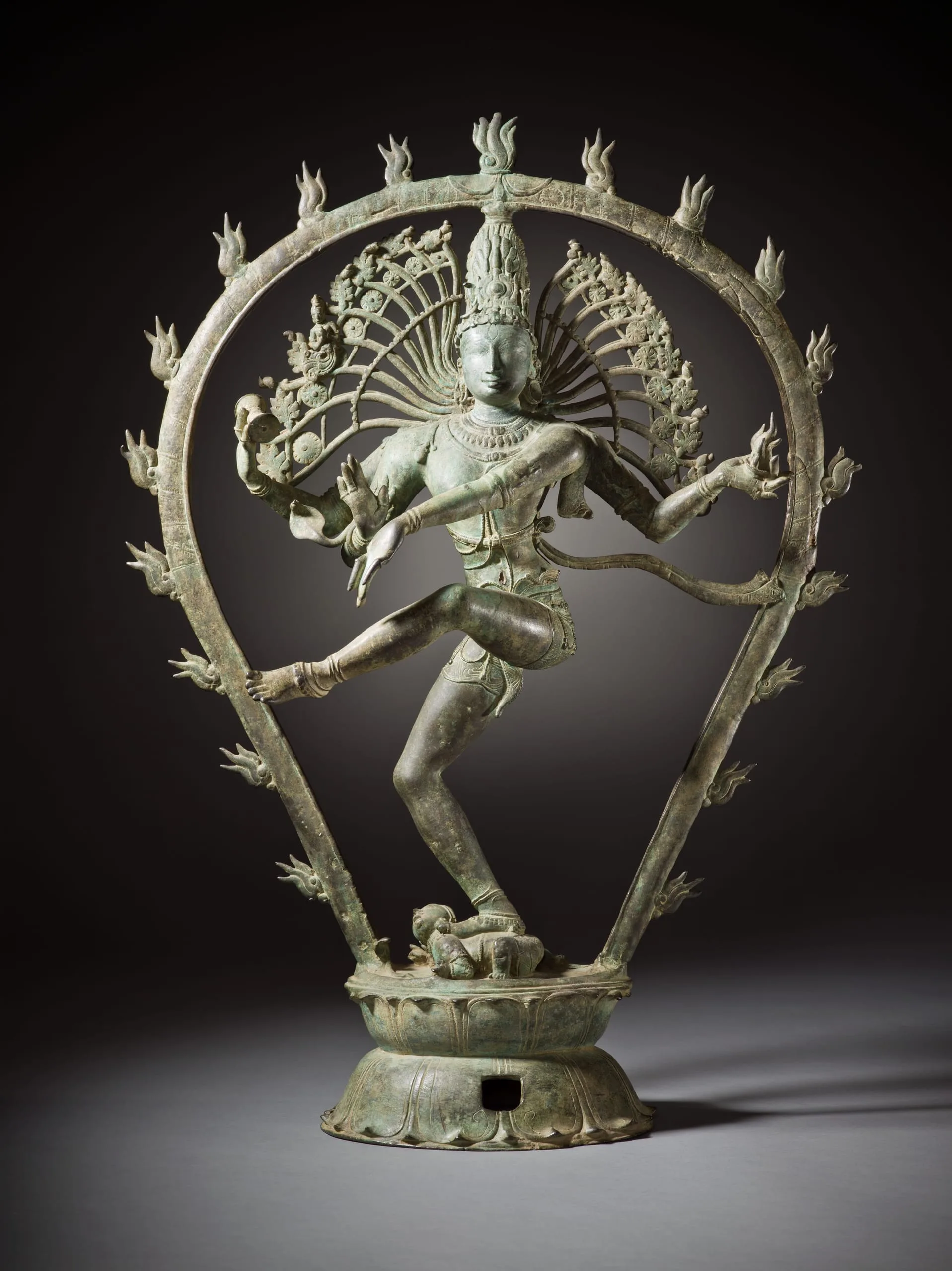
Bronze Nataraja sculpture with green patina, multi-armed dancing figure within a circular ring of flames, one leg raised, standing atop a small prostrate figure on a lotus base.
Bronze Nataraja sculpture with green patina; multi-armed dancing figure balanced on one leg atop a small figure on a lotus base, encircled by a ring of flames with intricate casting throughout.
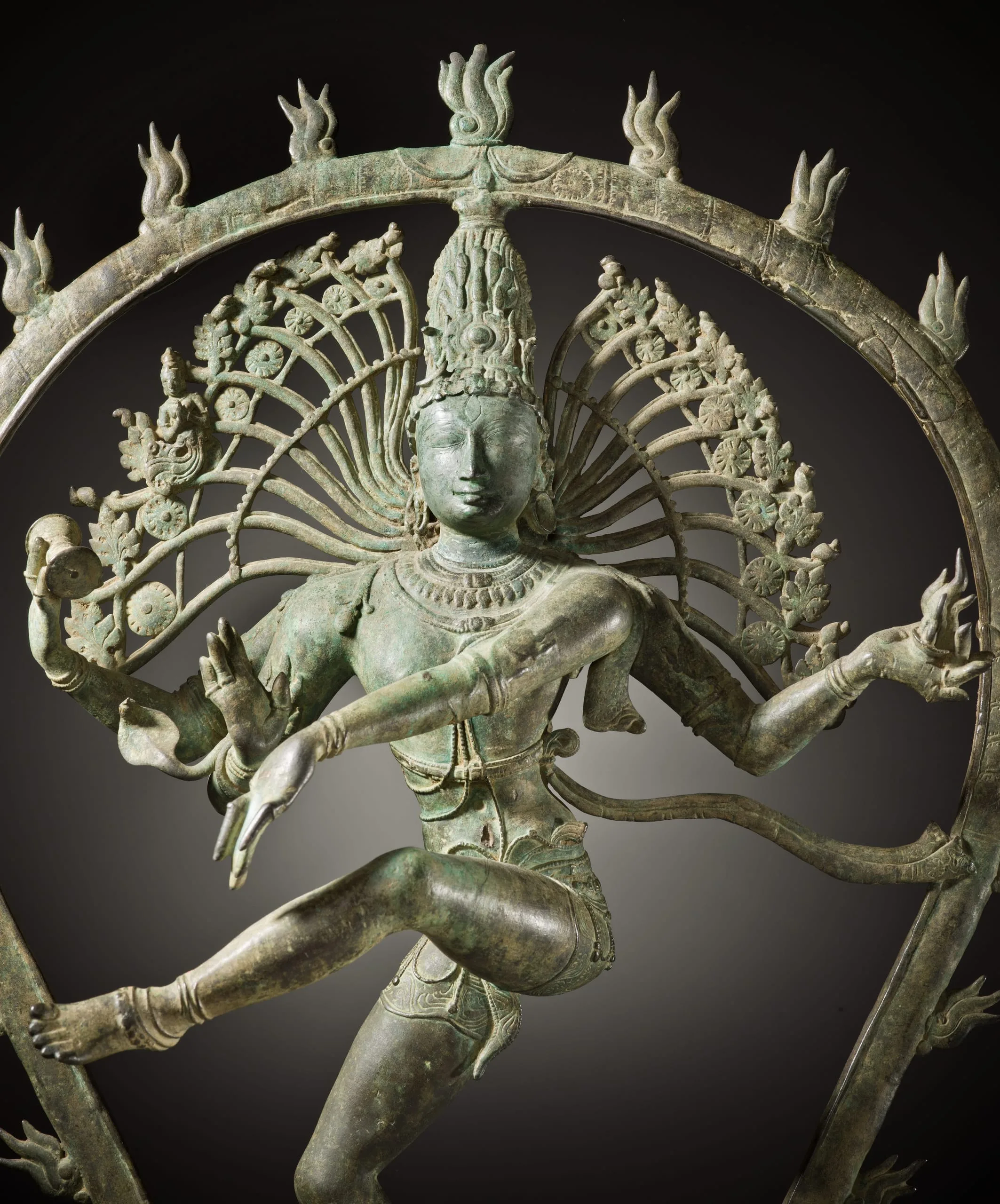
Bronze sculpture of a multi-armed dancing figure within a ring of flames, with one leg raised, elaborate crown and jewelry, green patinated surface with fine casting detail throughout.
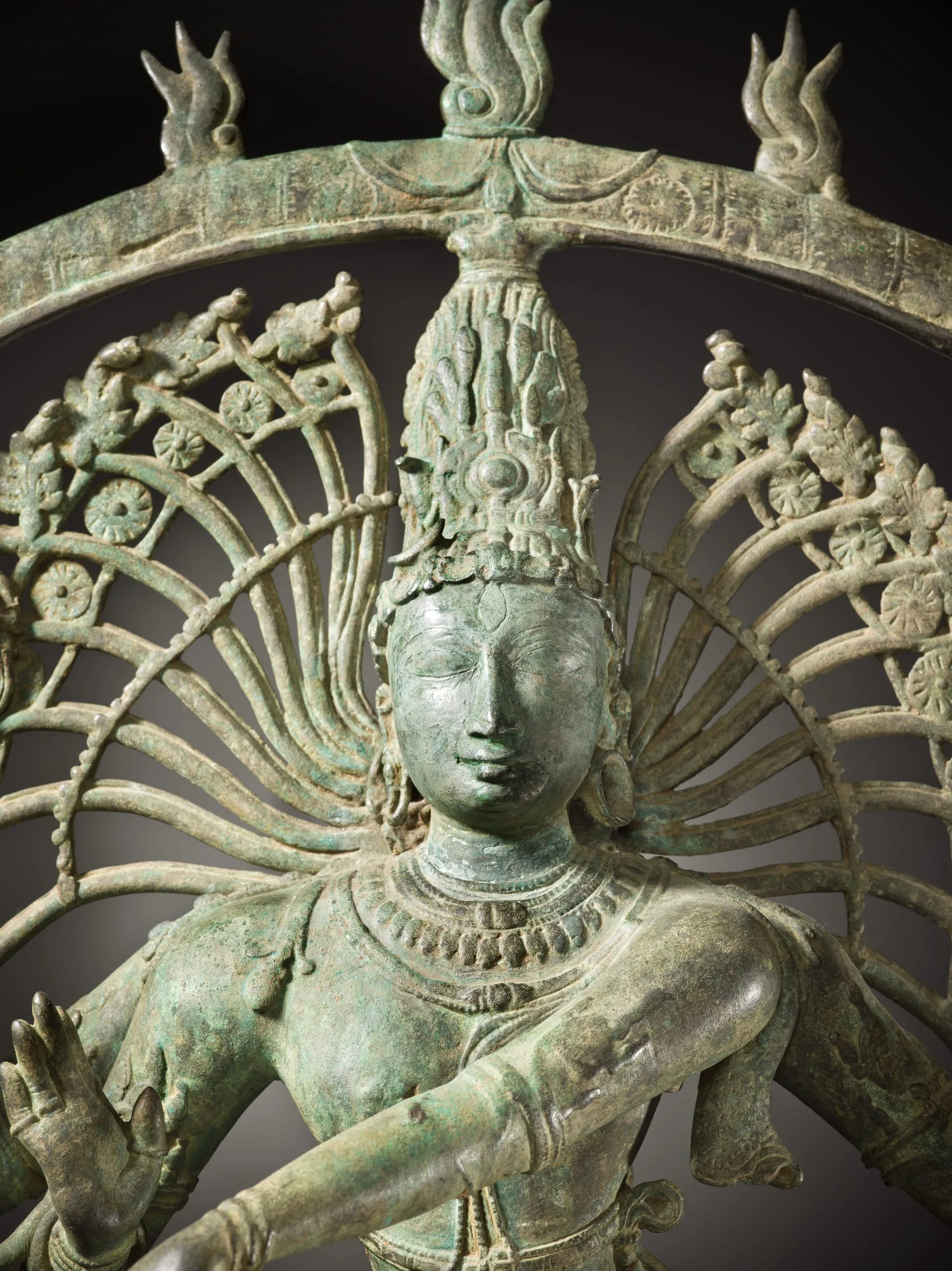
Bronze sculpture of Nataraja in dancing pose, shown from the waist up, with multiple arms radiating outward within a circular prabhavali ring adorned with flame finials. Green patinated surface with fine cast details including tall jatamukuta crown, necklaces, and armlets.
Artist or Maker
Unknown
Title
Shiva as the Lord of Dance
Place Made
India, Tamil Nadu
Date Made
circa 950-1000
Medium
Copper alloy
Dimensions
30 x 22 1/2 x 7 in. (76.20 x 57.15 x 17.78 cm)
Credit Line
Anonymous gift
Accession Number
M.75.1
Classification
Sculpture
Collecting Area
South and Southeast Asian Art
Curatorial Notes
Of the three gods of the Hindu trinity - Brahma the Creator, Vishnu the Preserver, and Shiva the Destroyer and Restorer - Shiva was especially popular and widely worshiped in southern India. This figure has an opening in its base that allowed it to be borne in religious processions, typically ornamented and draped.
In India the art of dance is not only regarded as a form of yoga but is associated with the very act of creation. As lord of yoga, Shiva is also the source of the cosmic dance that created the universe in endless rhythmic cycles. The Tamil sculptors of the Chola dynasty (mid-ninth to early fourteenth centuries) realized Shiva the Dancer in his most complete and graphic form (Nataraja), one which has become symbolic of Indian civilization.
Shiva dances in an aureole of flame that rises from a lotus pedestal, symbol of primordial being and creation. The arched aureole and its three-tongued flames represent the universe and its ultimate destruction by fire. In his upper right hand Shiva holds the drum representing the primordial sound at the creation of the universe; the second right hand makes a gesture of reassurance. His upper left hand holds the flame of destruction. The lower one points to his left foot, refuge of the soul, and shows the path of salvation through Shiva's trampling of the demon that personifies ignorance.
Shiva's body seems to rise and expand with his aureole. The force of his broad shoulders and proud countenance are echoed by the rhythmic explosion of his locks; among them the small figure of Ganges (left) represents the god's intimate connections with water, the force of life. Perfectly poised, this work manifests Shiva's divine unity with compelling grace and majesty.
Selected Bibliography
  • Los Angeles County Museum of Art. Transformation: the LACMA Campaign. Los Angeles: Museum Associates, 2008.
  • Meller, Susan. Labels of Empire: Textile Trademarks: Windows into India in the Time of the Raj. Novato, CA: Goff Books, 2023.
  • Markel, Stephen. "Hindu Cosmology and Mythology." Orientations 55, no.6 (2024): 39-47.