- Title
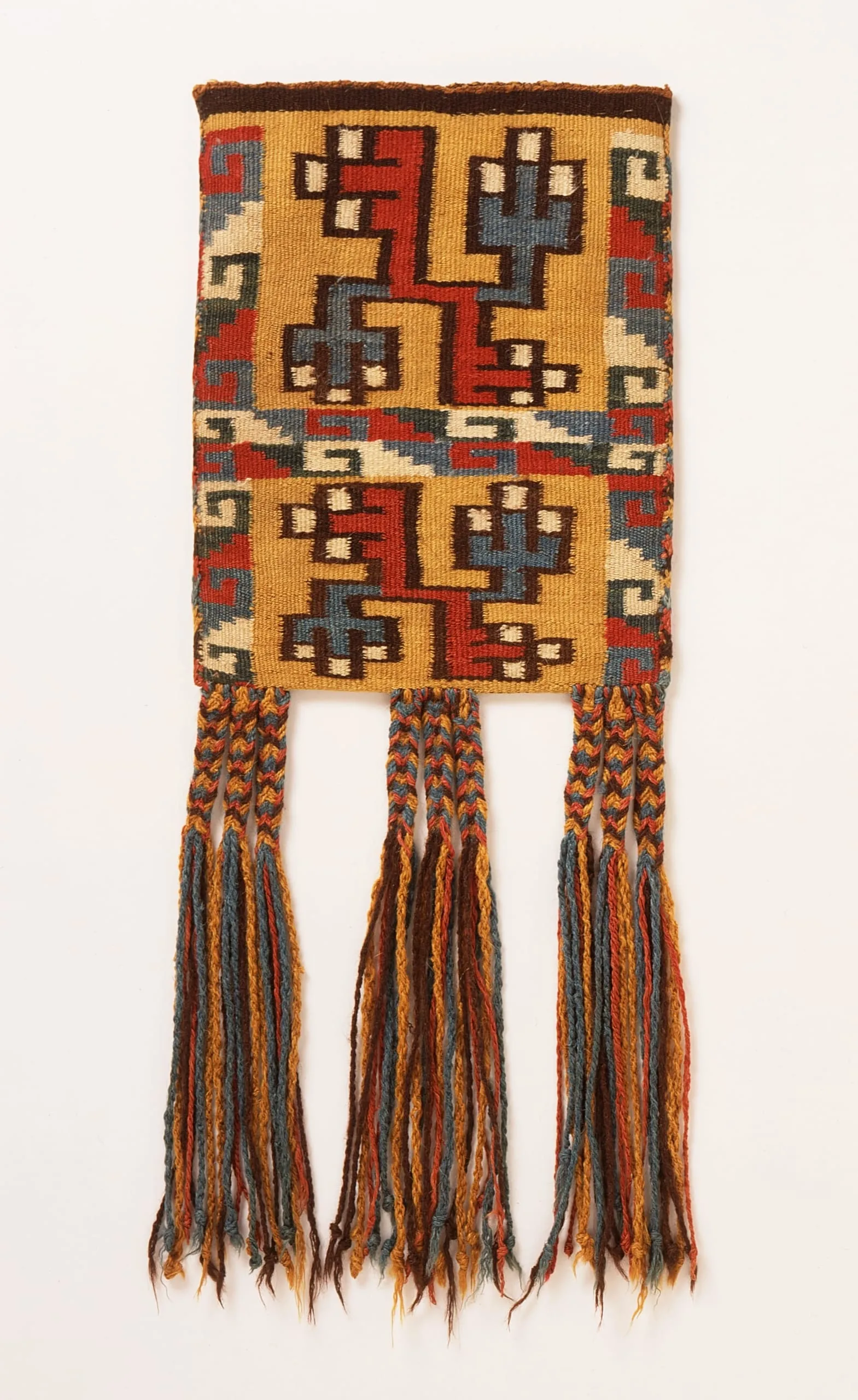
- Bag for Coca Leaves
- Date Made
- 600-800
- Medium
- Camelid fiber and cotton, dovetailed tapestry with loop stitch embroidery, and braided fringe
- Dimensions
- With fringe: 16 1/2 × 6 3/8 in. (41.91 × 16.19 cm)
- Accession Number
- M.74.151.16
- Curatorial Notes
The plant from which cocaine is made bears coca leaves, which were originally carried in small, beautifully patterned bags with long straps for the shoulder or neck. Coca leaves had ceremonial significance and were distributed far from zones where coca plants grew naturally; chewing them with a bit of powdered lime formed a part of the sacred rituals depicted on the ceramic art of many ancient South American cultures. Chewing coca leaves also diminished hunger and provided energy for the long and rugged mountain treks in the Andes. Bags were therefore an indispensable accessory as well as an important factor in the overall visual effect of a costume ensemble.
One of the frequent elements of abstraction in the Wari textile code is a single part of an image that acts as a surrogate for the whole. In this fringed bag, the swastika design is composed of only two characteristic elements of the Staff Bearer—the three-toed “foot” and the tripartite “fan” headdress—yet this powerful abstract symbol creates a visual acronym for the Staff Bearer in all its possible manifestations.
Nicole LaBouff via Kaye Spilker
2009