LACMA

ShopMembershipMyLACMATickets
LACMA
Los Angeles County Museum of Art
5905 Wilshire Blvd.
Los Angeles, CA 90036
info@lacma.org
(323) 857-6000
Sign up to receive emails
Subscribe
© Museum Associates 2025

Museum Hours

Monday

11 am–6 pm

Tuesday

11 am–6 pm

Wednesday

Closed

Thursday

11 am–6 pm

Friday

11 am–8 pm

Saturday

10 am–7 pm

Sunday

10 am–7 pm


  • About LACMA
  • Jobs
  • Building LACMA
  • Host An Event
  • Unframed
  • Press
  • FAQs
  • Log in to MyLACMA
  • Privacy Policy
© Museum Associates 2025
Collections

Unknown
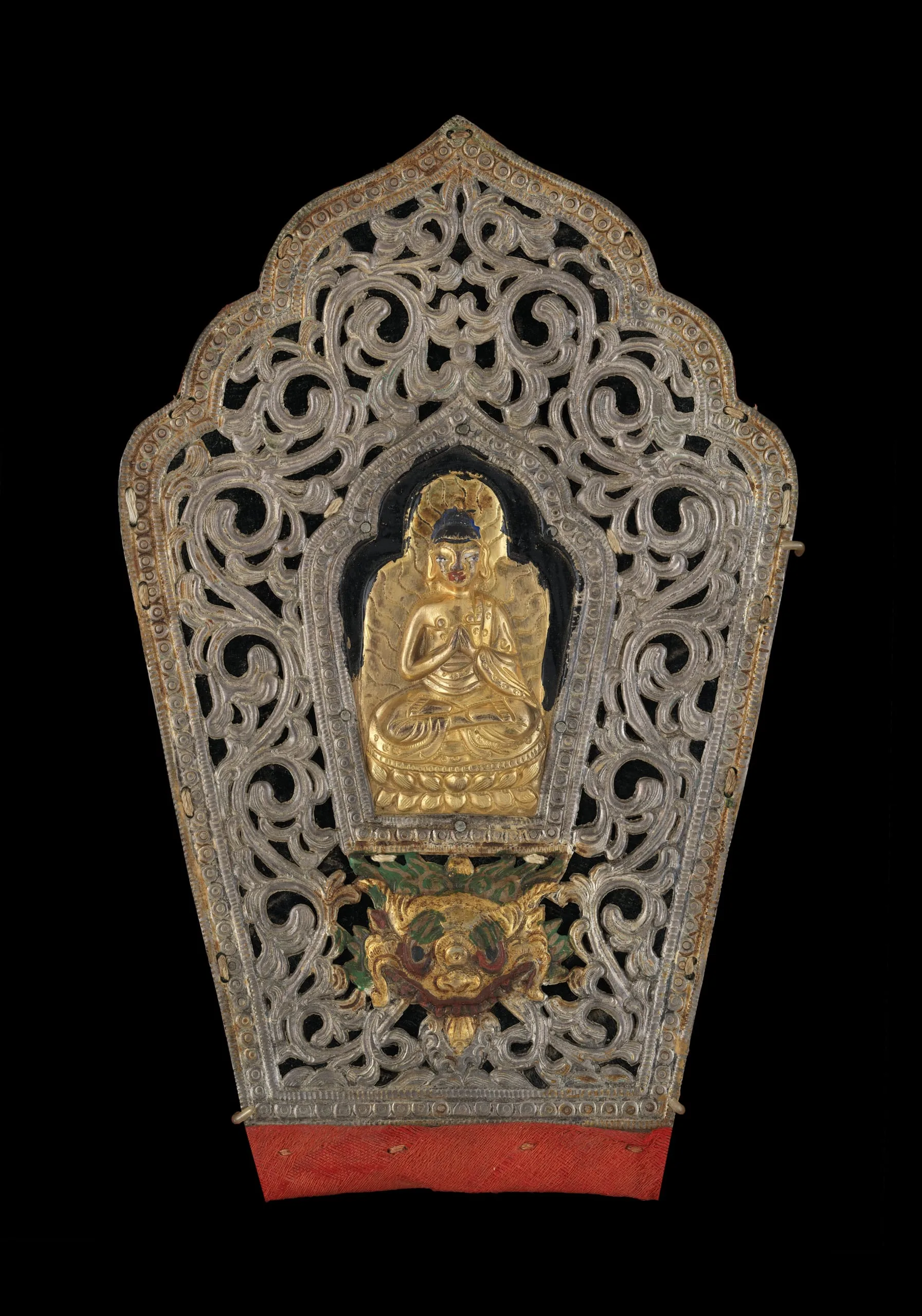
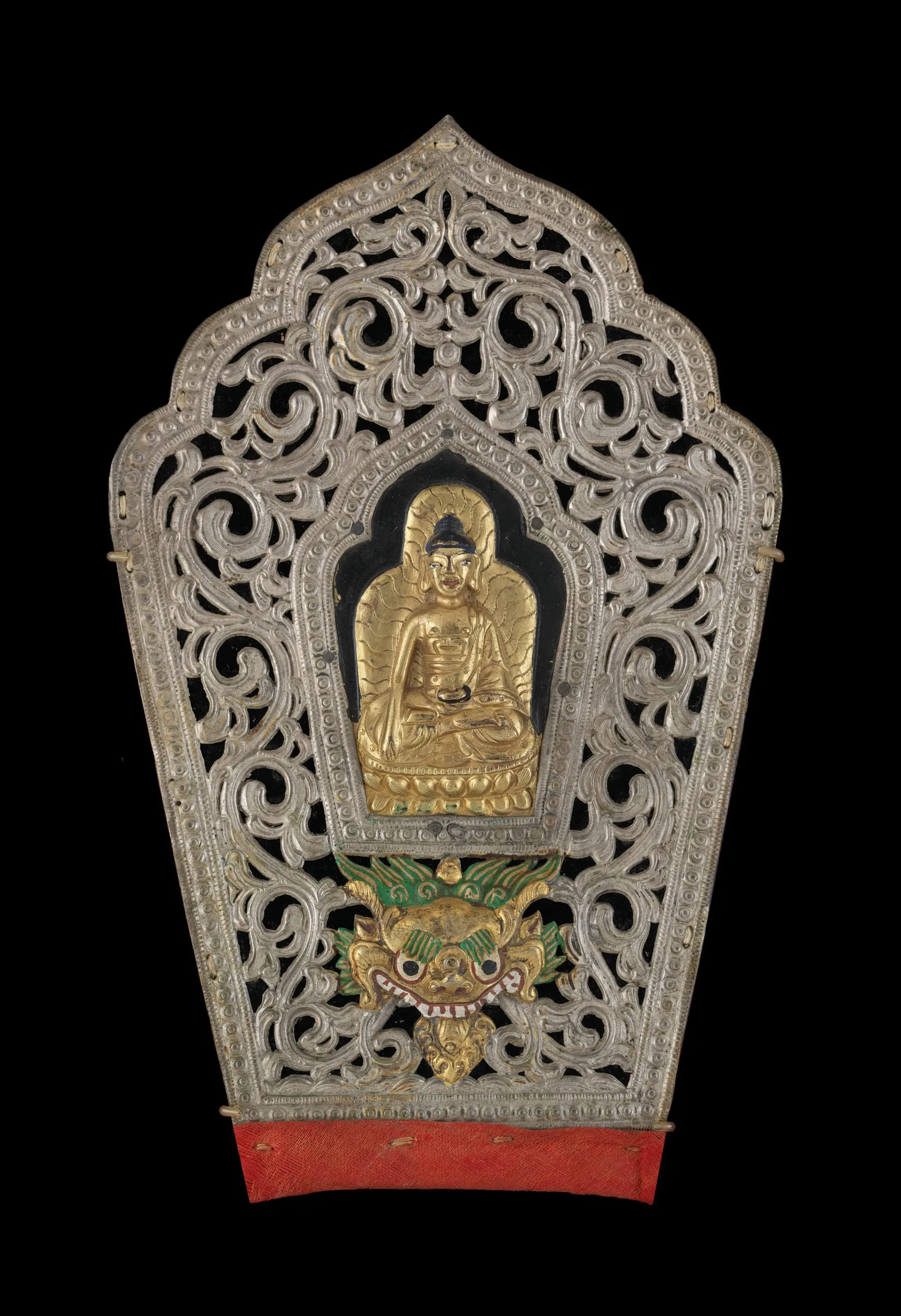
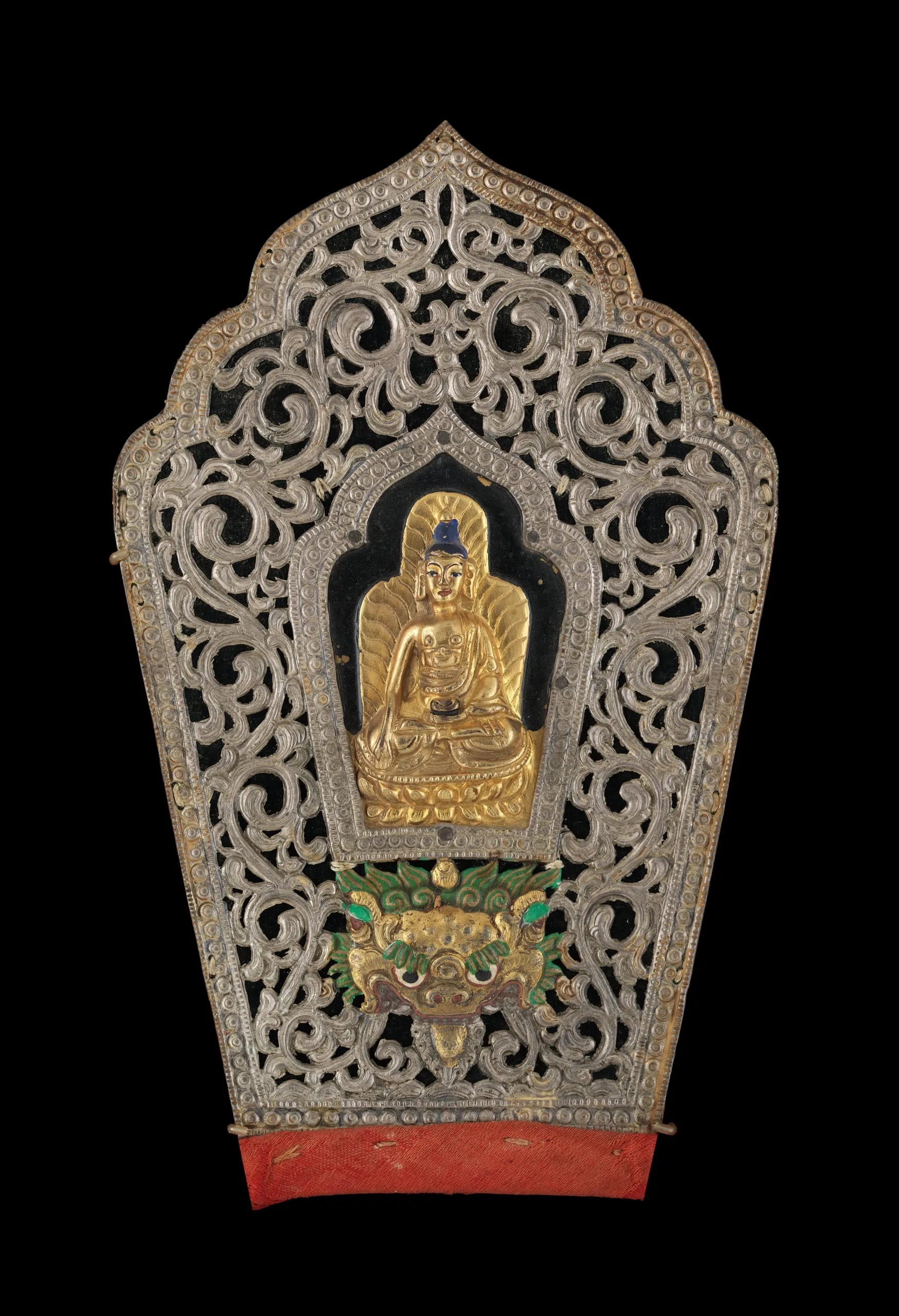
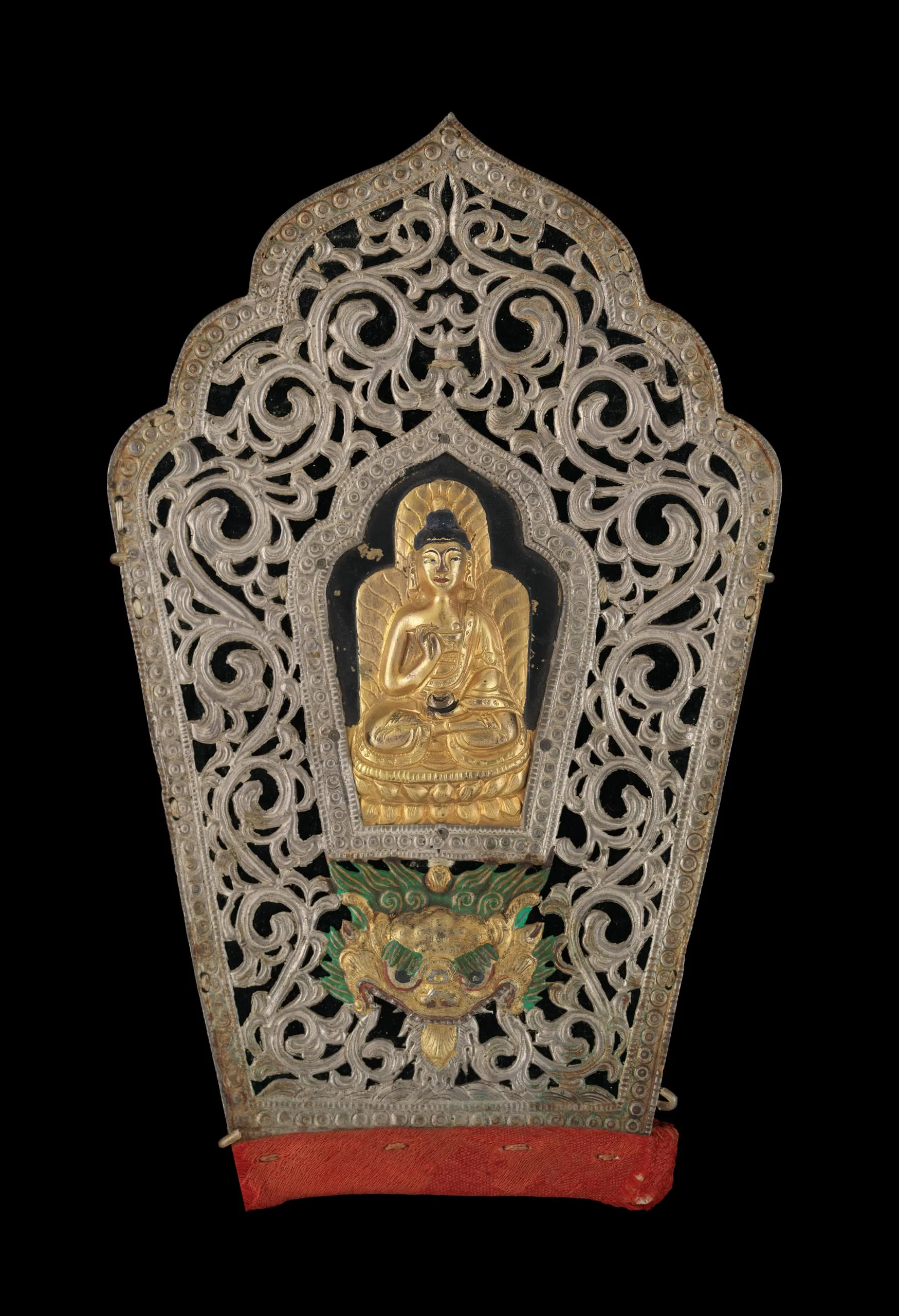
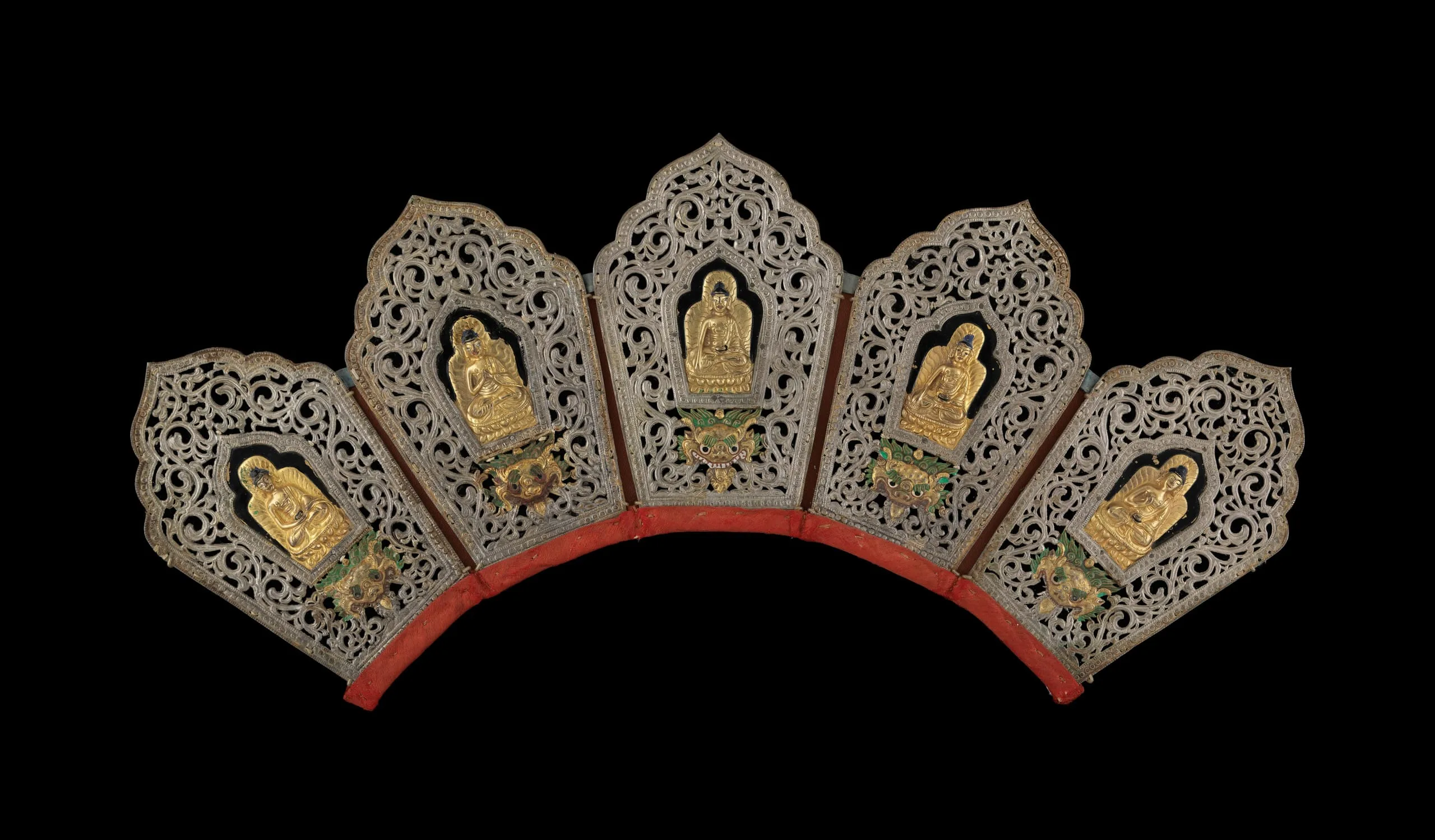
Ritual Diadem with the Five Jina Buddhas: Amitabha, Vairochana, Akshobhya, Ratnasambhava, and Amoghasiddhi19th century

Not on view
Fan-shaped ceremonial crown with five silver fretwork panels rising from a coral-red arc, each panel featuring a small seated gilded figure against a black inset field
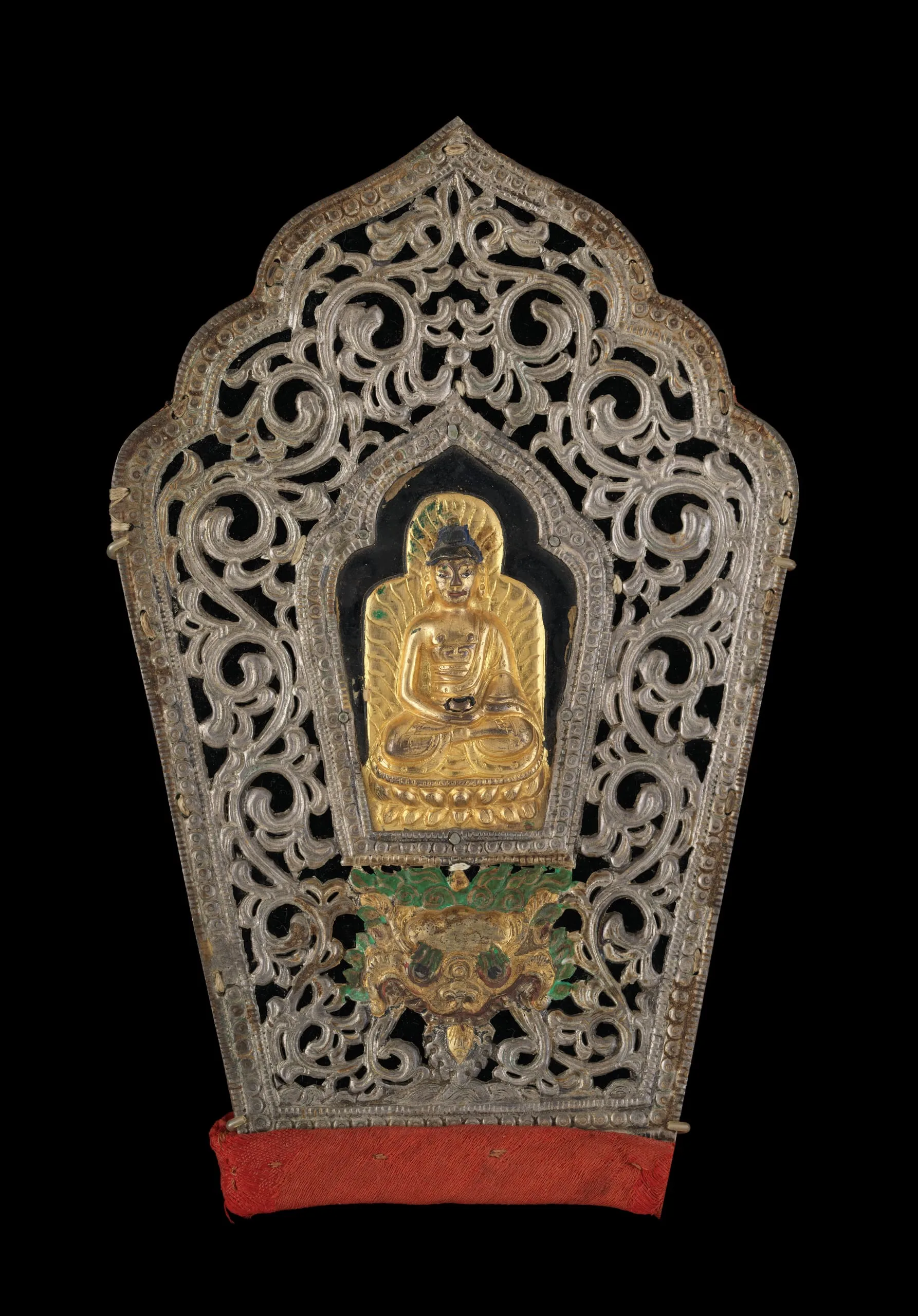
Portable metal shrine with pointed arch form; silver-toned openwork filigree scrollwork surrounds a central niche housing a gilded seated Buddha figure in dhyana mudra on a lotus throne, with green and gold decorative elements below and a red lacquered base.
Gilt and silver metal altar backplate with pointed arch form, featuring openwork scrolling foliage surround and a central gilded seated figure in meditation pose on a lotus throne, with polychrome painted element at the base.
Metalwork altar backing with arched form, featuring repoussé silver openwork scrolling foliage framing a central niche; gilt seated figure in meditation pose on a lotus throne above a polychrome protector deity mask with green and gold detailing; red lacquered base.
Portable altar with arched silver repoussé backplate featuring openwork scrolling foliate patterns; a small gilt figure of a seated deity in meditation pose occupies a central niche, with a polychrome makara mask below and a red textile base.
Portable metal shrine with arched silver-toned repoussé surround of pierced scrolling foliage, enclosing a gilt seated Buddha figure in a recessed niche above a polychrome zoomorphic mask; red fabric base.
Artist or Maker
Unknown
Title
Ritual Diadem with the Five Jina Buddhas: Amitabha, Vairochana, Akshobhya, Ratnasambhava, and Amoghasiddhi
Place Made
Northern Nepal or Tibet
Date Made
19th century
Medium
Openwork silver and gold with paint; fabric-wrapped cardboard; leather ties
Dimensions
Each plaque: 7 1/4 x 4 1/2 x 3/8 in. (18.42 x 11.43 x .95 cm); Overall: 10 1/4 x 21 1/4 x 3/8 in. (26.04 x 53.98 x .95 cm)
Credit Line
Gift of Dr. Ronald M. Lawrence
Accession Number
M.74.139.15
Classification
Jewelry and Adornments
Collecting Area
South and Southeast Asian Art
Curatorial Notes
This pentaptych diadem with the Five Jina Buddhas would have been worn by a Nepalese Buddhist priest known as the Vajracharya (Master of the Thunderbolt) during public ceremonies to identify him or her ritually as the primordial teacher Vajrasattva (Adamantine Being).

By donning the headdress over an artificial mound of the triple-crowned Mount Meru hair, generally made of thick, black string, the teacher or practitioner becomes the purified Vajrasattva, the Adamantine Being, and is thereby theologically qualified to perform the rituals. This public display of presumed spiritual attainment documents that the esoteric practices of one’s transformation into a Vajrayana deity had become common knowledge. This is thought to have occurred by the 6th–7th century in India, although sculpted representations date back only to the 11th–12th century in eastern India as Tantric methodologies shifted towards a public ministry. See John C. Huntington and Dina Bangdel, The Circle of Bliss: Buddhist Meditational Art (Columbus: Columbus Museum of Art and Chicago: Serindia Publications, 2003), pp. 224-229, nos. 60-62.

The Five Jina Buddhas, from the viewer’s left, are Amitabha (Infinite Light), Vairochana (Intensely Luminescent One), Akshobhya (Unshakeable One), Ratnasambhava (Jewel Born), and Amoghasiddhi (Unfailing Success). These five Buddhas, who are emanations of Adi Buddha (Primordial Enlightened One), represent the state and qualities of Buddhahood and the essence of the Buddhist Dharma. Each Buddha has a specific mudra, insight, symbol, color, vehicle, and rules a cardinal direction or the zenith. The Buddhas' female aspects (prajna) are present in this ritual headdress only by implication, as some crowns portray the Five Jina Buddhas in union with their Buddha Prajnas. Each Buddha represented here has a flaming aureola (prabhavali). They each sit on a double lotus base in a gemstone-bordered cartouche in the center of an outer border of scrolling vines made of openwork silver. Beneath each Buddha is a mask of a mythical animal, the zipac, which is a Tibetan apotropaic symbol resembling the Indian "Face of Glory" (kirttimukha) and the Chinese gluttonous creature (taotie).

See also M.79.151.1, M.79.151.2, and M.81.67. A comparable ritual diadem is in the Field Museum, Chicago (1965.2855.235030). For the initiation cards (tsakali) with images of the deities to be envisioned by the practitioner during the public ceremonies, see M.74.139.8, M.88.59.1-.4, and AC1998.253.1-.6.
Selected Bibliography
  • Little, Stephen, Tushara Bindu Gude, Karina Romero Blanco, Silvia Seligson, Marco Antonio Karam. Las Huellas de Buda. Ciudad de México : Instituto Nacional de Antropología e Historia, 2018.
  • Little, Stephen, and Tushara Bindu Gude. Realms of the Dharma: Buddhist Art across Asia. Los Angeles: Los Angeles County Museum of Art, 2025.