- Title
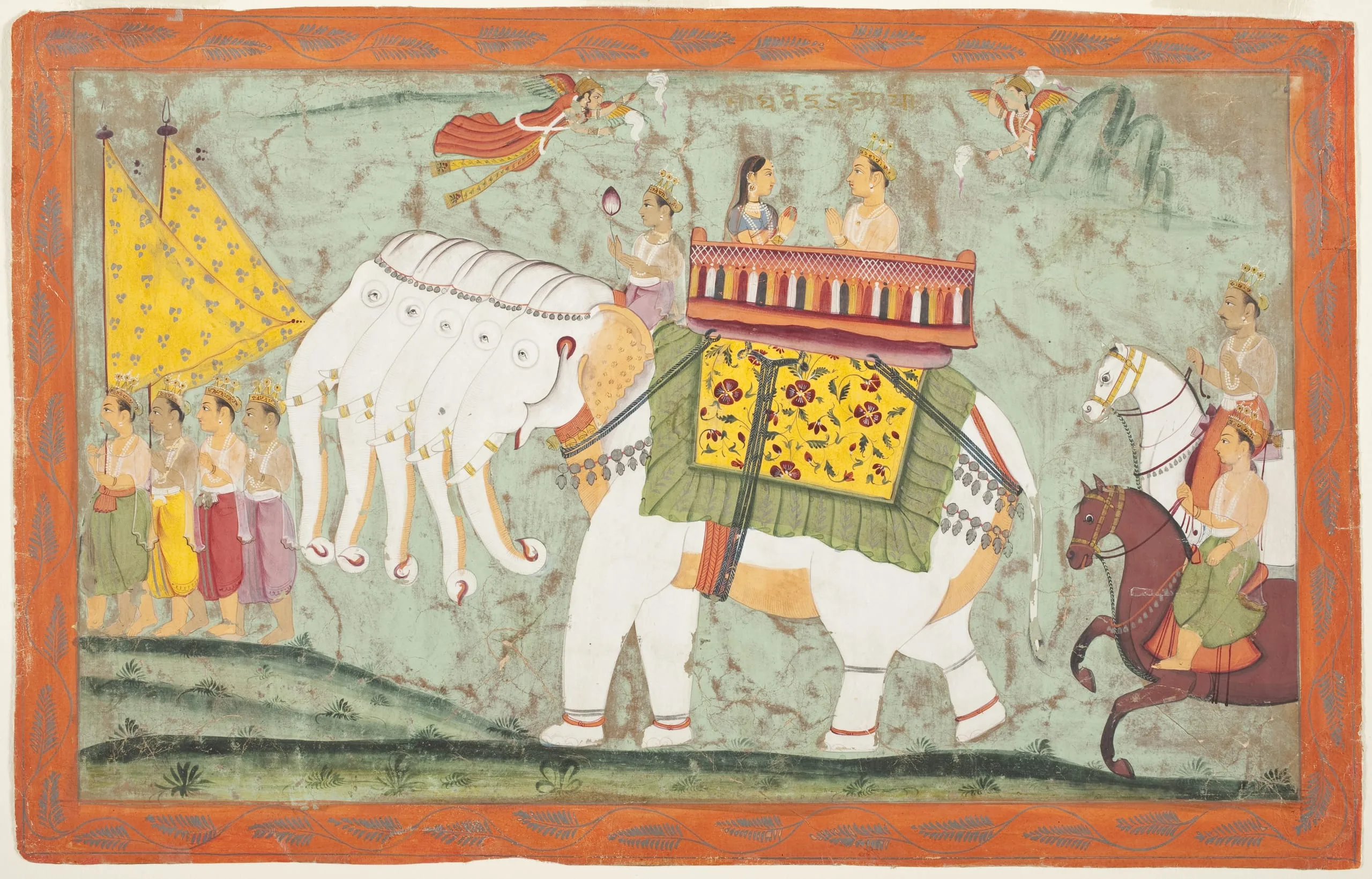
- Indra and Indrani Riding on Airavata, Folio from a Panchakalyanaka (Five Auspicious Events)
- Date Made
- circa 1740
- Medium
- Opaque watercolor, gold, and silver on paper
- Dimensions
- Image: 9 1/8 x 15 1/8 in. (23.18 x 38.42 cm); Sheet: 10 5/8 x 16 3/4 in. (26.99 x 42.55 cm)
- Accession Number
- M.74.102.4
- Curatorial Notes
The Panchakalyanaka (Five Auspicious Events) is based on a biography of the first Jina, Rishabhanatha (or Adinatha), as narrated in the Jain Adi Purana composed in Sanskrit by the Digambara monk Jinasena in Karnataka in the 9th century. After Queen Marudevi gave birth to Rishabhanatha, Indra and his wife Indrani (or Sachi) descended from Indra’s heaven and went to Marudevi’s bed chamber in the palace. Indrani placed her in a trance and substituted a duplicate child for the baby Jina. They then took Rishabhanatha in a grand procession to the cosmic Mount Meru for the lustration rites (Janmabhisheka) that Indra performs on newborn Jinas with 1008 sacred water vessels (see AC1992.270.2). After the ceremony, the baby Jina was returned to his mother and exchanged for the surrogate infant.
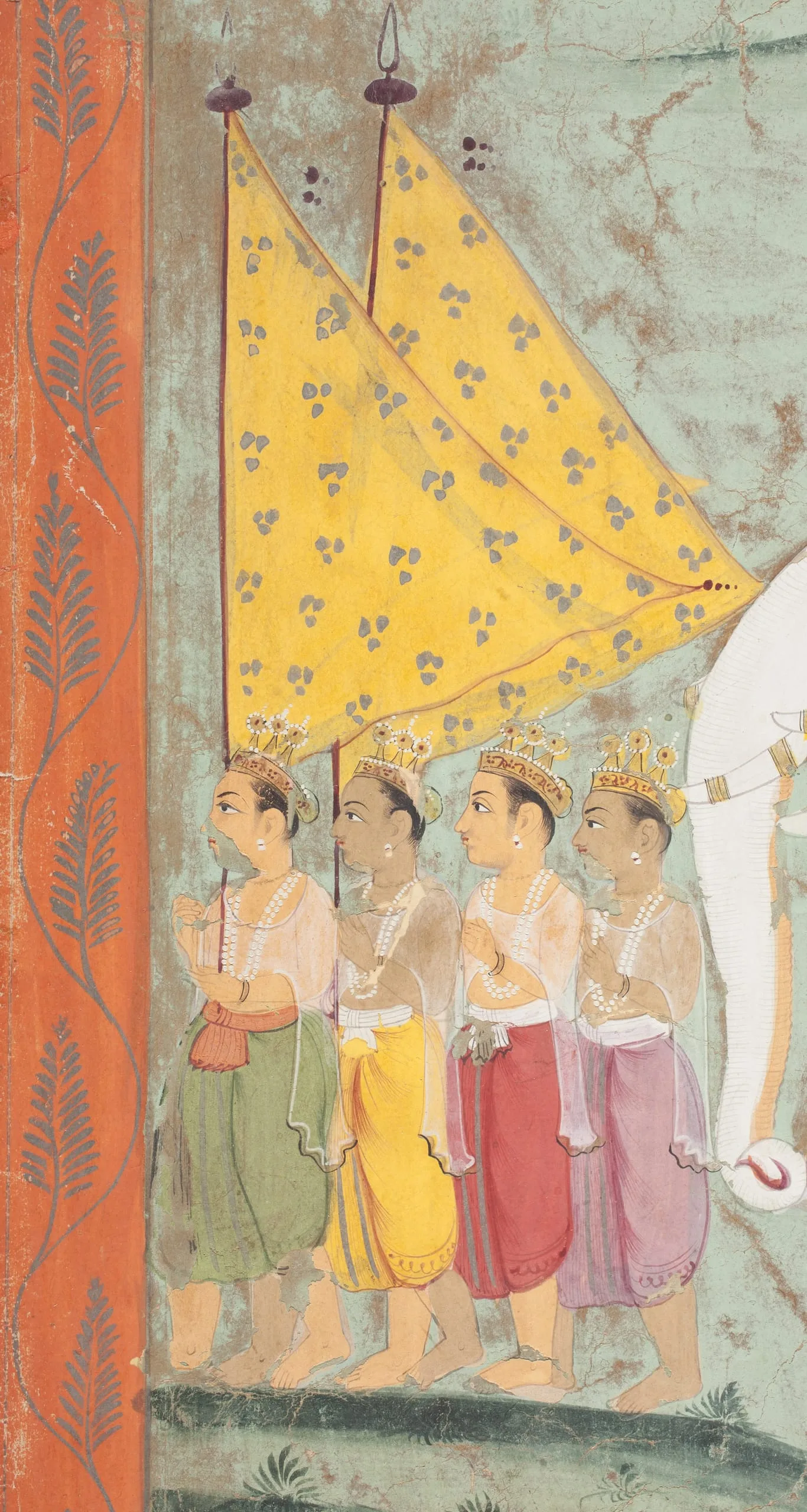
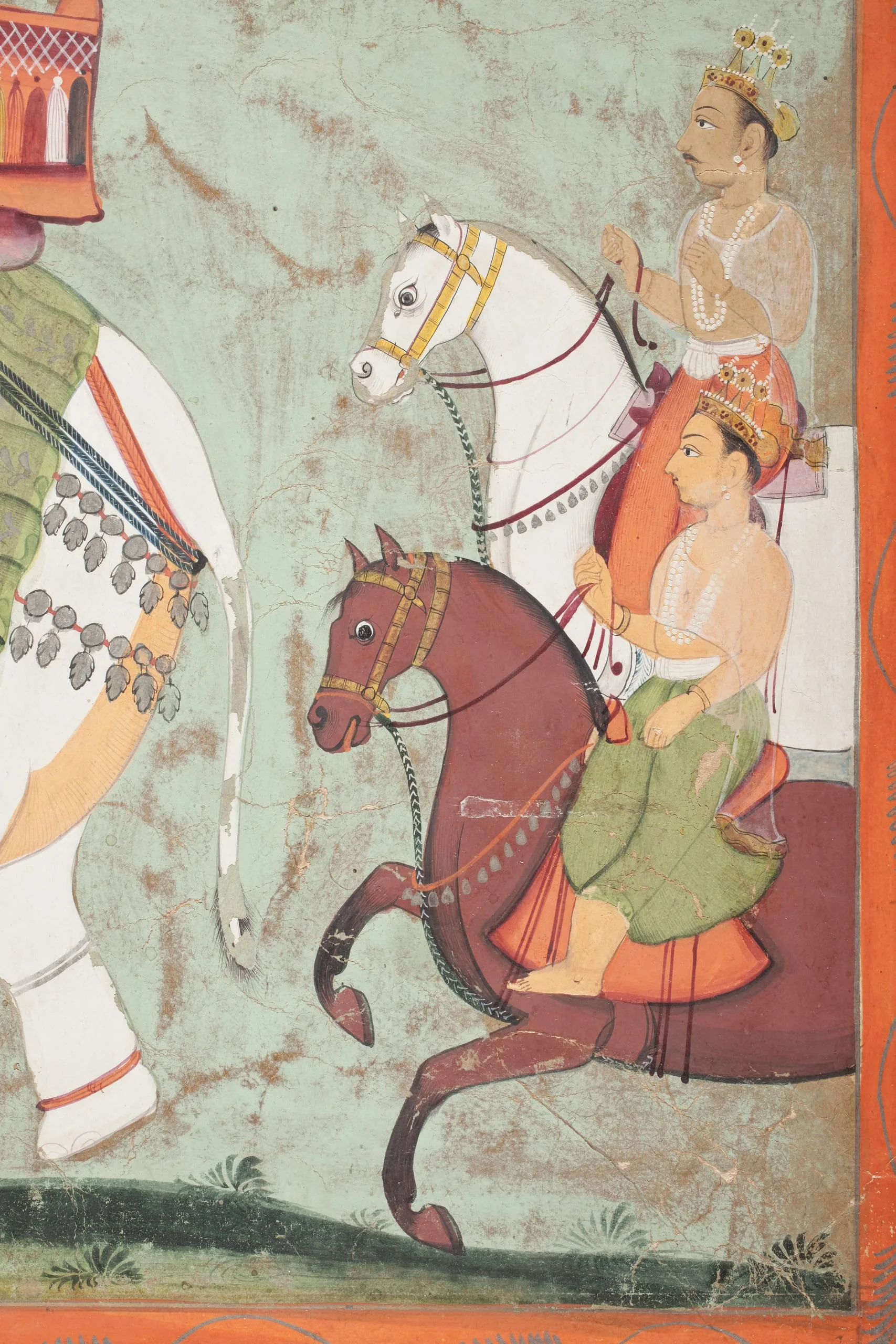
This folio [#7] depicts Indra and Indrani riding in a howdah on Indra’s mount, the multi-trunked white elephant Airavata, in a procession going to Marudevi’s palace to collect Rishabhanatha. Another folio in the series, now in the Pierpont Morgan Library, depicts a procession going in the opposite direction when Indra returned from the palace conveying the infant Jina under an honorific parasol. A partially effaced identifying title is written in gold above the divine couple.
Additional folios from this dispersed series are in the Cleveland Museum of Art (2021.12), Pierpont Morgan Library, New York (MS M.1048.4), and San Diego Museum of Art (1990.213 and 1990.214).