- Title
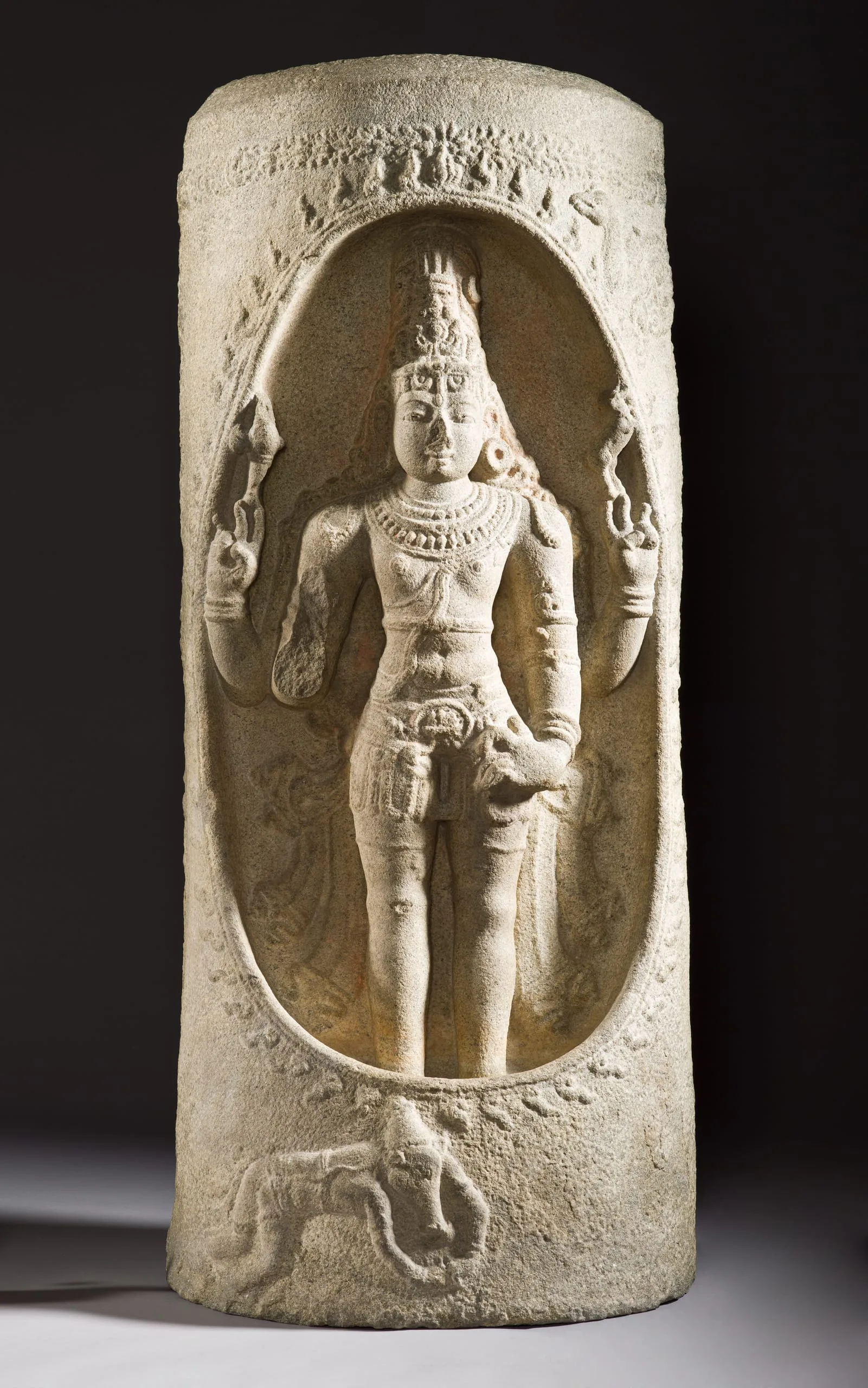
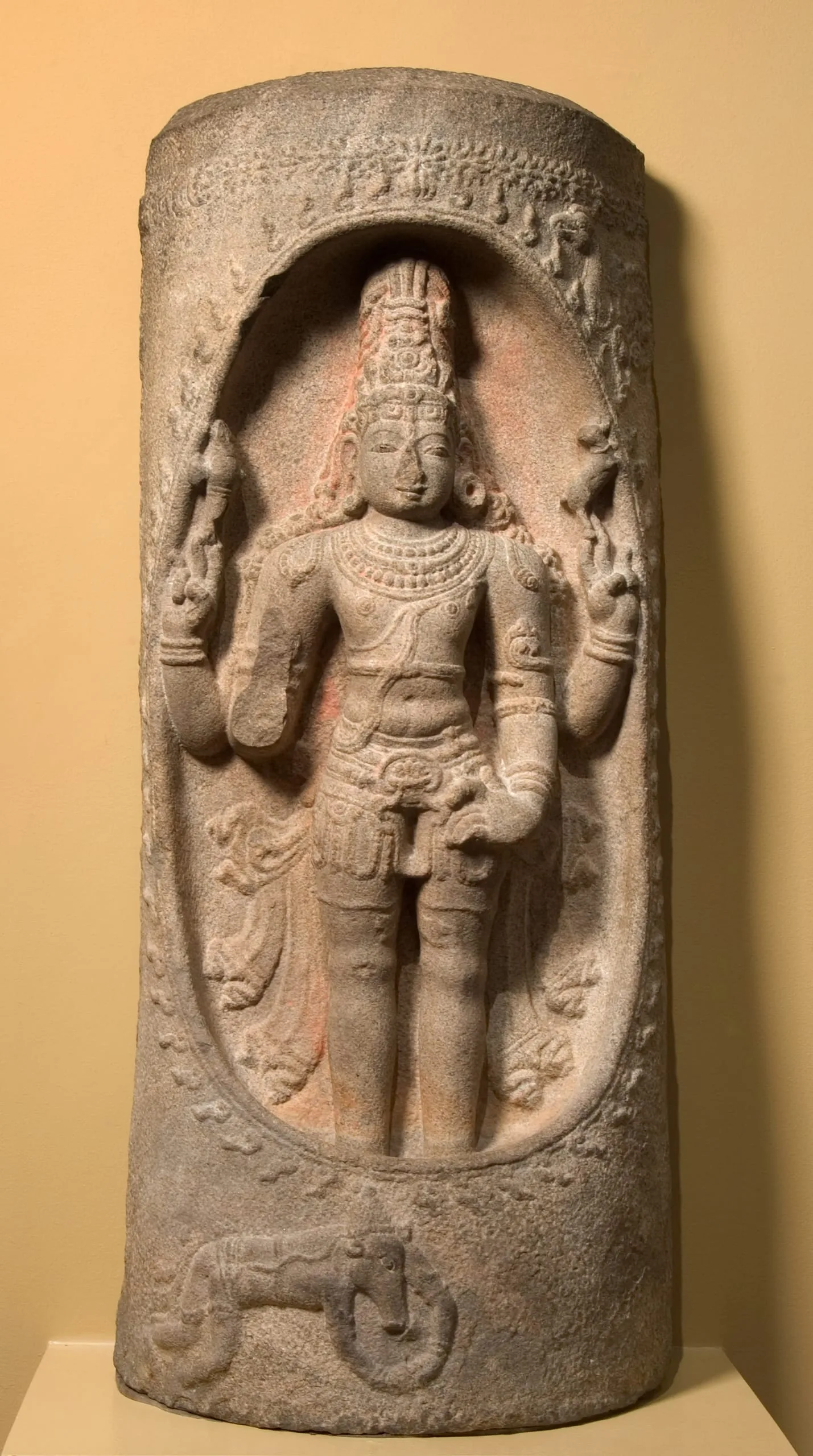
- Shiva as the Cosmic Pillar
- Date Made
- early 12th century
- Medium
- Granulite with traces of paint
- Dimensions
- 48 1/4 x 21 x 13 in. (122.55 x 53.34 x 33.02 cm)
- Accession Number
- M.74.138.4
- Curatorial Notes
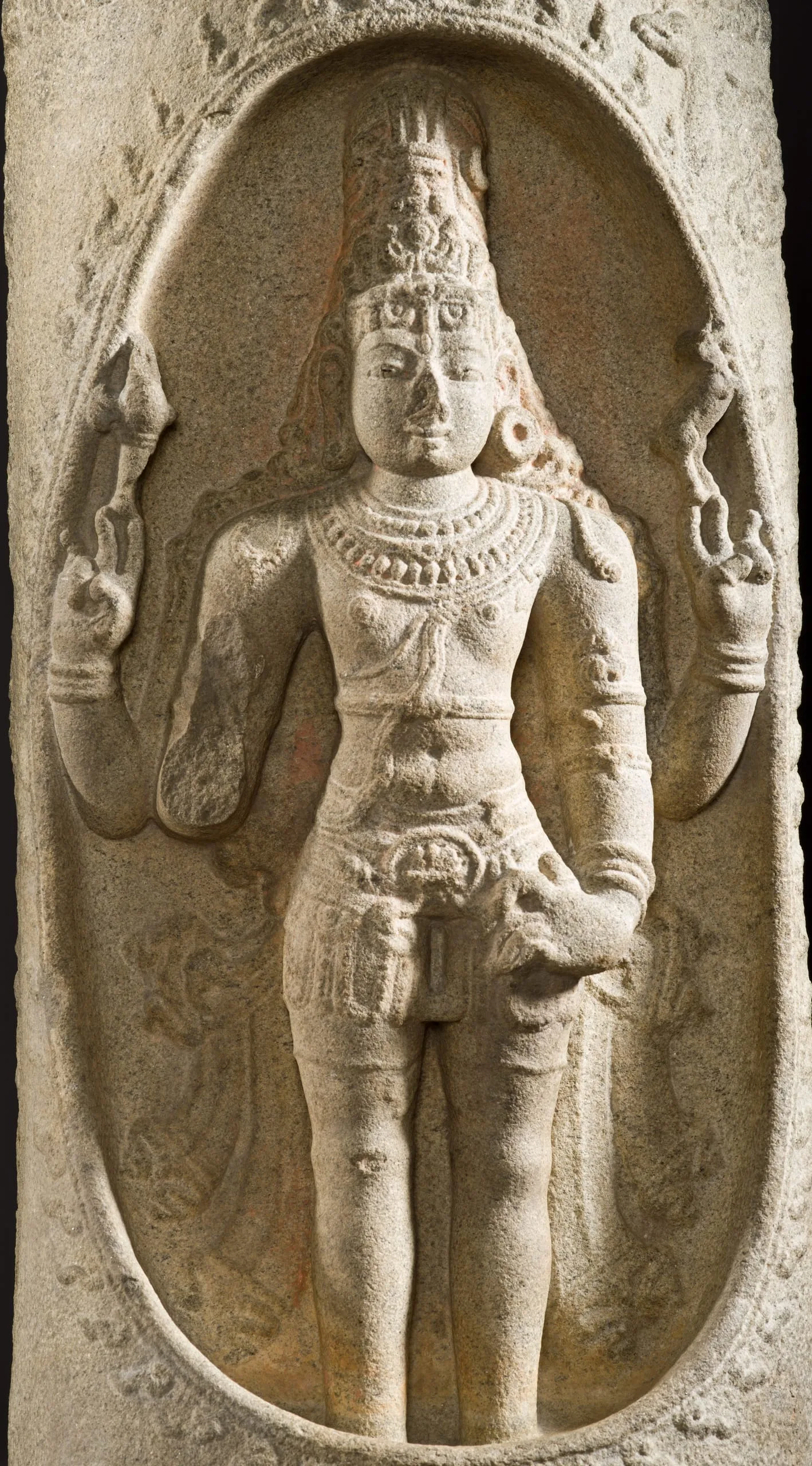
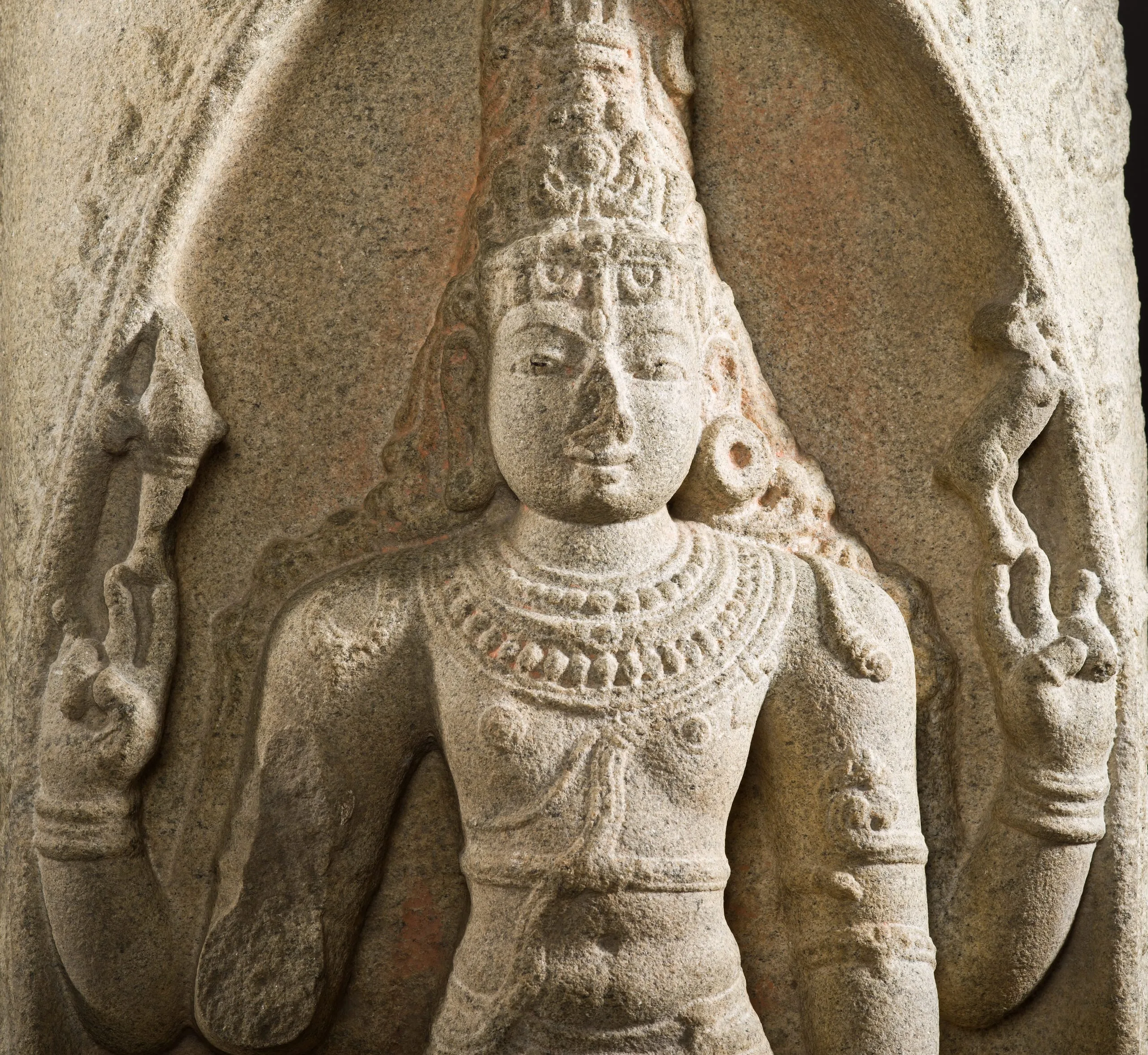
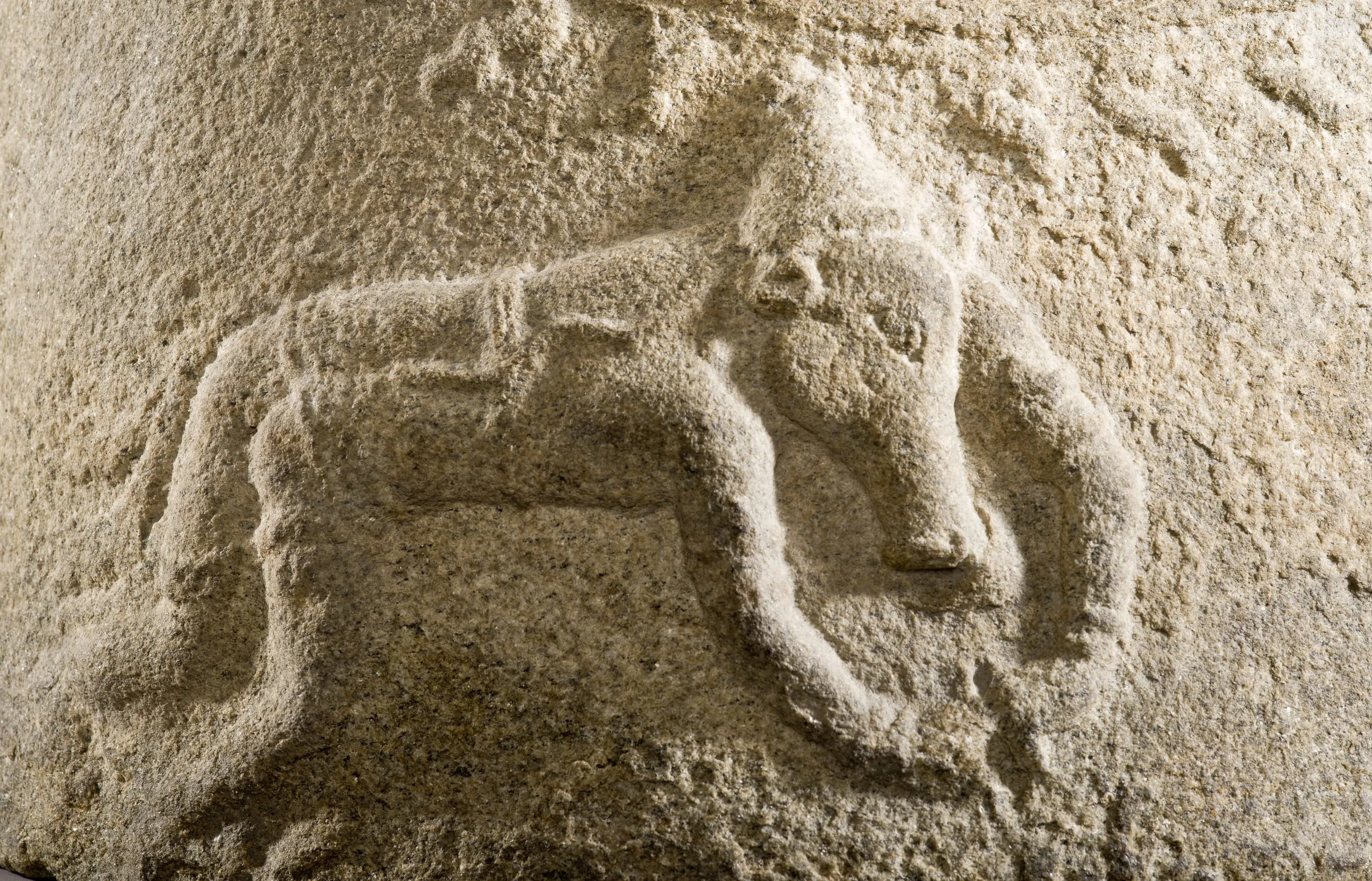
This sculpture represents the Shaiva devotee’s assertion of the superiority of Shiva over his rival Hindu gods Brahma and Vishnu. According to the myth, Brahma and Vishnu were arguing boastfully over who was the more powerful, when suddenly they came upon a colossal column of flame arising from the cosmic ocean. Brahma took the form of his mount, a white gander (depicted on the upper right), and flew upward to find the flame's summit. Vishnu sought the fire's origin by diving into the ocean in his boar incarnation (depicted on the base). When neither god could find an end to the column, which was actually a linga (Shiva’s aniconic symbol), Shiva triumphantly emerged from its side and proclaimed his supremacy. Shown standing within an elliptical cavity ringed with flames, Shiva is crowned with an ascetic’s piled hair adorned with his emblem of the crescent moon. His upper right hand carries a battle axe. Now-broken, his lower right hand was once held in the ‘fear-not’ gesture (abhaya mudra). His upper left hand holds his deer attribute, while his lower left hand rests on his hip.
Southern Indian representations of this sculpture, termed a lingodbhava-murti (image that arises from the linga), were placed in niches around the bases of temples to establish the proper iconographic programs and orient the ritual worship of the faithful.