LACMA

ShopMembershipMyLACMATickets
LACMA
Los Angeles County Museum of Art
5905 Wilshire Blvd.
Los Angeles, CA 90036
info@lacma.org
(323) 857-6000
Sign up to receive emails
Subscribe
© Museum Associates 2025

Museum Hours

Monday

11 am–6 pm

Tuesday

11 am–6 pm

Wednesday

Closed

Thursday

11 am–6 pm

Friday

11 am–8 pm

Saturday

10 am–7 pm

Sunday

10 am–7 pm


  • About LACMA
  • Jobs
  • Building LACMA
  • Host An Event
  • Unframed
  • Press
  • FAQs
  • Log in to MyLACMA
  • Privacy Policy
© Museum Associates 2025
Collections

Unknown
A Shaiva Guardian Figure from a River Goddess Reliefcirca 850-900

Not on view
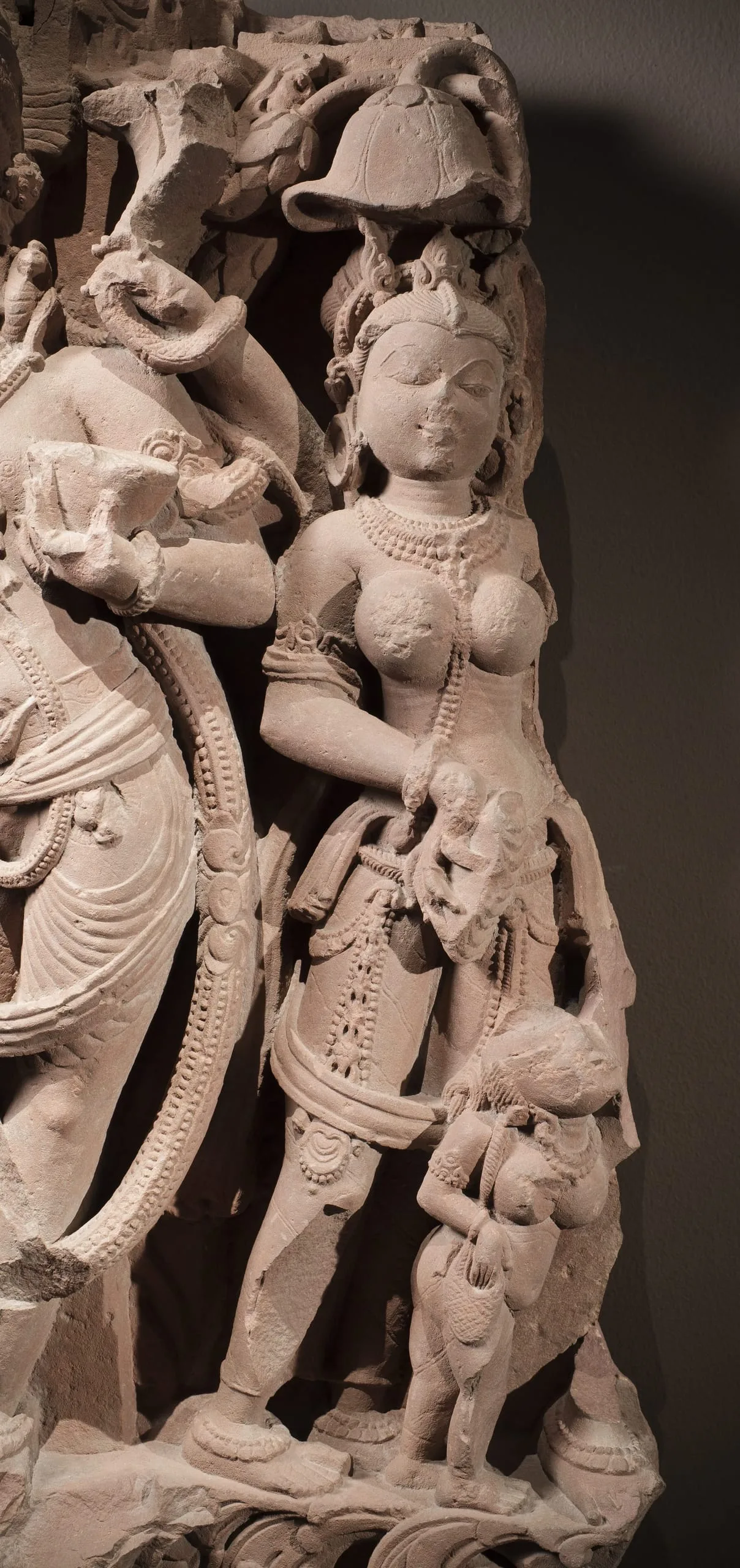
Sandstone relief sculpture with two large standing multi-armed figures, ornate jewelry and crowns, flanked by smaller attendant figures, weathered surface
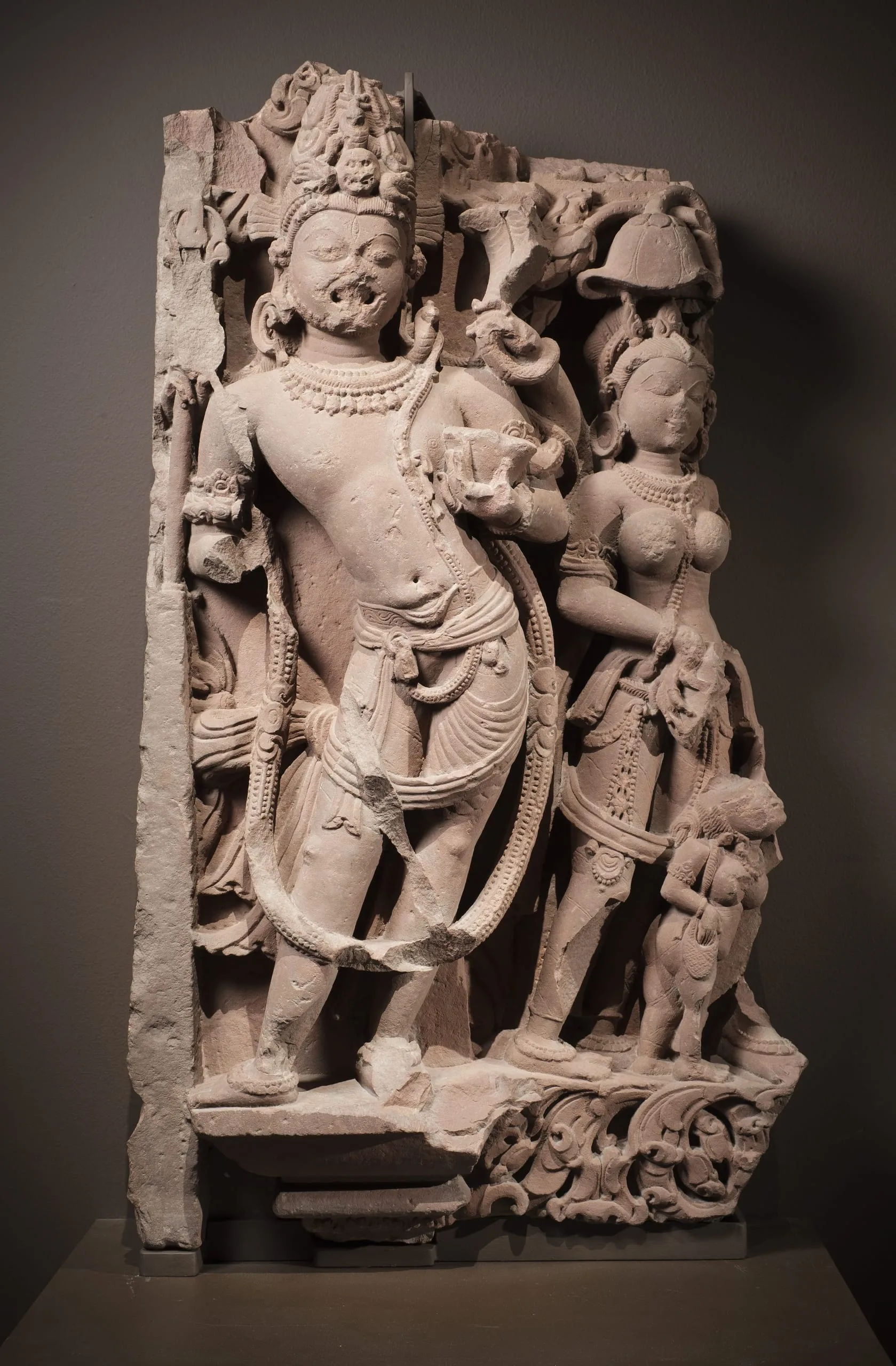
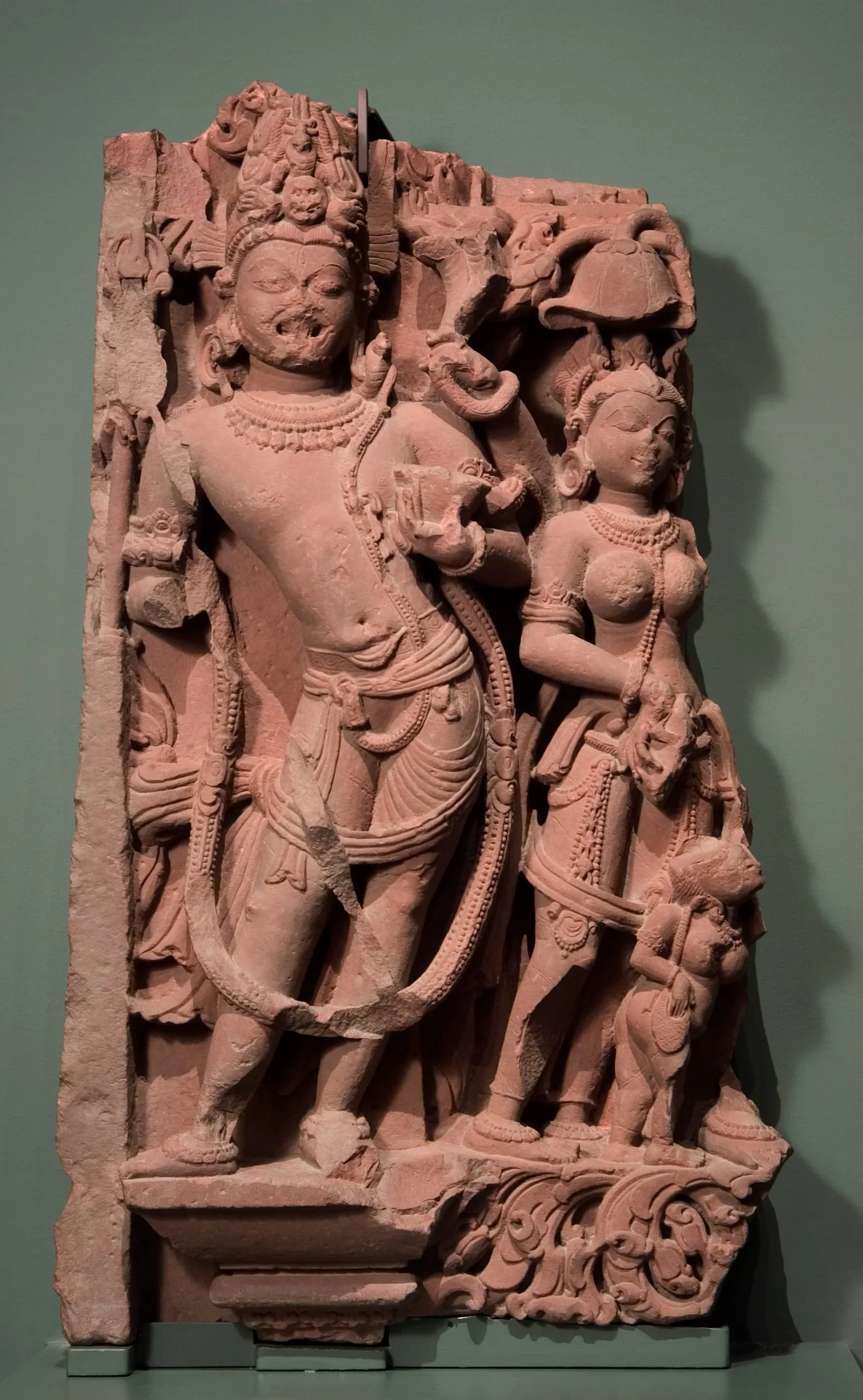
Red sandstone relief panel with two standing figures in high relief: a male deity with elaborate crown, beard, and multiple ornaments at left; a female figure with jewelry and headdress at right, a small attendant figure at her feet. Foliate carving at the base, detailed surface work throughout.
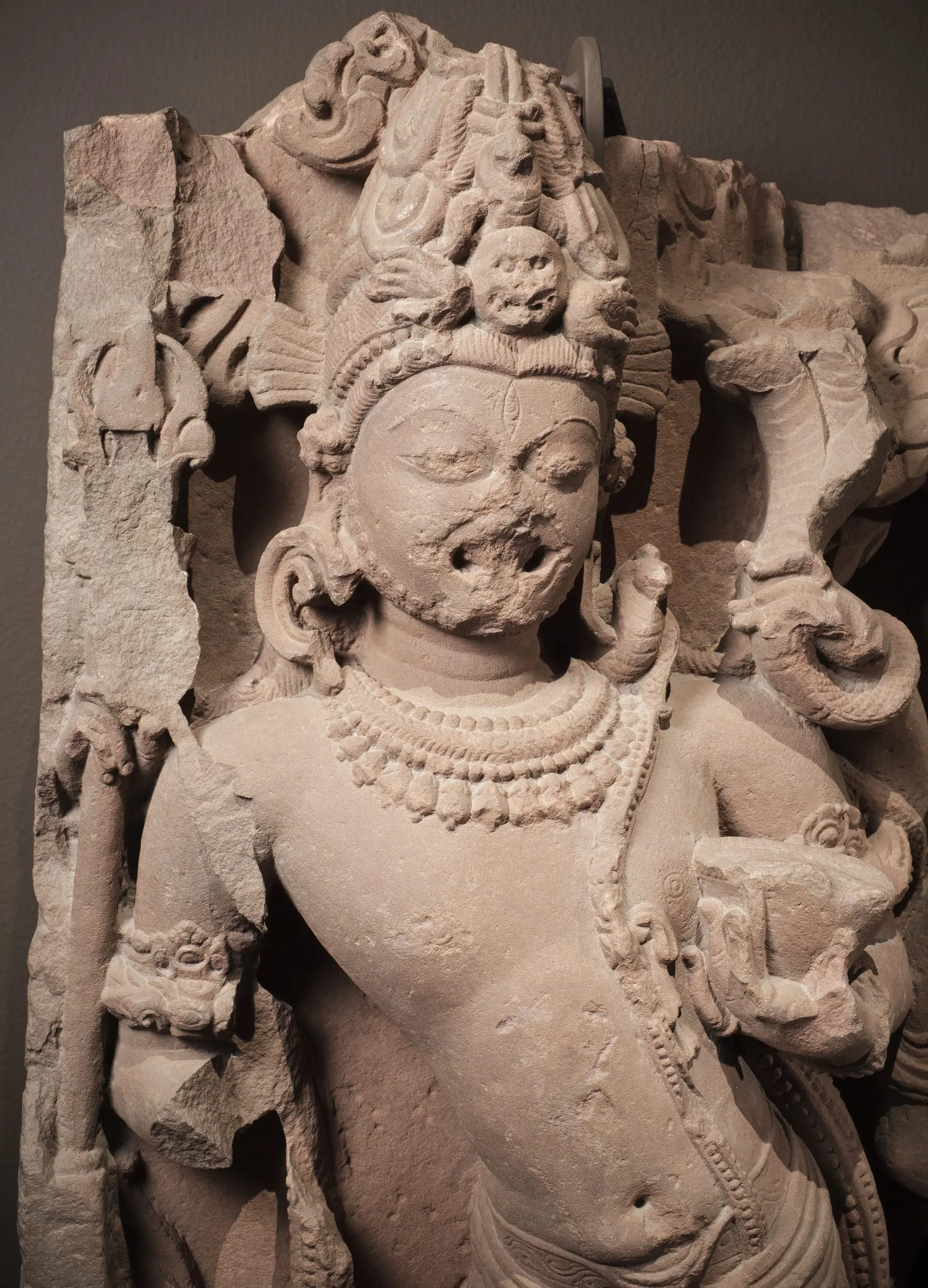
Sandstone relief sculpture of a multi-armed deity in frontal stance, wearing an elaborate crown with small figures, large circular earrings, and a beaded necklace; surface shows weathering with some detail loss.
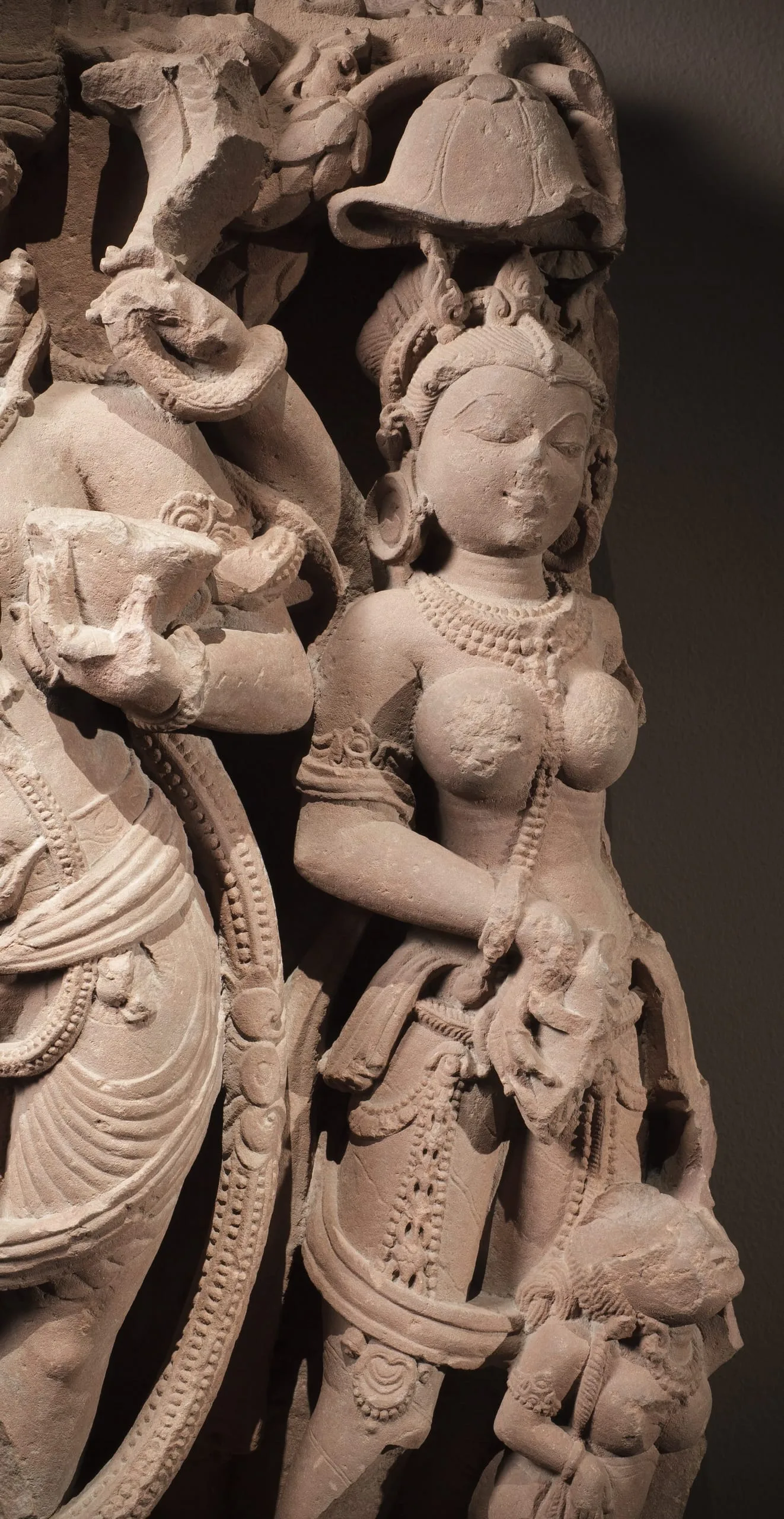
Sandstone temple sculpture fragment depicting a female figure adorned with beaded jewelry and a decorated skirt, flanked by carved subsidiary figures and architectural elements, with fine surface detail throughout.
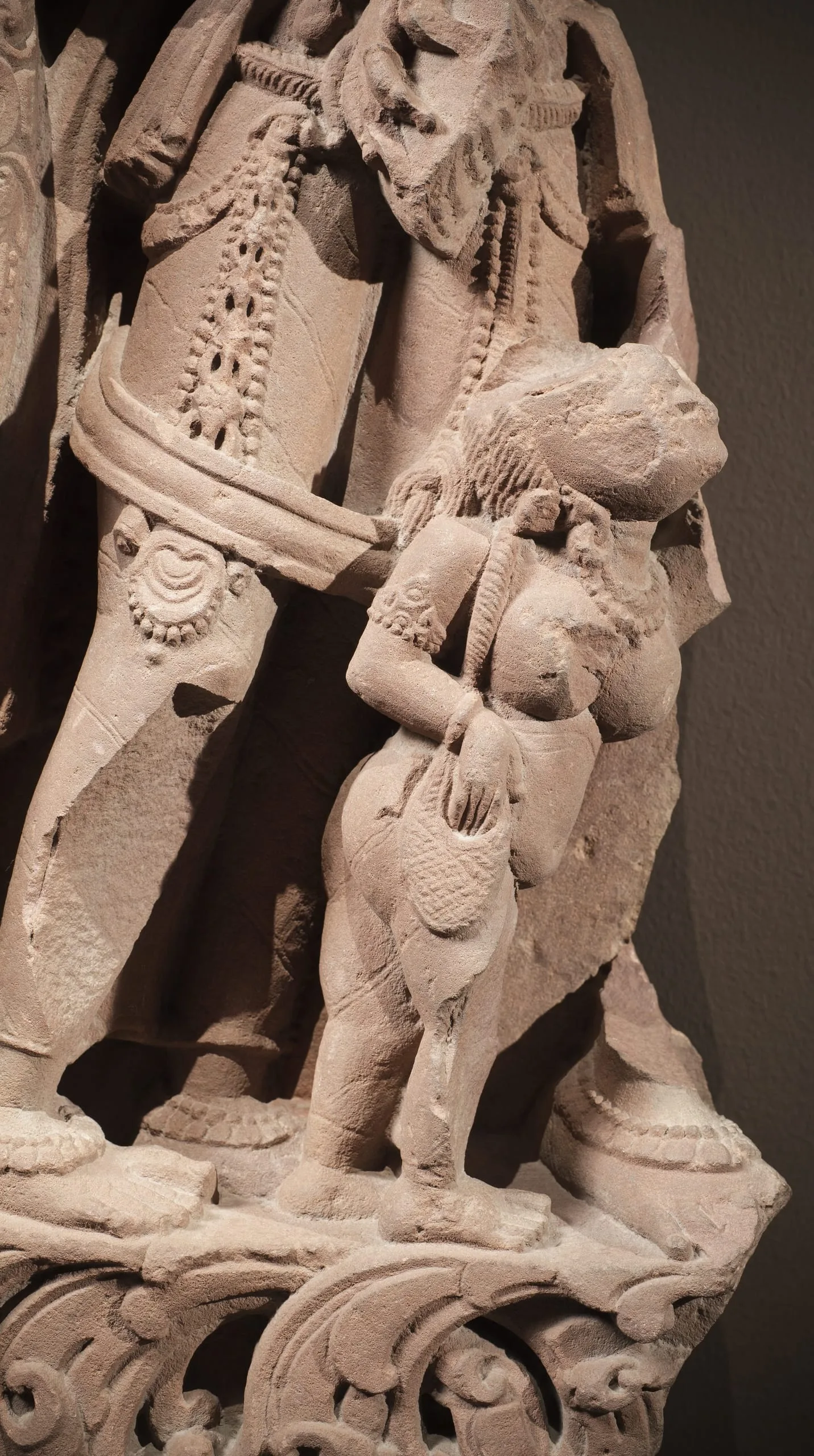
Sandstone relief sculpture with two figures in high relief: a larger standing figure adorned with beaded jewelry and draped garments, beside a smaller standing figure with curled hair and minimal clothing, both carved with fine decorative detail. Scrolling foliate forms at the base.
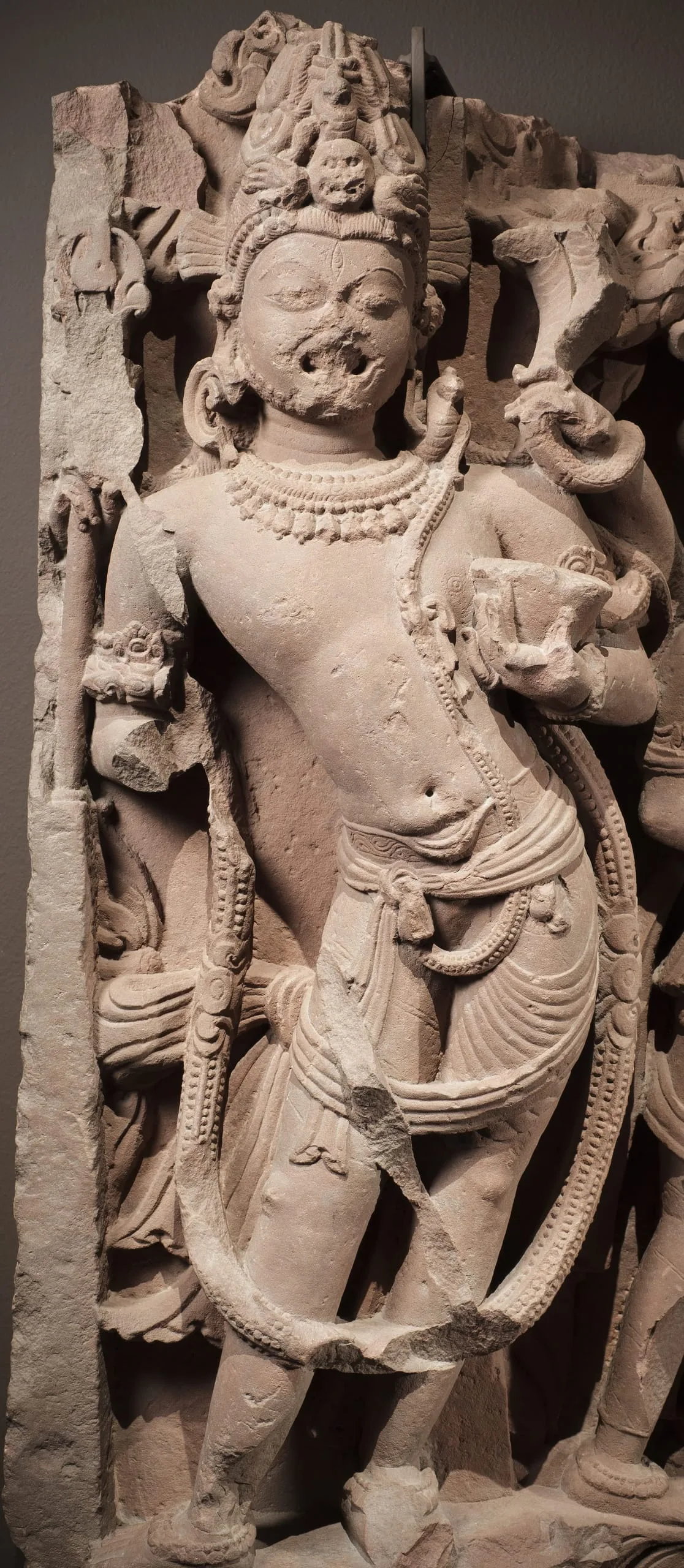
Sandstone relief sculpture of a multi-armed deity in tribhanga stance, wearing beaded jewelry, layered garlands, and a draped lower garment, with an elaborate crown; carved in high relief against a textured stone slab.
Sandstone temple relief sculpture depicting a female figure in three-quarter view, adorned with layered necklaces, armlets, and an elaborate headdress; a small attendant figure stands at her feet, with additional carved figures and architectural elements at the edges.
Artist or Maker
Unknown
Title
A Shaiva Guardian Figure from a River Goddess Relief
Place Made
India, Rajasthan, Kota region, Atru (?)
Date Made
circa 850-900
Medium
Red sandstone
Dimensions
36 1/2 x 21 1/2 x 9 in. (92.71 x 54.61 x 22.86 cm)
Credit Line
From the Nasli and Alice Heeramaneck Collection, Museum Associates Purchase
Accession Number
M.74.5.5
Classification
Sculpture
Collecting Area
South and Southeast Asian Art
Curatorial Notes

Beginning as early as the renowned Gupta Dynasty (319-467 CE) and continuing through the early medieval period (6th-13th century), the door jambs of northern and central Indian Hindu temples are typically graced with deified personifications of the Indian rivers Ganga (Ganges River) and Yamuna (formerly Jumna River). At first, they were place near the lintel but were later shifted to the base of the door jamb. The goddesses serve to demarcate the threshold into the sacred space within and to purify the worshippers who enter the sanctum.

This river goddess panel is partially damaged. The sculpture of Ganga on the right end of the relief is now missing except for a fragment of her right foot and the tail end of her mythical aquatic creature (makara) mount that extends beneath her attendants. (For a complete representation of this subject, see M.79.9.10.1.) On the left end, a fierce Shaiva door guardian (dvarapala) stands in a pronounced swaying posture. He has Shiva’s ascetic hairstyle (jata mukuta) with a skull and cobra, his third eye of wisdom (jñana netra), roaring mouth, fangs, and is bearded. He wears the Brahmanical sacred thread (yajnopavita) over his left shoulder, a long garland (vana mala), and an elegantly tied dhoti. He has four arms. In his upper right hand, he carries a now-damaged trident (trishula). In his upper left hand, he carries a now-damaged multi-headed cobra. He holds a skull cup (kapala) in his lower left hand. His lower right hand is now missing. He may represent Shiva in the form of Mahakala, who functioned as one of the eight guardians of Shiva temples. Beside him are two attendants in the river goddess’s retinue: a full-breasted female wearing exquisite jewelry, and a female dwarf looking up at her now-missing mistress and holding a cosmetic bag. This sculpture may have originally been on the same temple as M.74.5.6 and M.77.19.27. A sculpture of Shiva’s Family from the same temple is in the National Museum of Korea (formerly LACMA M.73.4.12).

See Vishakha N. Desai and Darielle Mason, eds., Gods, Guardians, and Lovers: Temple Sculptures from North India, A.D. 700-1200 (New York: Asia Society Galleries, in association with Ahmedabad: Mapin Publishing, 1993): 238-239, no. 59.
Selected Bibliography
  • Pal, Pratapaditya. Indian Sculpture, vol.2. Los Angeles: Los Angeles County Museum of Art; University of California Press, 1988.
  • Pal, Pratapaditya, ed. Aspects of Indian Art: Papers Presented in a Symposium at the Los Angeles County Museum of Art. Leiden, The Netherlands: E.J. Brill, 1972.
  • Rosenfield, John. The Arts of India and Nepal: The Nasli and Alice Heeramaneck Collection. Boston: Museum of Fine Arts, Boston, 1966.