LACMA

ShopMembershipMyLACMATickets
LACMA
Los Angeles County Museum of Art
5905 Wilshire Blvd.
Los Angeles, CA 90036
info@lacma.org
(323) 857-6000
Sign up to receive emails
Subscribe
© Museum Associates 2025

Museum Hours

Monday

11 am–6 pm

Tuesday

11 am–6 pm

Wednesday

Closed

Thursday

11 am–6 pm

Friday

11 am–8 pm

Saturday

10 am–7 pm

Sunday

10 am–7 pm


  • About LACMA
  • Jobs
  • Building LACMA
  • Host An Event
  • Unframed
  • Press
  • FAQs
  • Log in to MyLACMA
  • Privacy Policy
© Museum Associates 2025
Collections

Unknown
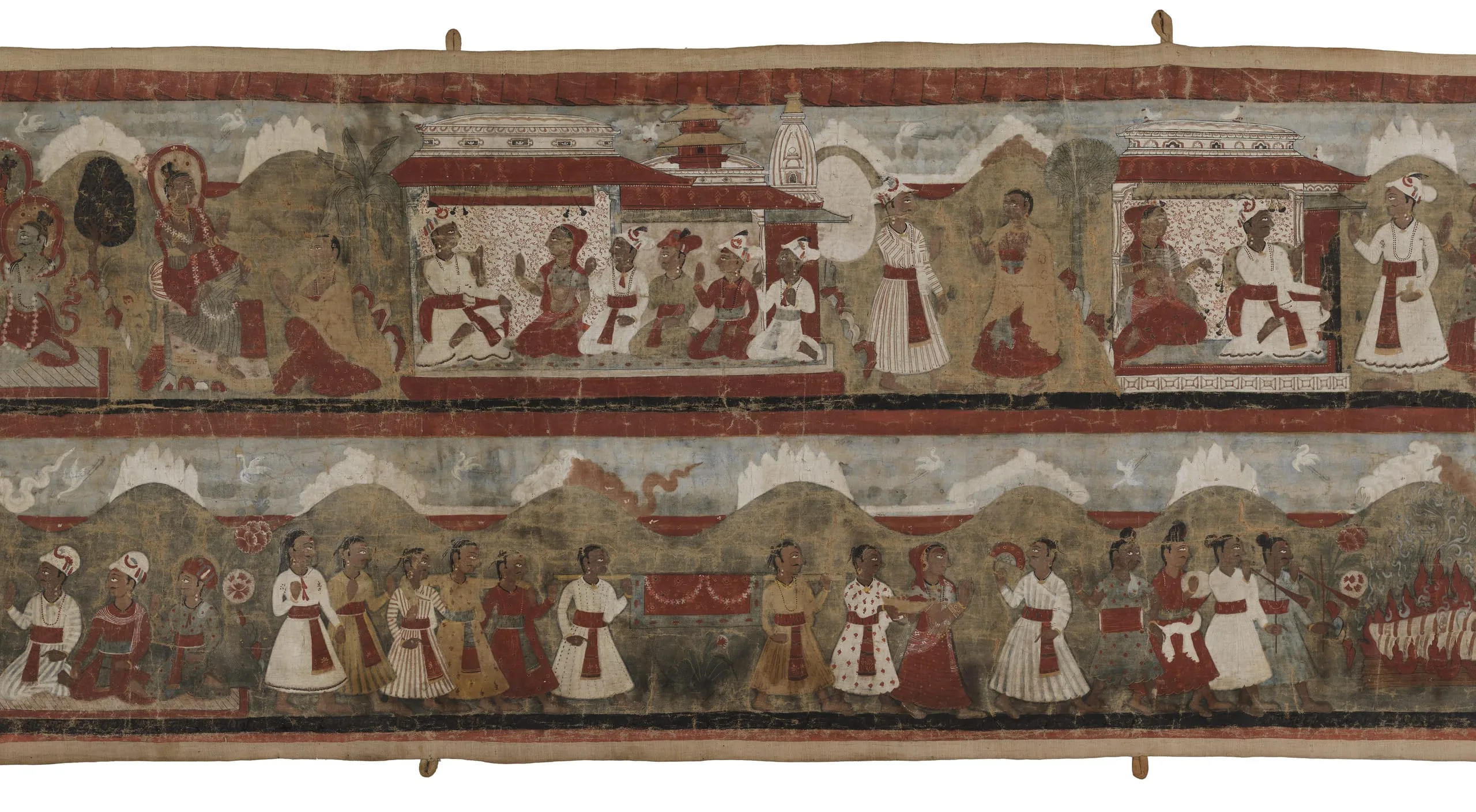
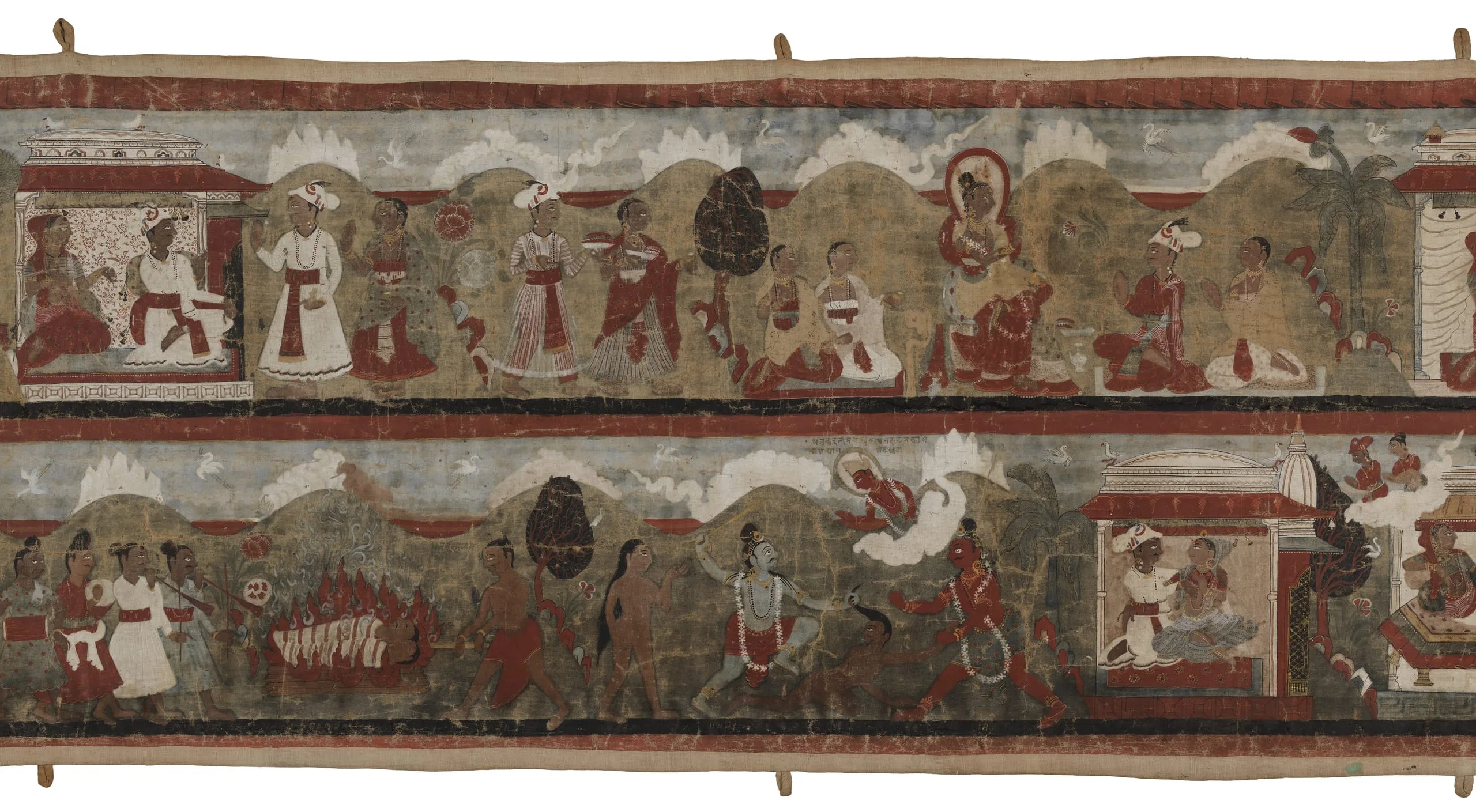
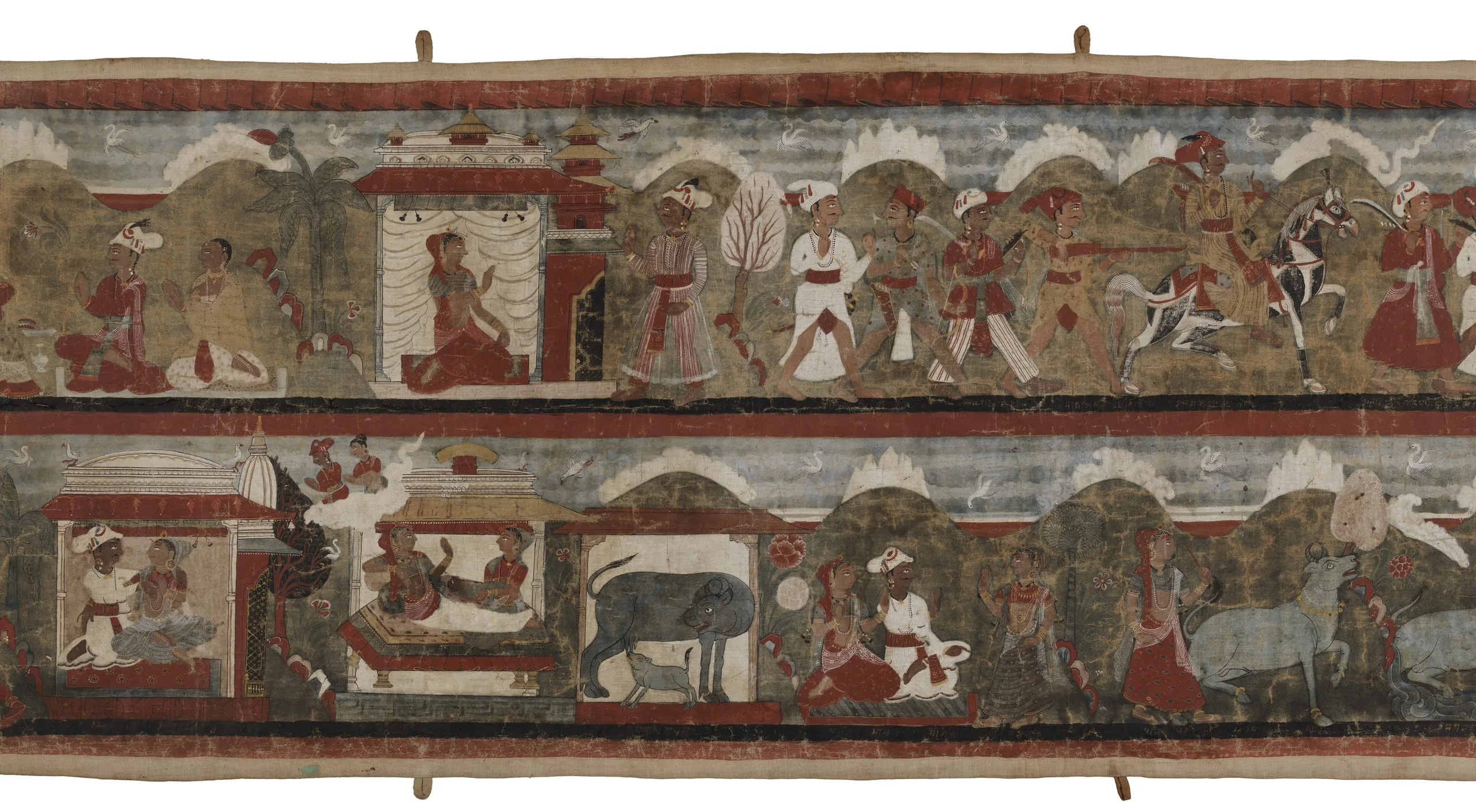
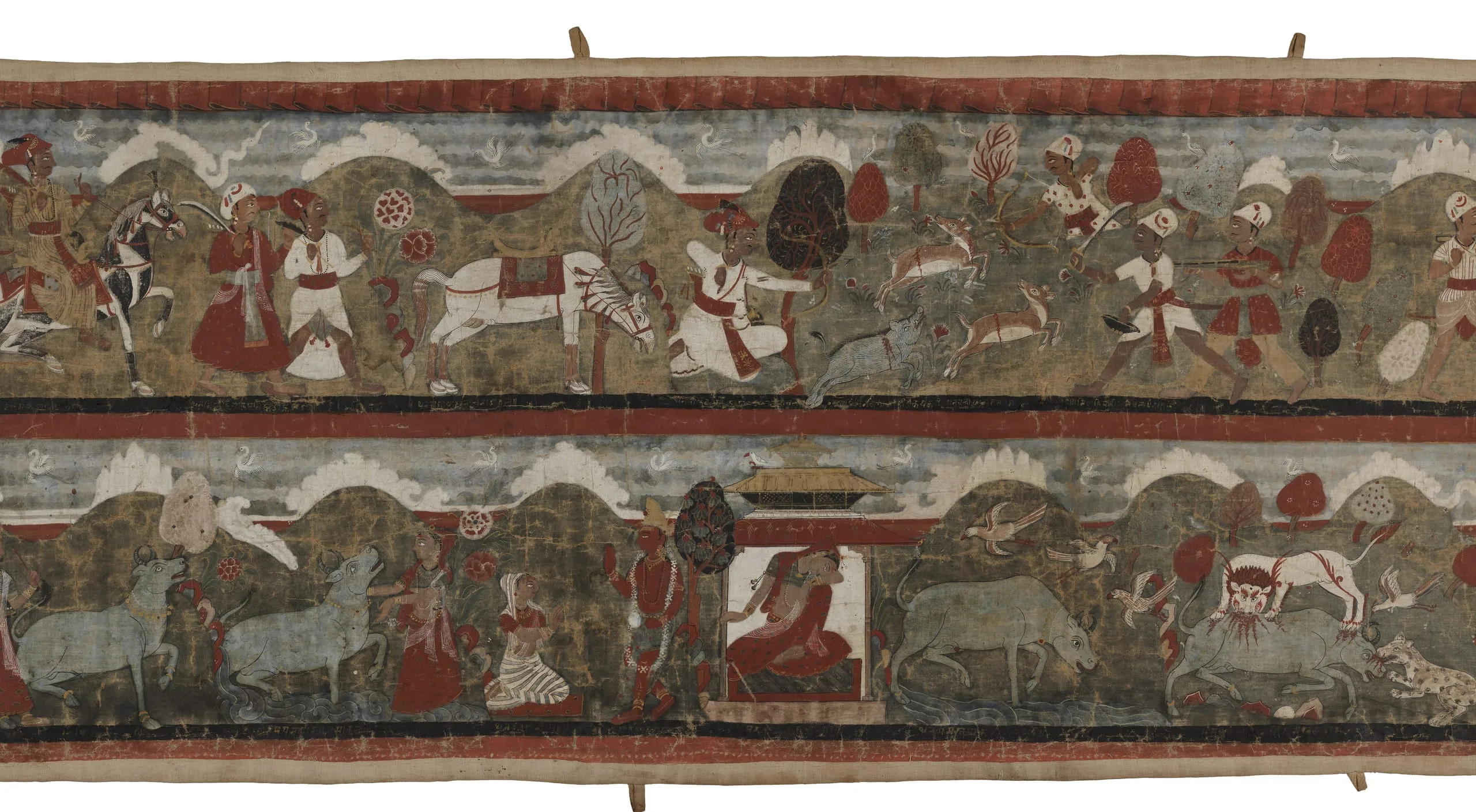
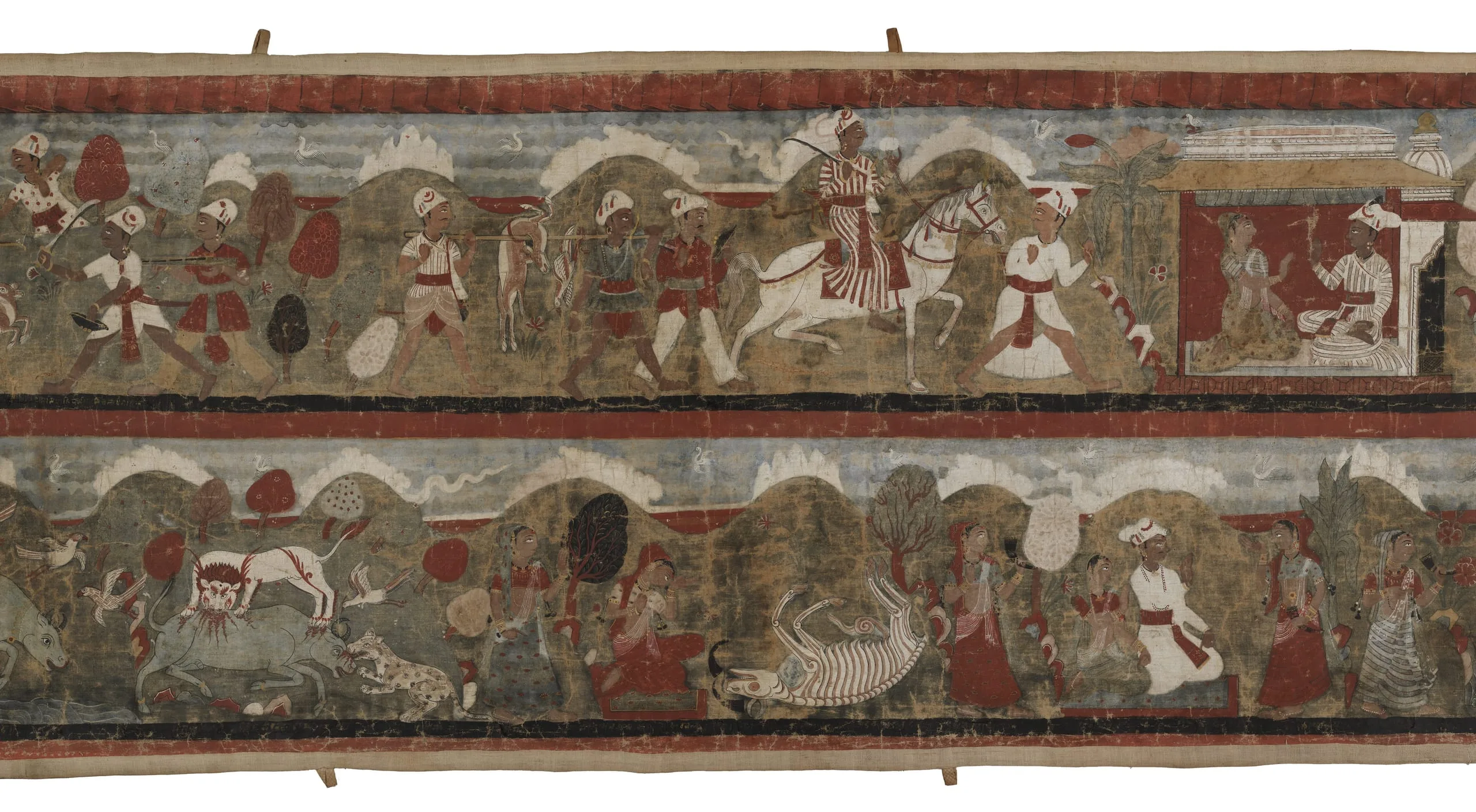
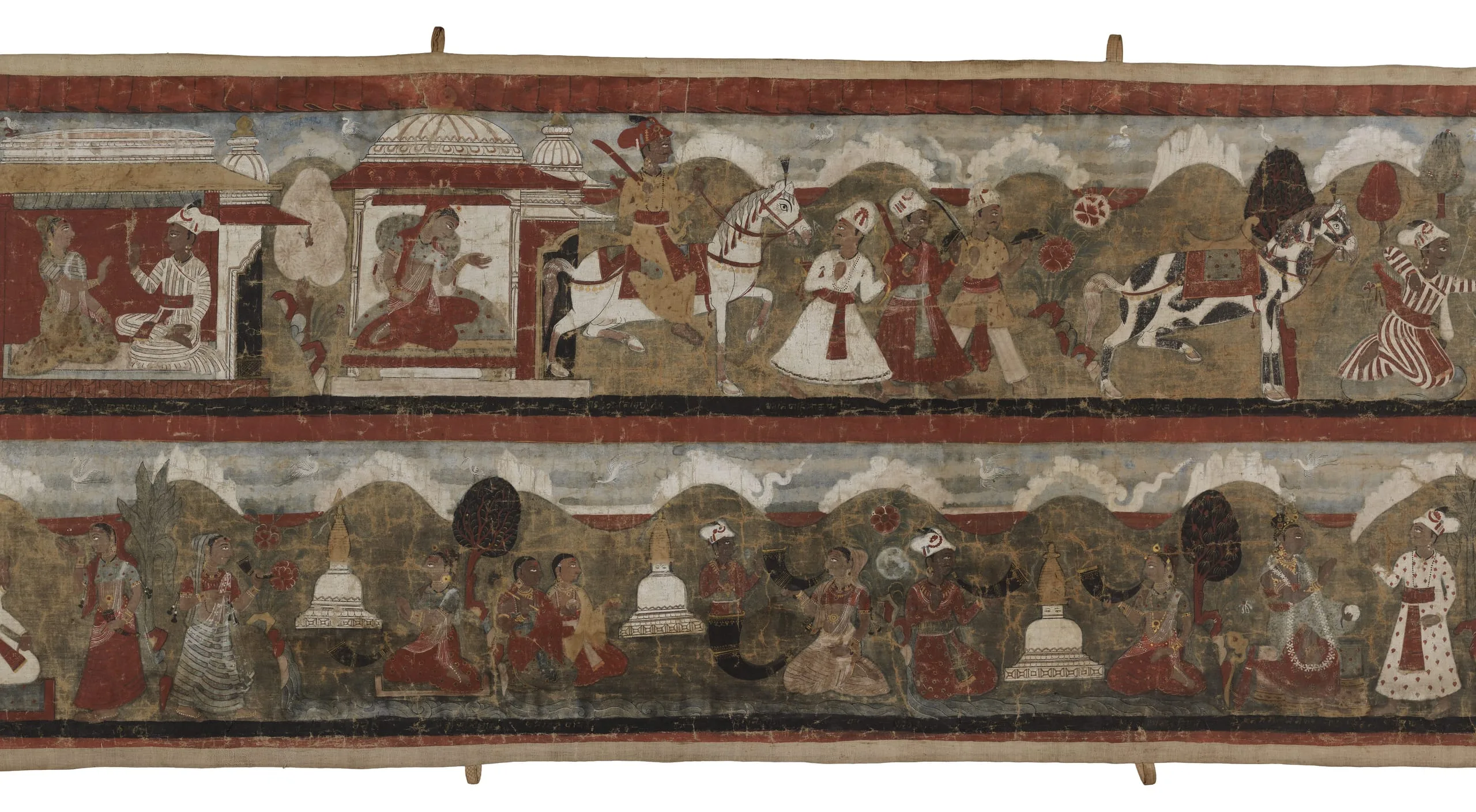
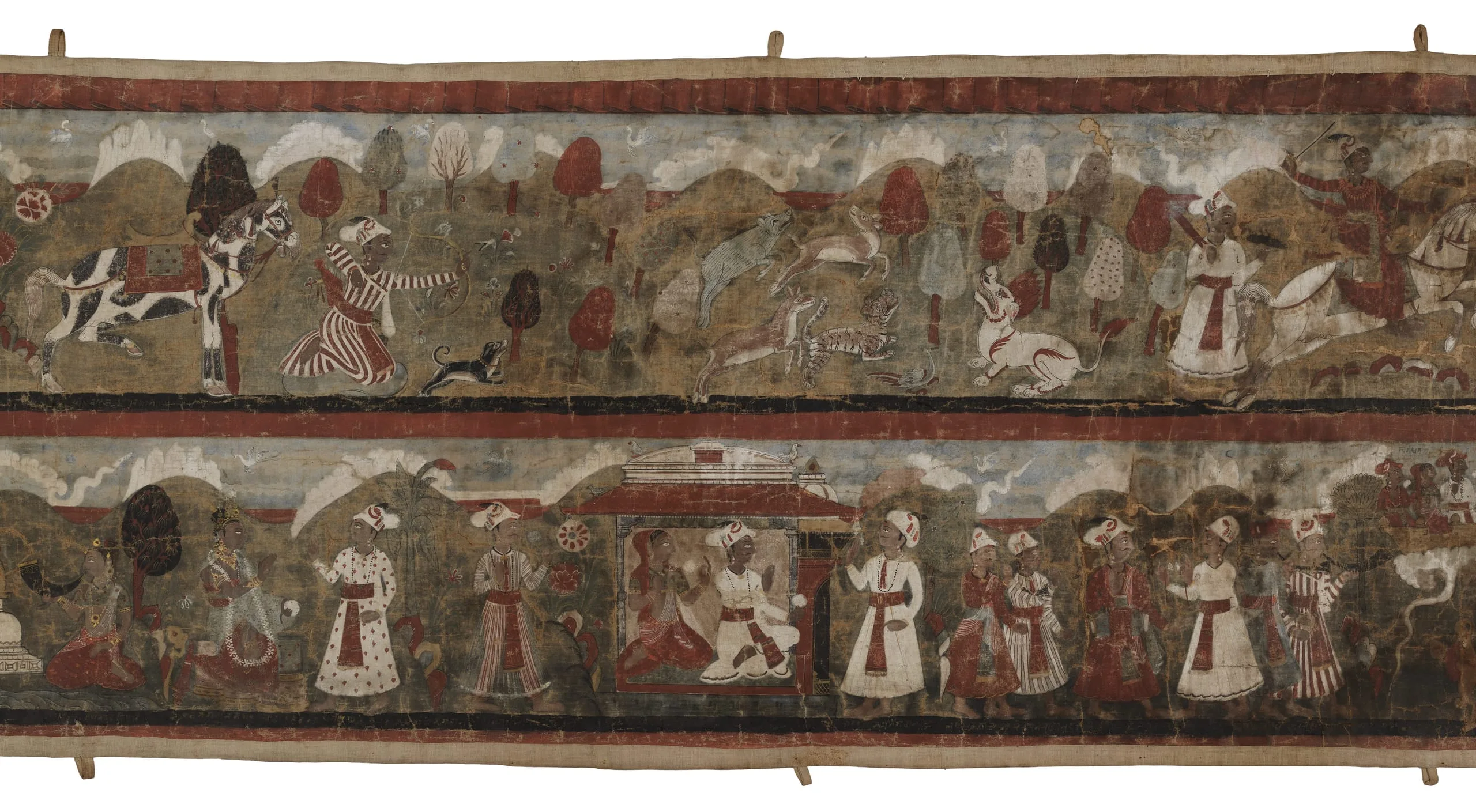
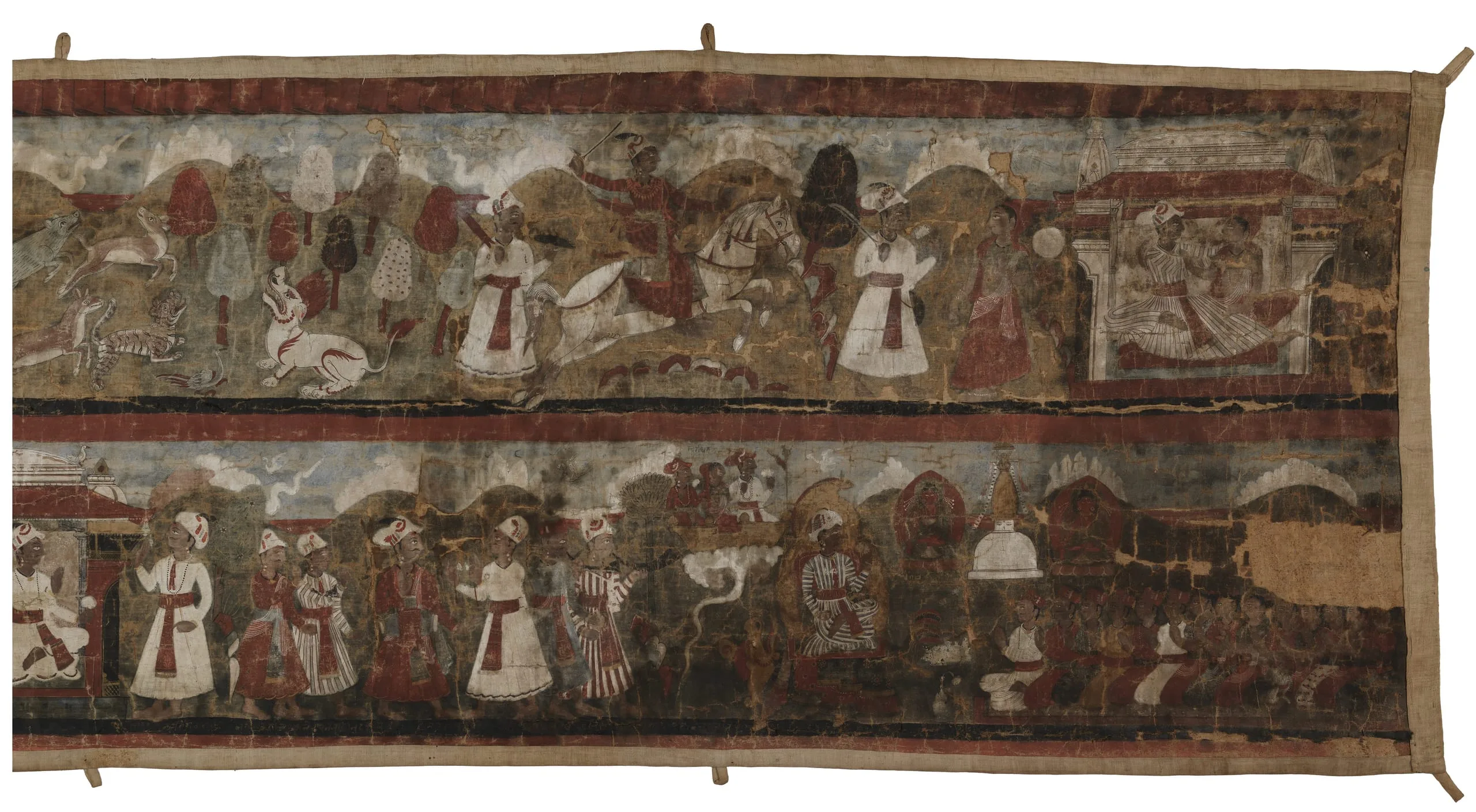
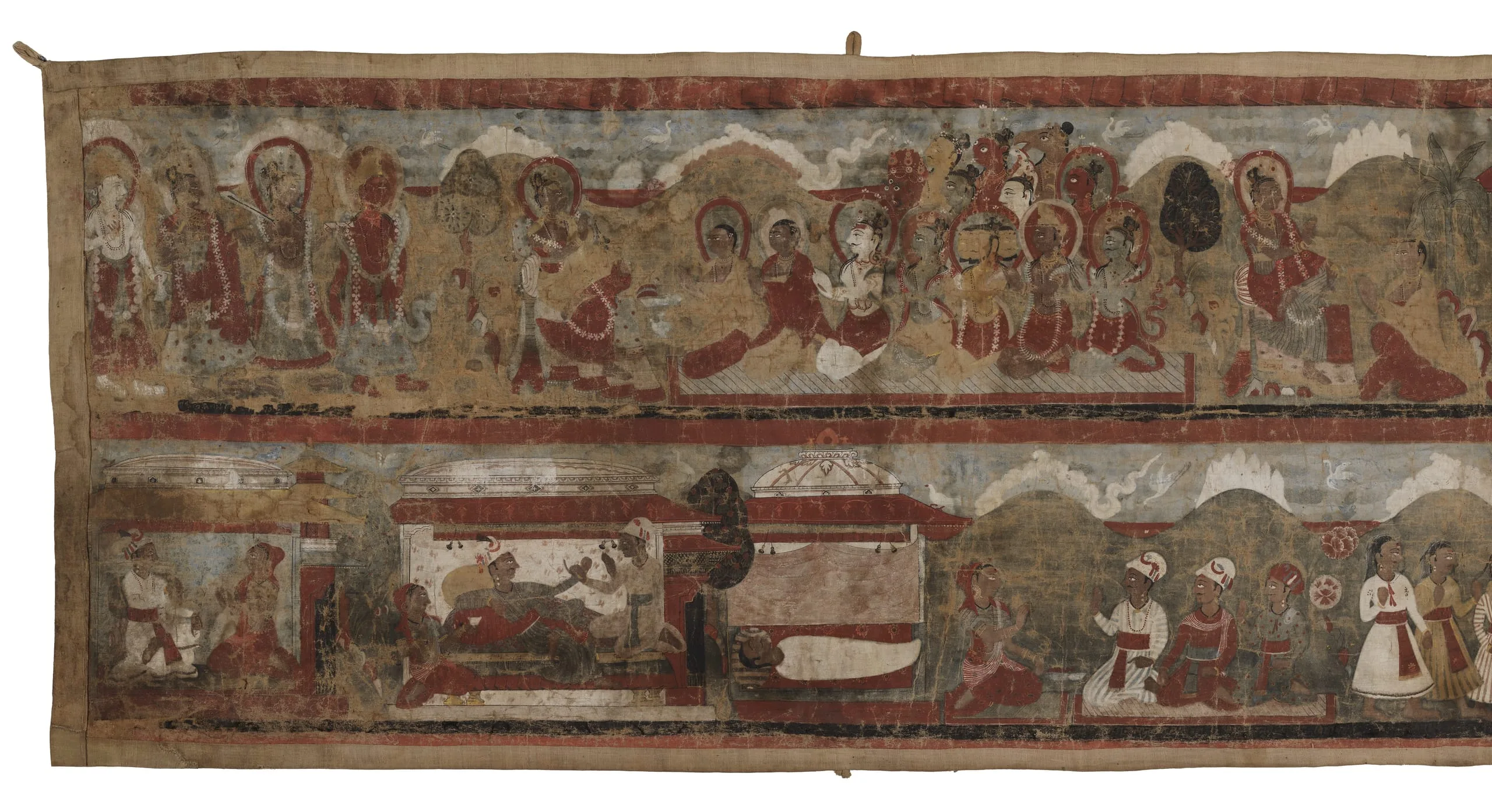
The Story of the Golden Horn (Shringabheri Avadana)late 18th century

Not on view
Unknown, The Story of the Golden Horn (Shringabheri Avadana)
Horizontal painted cloth scroll in two registers; upper register depicts multiple figures with halos in red, ochre, and grey, arranged in a crowded celestial scene; lower register shows narrative scenes including a reclining figure within a pavilion flanked by attendants and groups of standing figures, rendered in flat red, black, and white pigments with visible wear and losses.
Horizontal painted scroll on cloth, arranged in two registers. Upper register depicts court scenes with figures in red and white garments seated and standing within pavilions, temple spires visible above. Lower register shows a procession of numerous figures carrying objects, wearing red sashes and draped clothing, set against a gray and ochre landscape with stylized hills. Flat, linear style with red, white, ochre, and gray pigments throughout; visible wear and surface abrasion.
Horizontal painted scroll with two narrative registers, depicting multiple figures in red, ochre, and grey against a muted blue-grey background; upper register shows courtly and devotional scenes with seated and standing figures, a halo-bearing deity, and architectural elements; lower register shows processions and dynamic multi-armed figures in combat or ceremonial poses, with a temple structure at right; flat brushwork in a South or Southeast Asian painting tradition.
Horizontal painted scroll on cloth, two registers of narrative scenes with multiple figures in red, white, and earth tones against a pale ground. Upper register shows figures in turbans and draped garments near a pavilion, a procession, and a mounted horseman. Lower register depicts figures flanking an interior scene, a dark bull, and additional figures with animals, separated by red border stripes. Flat, linear style with visible aging and wear.
Horizontal painted textile with two narrative registers separated by red borders. Upper register depicts figures on horseback and on foot alongside animals and stylized trees in red, white, and gray. Lower register shows large animals including bulls and a lion, human figures, and an architectural pavilion at center, rendered in earth tones with flat, linear brushwork on aged cloth.
Horizontal painted textile scroll in two registers, with red border bands. Upper register depicts a mounted figure on a white horse amid a procession of soldiers, animals, and attendants, with a pavilion scene at right. Lower register shows figures with a lion, leopard, and other animals in a landscape. Painted in red, white, and gray on an ochre ground with visible wear and creasing.
Horizontal narrative scroll painting on cloth, arranged in two registers with red border bands. Upper register depicts a procession with figures on horseback, a palanquin or pavilion at left with seated figures, and groups of attendants in colorful dress. Lower register shows a crowd scene with white stupa-like structures, figures in red and white garments, and dark foliage forms, rendered in flat earth tones with red, white, and black accents throughout.
Horizontal painted textile scroll in two registers separated by red borders. Upper register depicts a hunting scene with figures, horses, dogs, and deer among stylized trees in muted greens and reds. Lower register shows standing and kneeling figures in courtly dress arranged around a pavilion, rendered in red, white, and dark pigments on an aged ground.
Painted cloth scroll with two horizontal narrative registers separated by a red border. Upper register depicts figures on horseback and on foot amid stylized red trees, with architecture at right. Lower register shows a procession of figures in red and white garments, with a white stupa and walled structures in the background. Muted earth tones with red, white, and gray pigments; surface shows significant wear.
Artist or Maker
Unknown
Title
The Story of the Golden Horn (Shringabheri Avadana)
Place Made
Nepal
Date Made
late 18th century
Medium
Mineral pigments on linen
Dimensions
25 1/4 x 345 in. (64.14 x 876.30 cm)
Credit Line
County Purchase and gift of Joan Palevsky
Accession Number
74.1
Classification
Paintings
Collecting Area
South and Southeast Asian Art
Curatorial Notes

Long narrative scrolls such as this excellent example were displayed on special occasions on the walls of Buddhist monasteries in order to emphasize moralistic parables appropriate for a particular religious celebration. The story would be read to the assembly, who then would follow the narrative as it was illustrated on the scroll. This scroll depicts the parable of the Golden Horn (Sringabheri Avadana) and origins of the lakshachaitya, a rite in which 100,000 stupas or reliquary monuments are dedicated.

Avadanas (Buddhist parables) are tales of "noteworthy deeds" and constitute an important class of Sanskrit Buddhist literature. The general theme of these stories is to show that bad deeds produce bad results and good deeds bear good fruits. Buddhists are not supposed to take life; people who follow the occupation of hunting and who take the lives of animals, either for necessity or pleasure, are held to merit a rebirth suitable for the pain and suffering that they have caused as is demonstrated by the actions and subsequent fate of the king in this story. Good actions have the ability to cancel and mitigate the effects of bad actions, after appropriate repentance, as evidenced by his virtuous queen.

The lakshachaitya rite is an annual Buddhist ritual observed in Nepal. "One day before the end of the month of Sravana, there is the worship consisting of the performance of the lakshachaitya rite, the consignment of the model chaityas to the river, the sounding of the ‘horn drum’ and the serving of a meal to one’s caste fellows." Originally, 100,000 chaityas would be fashioned out of sand or clay and then consigned to a body of water. Today the ritual is usually observed through the painting of chaityas on cloth scrolls that are then kept to commemorate the undertaking.

The Story of the Golden Horn

"In the town of Shashiprabha there reigned a king named Sinhaketu. His wife Sulakshana, was greatly devoted to him, and frequently begged and prayed that he should abstain from hunting. The king did not listen to her advice, and on his death, was born a buffalo. His wife was born in a Brahman family, and, through her previous virtuous deeds, remembered the history of her former life. Knowing the buffalo to be her husband, she followed him everywhere. Once she prayed to the Lord to retrieve her husband from his brutal condition, and the Lord advised her what to do. One day the buffalo was destroyed and eaten by wild beasts, and a few bones and the horns were all that were left behind. The faithful wife cast the bones into the river, brought water in the horns to wash the spot where the buffalo had fallen, and, washing the spot, buried whatever fragments she found and the horns, and erected a chaitya, reliquary or memorial mound, over them with river sand. For thirty days successively she worshipped the chaitya with the utmost reverence and devotion. On the twenty-first day a crystal chaitya came down from heaven, and entered the sandy one. The place became surrounded by a moat and seven successive lines of ramparts. The horns were changed into gold. Within this crystal chaitya a chamber became manifest, and from the golden horns within it came out a handsome young man, Dharmashila, who took the woman by the hand, and claimed her as his wife. He was subsequently elected by the people king of the country, when he assumed the name Bhadrashringi, and his devoted wife was known by the name of Rupavati."

(Quoted from R. Mitra, The Sanskrit Buddhist Literature of Nepal (1882, Reprint ed.: Calcutta: Sanskrit Pustak Bhandar, 1971), pp. 225-226.)

Selected Bibliography
  • Little, Stephen, Tushara Bindu Gude, Karina Romero Blanco, Silvia Seligson, Marco Antonio Karam. Las Huellas de Buda. Ciudad de México : Instituto Nacional de Antropología e Historia, 2018.
  • Little, Stephen, and Tushara Bindu Gude. Realms of the Dharma: Buddhist Art across Asia. Los Angeles: Los Angeles County Museum of Art, 2025.