- Title
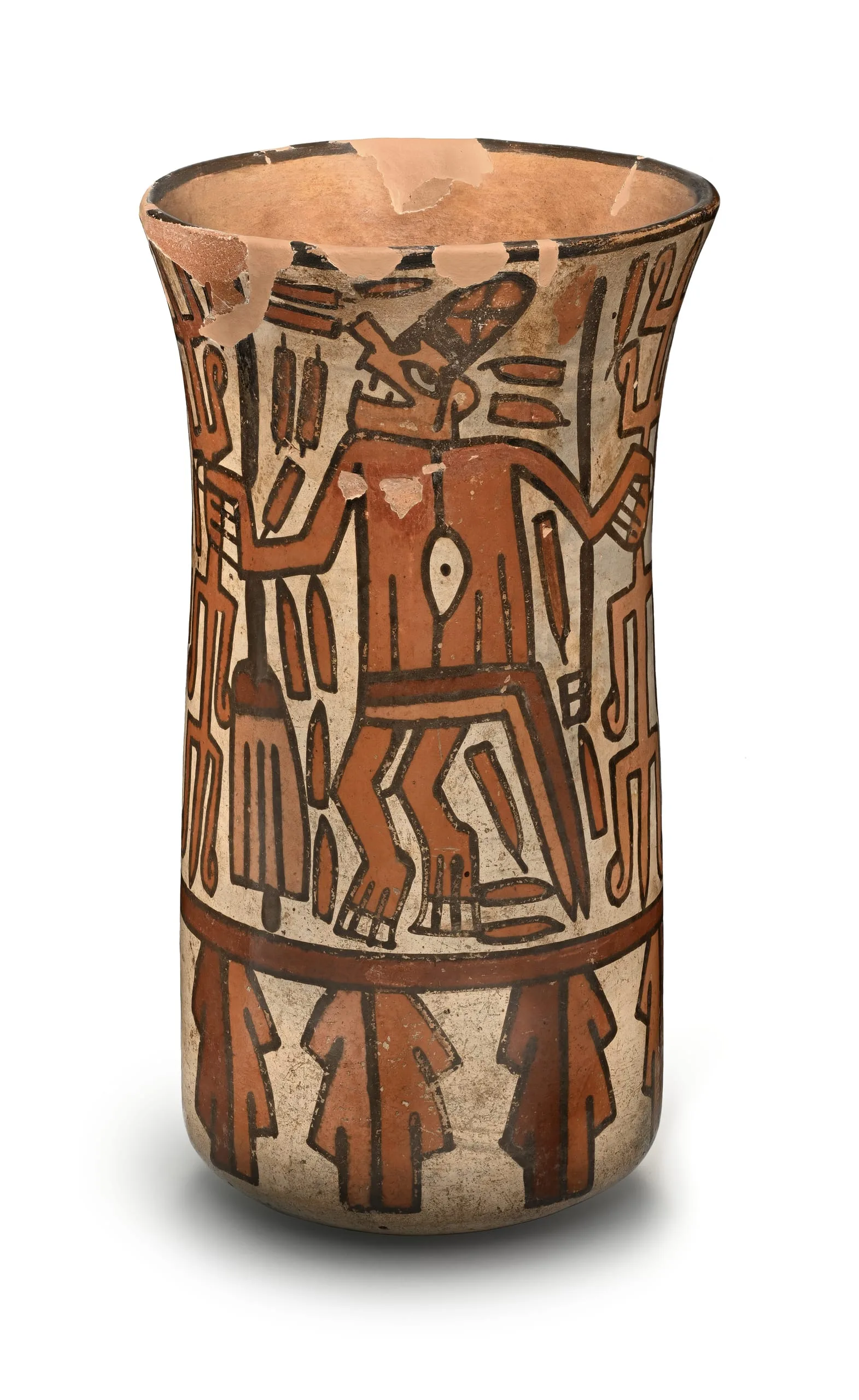
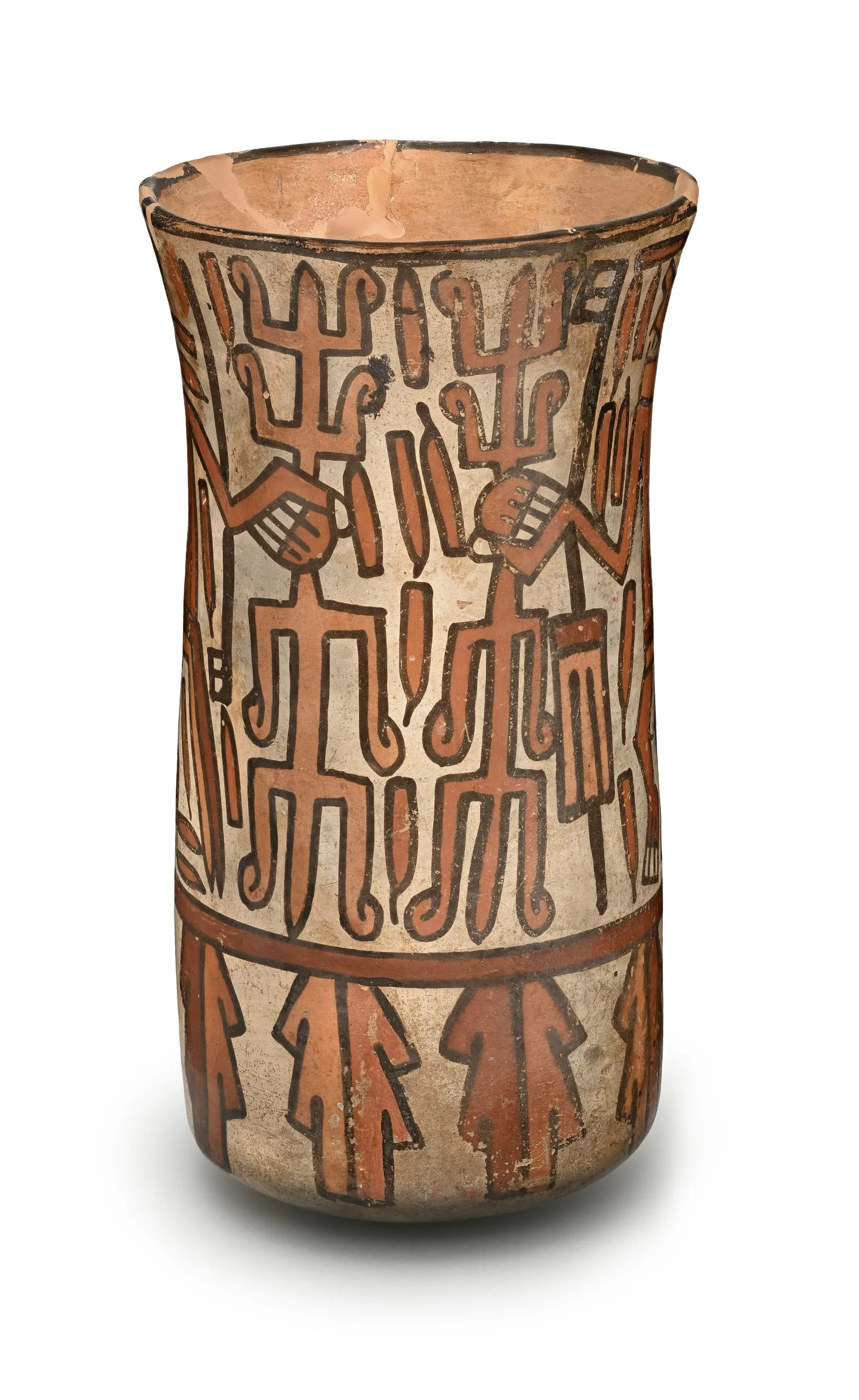
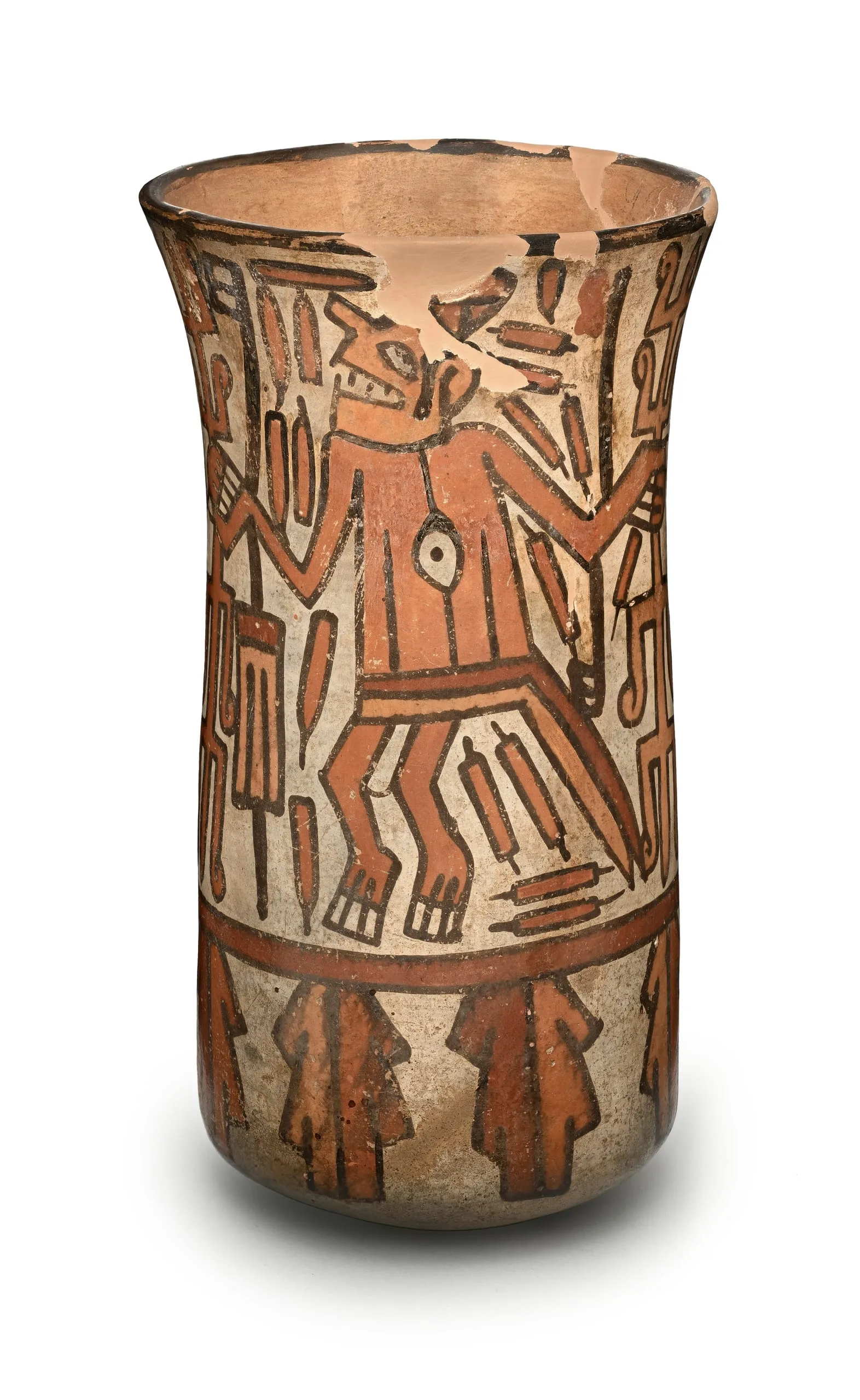
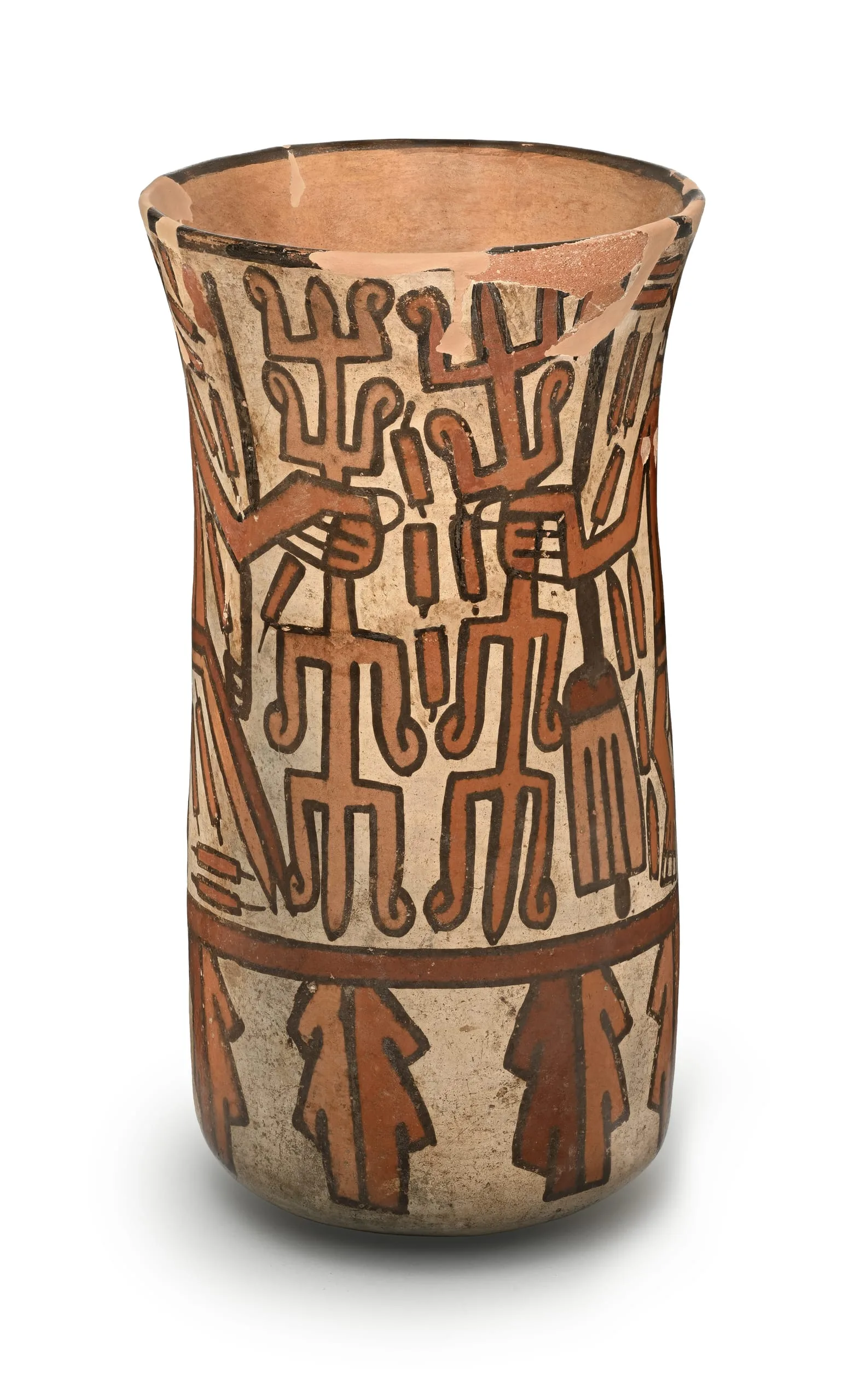
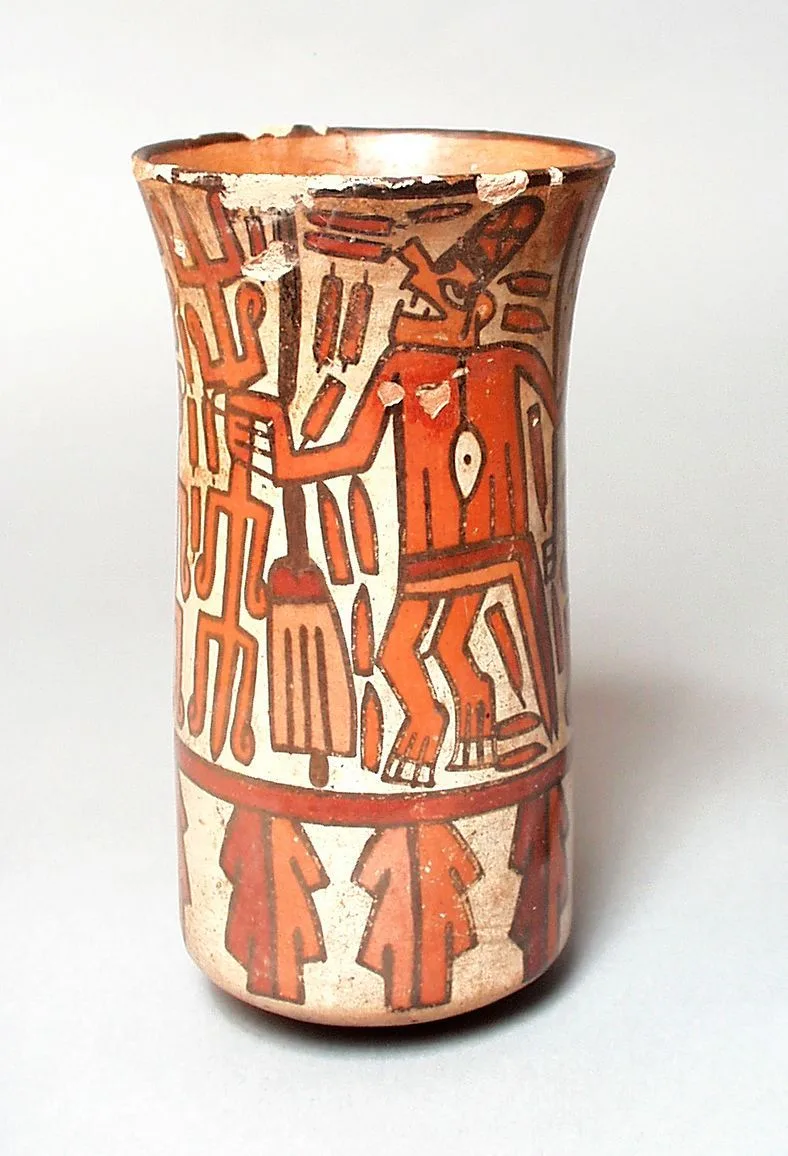
- Tall Beaker with "Harvester" Figure
- Date Made
- 200–400 CE
- Medium
- Slip-painted ceramic
- Dimensions
- 7 1/4 x 10 in. (18.42 x 25.4 cm)
- Accession Number
- M.73.48.26
- Curatorial Notes
Although rare in Late Nasca iconography, this figure can be identified as a version of the Mythical Harvester by his conical hat and his appearance with diverse plants (see also M.73.48.38). He holds maize and is surrounded by peppers and other crops. The bent position of his legs suggests, to some researchers, a supernatural harvesting dance.
Living on the Peruvian Pacific coast, one of the driest deserts in the world, the Nasca people developed resilient and creative strategies, both ecological and spiritual, for coping with extreme living conditions. Along with finding ways to exploit scarce resources and mitigate the impact of catastrophic climatic episodes, they devised a system of beliefs and practices to control and resist hardships, by reconceiving the wild desert as a domesticated and social landscape: a sacred cosmos inhabited and dominated by fantastical creatures, mythological beings, and powerful ancestors. Characters such as the Mythical Harvester provided the Nasca people with spiritual mechanisms to confront and understand some of the destabilizing forces of the natural world.
Luis Muro
2024