- Title
- Buddha Shakyamuni
- Date Made
- circa 1850-1900
- Medium
- Wood with lacquer, gold leaf, inlaid with glass and foil-backed mirror rosettes, and shell or enamel eyes
- Dimensions
- 68 x 30 1/2 x 10 in. (172.72 x 77.47 x 25.4 cm)
- Accession Number
- M.73.54.4
- Curatorial Notes
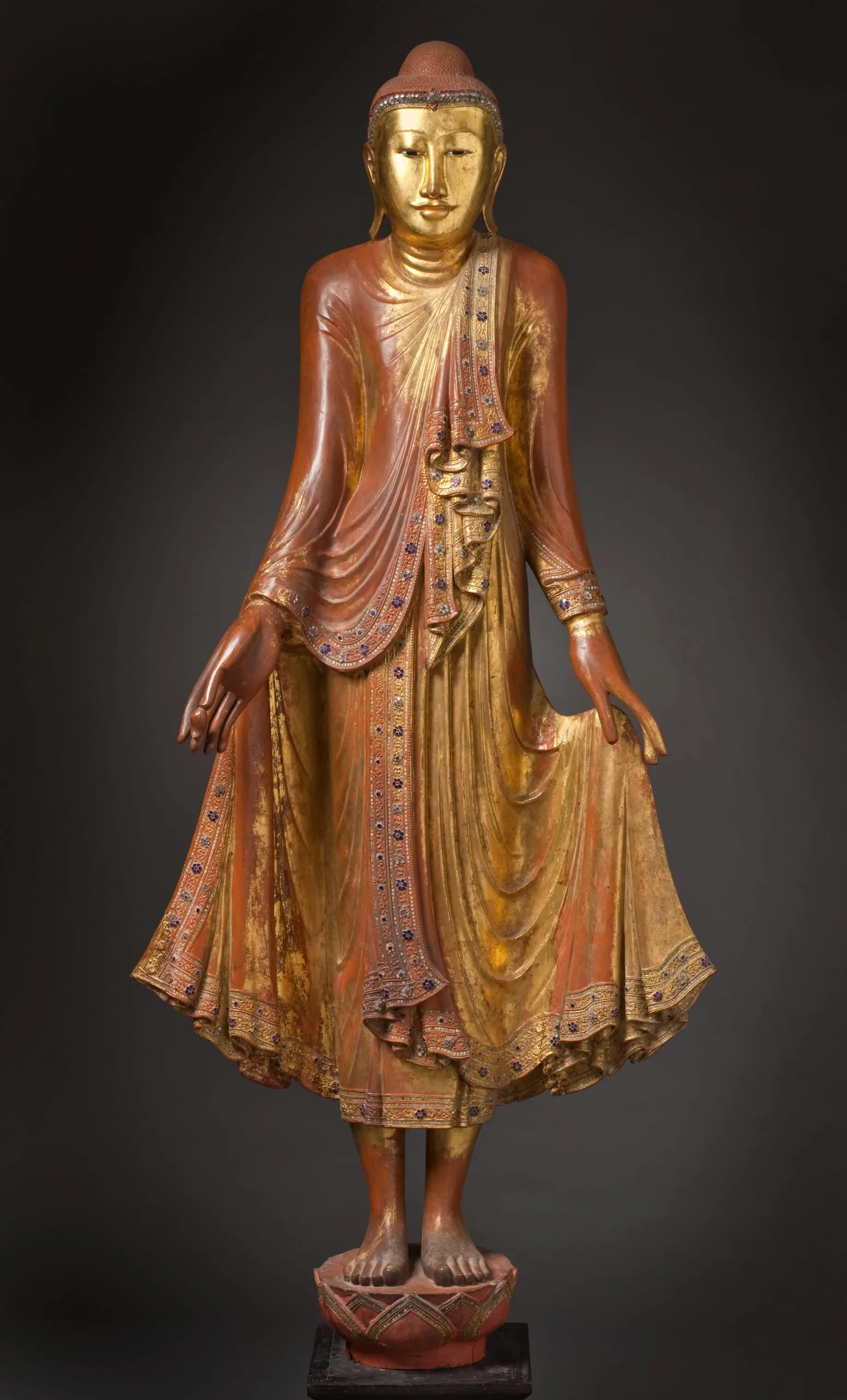
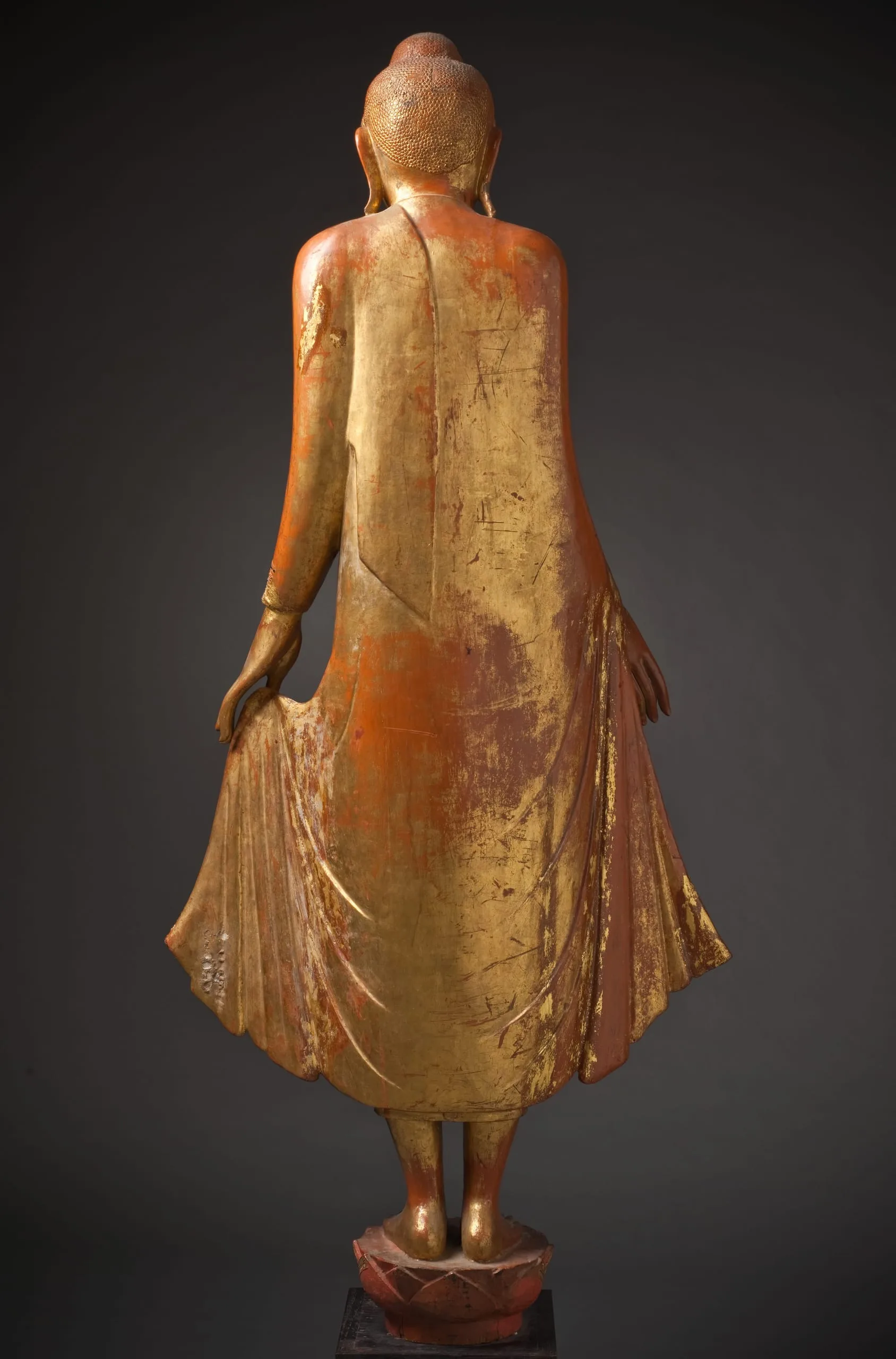
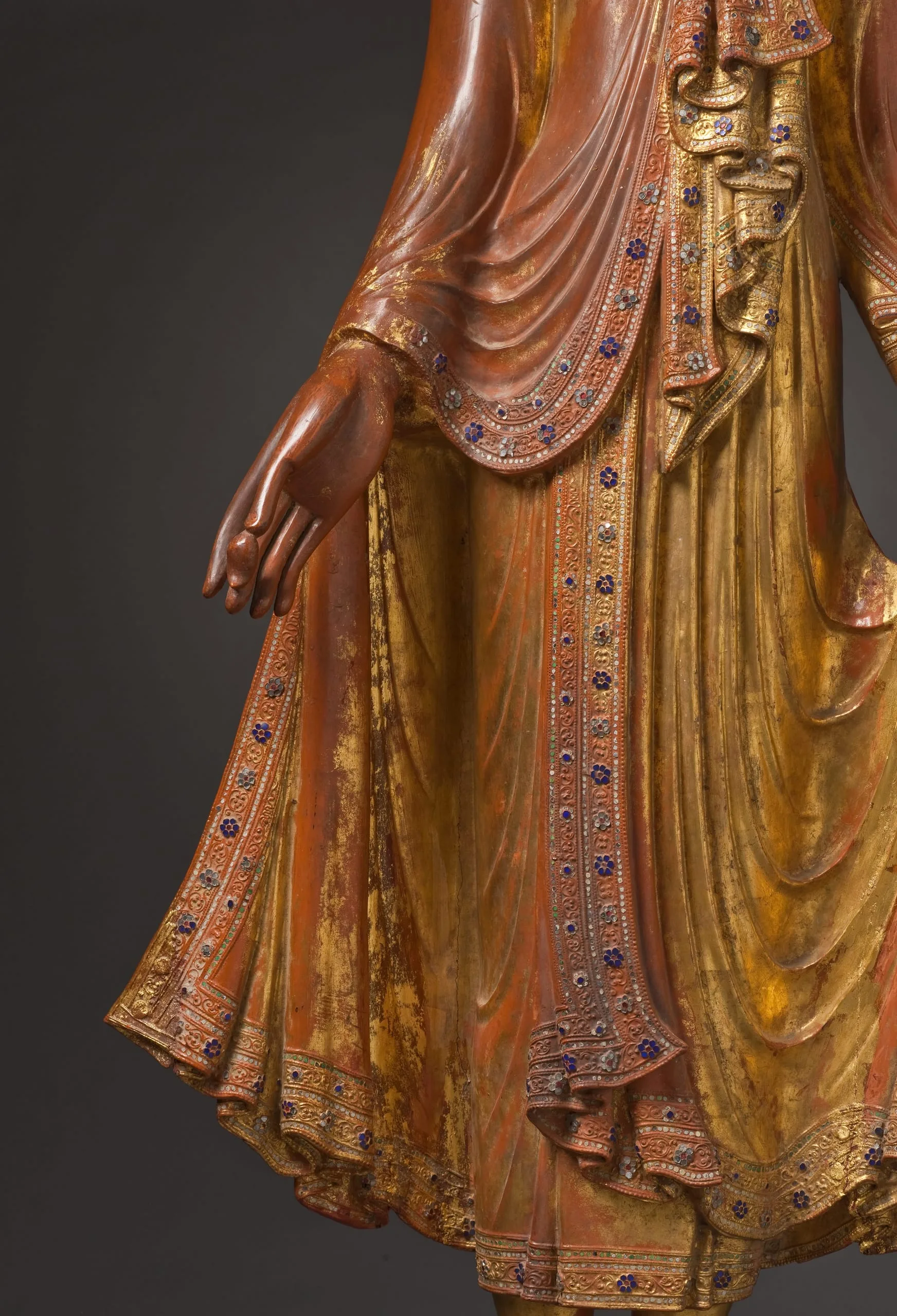
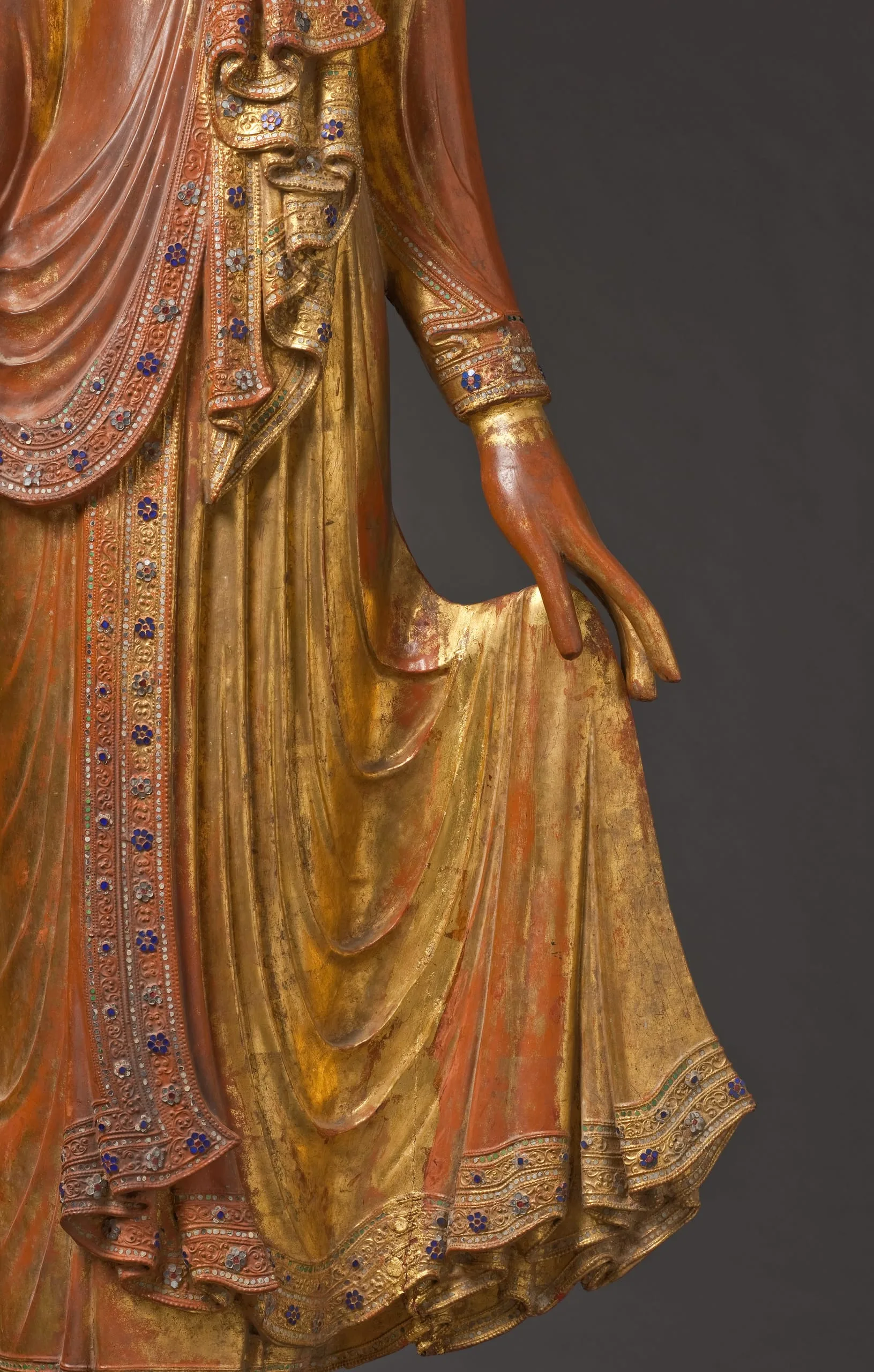
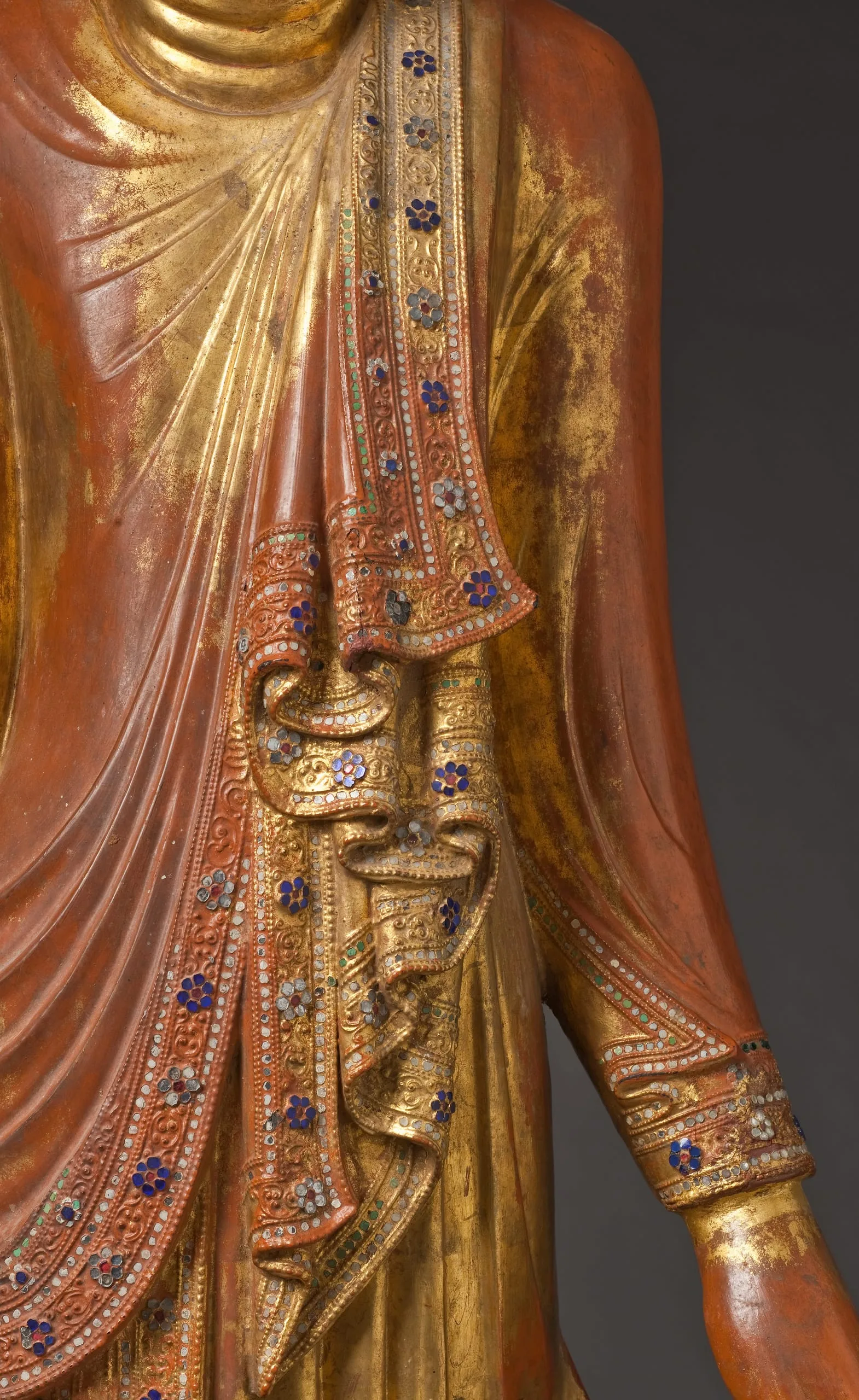
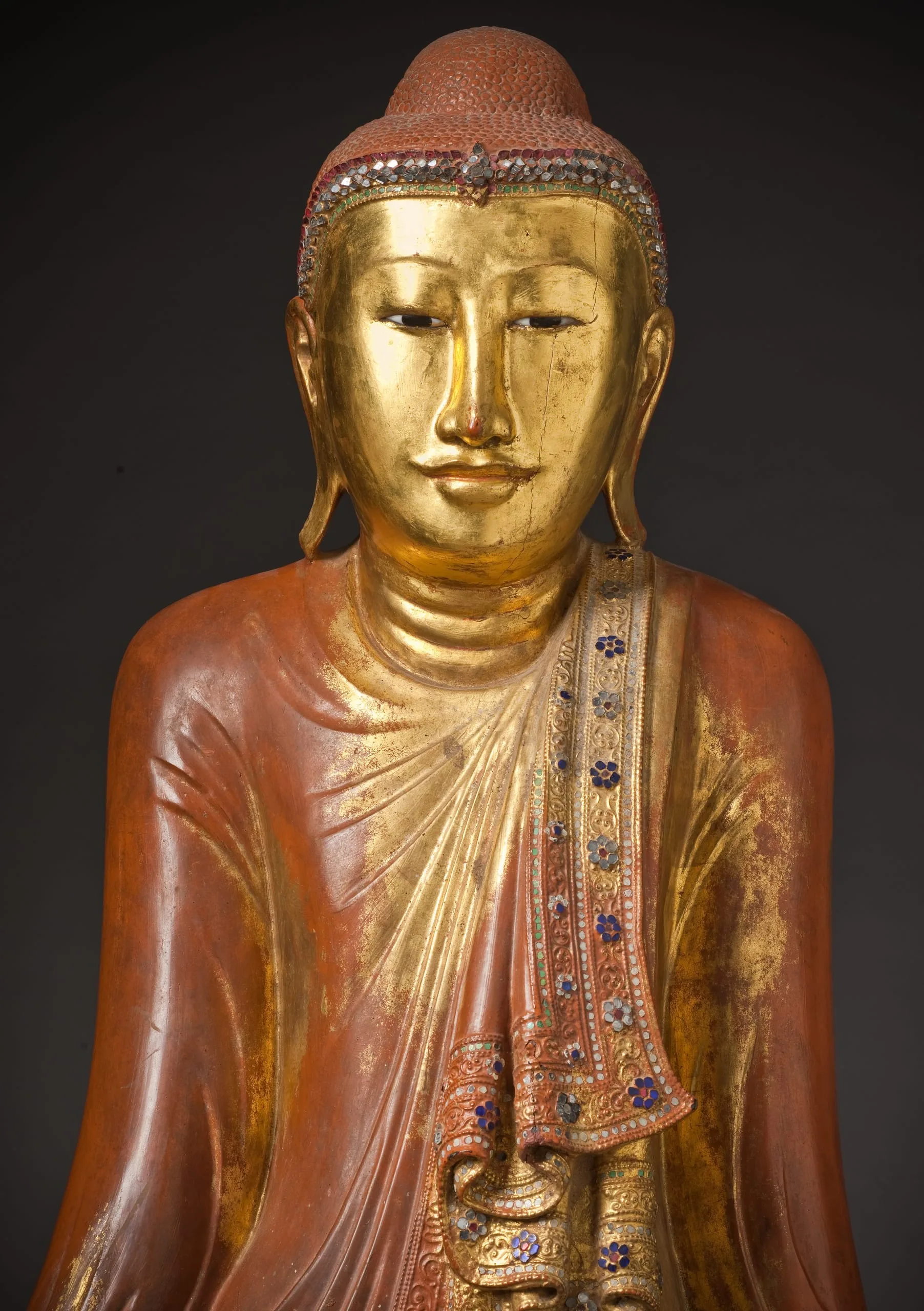
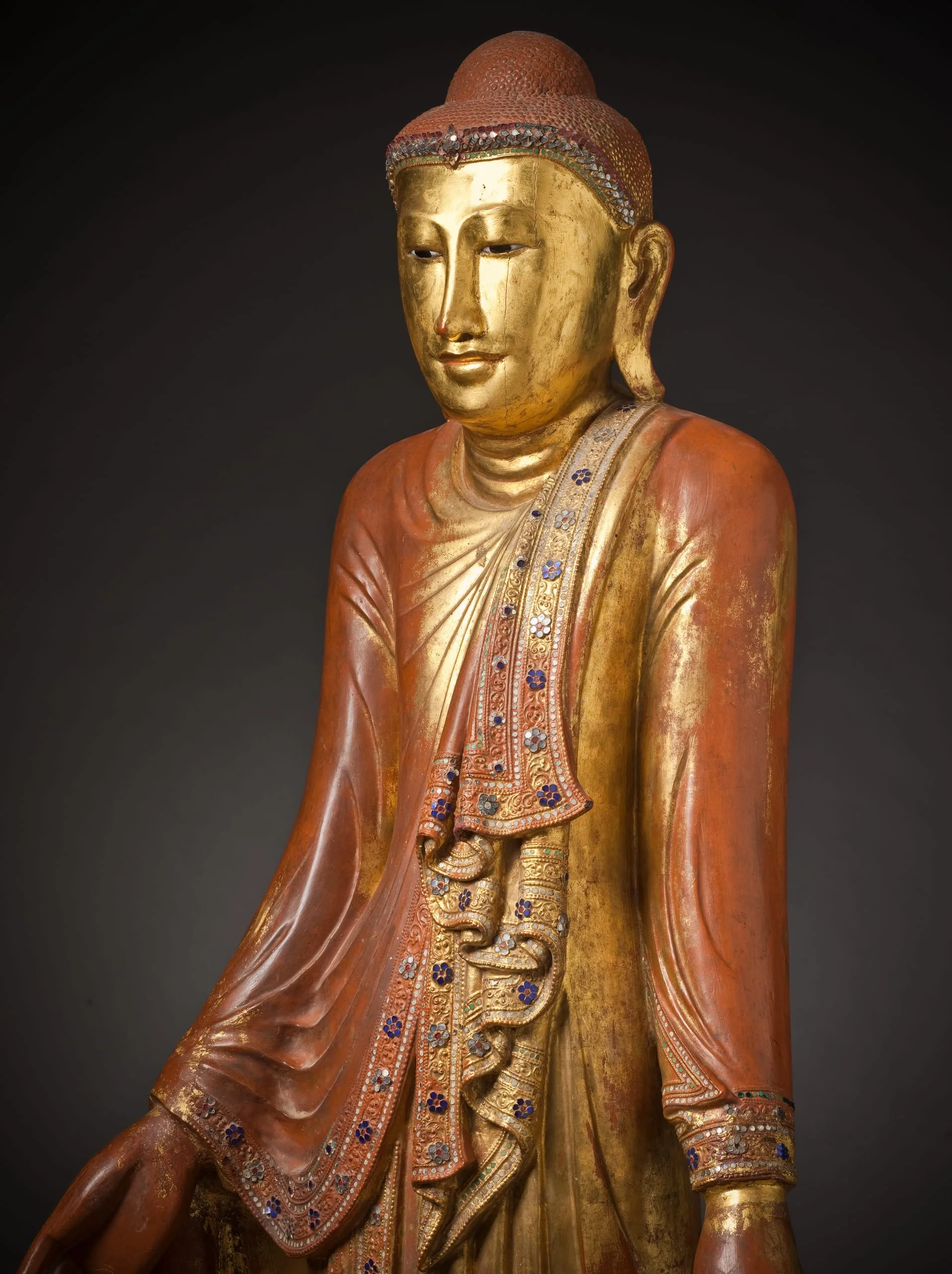
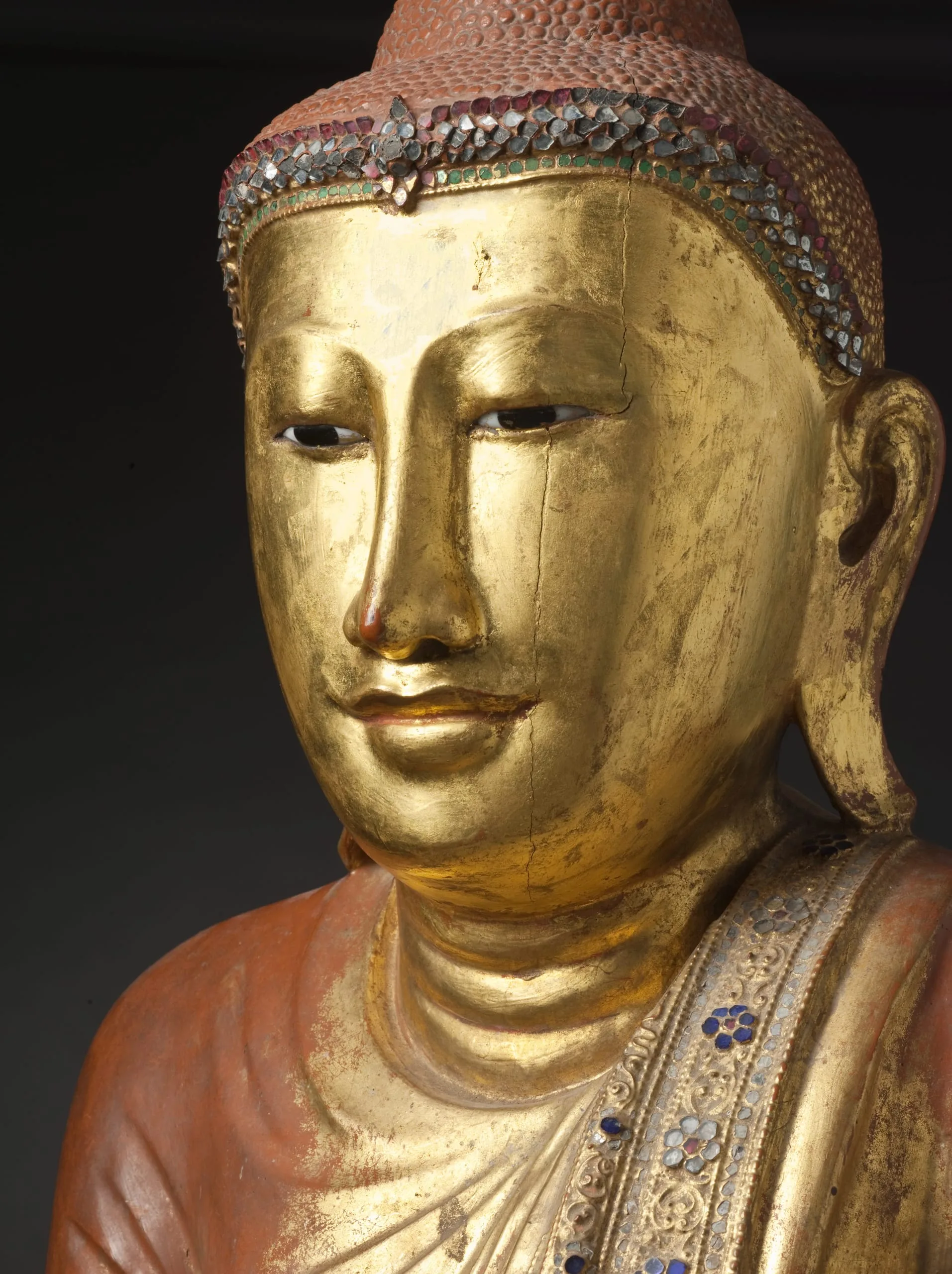
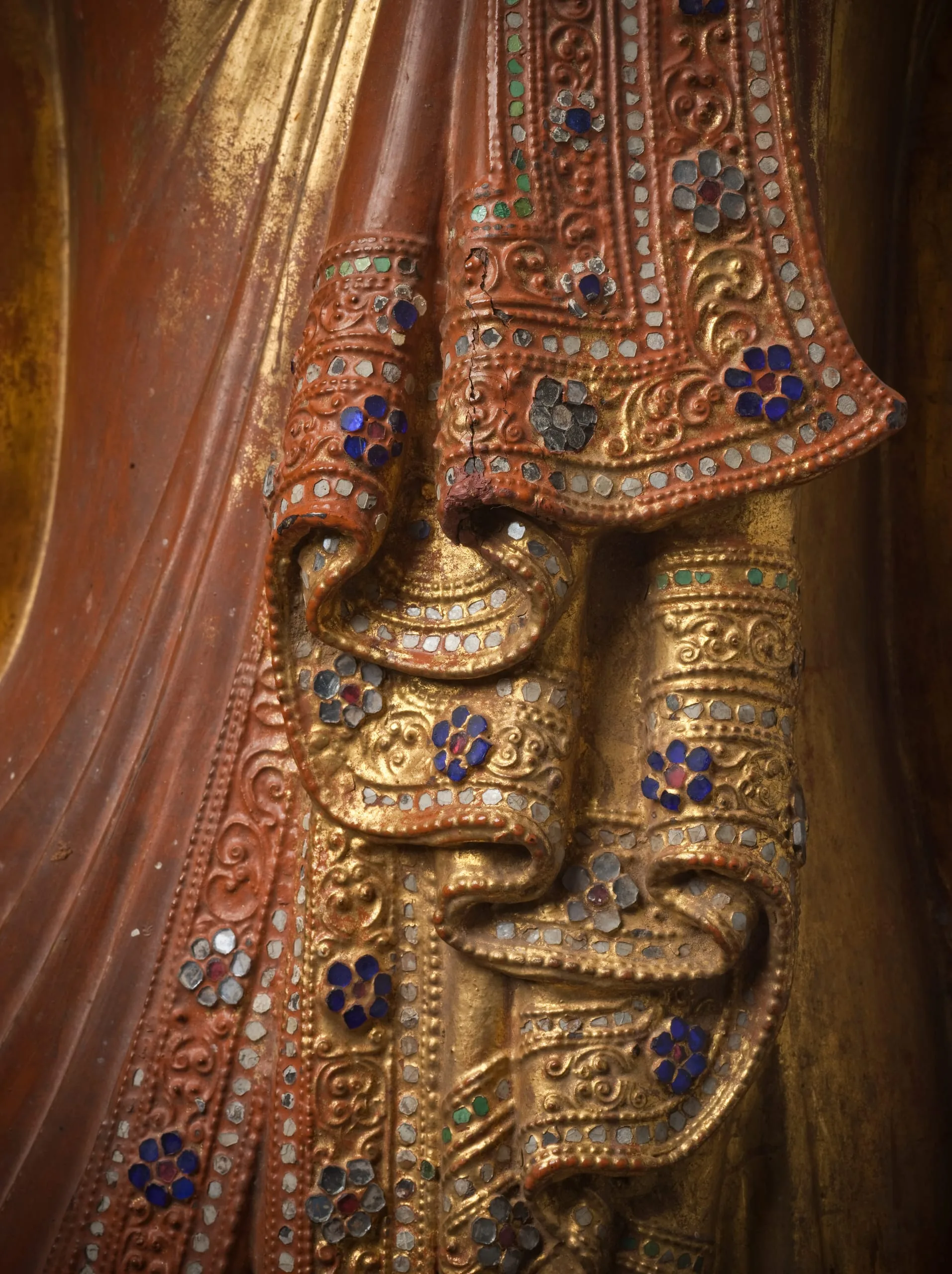
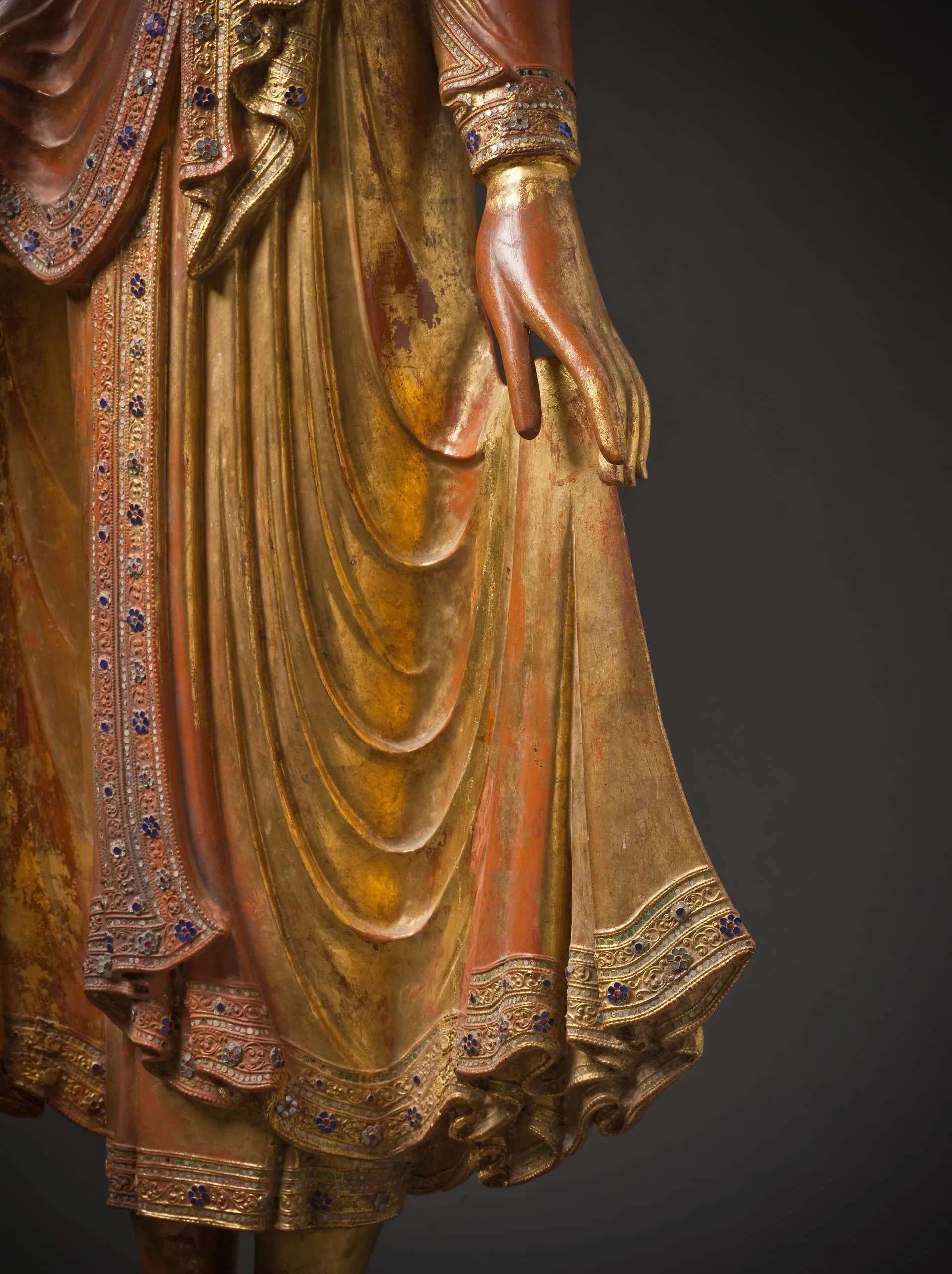
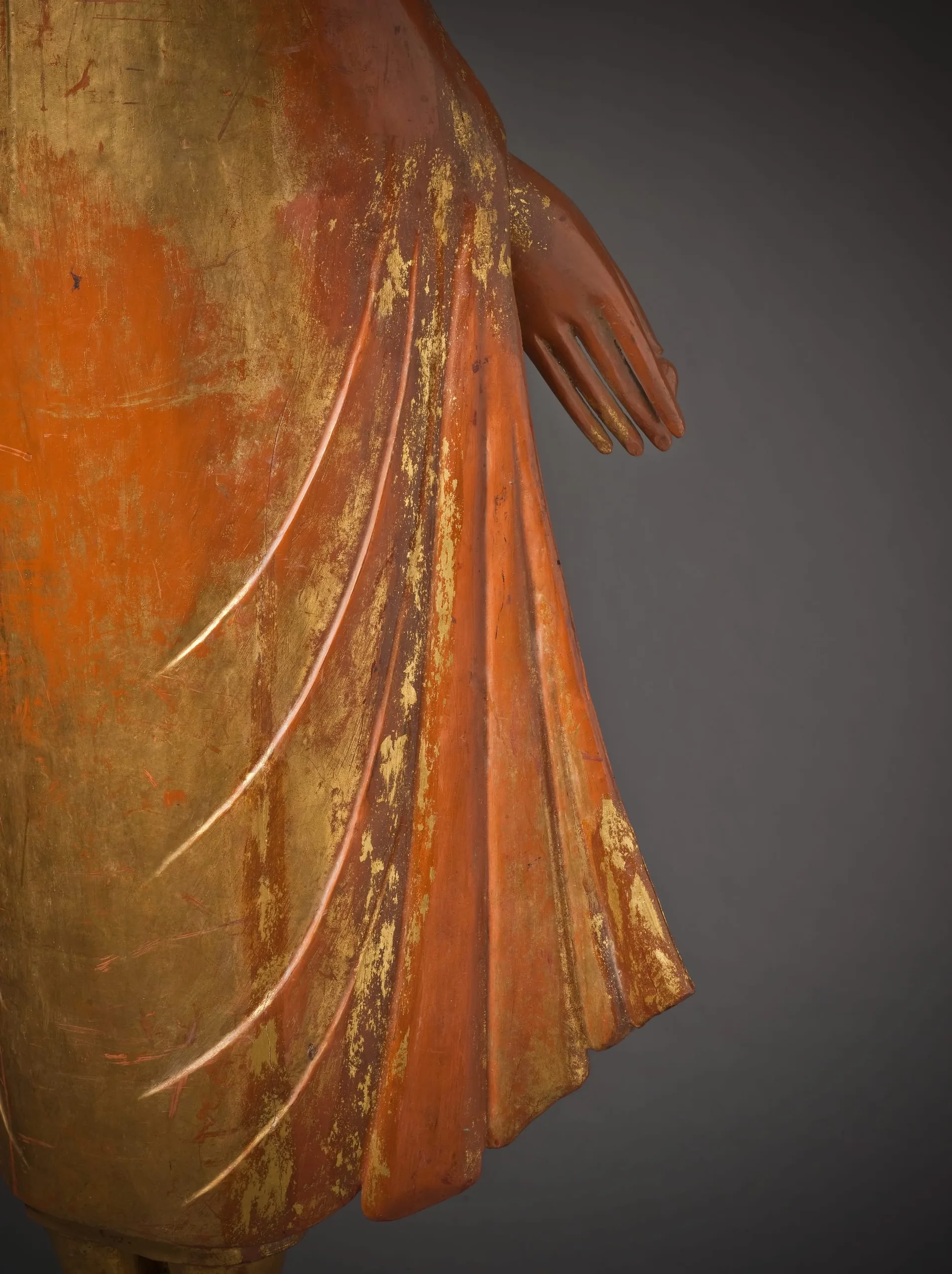
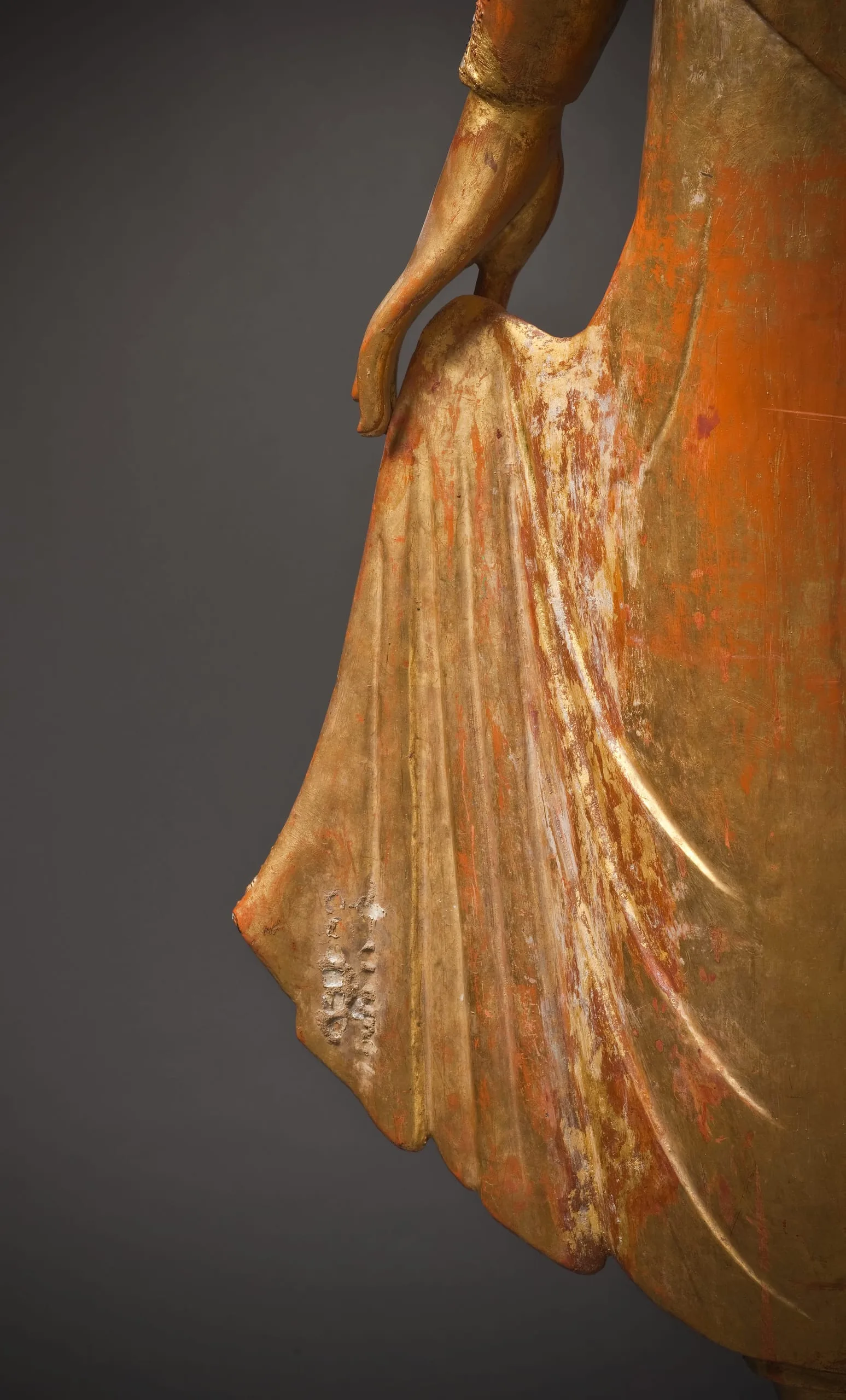
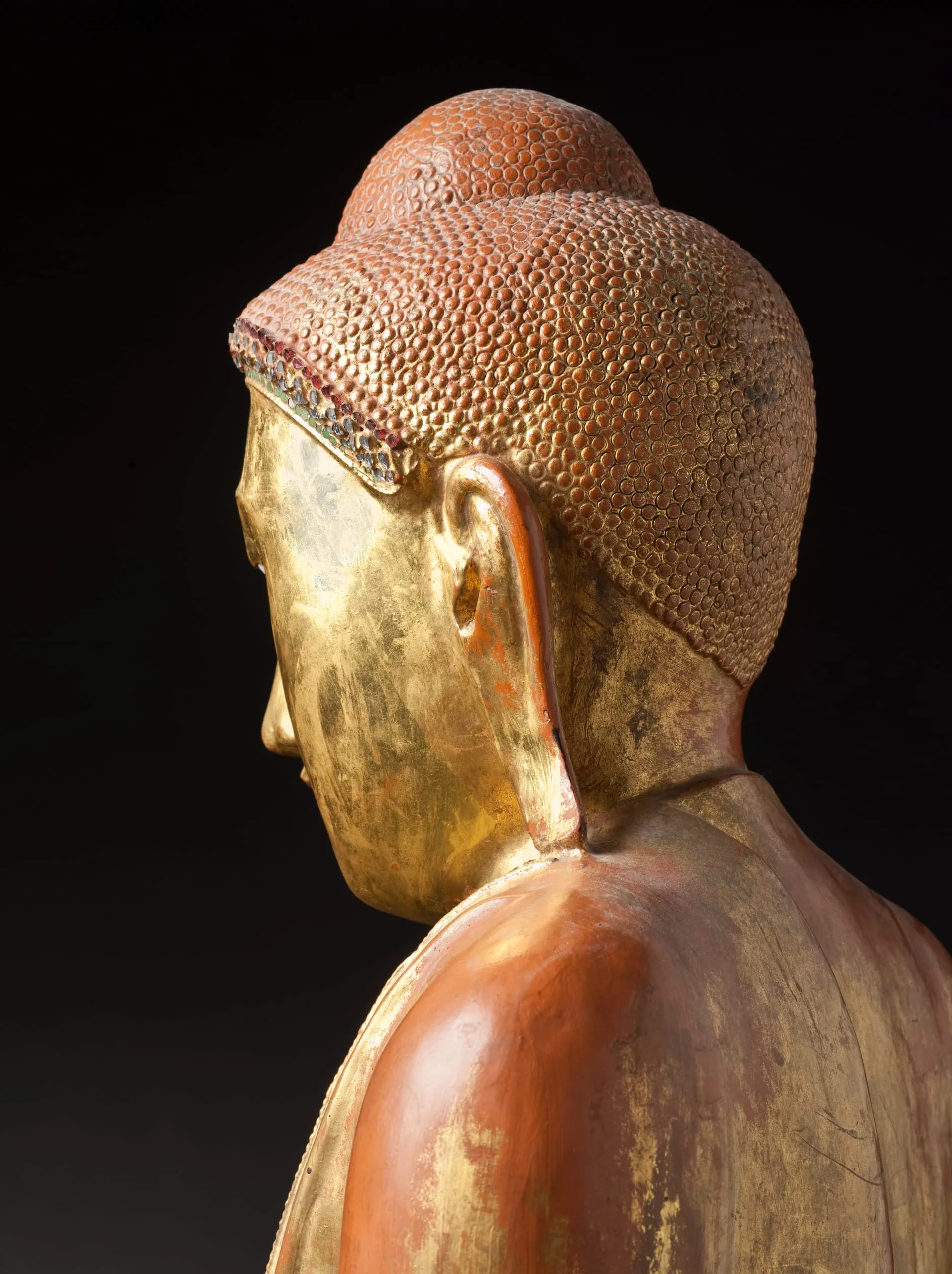
This elegant representation of Buddha Shakyamuni epitomizes the classic Mandalay style with its gentle smile and naturalistic features. He has the standard iconographic conventions of a Buddha: a cranial protuberance (ushnisha) emblematic of his omniscience, snail-curl hair, and elongated earlobes. His shorn hair and empty earlobes indicate his renunciation of his princely life when he wore long hair and heavy golden ear ornaments. A decorative band with a central floret is between his forehead and hair. He wears a monastic outer robe (uttarasanga) with stylized pleats over his left shoulder and borders of raised lacquer designs of scrolling vines, known as thayo work, and an inlaid mosaic of glass and foil-backed mirror rosettes. The robe cascades into a flaring bottom. The Buddha’s left hand holds his robe out to the side, while his right hand carries a myrobalan fruit between the thumb and middle finger. He stands on a lotus base.
Comparable Mandalay Buddhas are in the British Museum, London (1923,0305.1), Denison Museum, Granville (1989.79), and Kinský Palace, Prague (NG Vp 1626).