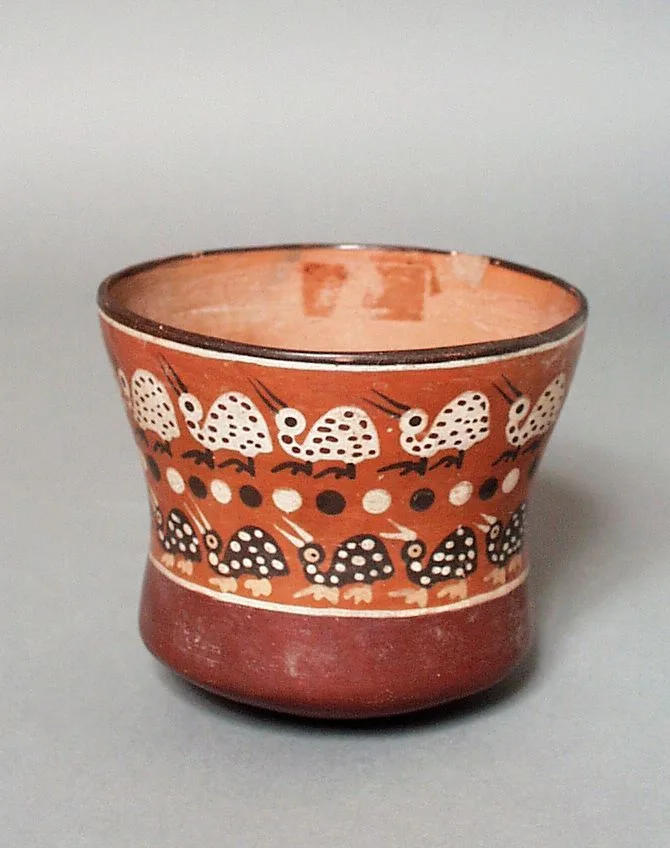
Birds are perhaps the most common animal chosen by Nasca artists for depiction on their ceramics (see also M.73.48.40, .41, and .42). Details of the design sometimes allow us to identify the species—such as hummingbirds, ducks, pelicans, and condors or vultures—but many more cannot be definitively assigned, such as here. Arranged over two rows and all facing left, these small birds are painted on a deep buff background using contrasting colors: one row is white with red spots and black beaks, the other black with white spots and white beaks. The feet, especially those on the lower row, appear to be webbed, which would indicate that these are waterbirds of some kind. Their upturned beaks give them the appearance of juveniles begging for food, as does their arrangement as, literally, ducklings in a row. The design may well refer to the fertility and abundance of spring.