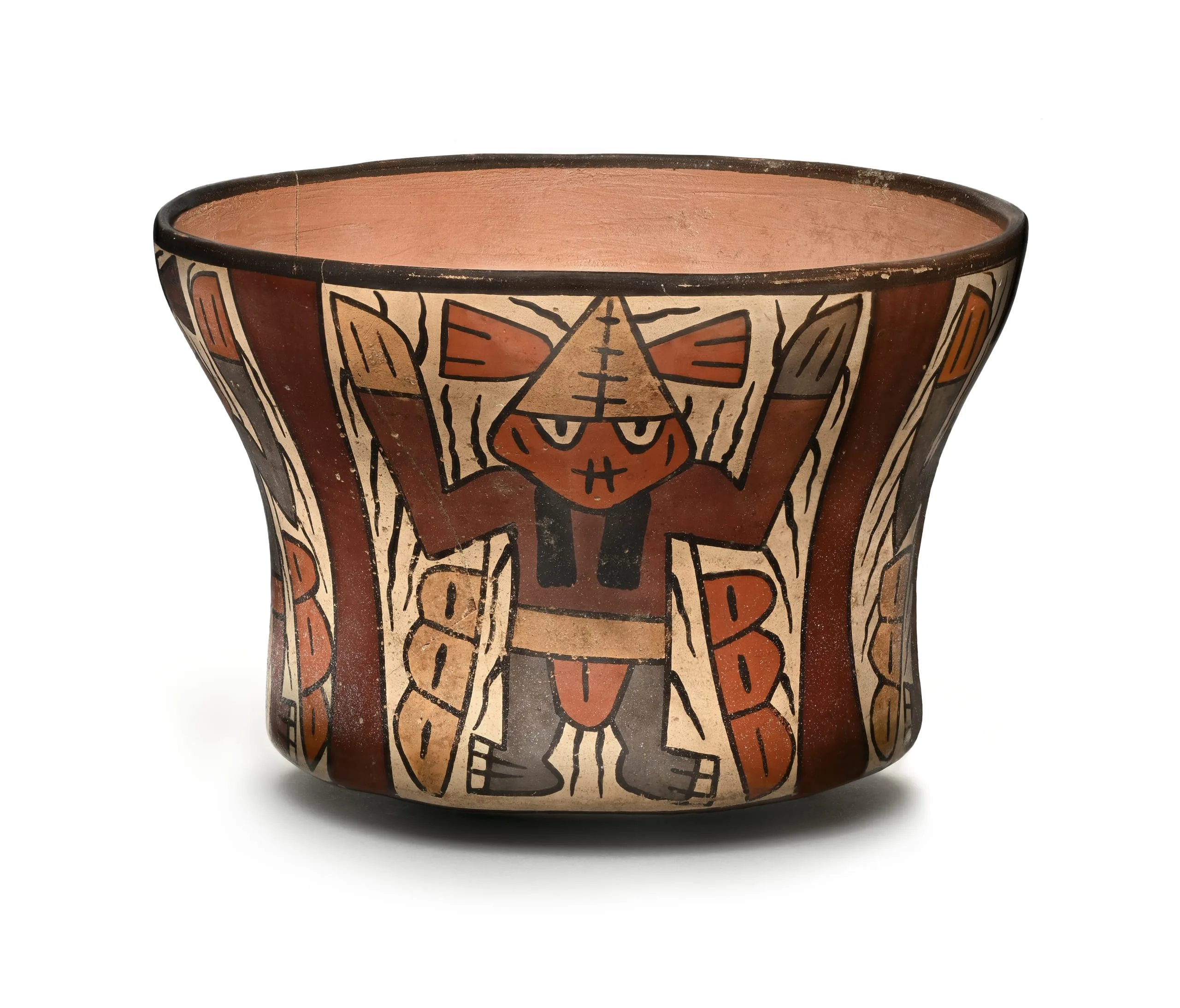
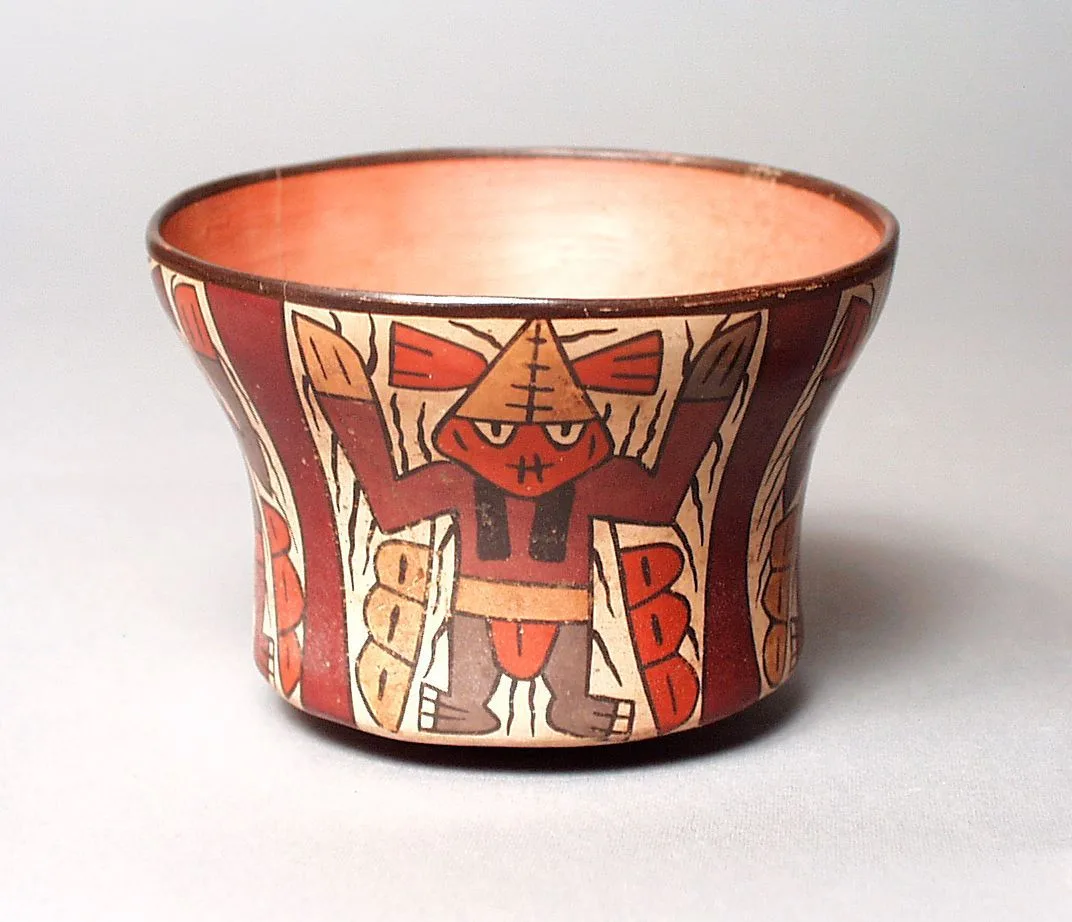
This Middle Nasca cup or open bowl depicts the Mythical Harvester, an ancestral entity—probably male—associated with fertility and abundance. The Harvester is often seen wearing a conical hat stitched on the front, with a cloth attached to its backside to protect his neck from the sun. He is shown frontally, holding (or hanging from) a variety of crops, such as maize, beans, peppers, and tubers. Widely represented by Nasca artists, the Harvester figure was popular in both secular and religious contexts. The two vertical lines across his mouth resemble the stitches or thorns used to hold together the lips of trophy heads, and indicate that this character himself may be deceased. The notions that ancestors generate new life and that death or the spilling of blood leads to fertility and renewal are well established in the ancestral cultures of Peru.
The conventions of the Mythical Harvester’s representation vary across time, ranging from a more figurative to a more abstract style. In later periods, he virtually disappears from the Nasca pantheon and artistic repertoire (see also M.73.48.26).
Luis Muro and Julia Burtenshaw
2024