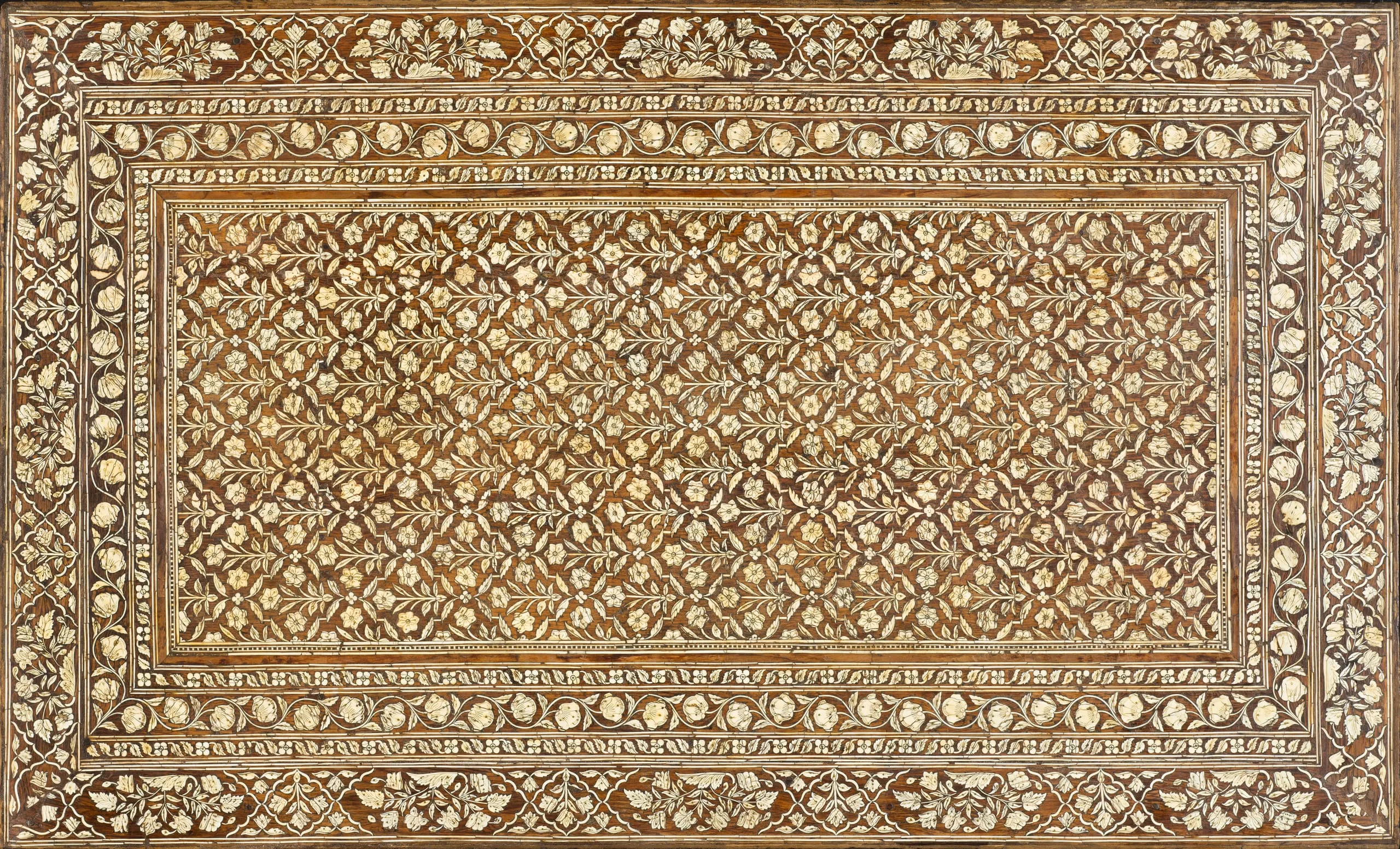
This elegant panel is made in a distinctive construction technique. Rather than the typical method of a solid hardwood inlaid with ivory or bone floral motifs, the top exterior surface is an ornamental veneer comprised of small wooden strips set in a resin binder. They are attached appliqué-fashion to form a wooden background surrounding the carved bone floral sprays and flowering vines that are arranged in decorative patterns and concentric registers. The central field features a lattice of split acanthus leaves with quatrefoil junctures, which enclose Mughal-style tripartite flowering plants, perhaps narcissi. The registers are asymmetrical, but generally increase in height moving outward. They include a creeper of open blossoms and serrated deltoid leaves, a scrolling poppy vine, and the outer border of lobed cartouches inset with flowering irises or tulips and splayed sprays of irises.
The panel’s edges are punctuated with decorative brass roundels with three design styles: a floral spray, a geometric arrangement of stylized blossoms and curvilinear stalks, and a laurel wreath partially encircling the numerals 20. The latter roundels were possibly converted from officer’s buttons featuring a variant insignia of the British Army’s 20th Infantry Regiment, known since 1881 as the Lancaster Fusiliers (personal communication from Rochelle Kessler).
The original function of this enigmatic panel is unknown. It was possibly a platform for a prayer rug or a tabletop.