LACMA

ShopMembershipMyLACMATickets
LACMA
Los Angeles County Museum of Art
5905 Wilshire Blvd.
Los Angeles, CA 90036
info@lacma.org
(323) 857-6000
Sign up to receive emails
Subscribe
© Museum Associates 2025

Museum Hours

Monday

11 am–6 pm

Tuesday

11 am–6 pm

Wednesday

Closed

Thursday

11 am–6 pm

Friday

11 am–8 pm

Saturday

10 am–7 pm

Sunday

10 am–7 pm


  • About LACMA
  • Jobs
  • Building LACMA
  • Host An Event
  • Unframed
  • Press
  • FAQs
  • Log in to MyLACMA
  • Privacy Policy
© Museum Associates 2025
Collections

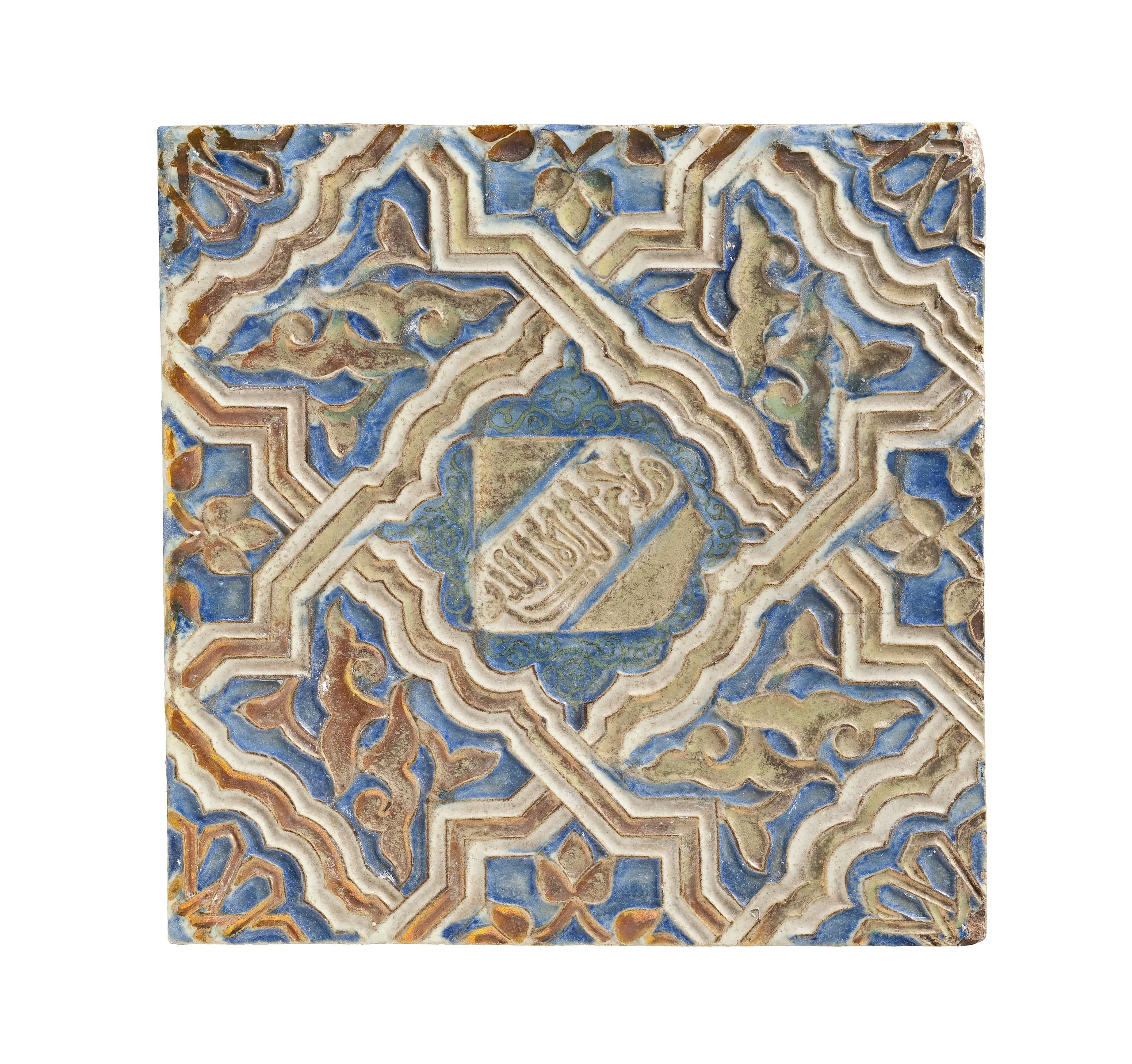
Tile14th century

Not on view
Square ceramic tile with molded geometric and floral relief pattern glazed in cobalt blue, amber, and ivory, with a central lobed medallion containing Arabic script
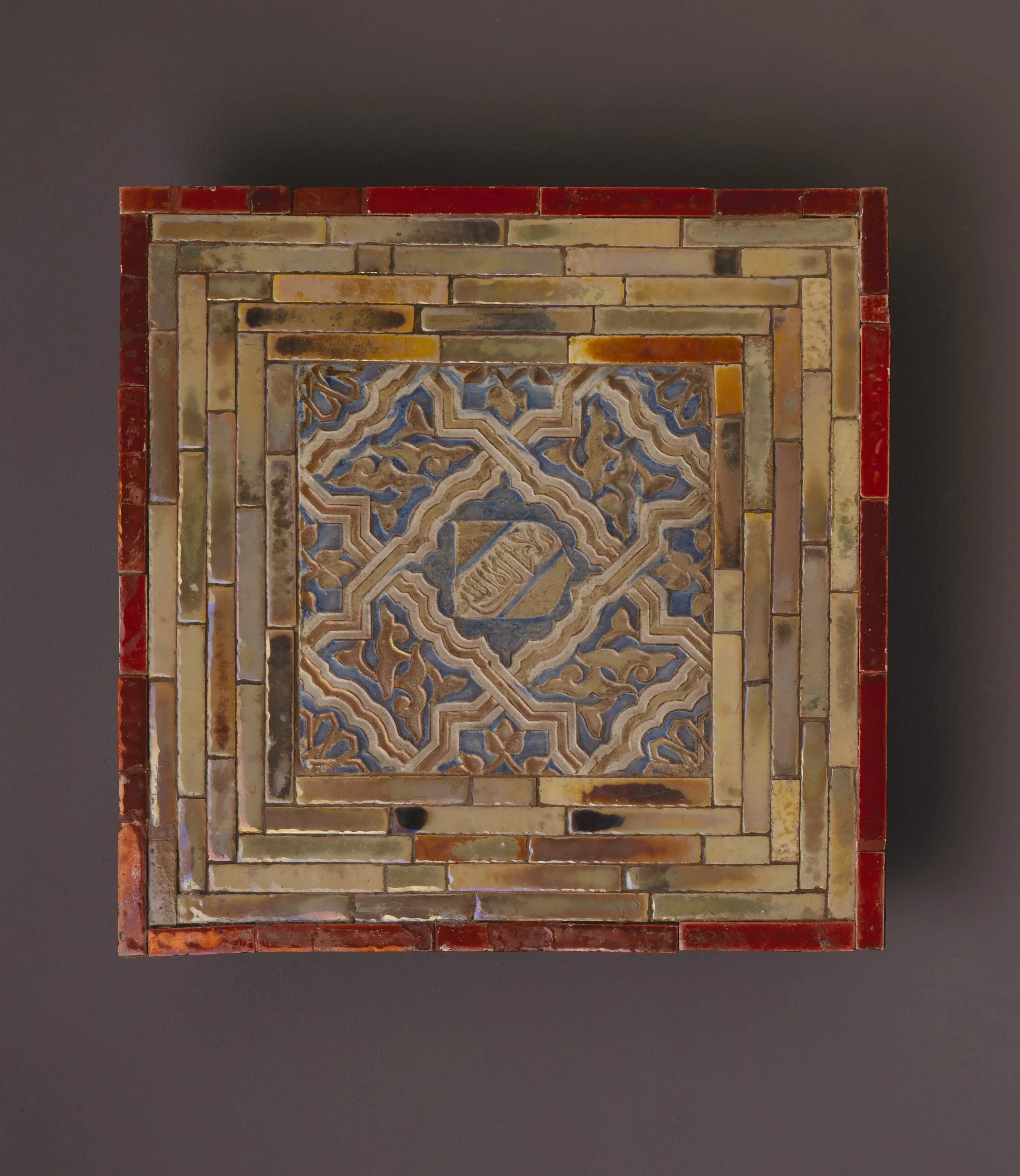
Ceramic tile panel with concentric rectangular borders of red, amber, and olive-green glazed brick strips surrounding a central square tile decorated with interlacing geometric and arabesque patterns in blue, white, and tan, with a diamond-shaped cartouche containing Arabic script at center.
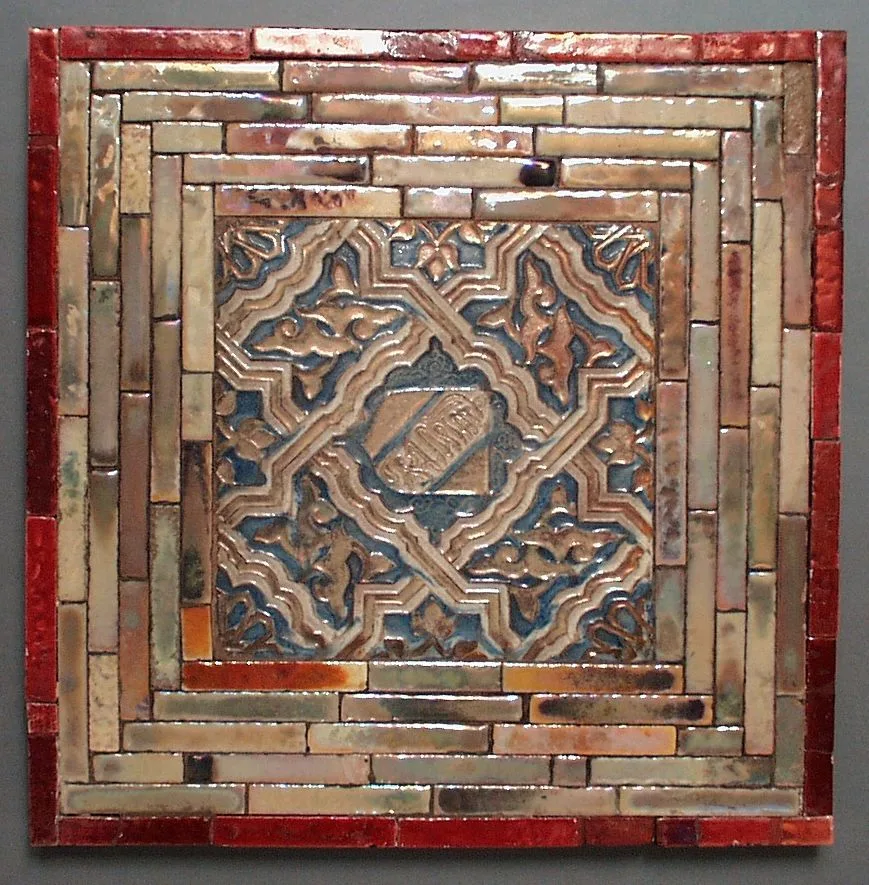
Ceramic tile panel with a central square decorated in blue and gold luster glaze, featuring geometric interlace and arabesque vegetal motifs surrounding a cartouche with Arabic script, framed by concentric borders of narrow rectangular tiles in red, ivory, and iridescent luster.
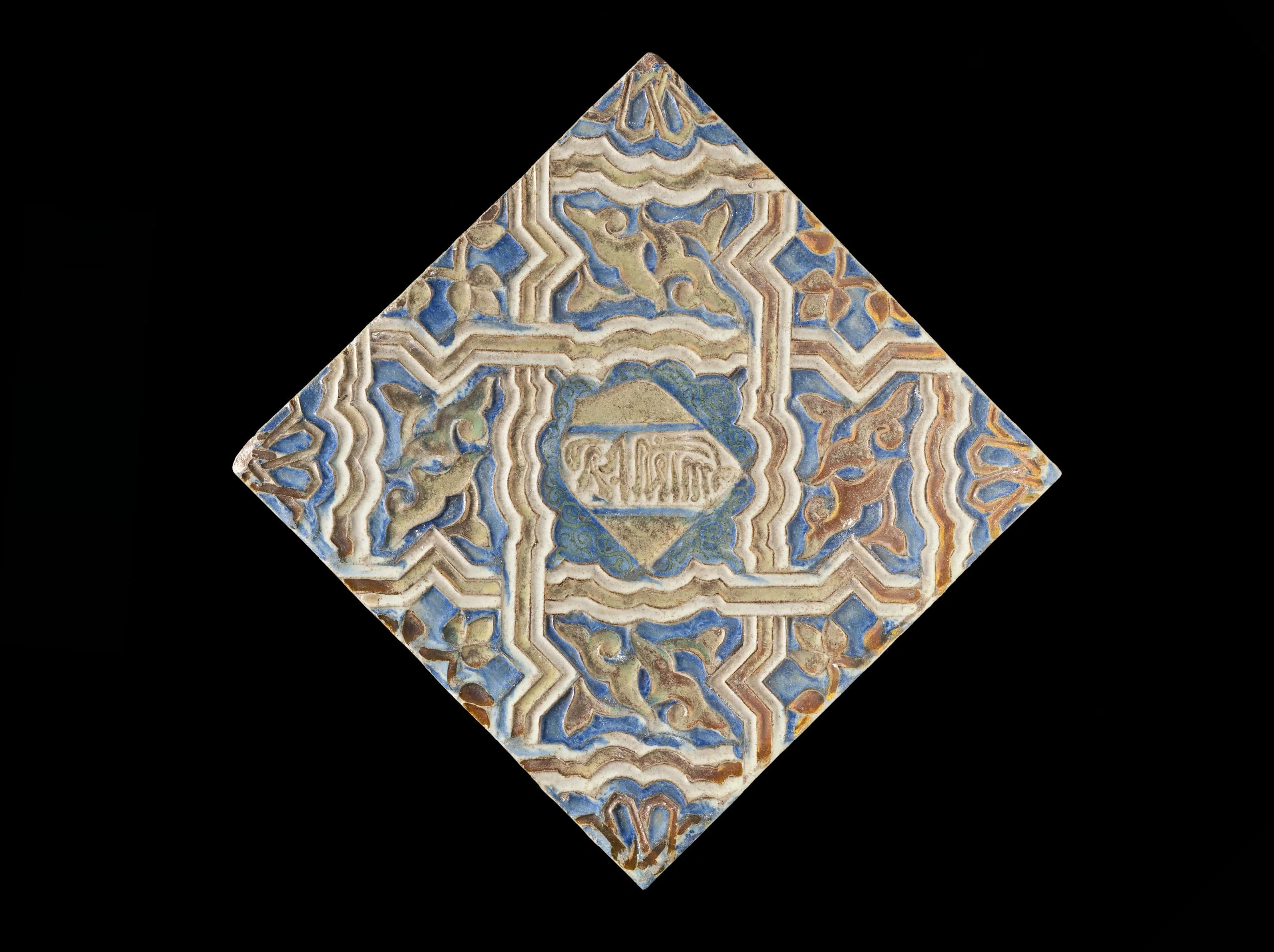
Glazed ceramic tile displayed on a diagonal, decorated in blue, white, and brown with raised interlacing geometric and vegetal patterns radiating from a central lobed cartouche containing Arabic script inscription.
Title
Tile
Place Made
Spain, Granada, Alhambra
Date Made
14th century
Medium
Earthenware, molded, tin-glazed and painted with colored glazes and luster
Dimensions
13 1/2 x 13 1/2 in. (34.3 x 34.3 cm)
Credit Line
The Nasli M. Heeramaneck Collection, gift of Joan Palevsky
Accession Number
M.73.5.782
Classification
Ceramics
Collecting Area
Art of the Middle East: Islamic
Curatorial Notes

The Alhambra is the most significant artistic achievement of the Nasrids, the last Islamic dynasty in Spain. Both a well-fortified palace and a royal city, the Alhambra was guarded by stone walls and towers on the exterior, which conceal on the interior an elaborate succession of gardens, courtyards, and intricately decorated rooms, some of which had veneers of carved and painted stucco and colorful tiles. This earthenware tile is inscribed with the Nasrids’ dynastic motto: "There is no conqueror but God" (for the same inscription on a stucco plaque, see M.2002.1.685,).

Selected Bibliography
  • Lo Terrenal y lo Divino: Arte Islámico siglos VII al XIX Colección del Museo de Arte del Condado de Los Ángeles. Santiago: Centro Cultural La Moneda, 2015.