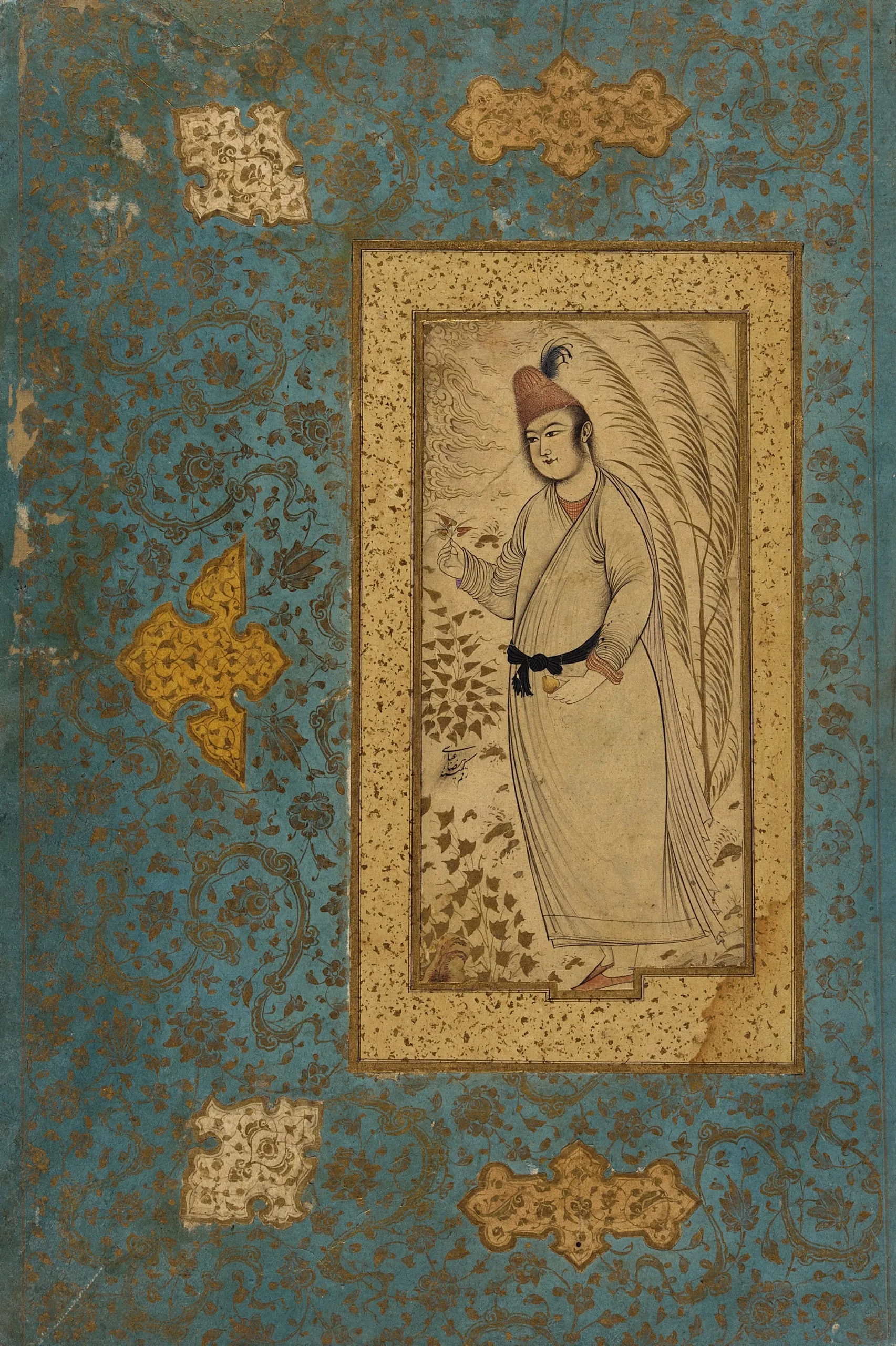
In the late sixteenth century, a new type of painting emerged in Iran that favored individual subjects painted on a single folio, with no relation to a narrative text, as had been the prior tradition. Such single-page compositions reached their peak in popularity during the seventeenth century at Isfahan, the capital of the Safavid dynasty, which blossomed into a great commercial and cultural hub. No longer confined by court patronage, artists found a willing market among the cultivated social elite, producing popular themes such as portraits of beautiful youths like this one. These paintings were often enjoyed individually or gathered in an album known as a muraqq‘a.
Such paintings typically depict generic types rather than specific individuals. Here, the youth’s dress suggests he is a dervish. In particular, his tall, grooved hat was worn by other Sufi members in various formats to indicate their rank (for example, senior figures wore the hat with a length of cloth wrapped around the bottom portion). The painting is signed by one of the most influential artists of the period, Riza-yi ‘Abbasi, whose students and followers carried his distinctive style into the late seventeenth century (see M.73.5.570).
2025