LACMA

ShopMembershipMyLACMATickets
LACMA
Los Angeles County Museum of Art
5905 Wilshire Blvd.
Los Angeles, CA 90036
info@lacma.org
(323) 857-6000
Sign up to receive emails
Subscribe
© Museum Associates 2025

Museum Hours

Monday

11 am–6 pm

Tuesday

11 am–6 pm

Wednesday

Closed

Thursday

11 am–6 pm

Friday

11 am–8 pm

Saturday

10 am–7 pm

Sunday

10 am–7 pm


  • About LACMA
  • Jobs
  • Building LACMA
  • Host An Event
  • Unframed
  • Press
  • FAQs
  • Log in to MyLACMA
  • Privacy Policy
© Museum Associates 2025
Collections

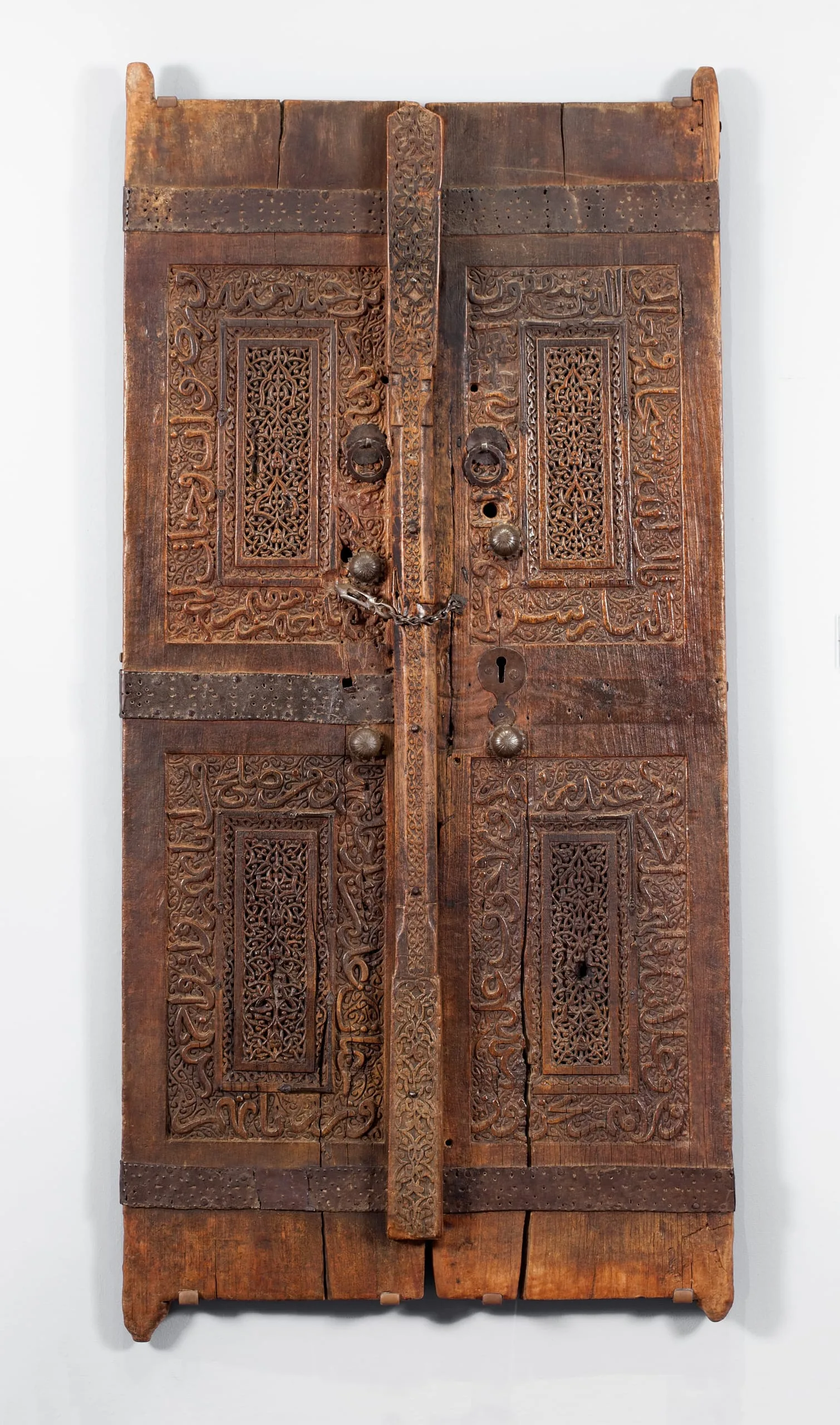
Pair of Doors15th century

Not on view
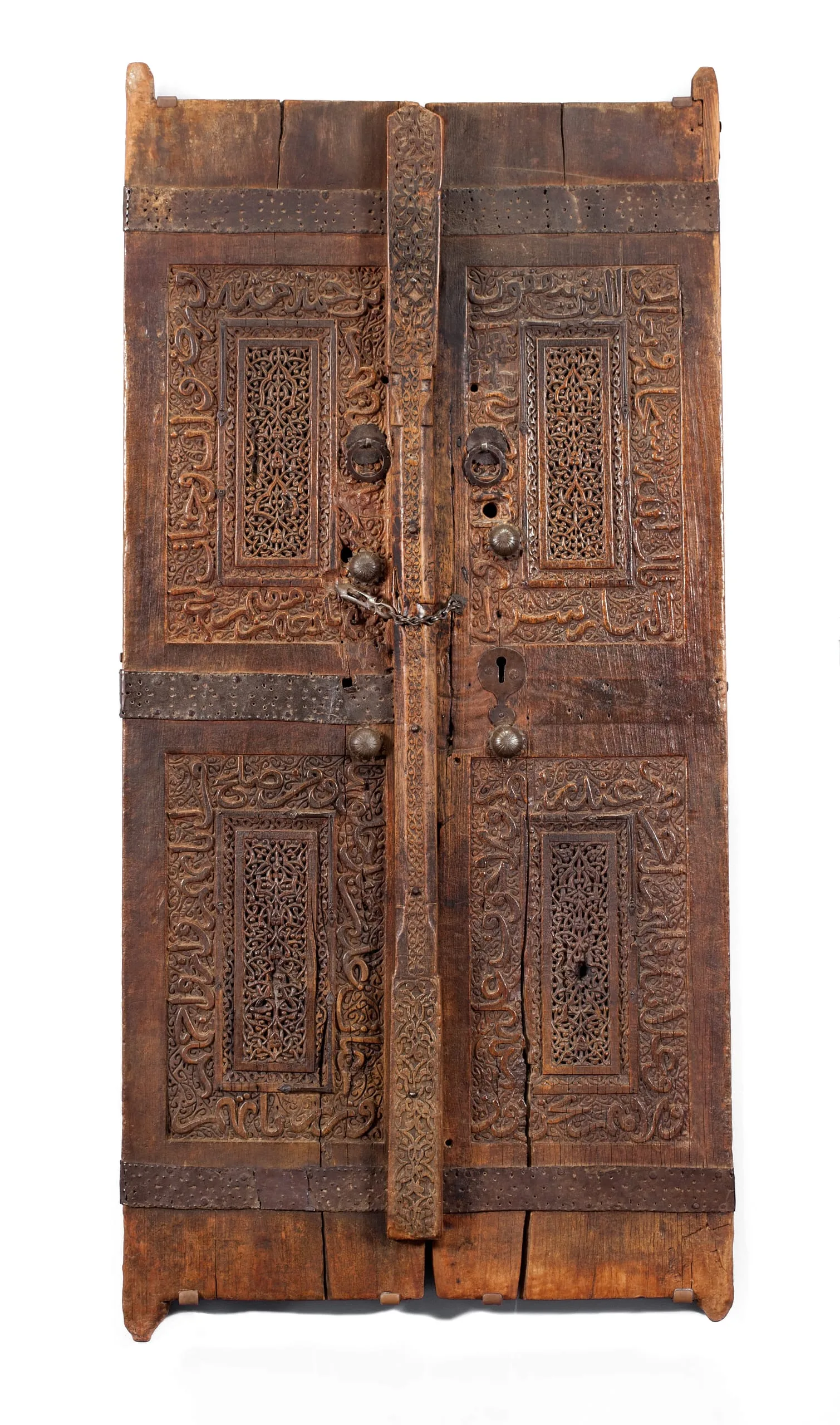
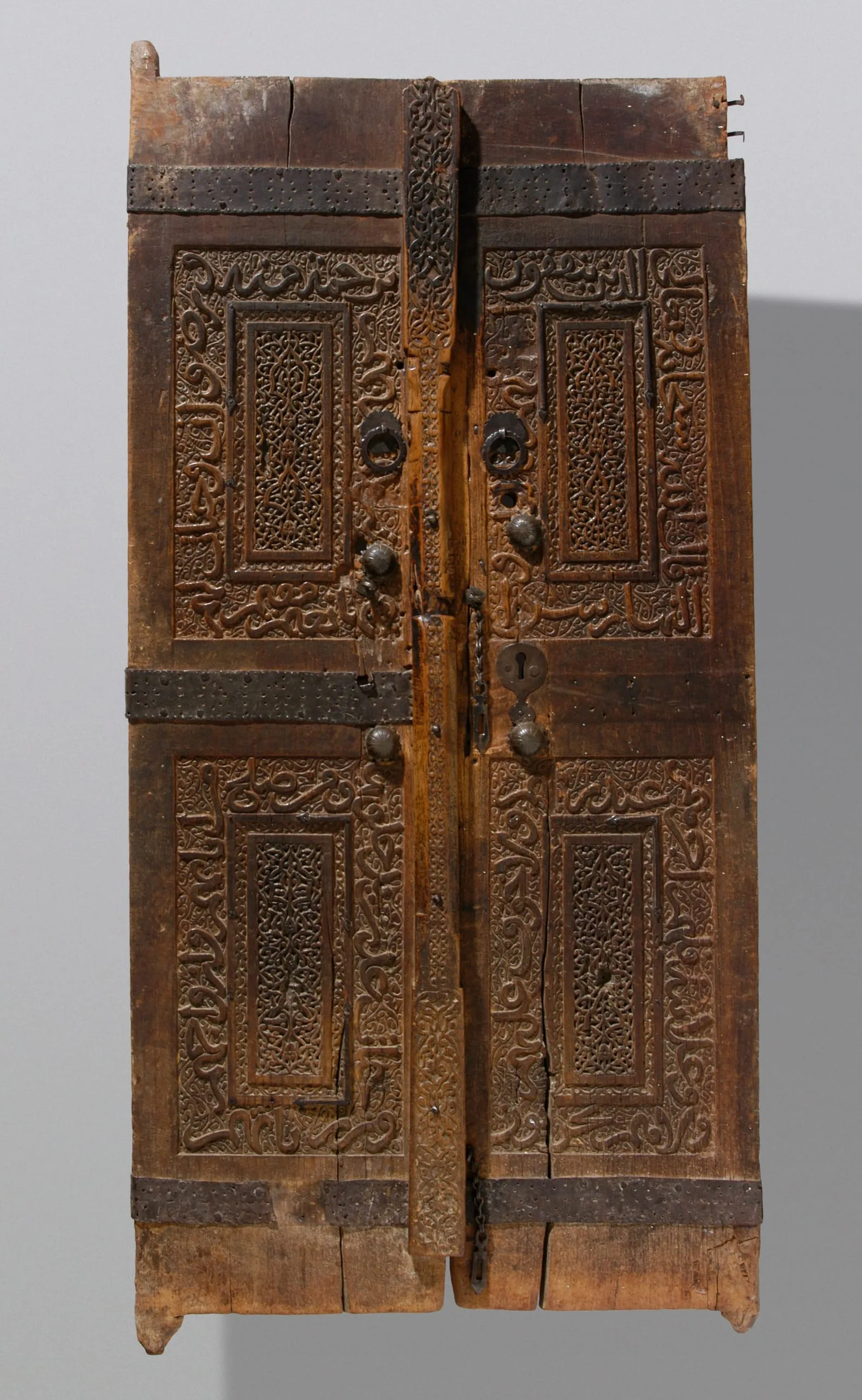
Pair of carved wooden doors with Arabic script borders, interlaced arabesque latticework panels, and iron hardware including straps, chain lock, and keyhole escutcheon
Pair of carved wooden doors with deeply incised Arabic script and arabesque scrollwork framing four recessed rectangular panels, fitted with iron hardware, hasps, and a central lock plate; warm brown wood with aged patina and iron strap reinforcements at top, middle, and base.
Carved wooden double door with deeply incised arabesque panels and Arabic script inscriptions bordering each panel, iron hardware including ring pulls, keyhole, and a central vertical bar locking mechanism; warm brown patinated wood throughout.
Title
Pair of Doors
Place Made
Iran
Date Made
15th century
Medium
Wood, carved
Dimensions
a) 67 x 16 1/4 in. (170.18 x 41.27 cm); b) 64 x 15 1/2 in. (162.56 x 39.37 cm)
Credit Line
The Nasli M. Heeramaneck Collection, gift of Joan Palevsky
Accession Number
M.73.5.790a-b
Classification
Wood
Collecting Area
Art of the Middle East: Islamic
Curatorial Notes

Although the building to which this pair of carved wooden doors originally belonged is not precisely known, clues may lie in its Qur’anic inscriptions, carved in the naskh script and framing four panels of openwork designs of scrolling vines. Each text quoted from the Qur’an mentions the rewards of Paradise, and those on the right door (Qur’an 2:274) specifically state that wealthy persons who spend their money for pious purposes need not fear what awaits them in the afterlife. Together, this suite of inscriptions suggests that the doors may have once graced a Shi‘ite shrine or a Sufi tomb.
Selected Bibliography
  • Gierlichs, Joachim. "Tabrizi Woodcarvings in Timurid Iran." in Politics, Patronage and the Transmission of Knowledge in 13th-15th Century Tabriz, edited by Judith Pfeiffer, 357-69. Leiden: Brill, 2014.