LACMA

ShopMembershipMyLACMATickets
LACMA
Los Angeles County Museum of Art
5905 Wilshire Blvd.
Los Angeles, CA 90036
info@lacma.org
(323) 857-6000
Sign up to receive emails
Subscribe
© Museum Associates 2025

Museum Hours

Monday

11 am–6 pm

Tuesday

11 am–6 pm

Wednesday

Closed

Thursday

11 am–6 pm

Friday

11 am–8 pm

Saturday

10 am–7 pm

Sunday

10 am–7 pm


  • About LACMA
  • Jobs
  • Building LACMA
  • Host An Event
  • Unframed
  • Press
  • FAQs
  • Log in to MyLACMA
  • Privacy Policy
© Museum Associates 2025
Collections

Unknown
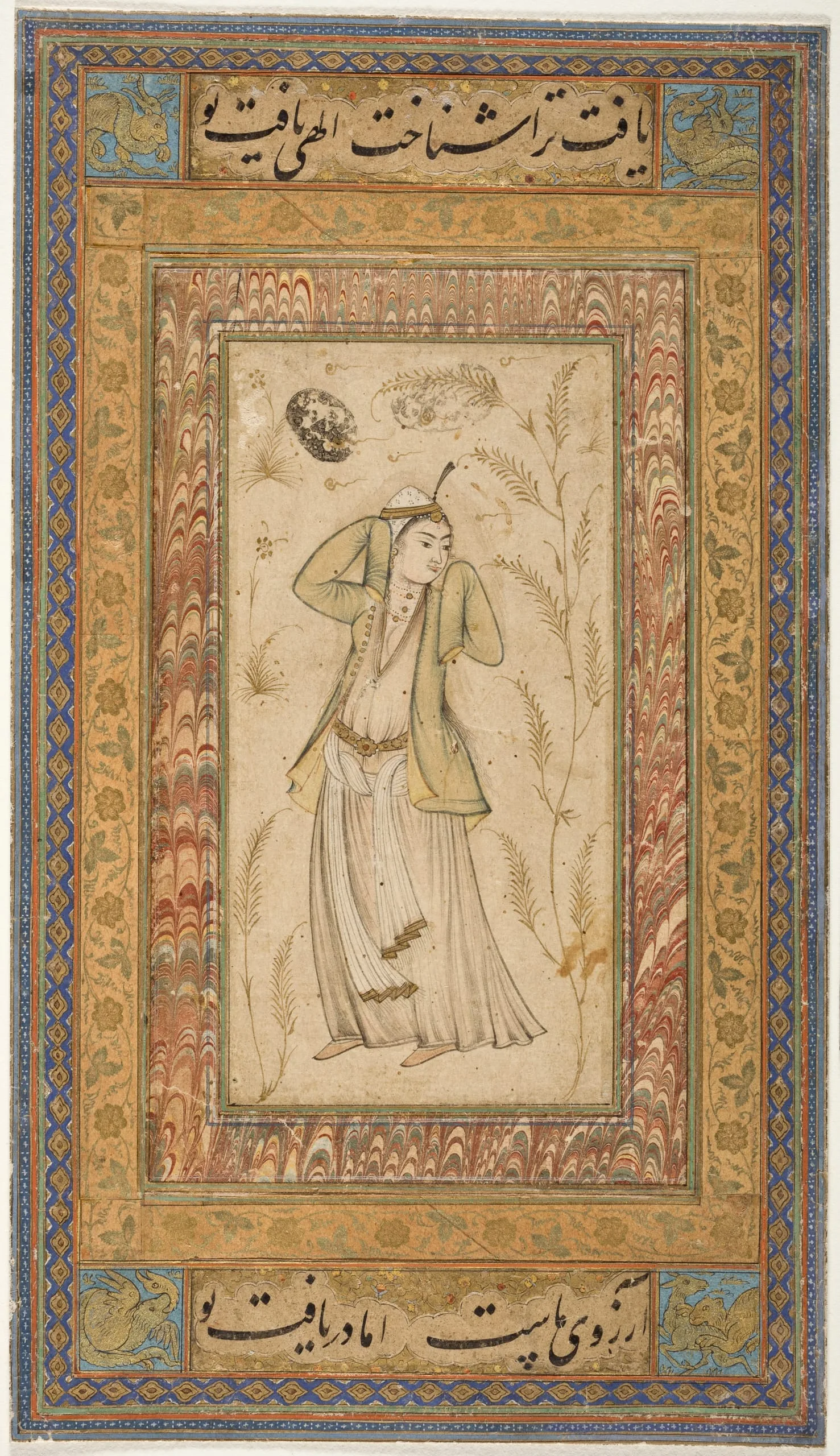
Female Sufi Dancercirca 1650

Not on view
Illustrated Persian manuscript page with a central ink and wash painting of a standing figure in a green jacket and white skirt, surrounded by marbled paper borders and gold-ground text bands with Persian script
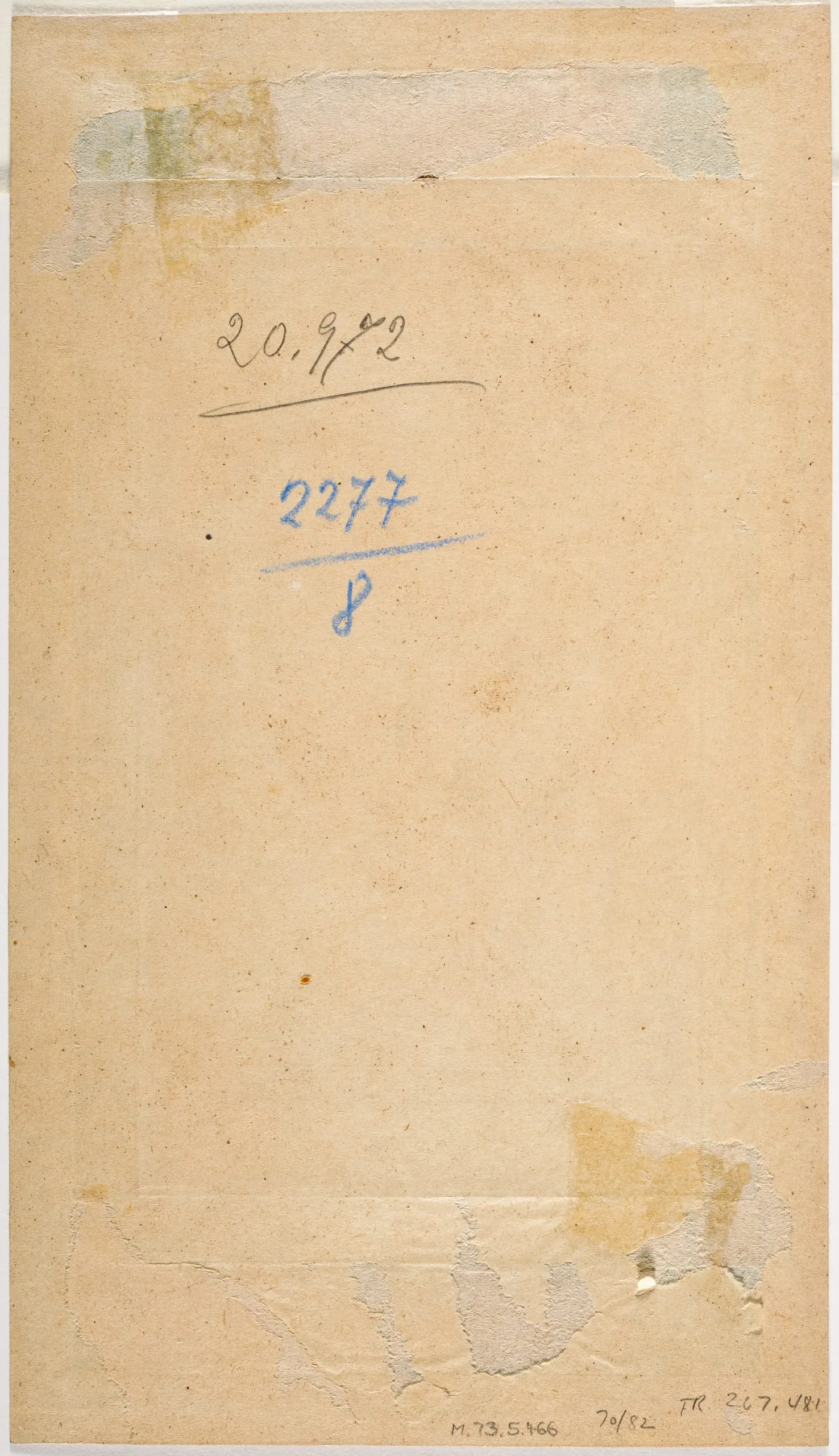
Verso of a paper sheet with aged, yellowed surface; handwritten accession numbers in pencil and blue ink reading "20.972" and "2277 / 8"; tape residue at top edge; staining and peeling at bottom.
Artist or Maker
Unknown
Title
Female Sufi Dancer
Place Made
India, Telangana, Golconda (?)
Date Made
circa 1650
Medium
Ink with opaque watercolor and gold on paper; Inner margin: marbled paper
Dimensions
Image: 5 1/4 x 2 5/8 in. (13.34 x 6.67 cm); Sheet: 9 3/4 x 5 9/16 in. (24.77 x 14.13 cm)
Credit Line
The Nasli M. Heeramaneck Collection, gift of Joan Palevsky
Accession Number
M.73.5.466
Classification
Drawings
Collecting Area
South and Southeast Asian Art
Curatorial Notes

This nim qalam (half-pen) lightly tinted drawing depicts a long-haired female dancer rendered in a Persianate figural and clothing style. She has a white conical cap with a bejeweled golden circlet and a feather plume. She wears dangling earrings and several necklace strands. Her waist-length green coat is open with long sleeves dangling from her hidden hands, which suggests she is a Sufi as this is a characteristic mode of dress for Sufi dancers. Her V-necked long frock is bound at the waist by a bejeweled golden belt and a loosely knotted white waist sash. She stands against a plain background beside lyrical flowering plants and Chinese-style clouds in gold. Two illegible seal stamps are above her.

The central panel is set within several diverse margins, including one made of marbled paper. There are calligraphic headers and footers bordered with scenes of animal combat in the corners. In the top left is a makara (mythical aquatic creature) and lion; the top right has a simurgh (mythical avian creature) and makara; the bottom left has a simurgh and serpent; the bottom right has a lion and deer.

The poetic verses read as follows:
{0 Lord, whoever} found {Thee} knows thee,
{0 Lord,} finding Thee is our wish but comprehending Thee . . .

(Translation by Z. Faridany-Akhavan.)
Selected Bibliography
  • Pal, Pratapaditya, ed. Islamic Art: The Nasli M. Heeramaneck Collection. Los Angeles: Museum Associates, 1973.
  • Pal, Pratapaditya. Indian Painting, vol.1. Los Angeles: Los Angeles County Museum of Art, 1993.