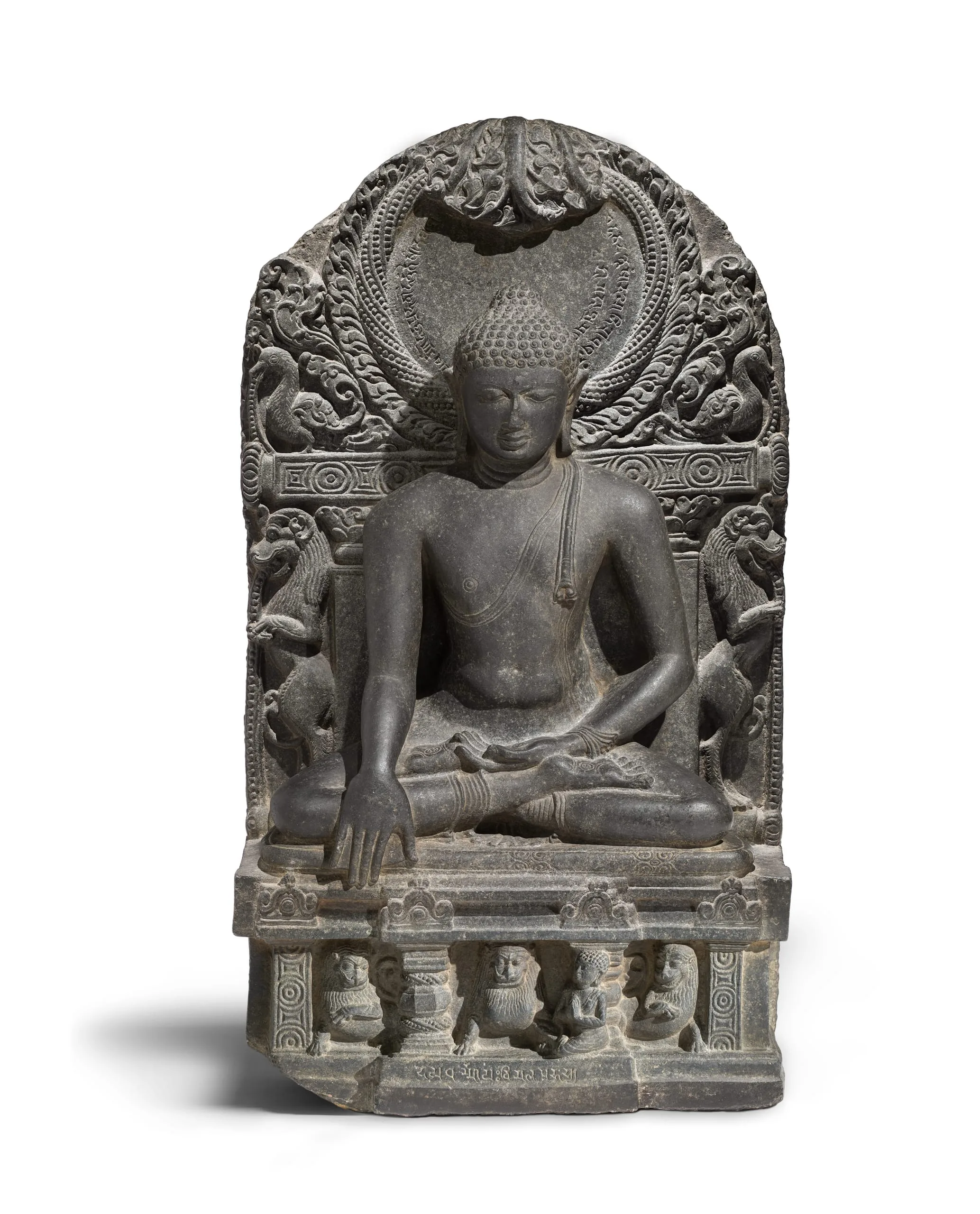
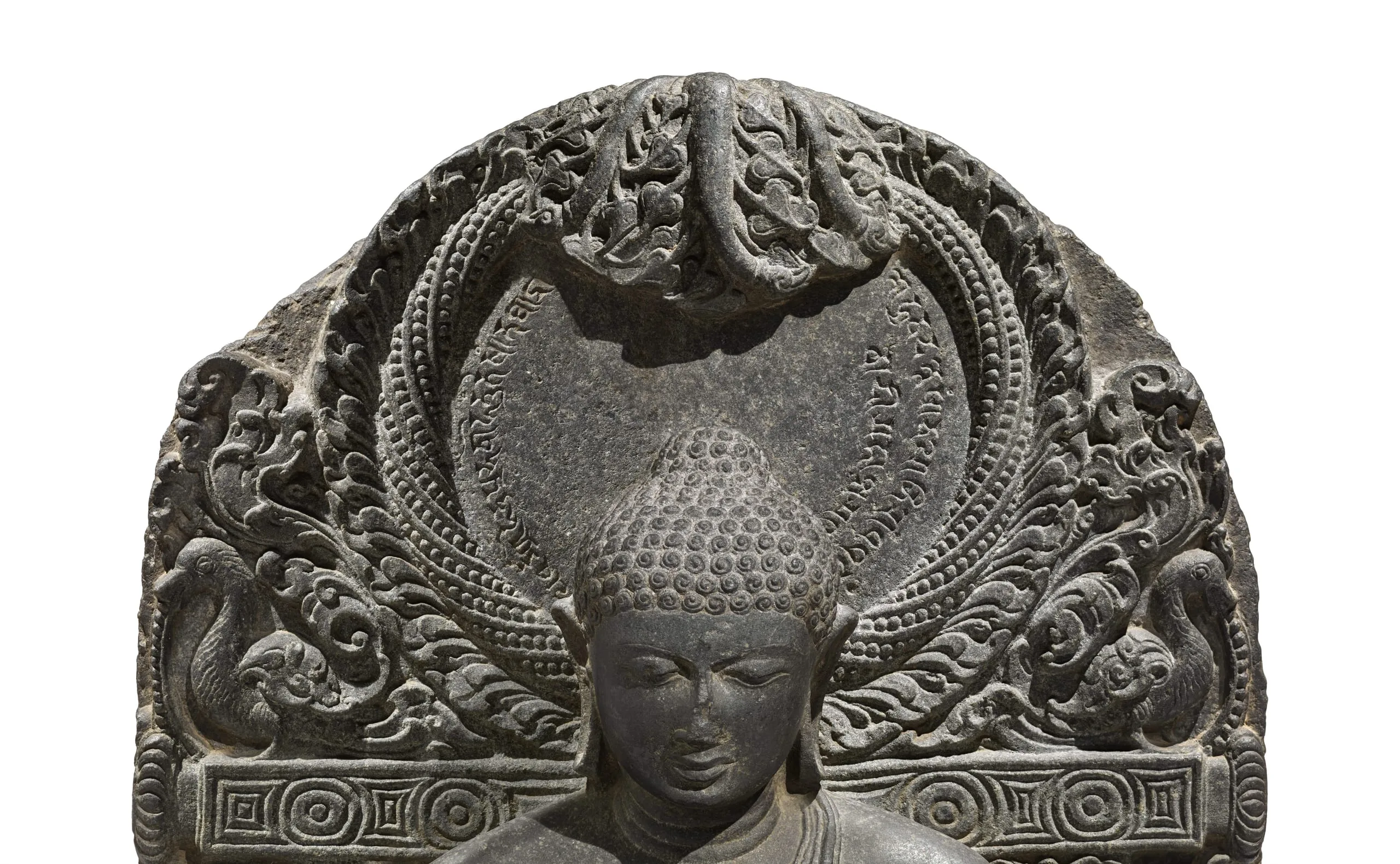
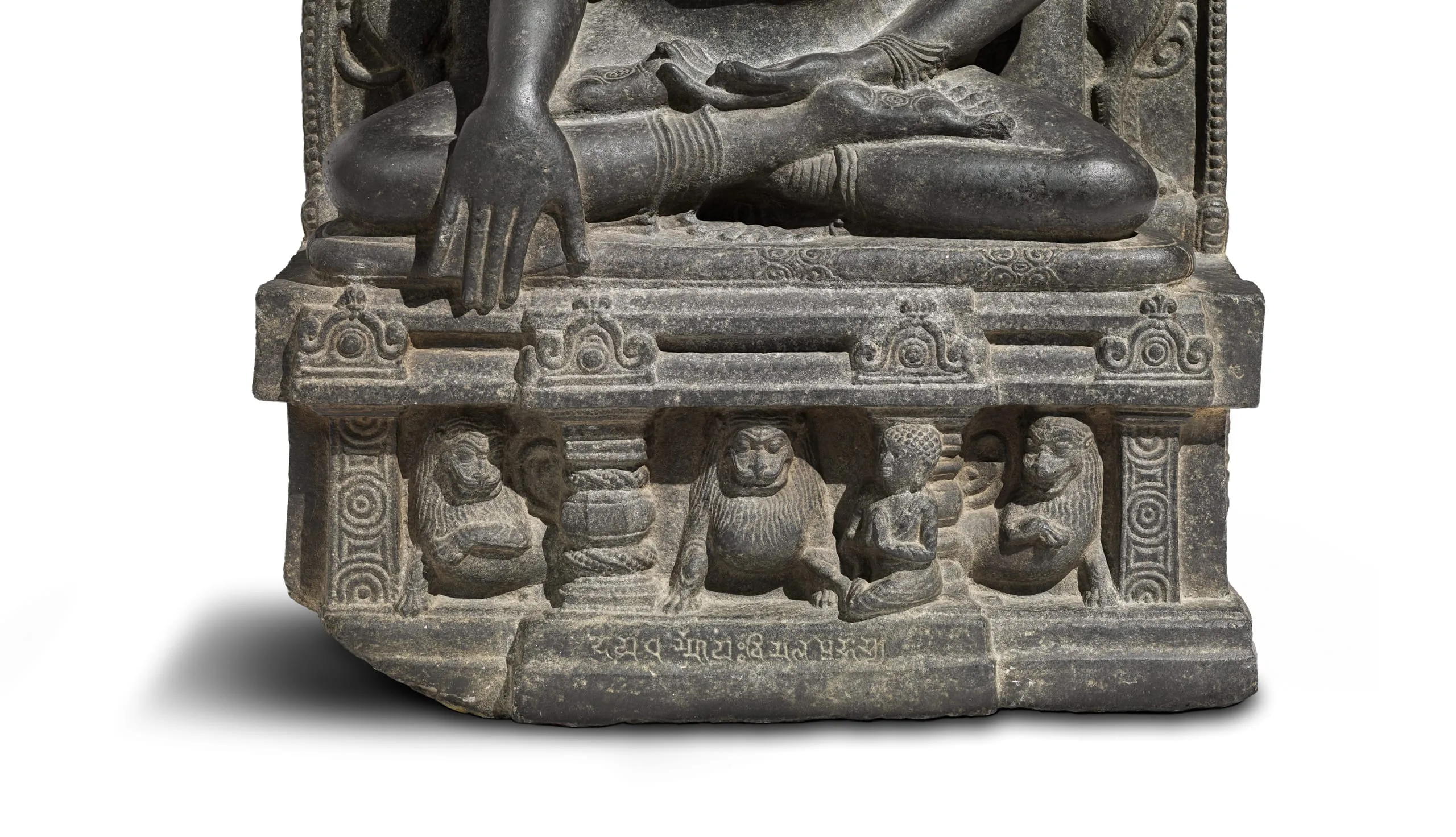
This sculpture represents the climactic moment when the historical Buddha Shakyamuni (born Siddhartha Gautama, traditionally dated to 563–483 BCE) extends his right hand in the gesture of calling upon the earth to witness his right to achieve Enlightenment after his many lifetimes (bhumisparsha mudra). The Buddha achieved his Awakening at Bodhgaya, Bihar, where he meditated under the Bodhi tree (Ficus religiosa). Branches of the Bodhi tree are depicted overhanging this image’s nimbus to help identify the location and event. The Buddha sits on a traditional South Asian-style throne used for royal and religious images. It features lions supporting the throne base, rearing horned leonine creatures (vyala) flanking the Buddha to indicate his mastery over the natural and supernatural worlds, and ganders symbolic of wisdom seated on the crossbar spewing pearls.
The Sanskrit inscription along the inner edge of the halo is the Buddhist creed: The Buddha has explained the cause of all things that arise from a cause. He, the great monk, has also explained their cessation.
The dedicatory inscription on the base beneath the donor figure reads, This is the pious gift of Vimalaprabha. (Translation by Pratapaditya Pal.)
Closely comparable images likely from the same workshop, albeit donated by different monks, are in the Asian Art Museum, San Francisco (B60S598) and Seattle Asian Art Museum (39.35).