LACMA

ShopMembershipMyLACMATickets
LACMA
Los Angeles County Museum of Art
5905 Wilshire Blvd.
Los Angeles, CA 90036
info@lacma.org
(323) 857-6000
Sign up to receive emails
Subscribe
© Museum Associates 2026
  • About LACMA
  • Jobs
  • Building LACMA
  • Host An Event
  • Unframed
  • Press
  • FAQs
  • Log in to MyLACMA
  • Privacy Policy
© Museum Associates 2026
Collections

Shukrullah Afshar
Pen Box1832/1248 A.H.

On view:
Geffen Galleries
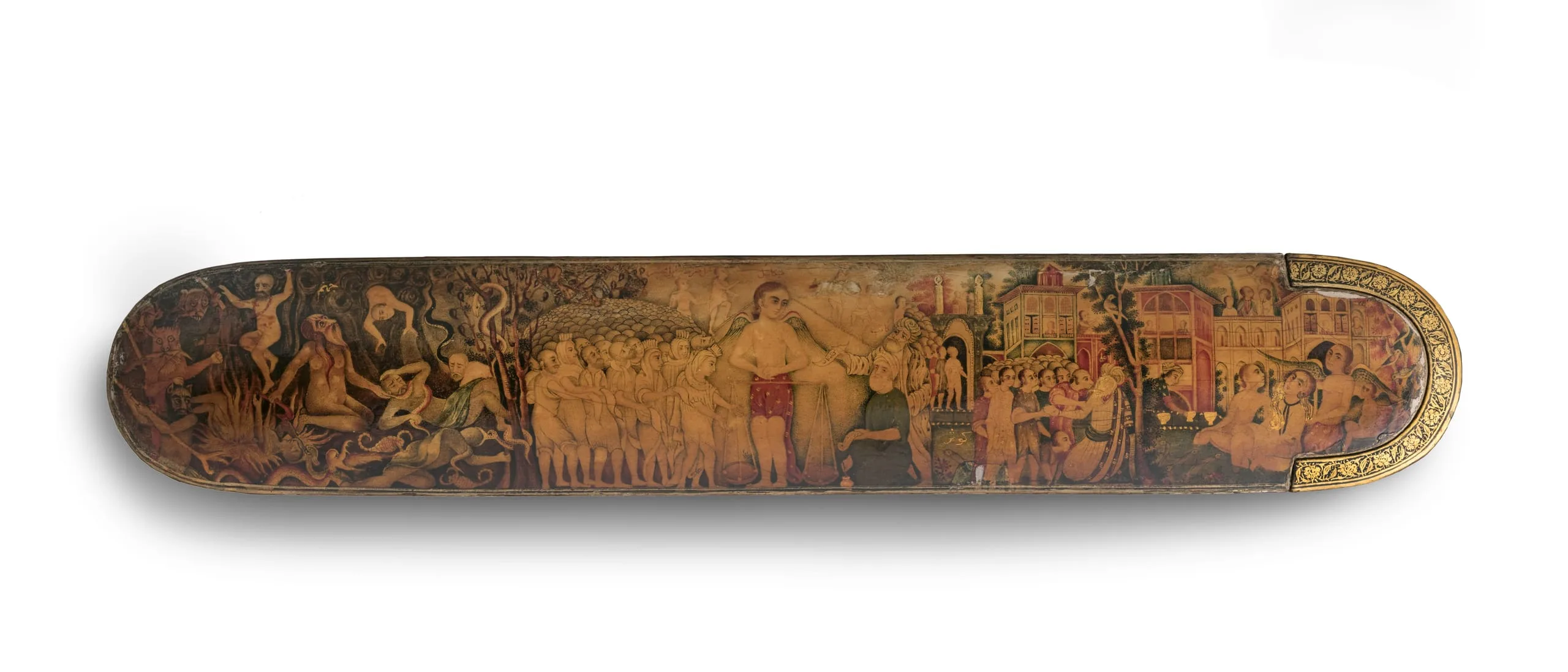
Lacquered pen case with a continuous miniature narrative scene depicting dozens of figures across a warm ochre and terracotta ground, with gold metal end caps
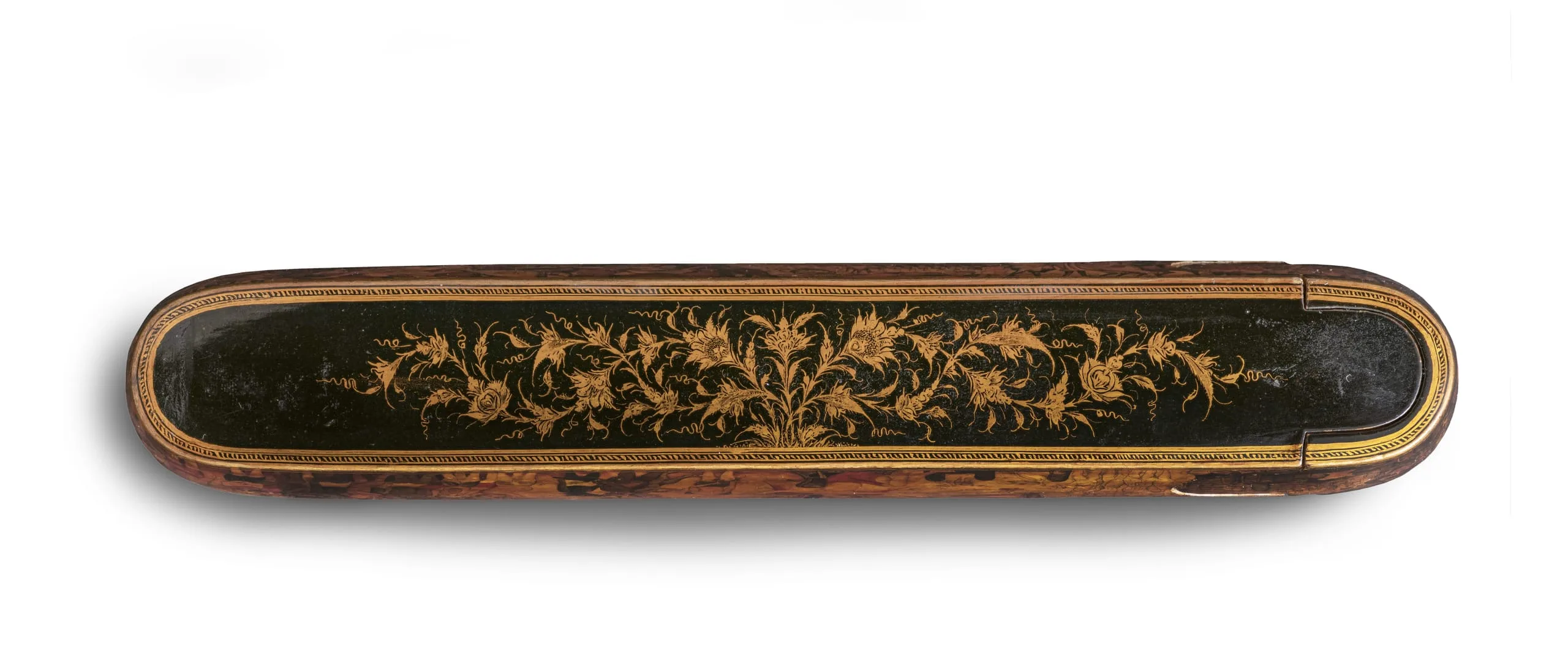
Elongated lacquered pen case with rounded ends, featuring a central black panel decorated with gilded scrolling floral and leaf motifs, bordered by a narrow gold geometric band and a mottled reddish-brown outer edge.
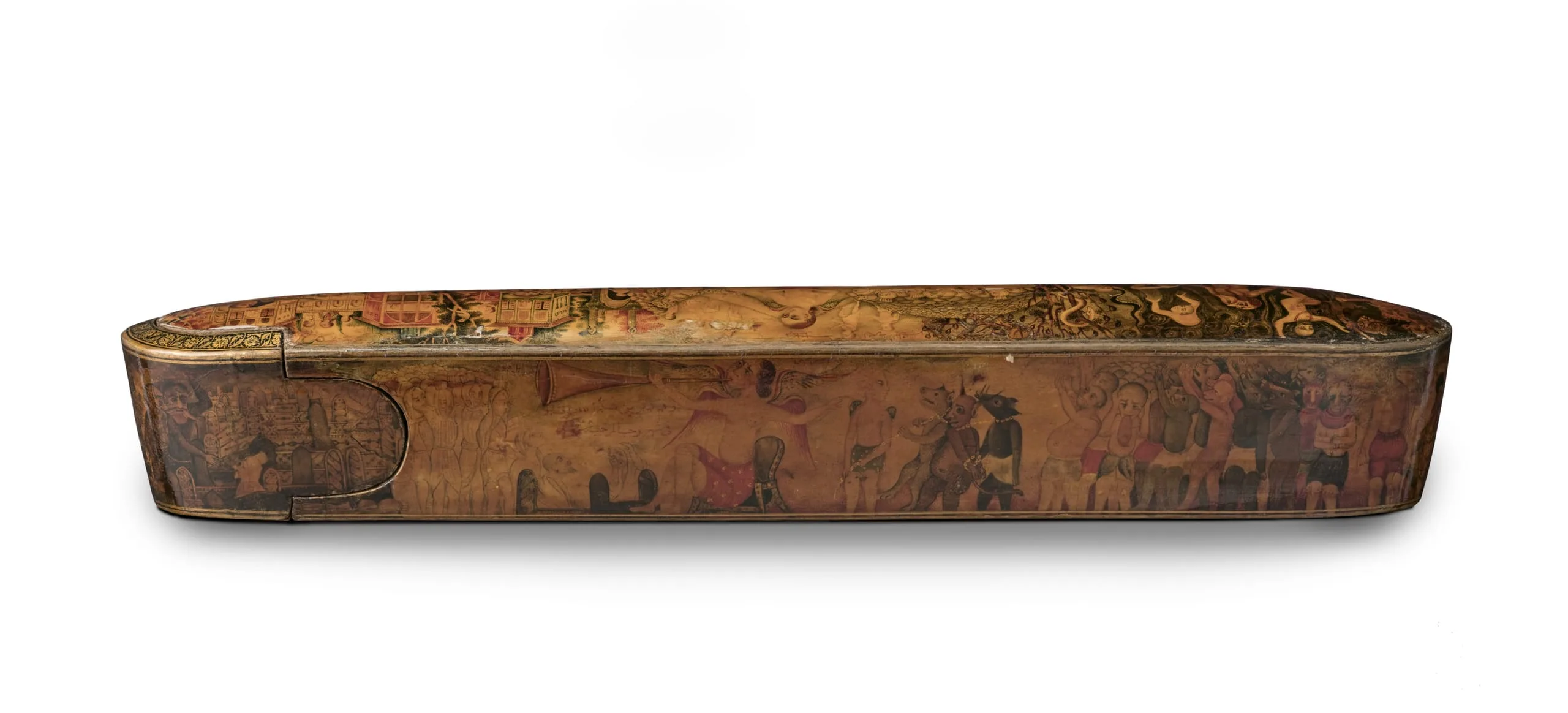
Elongated wooden pen case with painted figural scenes across its surface, depicting multiple standing figures in red and dark tones, with a decorative landscape along the upper edge, brass fittings at the hinge.
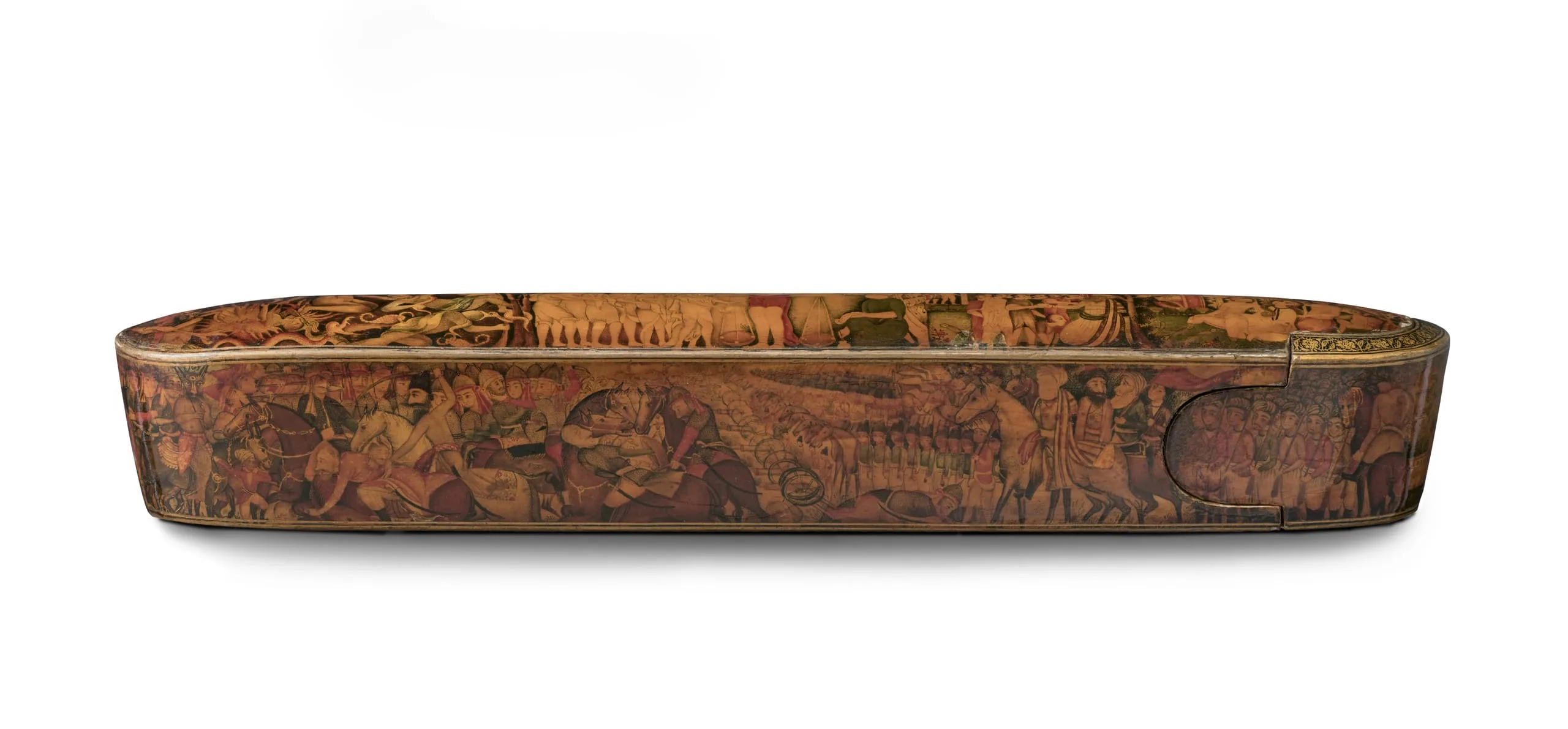
Elongated oval pen case with painted lacquer decoration, depicting a continuous frieze of courtly and battle scenes with multiple figures, horses, and elephants in warm tones of red, gold, and brown; brass edge fittings visible.

Shukrullah Afshar, Pen Box, 1832/1248 A.H., Los Angeles County Museum of Art, The Nasli M. Heeramaneck Collection, gift of Joan Palevsky, photo © Museum Associates/LACMA

Artist or Maker
Shukrullah Afshar
Title
Pen Box
Place Made
Iran
Date Made
1832/1248 A.H.
Period
Qajar (1789-1925)
Medium
Wood, papièr maché, lacquer, and gold
Dimensions
9 3/8 x 1 3/4 in. (23.8 x 4.5 cm)
Credit Line
The Nasli M. Heeramaneck Collection, gift of Joan Palevsky
Accession Number
M.73.5.159
Classification
Lacquer
Collecting Area
Art of the Middle East: Islamic
Curatorial Notes

Lacquering developed in the late fifteenth century in Iran for book covers. During the eighteenth and nineteenth centuries, it became an especially popular technique applied to a range of objects, from mirror cases and bows to playing cards and pen boxes (qalamdans) such as this one. Composed of papier-mâché and sometimes wood, pen boxes were decorated with painted scenes, then coated with lacquer, which often darkens over time. The decorative repertoire included religious scenes, landscapes, romances, and, especially in the nineteenth century, images borrowed from European paintings and prints (see M.73.5.157), which circulated in greater numbers with the growing presence of foreigners in Iran.

This pen box features a detailed depiction of the Day of Judgment. The top of the box shows the archangel Mikhail (Michael) with a set of scales sorting the righteous from the wicked, the former sent to heaven on the right and the latter cast into hell on the left. On one long side, the archangel Israfil blows a horn to signal the day of resurrection. The other long side depicts a battle scene, in which Dajjal (the Antichrist) is met in battle by the Mahdi, who is believed to appear at the end times; the armies wear contemporary dress and wield modern military arms such as canons. An inscription identifies the date of production as November AH 1248 (1832 CE) and the artist as Shukrullah Afshar, likely a member of the famous family of lacquer painters that also included ‘Ali Ashraf Afshar (active mid-18th century) and Muhammad Hasan Afshar (active late 19th century).

2025
Selected Bibliography
  • Pal, Pratapaditya, ed. Islamic Art: The Nasli M. Heeramaneck Collection. Los Angeles: Museum Associates, 1973.