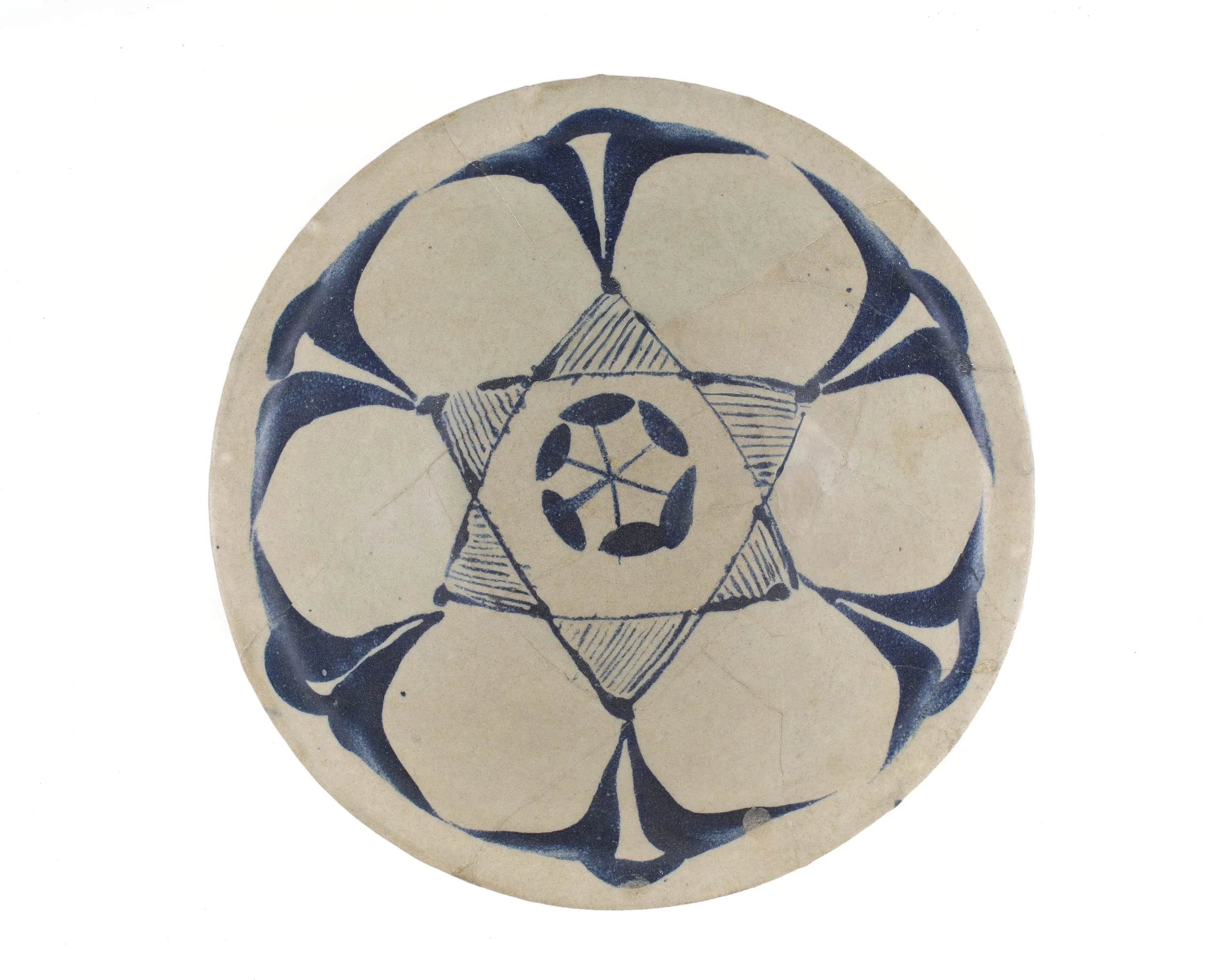
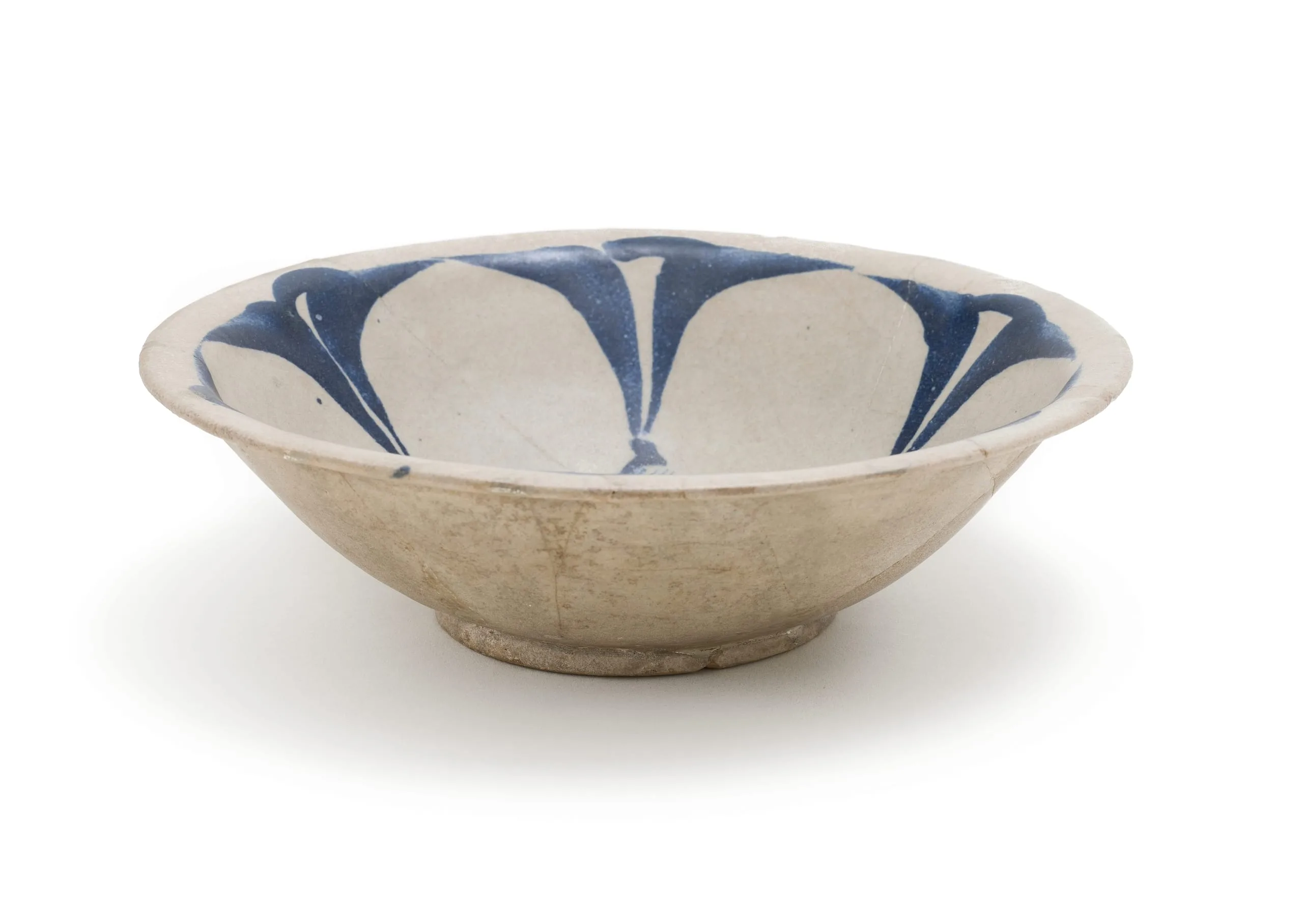
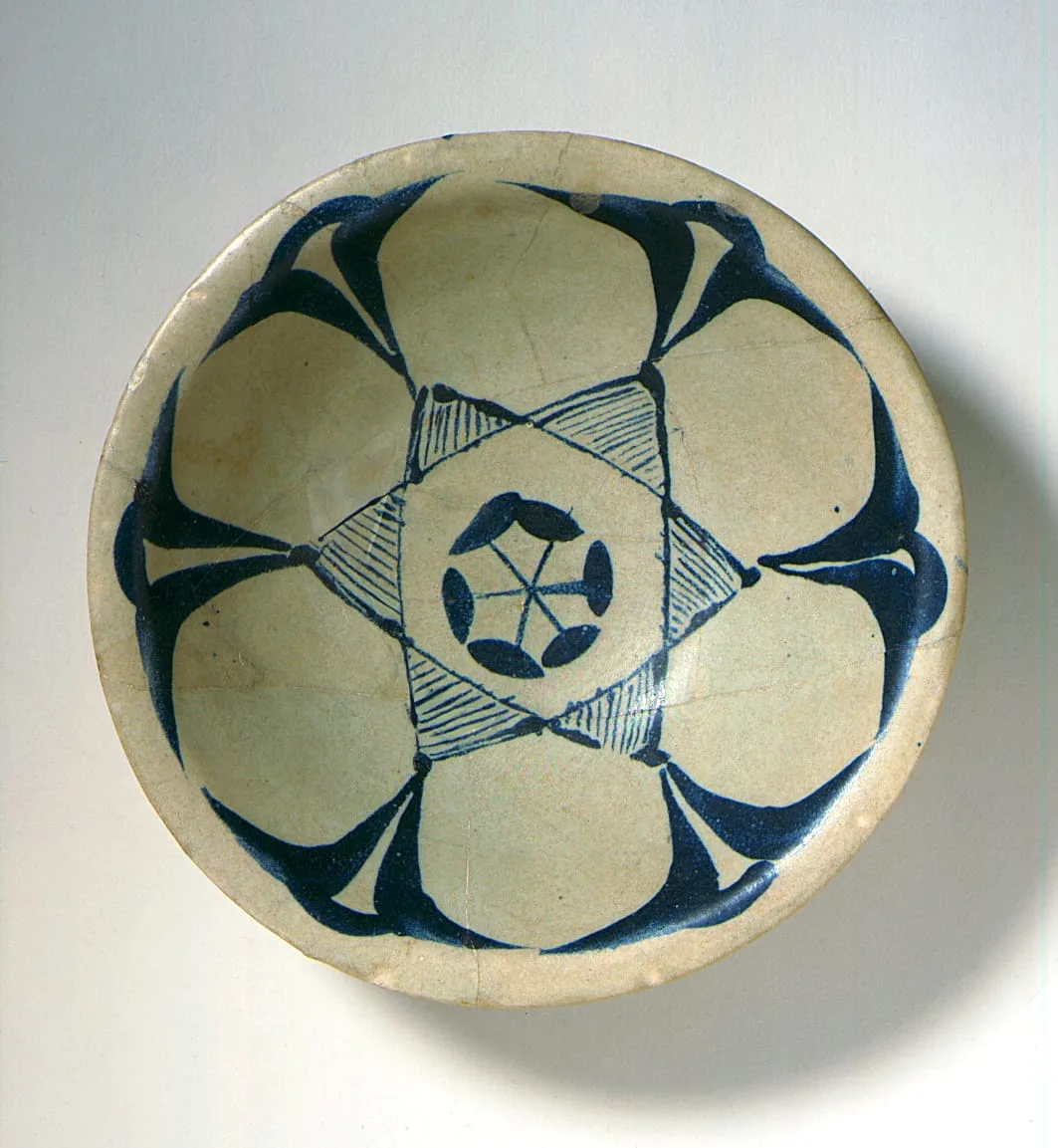
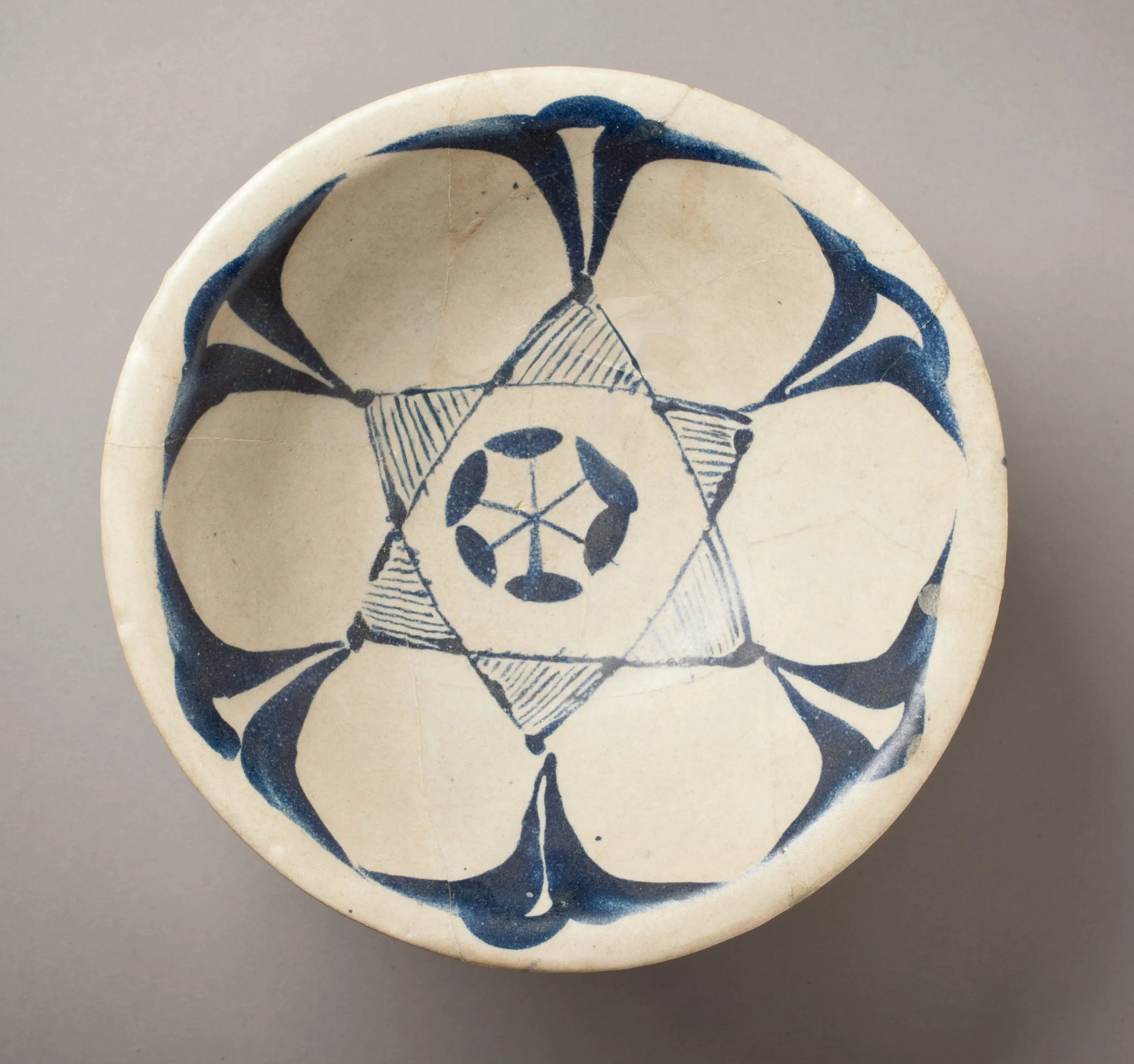
Finely glazed pottery first became a significant form of Islamic art around the first decades of the ninth century, as demonstrated by this handsome bowl. It is only in the early ‘Abbasid era (c. 9th-10th centuries) that well-made wares with complex glazing techniques proliferated in Iraq, in the southern city of Basra, spreading rapidly throughout the empire. At around the same time, Chinese wares were exported westward to the lands of the ‘Abbasid caliphate, as documented by excavations on land and under the sea, as well as references in textual accounts. The driver of these two markets was the recent and burgeoning interest in cuisine and fine dining as exemplified by the court in Baghdad.
When motivated by culinary etiquette, it is easy to appreciate the predilection for the clean, hard white surface of imported Chinese stoneware and porcelain, but Basran wares, such as this bowl, should not be understood as poor substitutes. They are original and technically advanced achievements in ceramic art in which low-fired earthenware was covered with an opaque white glaze approximating the whiteness of high-fired stoneware and porcelain. Rather than being content with mere imitations, Iraqi potters must have seen the white surface as a potential canvas on which to paint bold cobalt-blue designs—abstract and floral patterns as well as difficult to decipher Arabic inscriptions—which were then fixed in a single firing.
2024