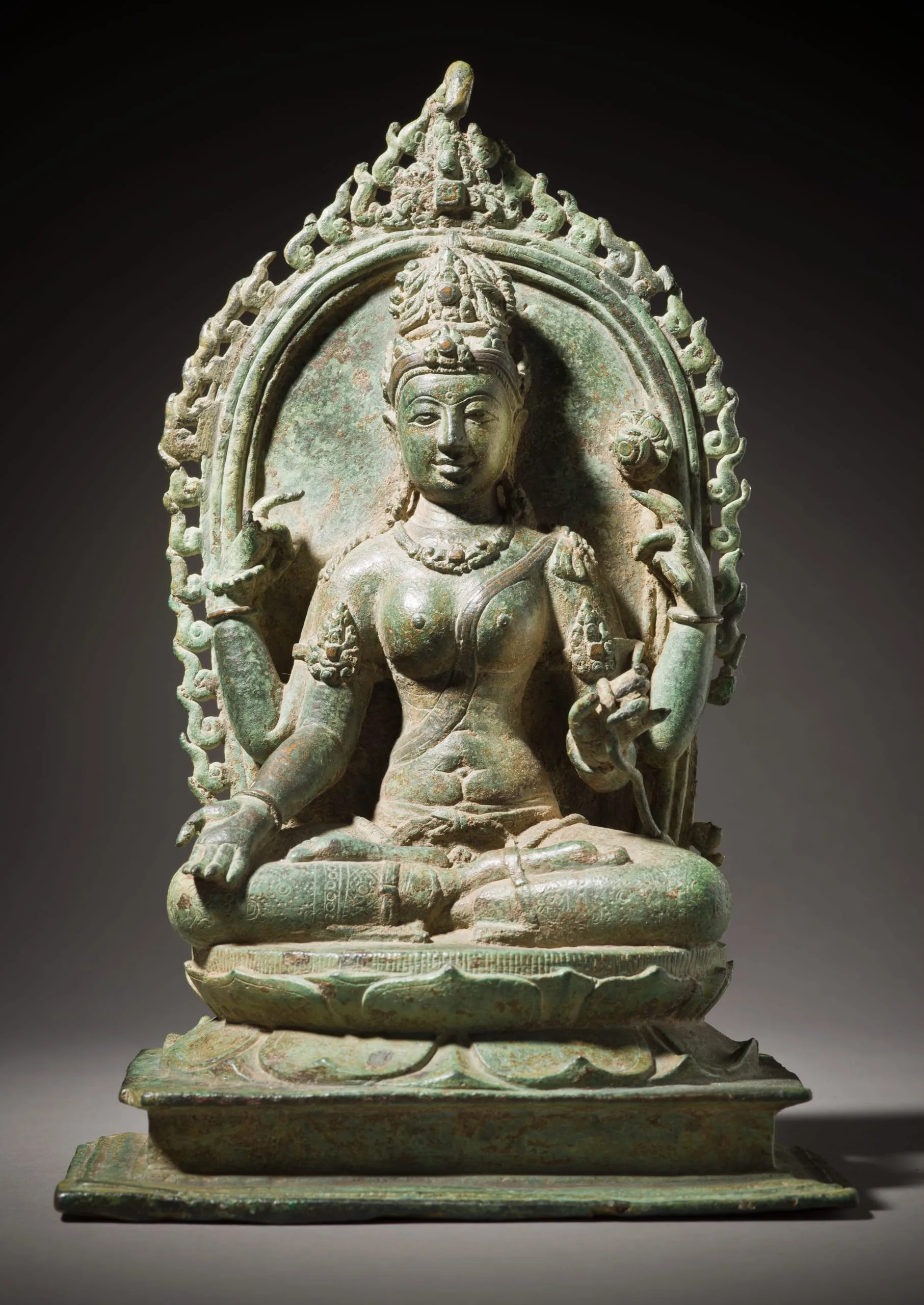
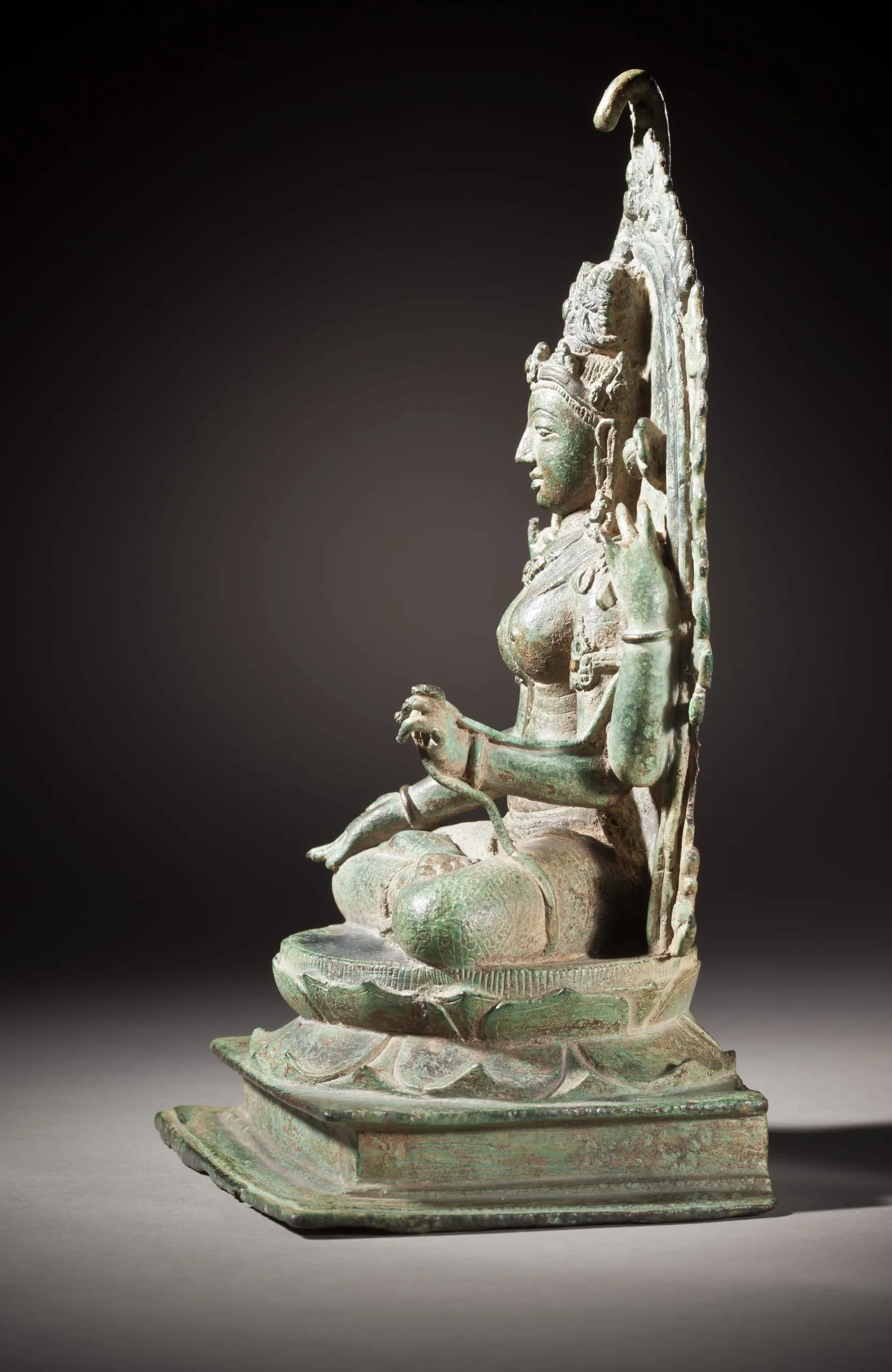
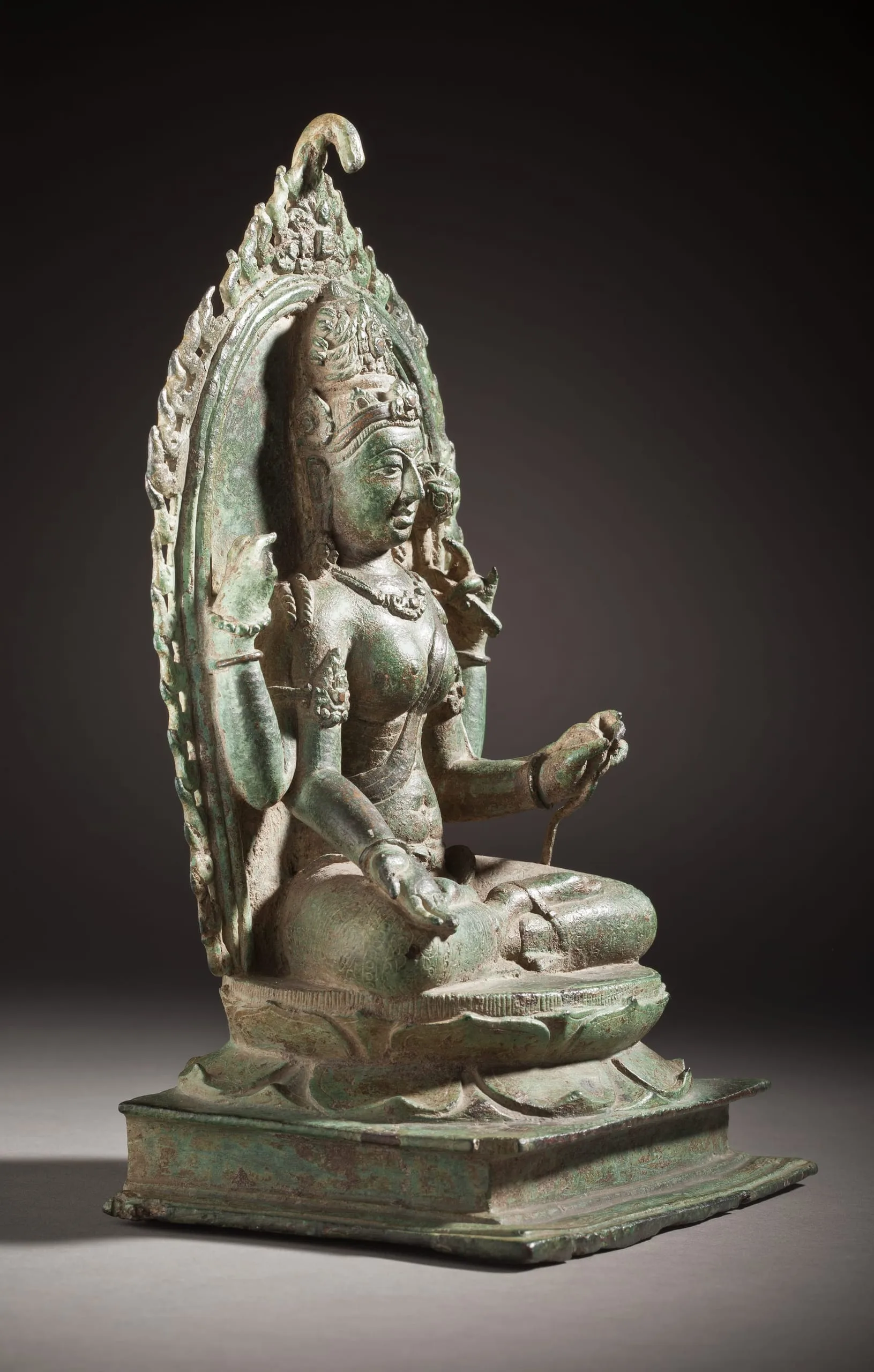
The Buddhist goddess Tara is the female Bodhisattva of Compassion. She is said to have been born from the Bodhisattva Avalokiteshvara’s tears of compassion. There are many forms of Tara, all of whom help practitioners overcome hindrances and difficulties on the path to Enlightenment. Each Tara has a different symbolic character and associated color. It is unknown which form of Tara this image represents. It had been previously suggested to be Dhanada Tara (Rosenfield 1966, p. 74, no. 68), but that identification was later refuted (Huntington 1990, pp. 235-236, no. 79).
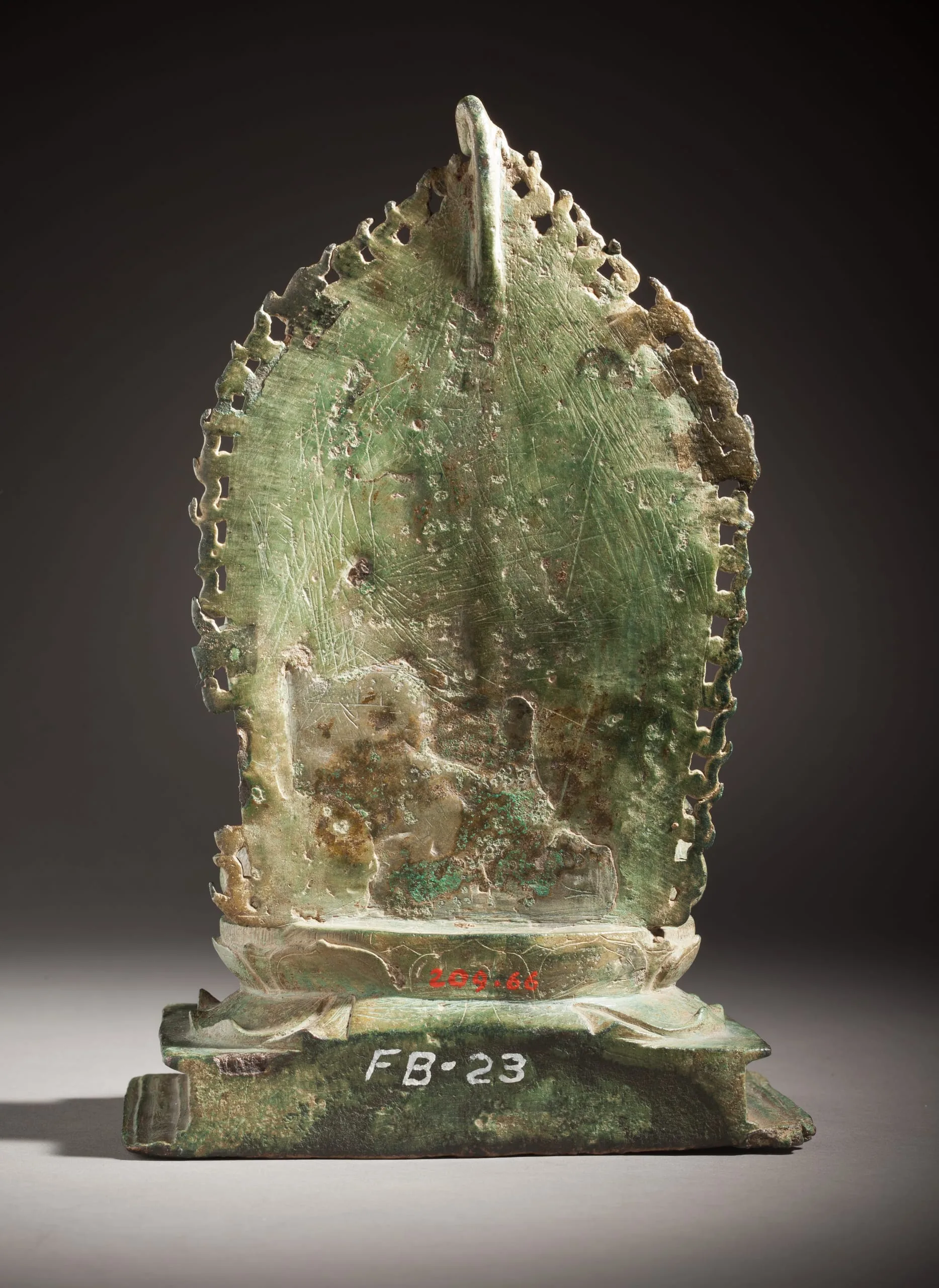
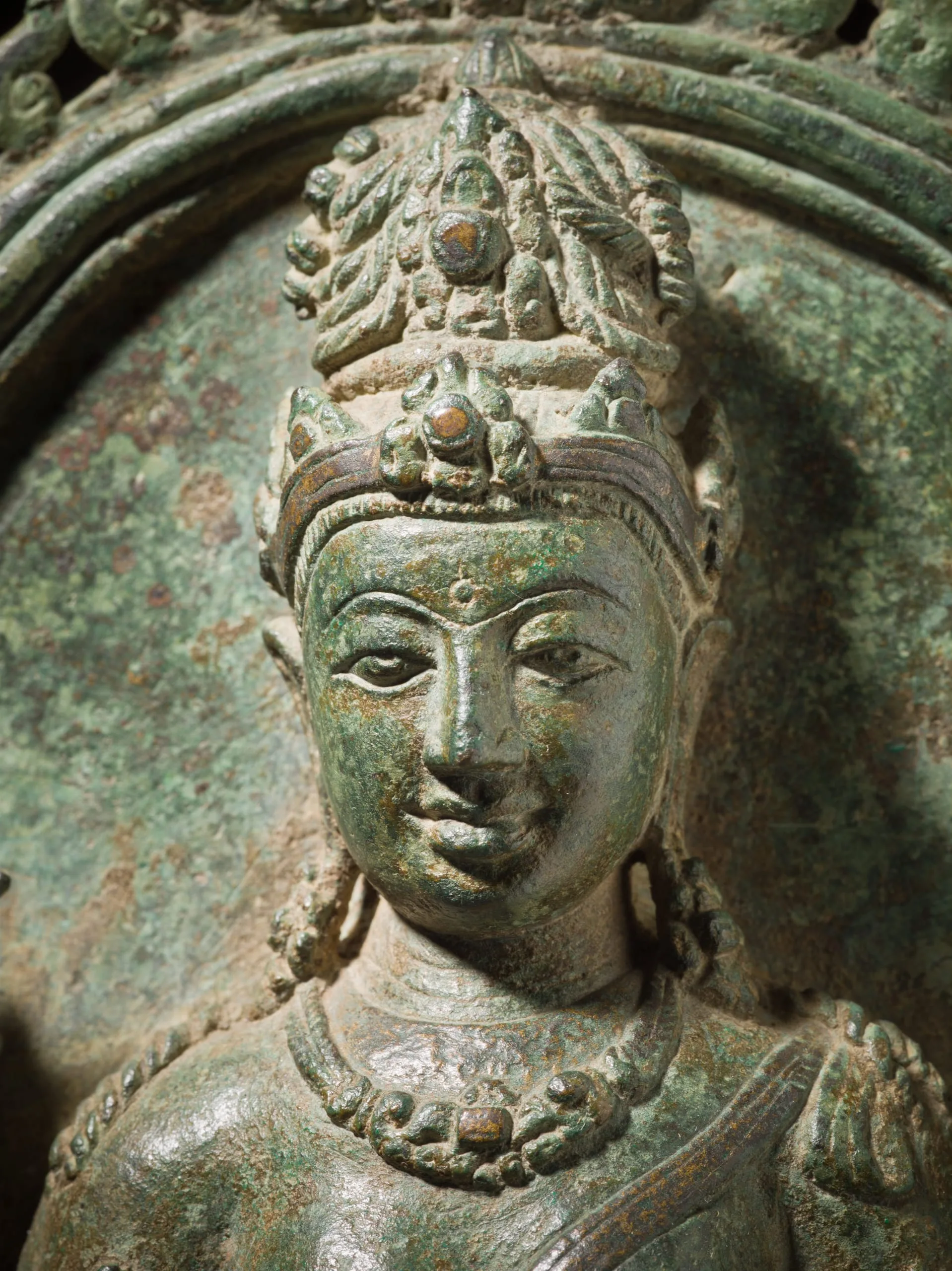
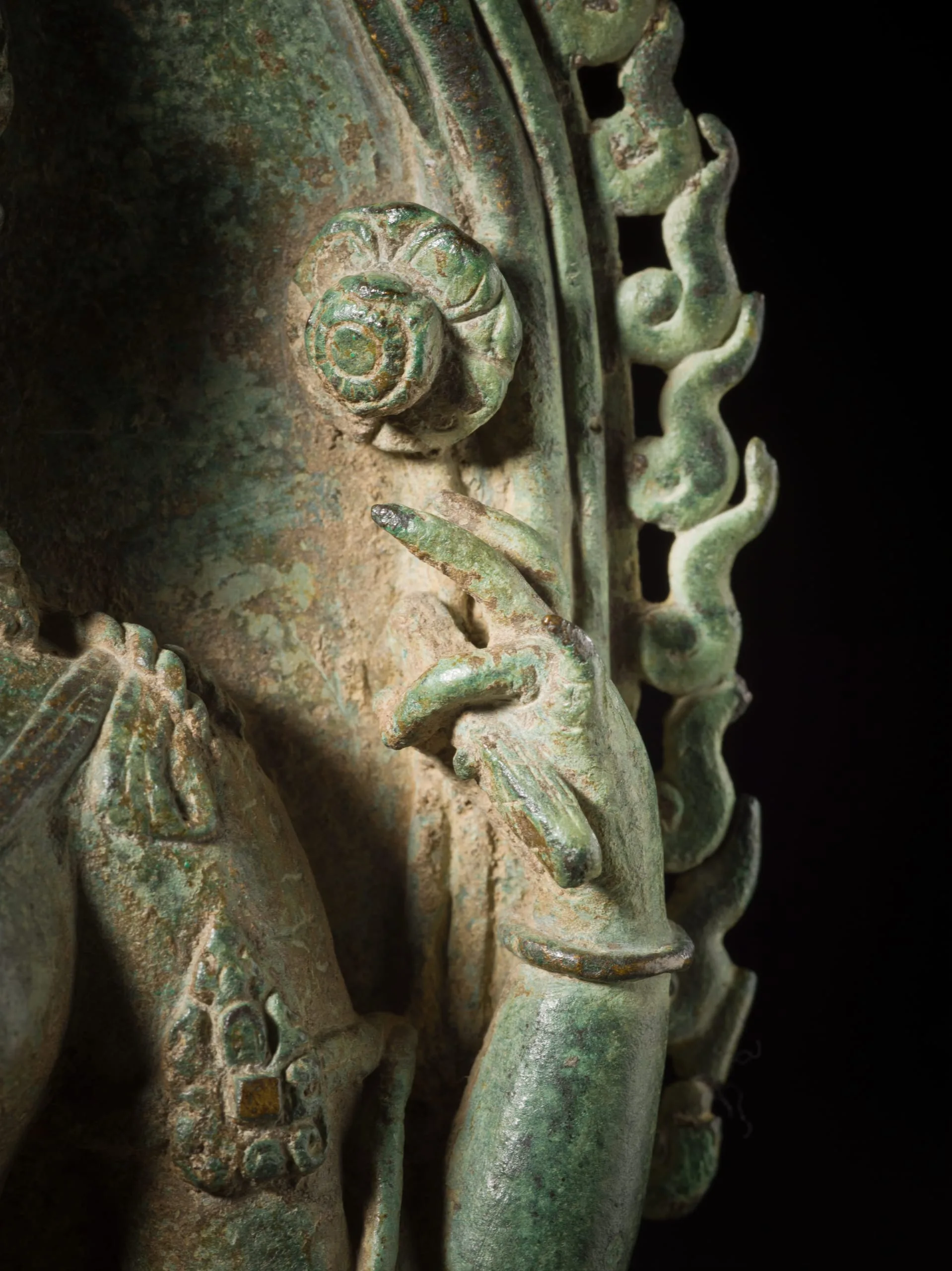
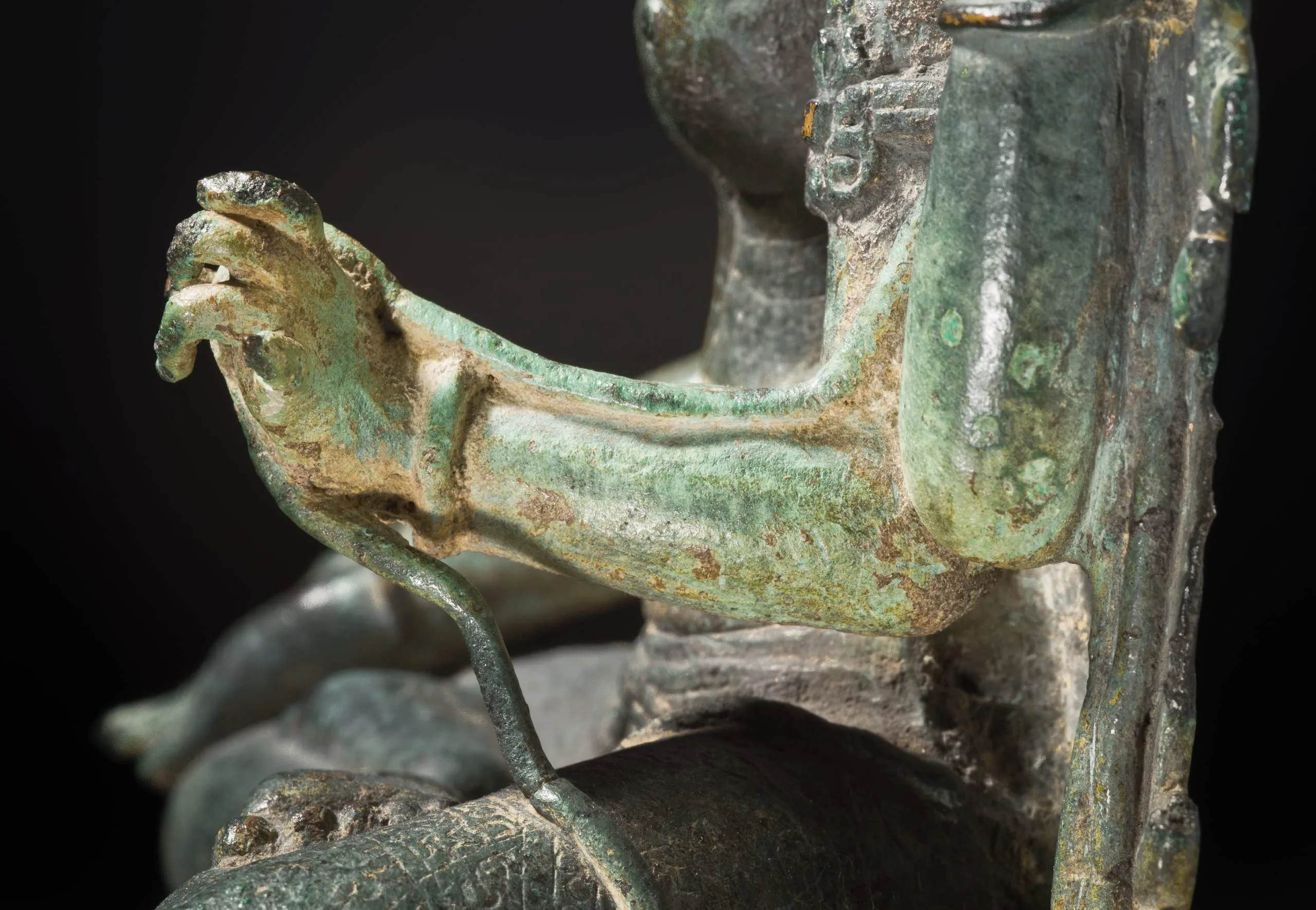
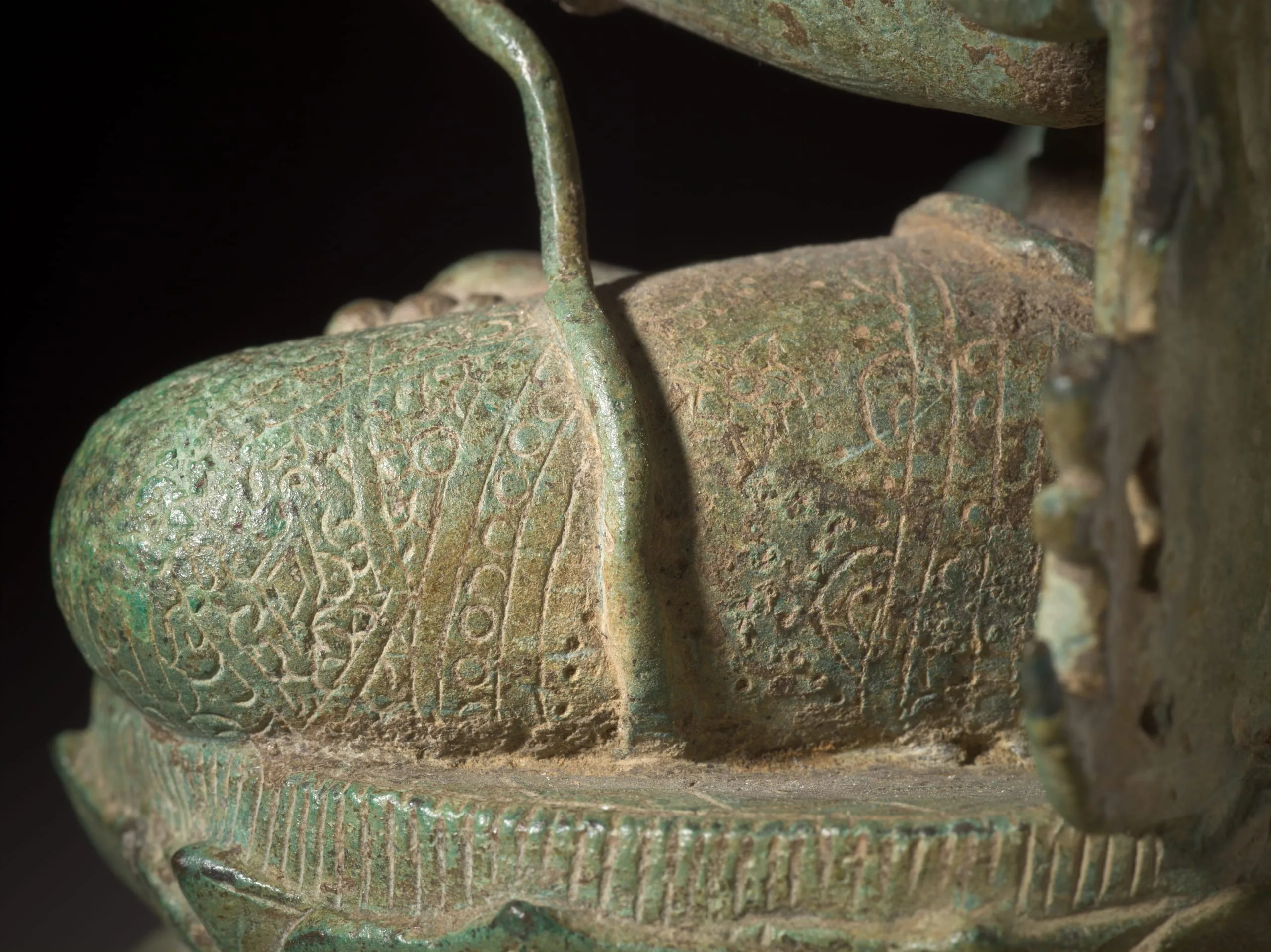
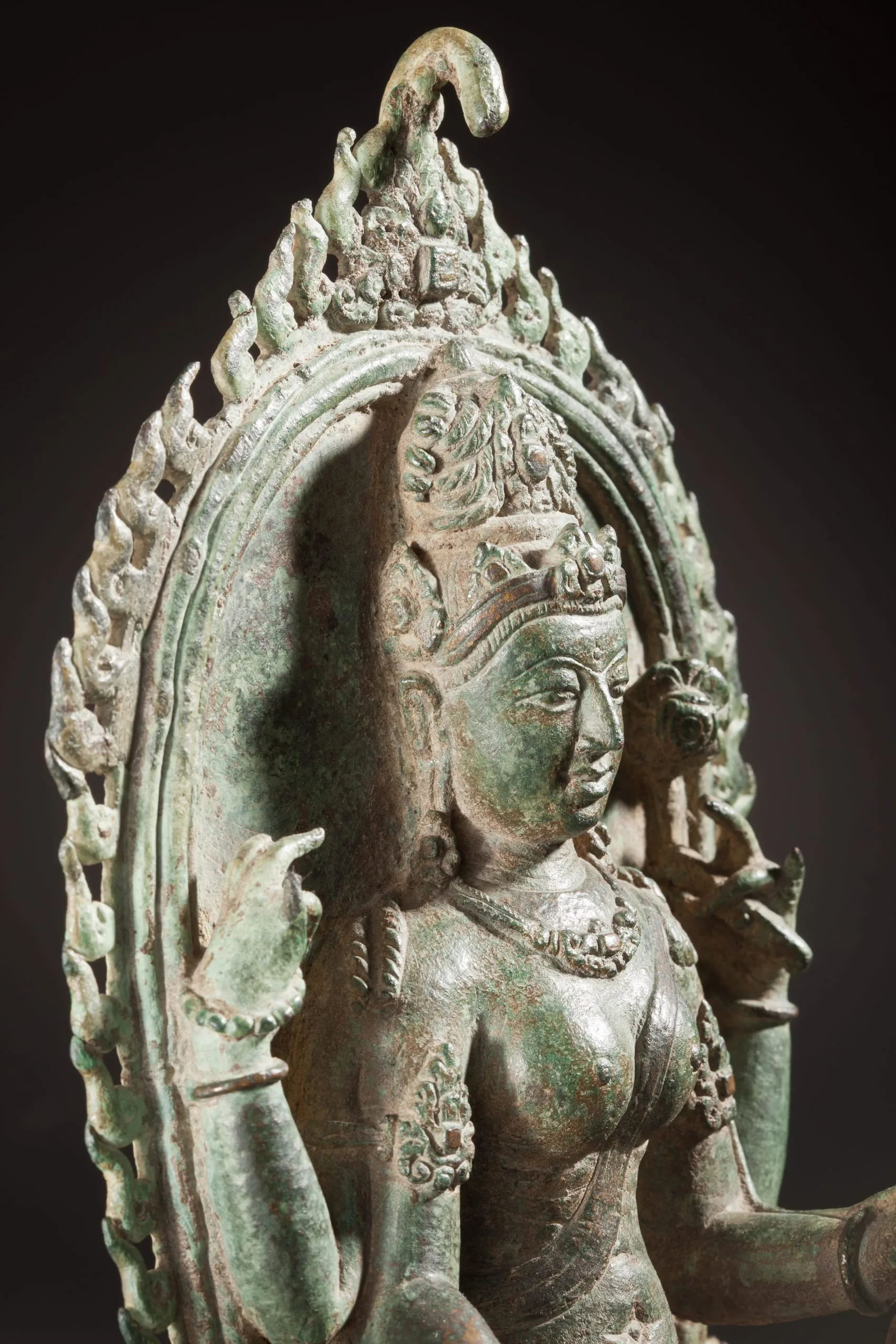
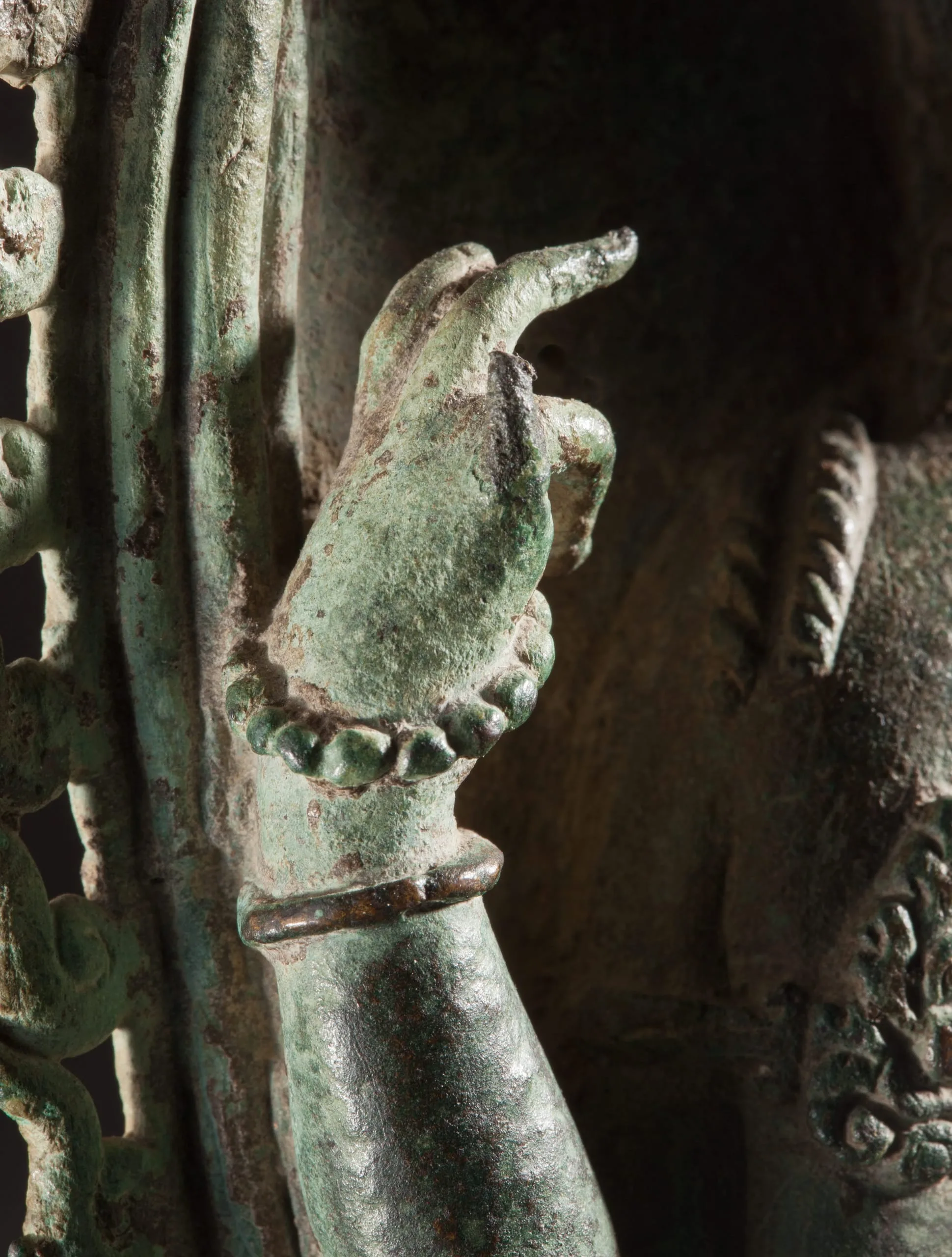
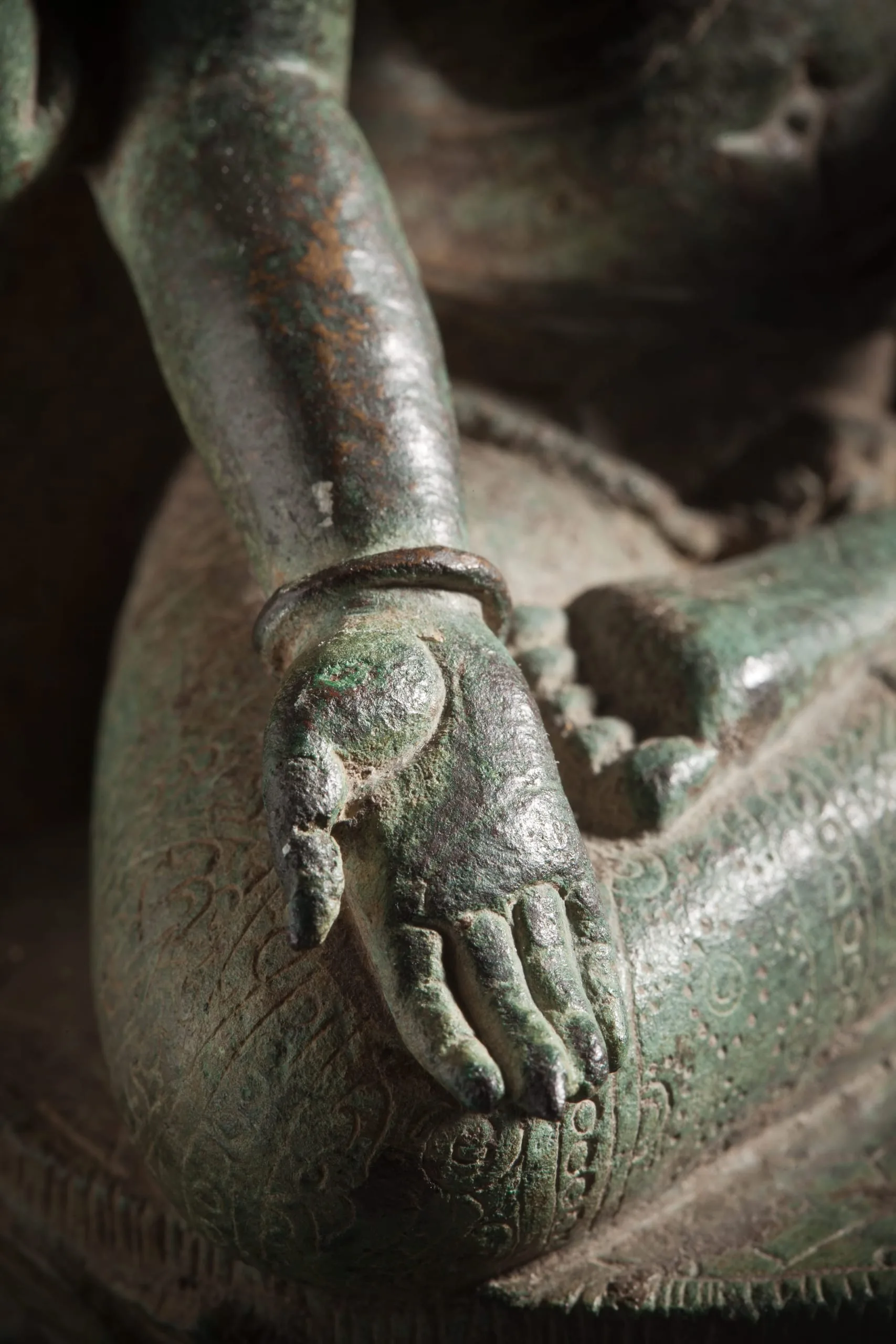
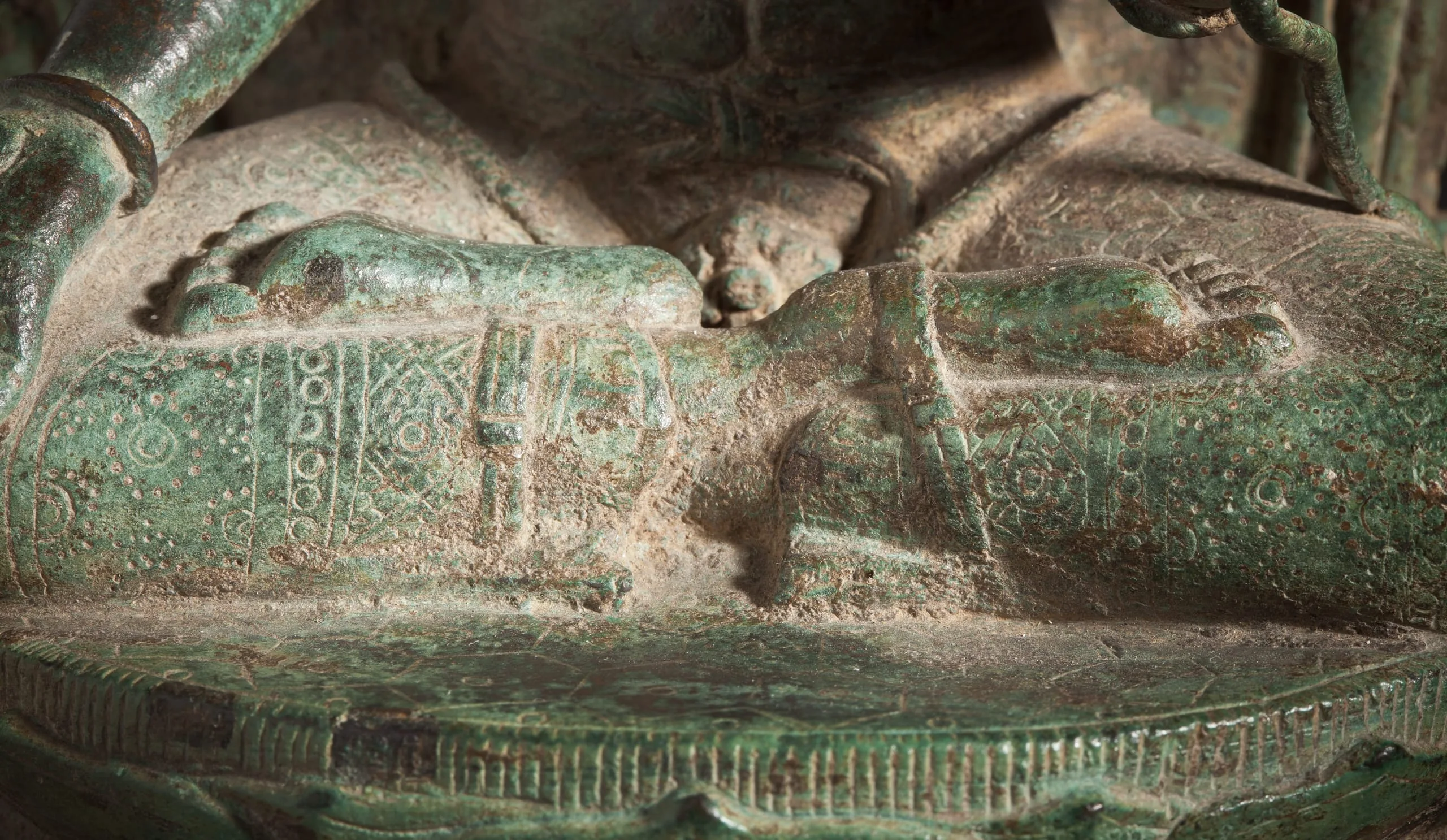
Tara has the piled hair of an ascetic without an identifying small image (bimba) in her crown of her emanation source deity. She is seated on a lotus base in the meditation posture (padma asana). She has a gracious countenance and wears standard jewelry, a sash over her left shoulder, and a patterned lower garment. She is four-armed. In her upper right hand, she holds a rosary (akshamala). Her lower right hand is extended in the gesture of charity (varada mudra). In her upper left hand, she holds a sacred manuscript (pustaka). Her lower left hand holds the stalk of a lotus. Behind her is an aureole (prabhavali) with a flaming border. Its finial, now damaged, was likely an honorific parasol (chattra).
A comparable Central Javanese bronze image of Green (Shyama) Tara, albeit two-armed, is in the National Museum of Indonesia, Jakarta (640).